UK’s aerospace sector worth £22bn to the economy, with AAM bringing in £18m

July 25, 2024
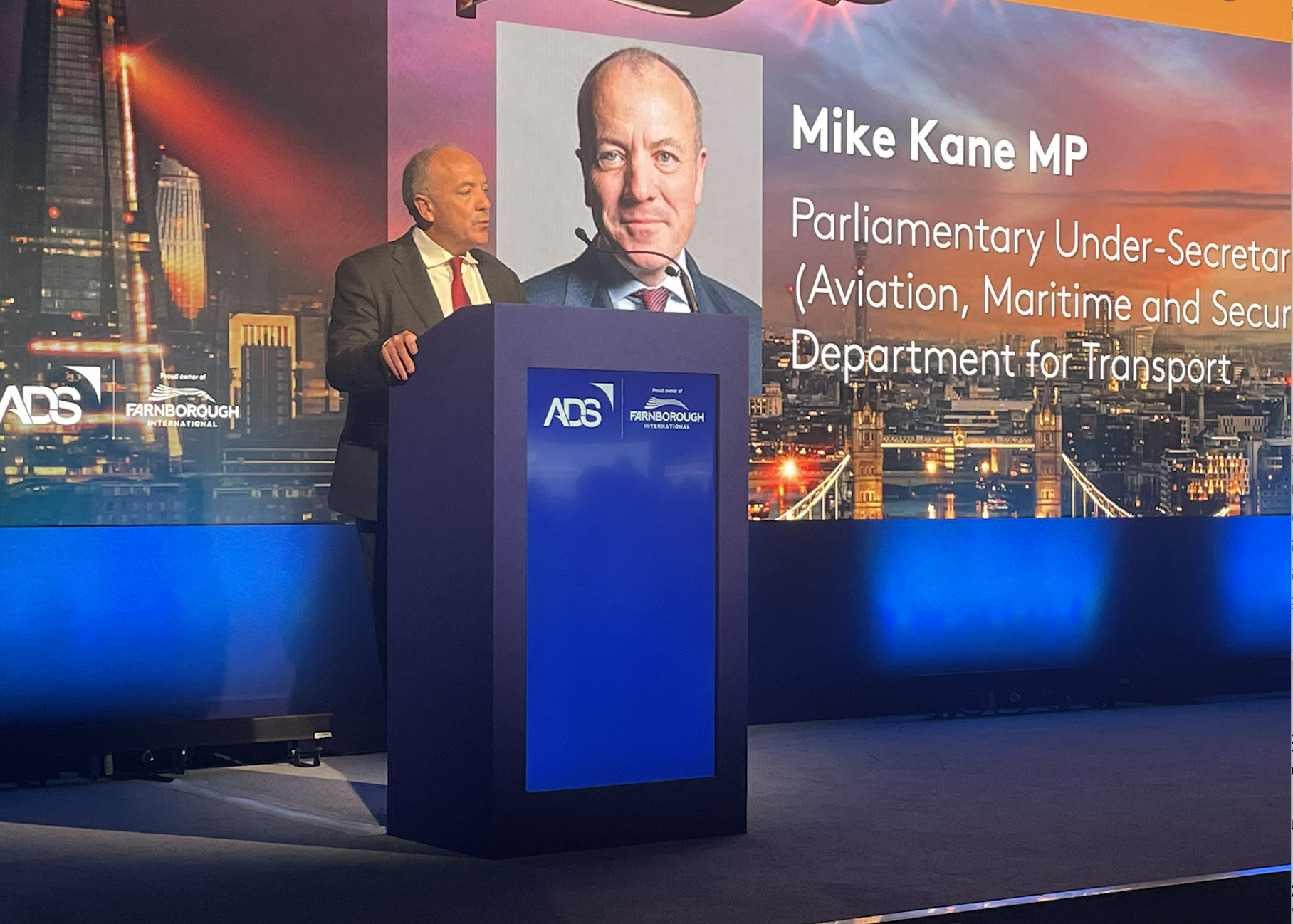
In an opening speech for GUAAS, which is this year being hosted at Farnborough International Airshow for the first time, Mike Kane, the UK’s new Aviation, Maritime and Security Minister, spoke about the historic and pioneering role of Farnborough in shaping the UK’s aerospace sector.
“In 1948, just 40 years after the country’s first powered flight took off from this town, Farnborough hosted its first airshow, showcasing the innovative and inspiring spirit that has allowed Britain to affirm itself as an aviation leader and pioneer,” he said.
“Today aviation and aerospace are central to our nation’s success, adding around £22bn to our economy and supporting around 237,000 jobs,” he continued. Serving as a catalyst for trade and travel as well as for investment and connectivity, he also credited the sector with helping to navigate turbulent times in recent years.
Looking to the future of flight and in the words of William Shakespeare, he said: “The golden age is before us, not behind us.”
With AAM and drones shaping the future of flight, Kane said AAM is helping Britain to realise its ambitions for growth. The sector currently generates around £18m every year and supports 2,000 jobs. “By 2030 we could see the drone industry adding £45bn to our economy and 650,000 jobs.”
Remarking on how they are driving more sustainable aviation, he said that uncrewed aerial vehicles (UAVs) could save 2.4m tonnes of carbon per year (the equivalent of taking 1.7m diesel cars off the road).
However, we must integrate this technology safely and seamlessly with other aircraft, he cautioned, underlining that airspace modernisation is a manifesto commitment for the new government. “A vital part of our national infrastructure, the highways in our sky were mapped shortly after Farnborough’s first airshow and are long overdue an upgrade.”
The new government, he said, will work closely with the UK’s civil aviation authority (CAA), which published the latest updates to its airspace modernisation strategy today, to put plans into action, create more choice, add better value for passengers, ensure fewer harmful emissions, greater efficiency, quicker flights and quieter operations.
“Our current airspace is an analogue system in a digital age. It has to change and it has to be upgraded. If a pilot came from 1950s now, they would still know how to plot today’s current airspace because it hasn’t been upgraded,” he said.
“The pioneers of the past battled to go further and faster to get aviation off the ground literally. Now we must go cleaner and greener to protect their innovations for the next generation.”
Just as the new Prime Minister Sir Keir Starmer had done on Monday when he opened the airshow, Kane said one of the key takeaways for the aviation sector from the King’s Speech, was the commitment to introduce a revenue certainty mechanism to support sustainable aviation fuel (SAF) production in the UK.
“It will give SAF producers the confidence to set up shop here in the UK and meet ambitious but achievable SAF mandates, adding £1.8bn to our economy and 10,000 jobs by 2030.”
Wrapping up his speech he said he wanted delegates at this year’s GUAAS to leave with a “fresh sense of optimism for the future of flight and renewed drive for growth fuelled by aspirations that those who stood here all those years could never have imagined.”