Ukraine strikes Russia’s Aviastar plant producing Il-76 and An-124 aircraft

March 19, 2026
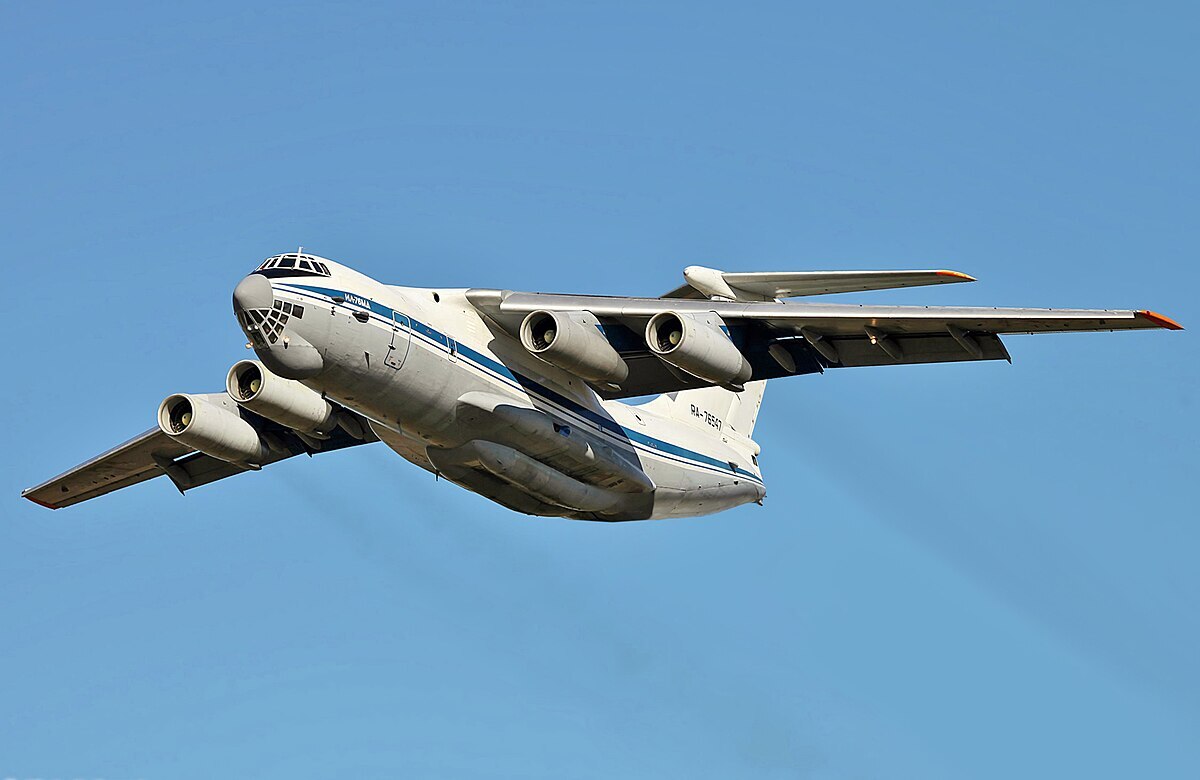
Ukraine has carried out a pair of successful strikes on two important Russian plants, including Aviaster, which specialises in heavy military transport aircraft production. The development comes as Ukraine continues to expand and develop its long-range strike capabilities.
Ukraine hits Russia’s large Aviastar aircraft manufacturing plant
Yesterday, Ukraine reported it had struck Russia’s Aviastar aviation plant in Russia’s Ulyanovsk region, owned by United Aircraft Corporation.
⚡️Ukraine’s Defence Forces struck key aviation industry targets inside Russia
— Defense of Ukraine (@DefenceU) March 18, 2026
On March 16–17, strikes hit:
✈️ Aviastar plant (Ulyanovsk region) — producer of Il-76MD-90A, Il-78M-90A, and servicing An-124 aircraft
🔥 Damaged aircraft shelters & parking areas; several aircraft… pic.twitter.com/iCUy5ca4dH
The strikes took place on the night of the 16th of March, with Ukraine saying it hit aircraft shelters and parking areas. The site is around 500 miles or 800 kilometres from the Ukrainian border.
Aviastar is the largest aircraft manufacturing site in Russia and is where Russia’s Il-76 strategic transport aircraft is built. It also historically built the Tu-204 aircraft and Russian-built examples of the An-124 Ruslan.
Get the latest aerospace defence news here on AGN.
Ukraine attack on 123rd Aircraft Repair Plant
Ukraine also says it hit the 123rd Aircraft Repair Plant in the city of Staraya in Russia’s Novgorod Region the next day. It claims it hit the maintenance hangars for the Ilyushin Il-76 and the smaller L-410, while satellite imagery shows successful hits on one of its main hangars.
This is where Russia’s Il-76MD-90A strategic airlifters and related Il-78M-90A tankers are built. It is also where its giant An-124 Ruslan strategic airlifters are serviced. This is full-service, including the engines.
Ukrainian drone forces posted saying, “Striking such targets directly reduces the enemy’s ability to restore and sustain combat-ready aircraft.”
Wonder if there was a plane inside. https://t.co/xsUgYabjXn
— The Military Watch (@MarcinRogowsk14) March 17, 2026
Reporting on this attack, the Telegram account, Astra, confirmed the attack. It posted, “In the Novgorod region, an aircraft repair plant has been attacked, local public channels report. In Staraya Russa, Novgorod region, an aircraft repair plant has been attacked, according to local public channels.”
It cited those local public channels as saying a workshop at the plant was hit with local sources saying around “seven UAVs” were shot down.
🔥 This morning, Aviastar plant in the city of Ulyanovsk was attacked.
— MAKS 25 🇺🇦👀 (@Maks_NAFO_FELLA) March 16, 2026
Aviastar is the largest Russian aircraft manufacturing plant. The enterprise specializes in the production of Il-76MD-90A military transport aircraft, Il-78M-90A tanker aircraft, as well as servicing An-124… pic.twitter.com/VF3hhXK9zg
The Kyiv Post wrote, “Notably, Russian aviation monitoring channels report that the plant currently houses two A-50 airborne early warning and control (AEW&C) aircraft.”
It is unclear if these were damaged, but it was reported that Russia only had eight remaining examples operational after Ukraine shot a pair down in 2024.
More Russian aircraft destroyed on the ground
The Ukraine war is now in its fifth year, and the manner in which Ukraine is destroying Russian aircraft has changed. At the start, most Russian aircraft losses were shot down, including dozens of combat aircraft.
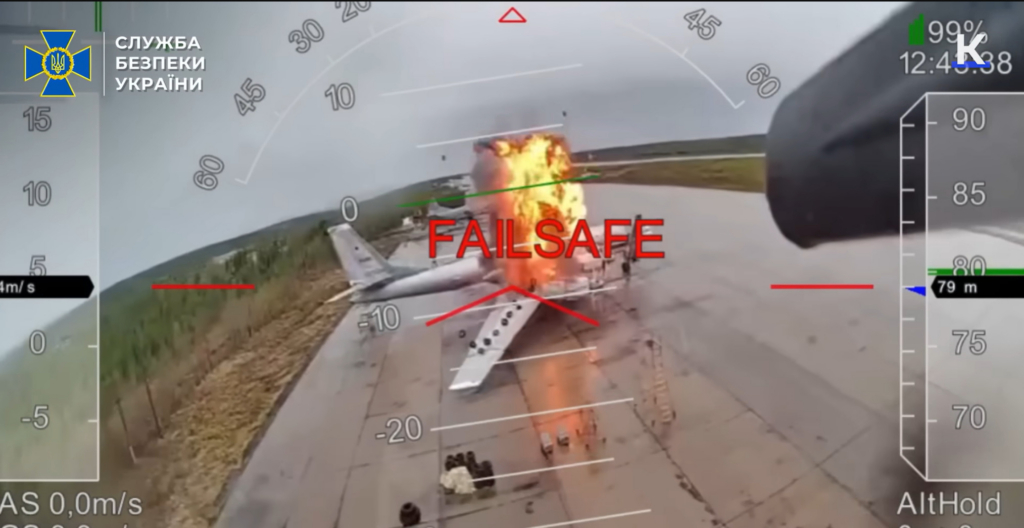
However, at this stage in the war, more aircraft are being hunted down and destroyed on the ground. Many of these losses are difficult to verify.
Most dramatically, Ukraine is estimated to have destroyed around 20% of Russia’s operational strategic bomber fleet in 2025 during Operation Spiderweb.
But this is part of a larger and growing campaign to target Russian aircraft on the ground with drones. Ukraine released a montage at the start of 2026 showing the many individual attacks on parked Russian aircraft in Crimea during 2025.
In November 2026, Ukraine also destroyed a rare A-60 laser aircraft and an A-100 AEW&C aircraft on the ground. That said, those aircraft may have been non-operational test aircraft used as decoys.
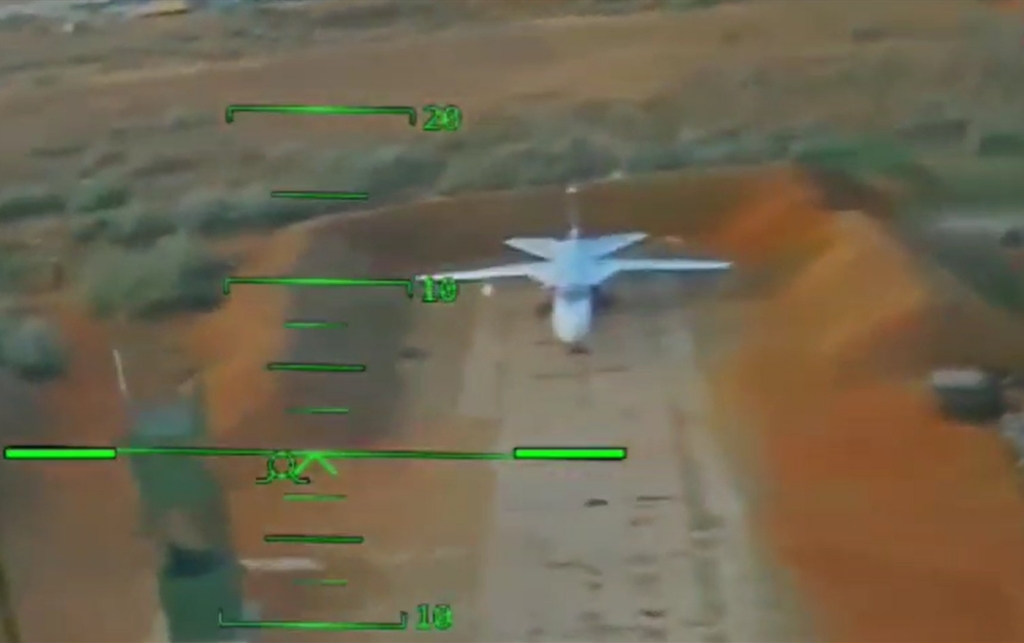
2026 has seen a major uptick in Ukraine’s FP-1/2 drones successfully targeting and destroying Russian Panstir, Tor, Buk, and S-300/S-400 air defence systems. If this continues, gaps are likely to grow in Russia’s air defence, leading to increasingly successful Ukrainian attacks.
Featured Image: Wikimedia Commons
![NASA's X-59 Quesst [registration N859NA '859'] is seen in-flight over California during the experimental supersonic aircraft's brief second test sortie on 21 March 2026. Image: NASA/Jim Ross](https://aerospaceglobalnews.com/wp-content/uploads/2026/03/X-59-Second-Flight-21-03-26-NASA-Jim-Ross-crop-scaled-640x0-c-default.jpg)