BBGA: Business aviation and PSO routes seen as key to UK regional connectivity

March 16, 2026

As regional air connectivity across the UK comes under increasing pressure, speakers at the British Business and General Aviation Association (BBGA) AGM, held in London on 12 March, explored how a blended model combining business aviation flexibility, regional airline networks and emerging aircraft technologies could be key to strengthening links.
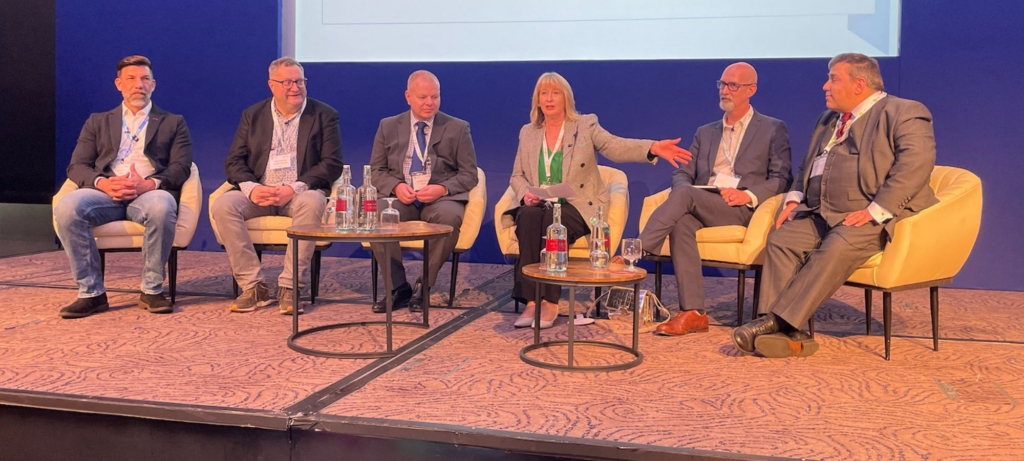
With the number of regional airlines declining and smaller communities struggling to maintain reliable air links, industry leaders highlighted the potential overlap between business aviation and regional transport. Regulatory frameworks, Public Service Obligation (PSO) routes and next-generation aircraft were all identified as key elements for reshaping regional mobility.
UK CAA sees surge in permits for business aviation
A key challenge for private jet operators operating flights into or out of the UK has been getting a foreign permit issued within a tight turnaround. This is primarily due to a significant increase in the number of permits issued by the UK’s Civil Aviation Authority (CAA).

David Kendrick, head of airline licensing at the UK CAA, explained how the regulator assumed responsibility for issuing permits for commercial flights by non-UK-registered aircraft from the Department for Transport around 11 years ago. At the time, around 3,000 permits were issued annually. Today, the number has more than quadrupled.
“As of March this year, we are on track to issue around 13,000 permits,” Kendrick said. “The majority of those are for air taxi operations,” he added, noting that many of these flights involve one-off charters connecting the UK with destinations around the world.
While scheduled flights between the UK and the EU are often covered by block permits, ad-hoc charter flights, which are common in the business aviation sector, require individual authorisation. “Because these flights are often one-off operations, each one needs to be assessed individually before being approved,” said Kendrick.

Despite the increase in applications, he emphasised that the regulator aims to support the industry while maintaining oversight. “At the end of the day, we are the UK CAA, and we want UK civil aviation to thrive,” he said. And while the overall permitting situation is improving, he reiterated that operators need to allow two to three working days when applying for permits to ensure all necessary checks are completed.
PSO routes offer lifeline for UK regional aviation but carry risk
Another fundamental concern in regional connectivity is the role of PSO routes in maintaining connectivity to remote regions, particularly in light of the recent collapse of several regional carriers.
The recent failures of Eastern Airways and Blue Islands have left gaps in the UK’s regional network.
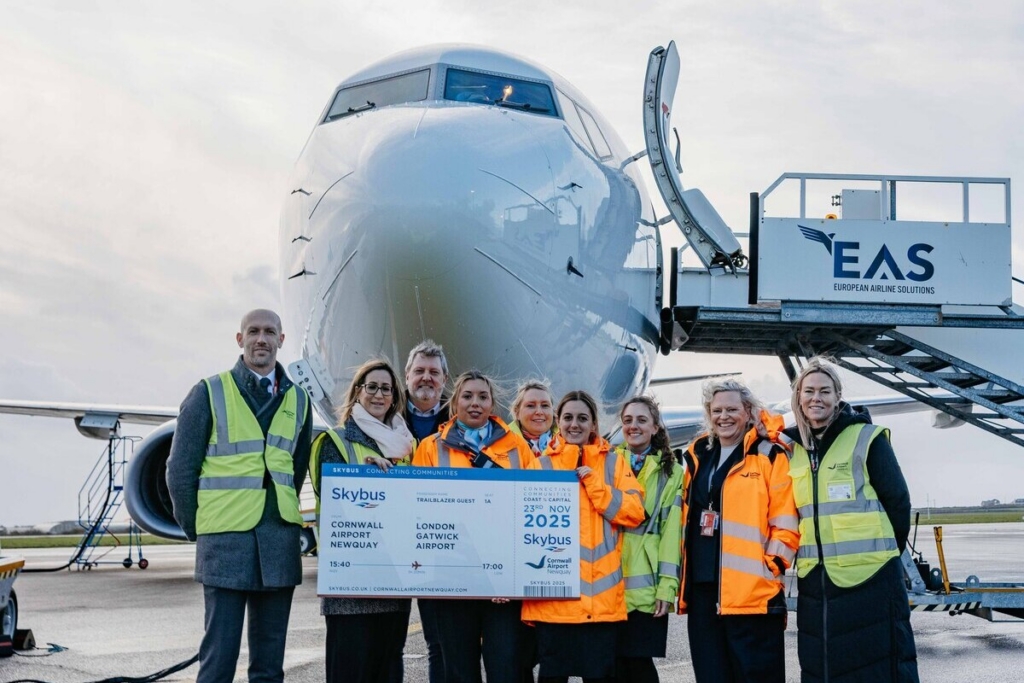
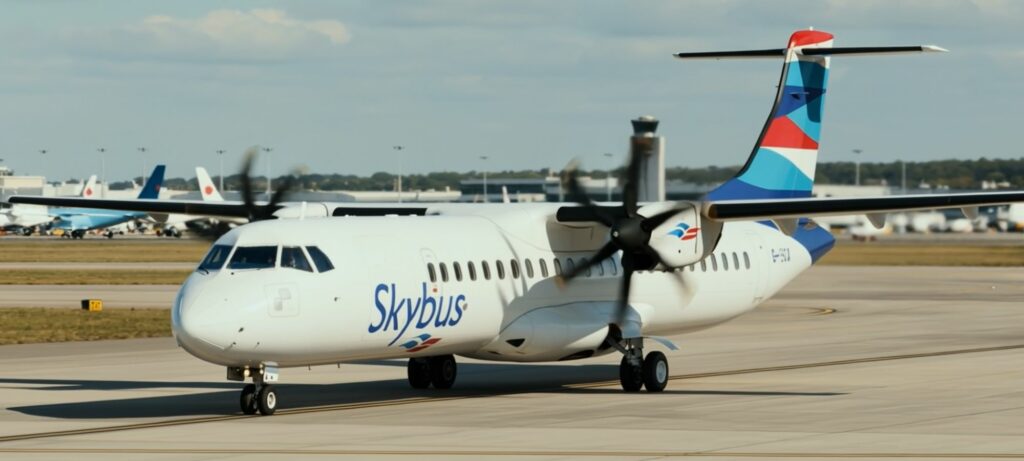
While Skybus stepped in to operate the Newquay–Gatwick route, temporarily preserving a vital link between Cornwall and London, managing director Jonathan Hinkles emphasised that PSO contracts entail significant commercial risk.
“A PSO is not a cost-plus contract,” he said. “If you go into a PSO, you are assuming both operational and commercial risk.”
While the subsidy covers the gap between revenue and operating costs, airlines remain responsible for accurately forecasting demand. “If you’ve overstated revenue or underestimated costs, that’s your problem,” Hinkles explained. “That’s how a PSO works.”
He added that PSO contracts can also limit an airline’s commercial flexibility. PSO routes are typically allocated specific flight schedules, frequencies and aircraft types, leaving little room for adjustments if demand changes.
“Many of the levers you would normally apply, such as using a smaller aircraft or adjusting ticket prices if a route is struggling, may not be available,” Hinkles said.
The UK’s Newquay–Gatwick PSO route illustrates the challenge. Although Skybus stepped in following Eastern Airways’ collapse, Cornwall Council has since decided not to extend funding beyond the interim contract.
“We are hugely disappointed,” Hinkles said. “If we had known this would be the outcome, we probably wouldn’t have entered into the agreement.”
Regional aviation remains vital for remote UK communities
For many remote communities, regional air links remain essential despite ongoing debate about domestic aviation emissions and a push to use other modes of transport.
Hinkles pointed out that rail is not always a lower-carbon alternative, particularly on routes served by lightly used diesel trains.
“A diesel train running from Penzance to London is on diesel for four-fifths of the journey,” he said. “On some routes, the emissions per passenger are not necessarily lower than aviation,” he said, referencing the Future Air – Southwest project.

The feasibility study, which ran from September 2025 to March 2026, was established to explore how future flight technology could transform regional connectivity across Somerset, Devon and the Isles of Scilly.
Weather resilience is another challenge for regional connectivity. Since the UK lost access to the European Geostationary Navigation Overlay Service (EGNOS) in 2021 following Brexit, flight cancellations on smaller regional routes have increased significantly.
“Flight cancellations on small regional routes have tripled since we lost EGNOS,” according to Hinkles.
Regional airlines face a growing shortage of turboprop aircraft
Aircraft availability is another pressure point for regional operators. Philip Saunders, chief commercial officer at Aurigny, said his airline, which recently took over the Jersey–Guernsey route from Blue Islands, is operating the route with an ATR 72-600 turboprop.
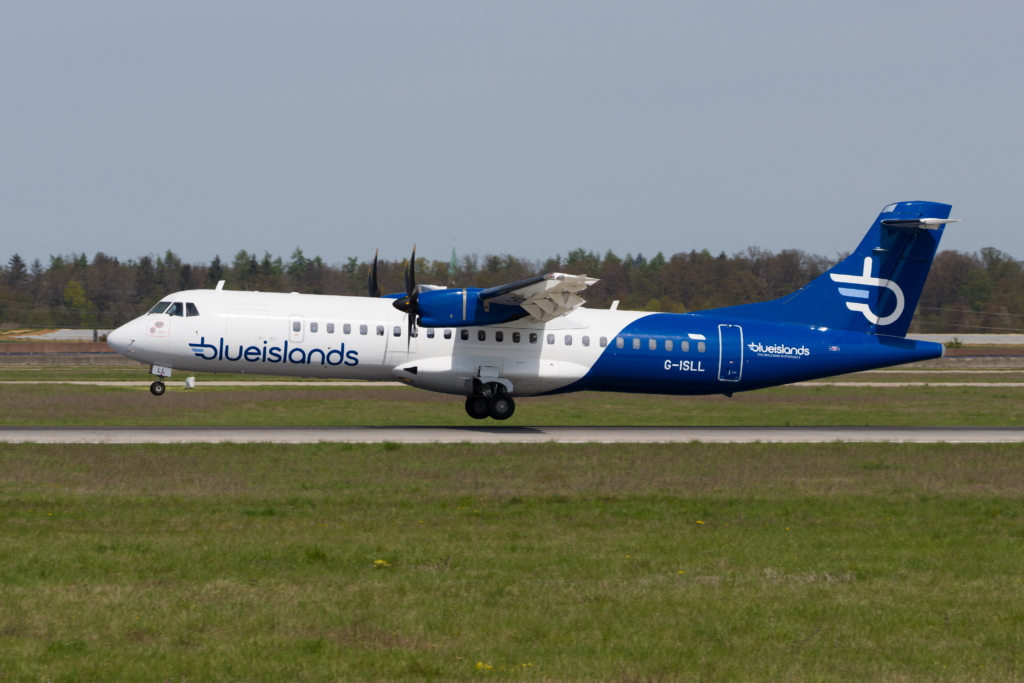
Deploying “the right aircraft for the right route” is critical. However, the range of available regional aircraft is shrinking, and the availability of spare parts is also a challenge.
“There isn’t the choice there once was,” Saunders continued. “Regional aviation will remain important for a long time, but aircraft availability is becoming more limited.”
Similarly, supply chain constraints on spare parts are also impacting airline operations. Saunders referenced his time at Flybe, noting that the airline encountered difficulties operating the Dash 8-400 due to a shortage of spare parts following the pandemic. Even newer aircraft, such as the ATR 72-600 operated by Aurigny, are experiencing supply-chain constraints.
By adjusting fares and operating two daily rotations (down from three previously), Aurigny has increased passenger demand on the Jersey–Guernsey route.
“We overshot our target in January with passenger numbers up 17% year-on-year, and February has seen a 32% increase.”
AI platforms could reshape regional airline networks
Beyond traditional airline models, new digital platforms could also reshape regional connectivity.
Tomi Lang, managing director at aviation technology company Vini, described how artificial intelligence could help identify untapped demand and connect smaller communities with available aircraft.
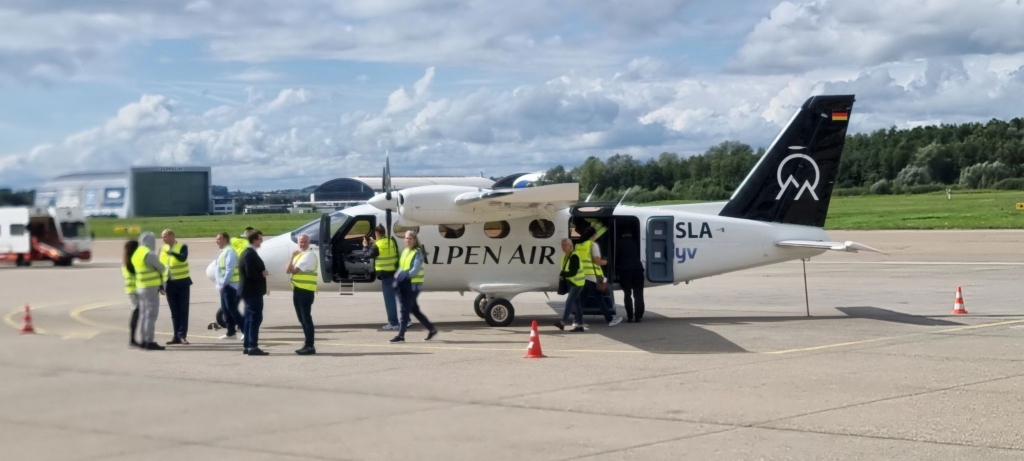
“We already have more than 150,000 search requests on our platform,” Lang said. “But we don’t yet have enough aircraft capacity to fulfil that demand.”
The platform analyses search patterns to predict demand and distribute traffic to partner airlines. “We are onboarding our first business aviation operator now,” Lang said. “AI can identify where people are searching for flights in real time and target those markets automatically.”
Where eVTOLs and electric aircraft fit into regional aviation
Longer term, emerging aircraft technologies, including electric vertical take-off and landing (eVTOL) vehicles, could further transform regional mobility.

Jam Hartley, founder of Beat Aviation, said future networks will likely combine multiple aircraft types depending on local infrastructure.
Communities with aerodromes could use conventional fixed-wing aircraft or rotorcraft, while others might rely on seaplanes or eVTOL vehicles.
However, regulatory and certification timelines mean widespread adoption in the UK is still some way off, as Hartley admitted, “We won’t see eVTOL operations in the UK for quite a while,” Hartley said. “But they are coming.”
Integrated air mobility to power the future of regional aviation
Looking ahead, panellists predicted a more integrated air mobility ecosystem combining business aviation, regional airlines and emerging technologies integrated with multimodal transport links.
Hinkles warned that structural challenges still threaten the regional aviation sector. “The number of airlines in the UK has more than halved,” he said. “It is increasingly difficult to be a small airline.”
The CAA’s Kendrick also pointed out that a thriving regional aviation sector in the UK also needs to factor in supporting airports, FBOs and the wider ecosystem.
Despite those challenges, regional aviation remains essential to economic connectivity, with collaboration between business aviation, small regional operators and regulators key to sustaining it.
“Regional aviation is vital,” Saunders concluded. “It should be cherished and supported so it can thrive.”
Featured image: Gulfstream