UK deploys HMS Dragon and Wildcat helicopters to defend Cyprus from drone attacks

March 3, 2026
UK Prime Minister Sir Keir Starmer has confirmed that Britain will deploy a warship and helicopters to Cyprus, following a drone attack on its base there.
An Iranian drone hit RAF Akrotiri on Monday, 2 March. The main airport at Paphos was evacuated and closed, although operations have since returned to normal.
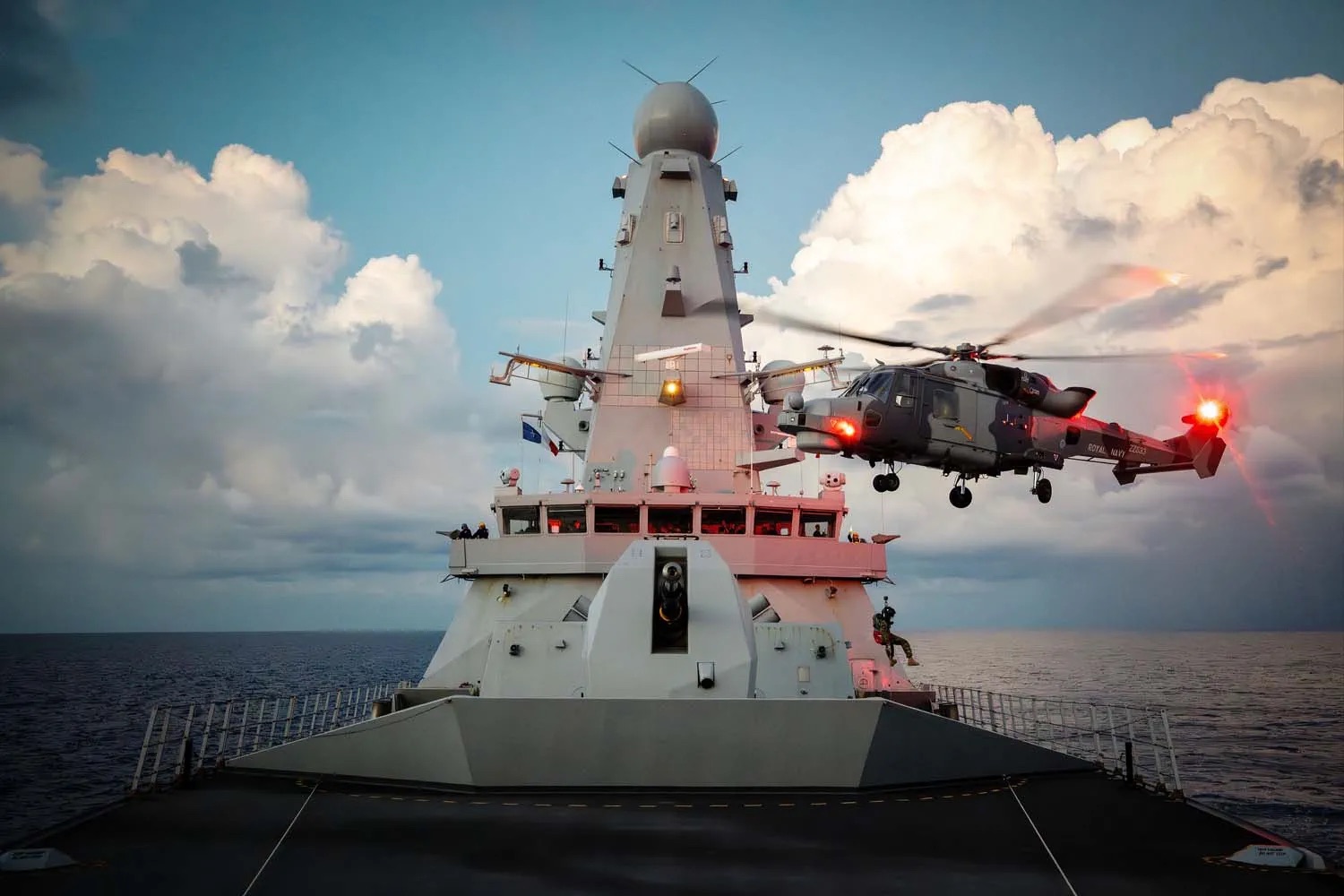
Starmer confirmed that the UK would send HMS Dragon, one of its six Daring-class air-defence destroyers built for the Royal Navy. Alongside this, he noted the deployment of helicopters with counter-drone capabilities.
The UK is fully committed to the security of Cyprus and British military personnel based there.
— Keir Starmer (@Keir_Starmer) March 3, 2026
We’re continuing our defensive operations and I've just spoken with the President of Cyprus to let him know that we are sending helicopters with counter drone capabilities and HMS… pic.twitter.com/0tsZb4dG2i
The helicopters are understood to be Leonardo AW159 Wildcats, equipped with the Martlet Lightweight Multirole Missiles (LMM).
Britain sends in Wildcat helicopters to counter Iranian drones in Cyprus
According to the World Air Forces directory, the Royal Navy has up to 35 Wildcats at its disposal. However, with a limited range of around 420 nmi, flying to Cyprus is not an option.
HMS Dragon can take up to two AW159 Wildcats on deck, and realistically, this is probably all that’s headed to Cyprus. Nevertheless, the combination of the Wildcat and the LMM presents a formidable defence against further drone attacks from Iran.
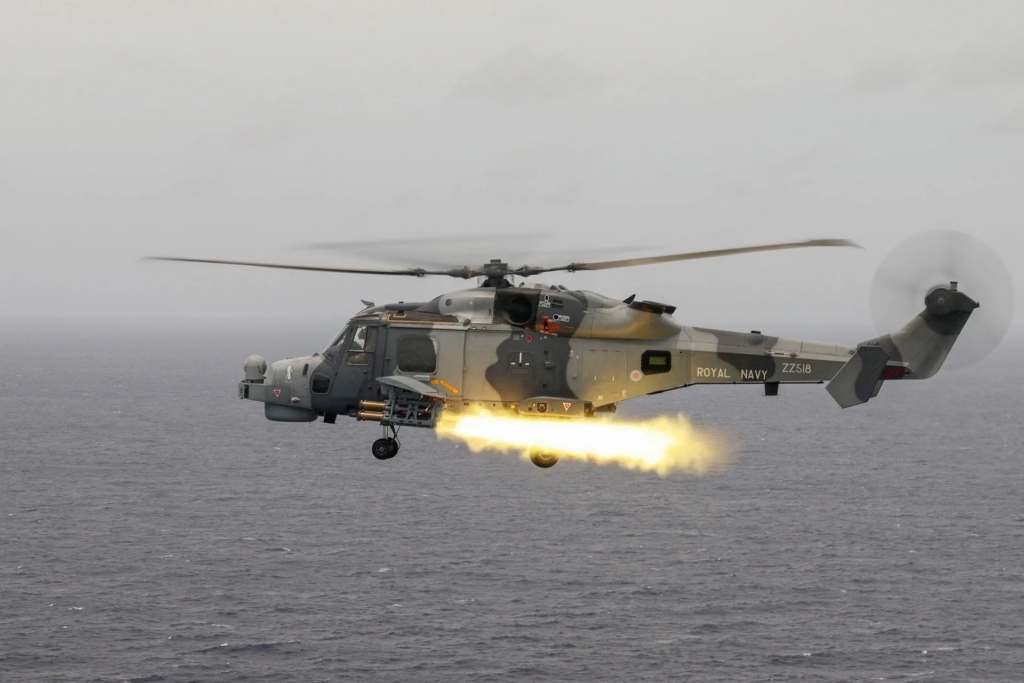
Martlet, developed by Thales, is a 13kg lightweight missile, integrated onto the AW159 Wildcat HMA2 via its wing-mounted weapon pylons. Up to 20 LMMs can be carried per helicopter.
Cued by the Wildcat’s radar and electro-optical/infrared sensors, the crew designates a target and maintains a laser beam projected from the helicopter. The missile ‘rides’ that beam to impact rather than using its own seeker, making it resistant to jamming and well-suited to small, low-signature threats.
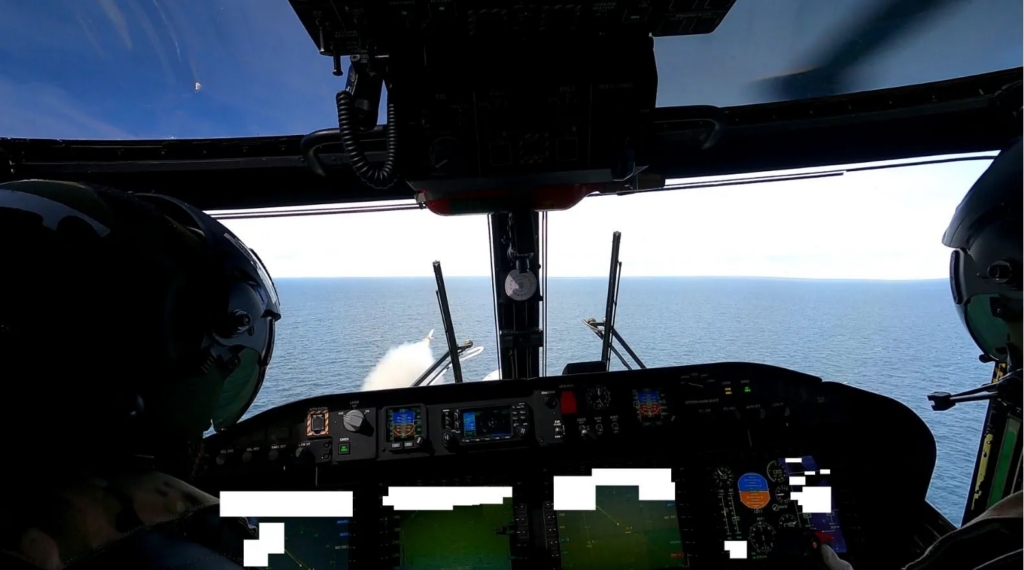
The Royal Navy has tested the combination of the Martlet and the Wildcat previously, most recently in France under Exercise Wildfire. The four day excercise saw the Wildcat detect and engage small, fast, uncrewed aerial systems (UAS), alongside French NH-90s and Dassault Rafales.
Lieutenant Commander Rhydian Edwards, Officer in Command of the Operational Advantage Group Wildcat Maritime Force, described destroying the drones as “like trying to kill a fly with a laser-guided dart.”
Nevertheless, Edwards was suitably impressed with the capabilities of the technology, which he described as having a “phenomenal ability to persecute fast-moving uncrewed systems”.
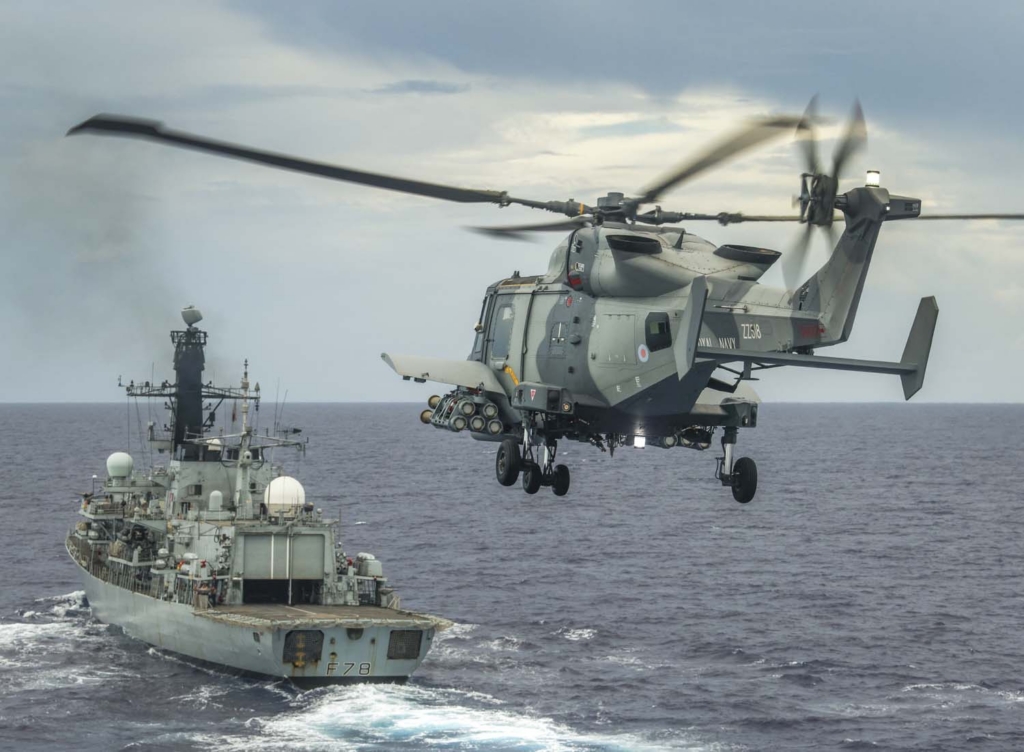
Iran’s drone strikes on Cyprus are not originating in Iran. Intelligence suggests pro-Iranian forces in Lebanon are behind the attacks. Fielding a ship-borne helicopter like the Wildcat will give the Navy flexibility to intercept incoming threats well before they reach Cypriot shores.
France deploys Rafales to UAE and bolsters Cyprus drone defence
It’s not just the UK that has been suffering damage to its overseas bases in the Iran conflict. A French hangar in the UAE was hit by a drone, as reported by BFM, although politicians were quick to point out it was not necessarily a targeted strike.
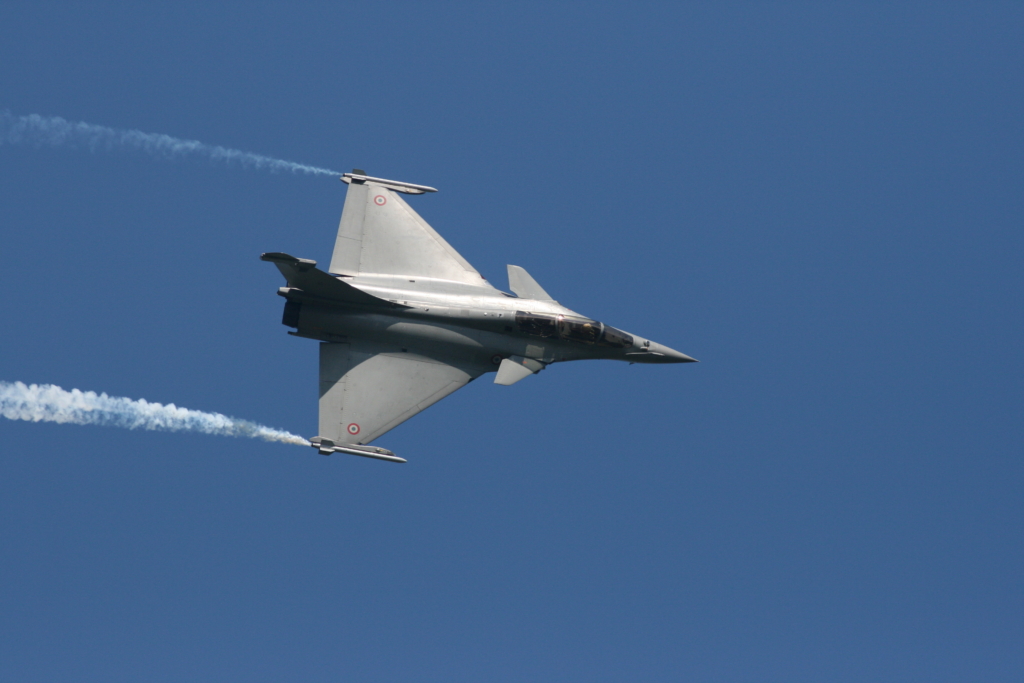
Nevertheless, France has responded. Dassault Rafale fighter jets, stationed at the Dhafra base outside Abu Dhabi, mobilised on Tuesday, 3 March, to begin conducting air security missions over the UAE.
According to Politico, France is also sending anti-missile and anti-drone systems to Cyprus, as well as a frigate.
Greece has already ordered a military force to Cyprus following Monday’s drone incursion, and has stationed there four F-16s and two frigates.
Cyprus stands as an example of how quickly conflict in the Middle East can spill over into European bases, and how rapidly the alliance responds to such threats.
Featured image: Royal Navy