20 fatalities as Turkish Air Force C-130 breaks apart mid-air

November 11, 2025
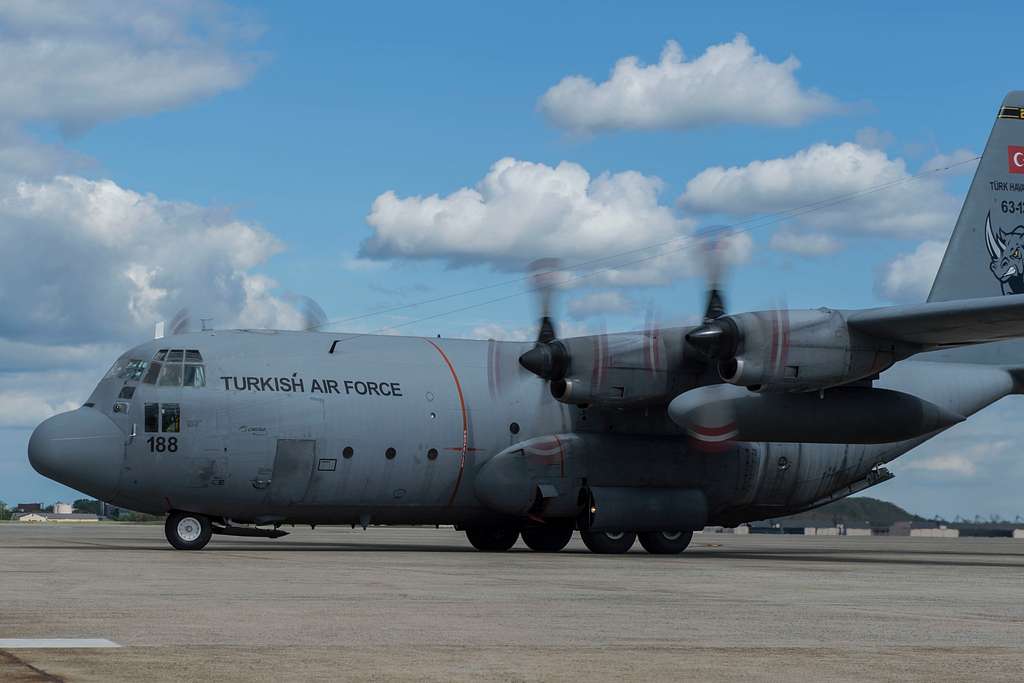
Earlier today, 11 November, a Turkish Air Force C-130 Hercules crashed in the border region of Azerbaijan and Georgia.
The aircraft had departed from Azerbaijan and was en route to Turkiye when the accident occurred. The plane went down near the municipality of Sighnaghi in Georgia, close to Azerbaijan’s border.
Footage of the incident shows the aircraft descending towards the ground in pieces, with the cockpit and empennage separated from the centre wing box, although the wings stayed fixed to a portion of the fuselage.
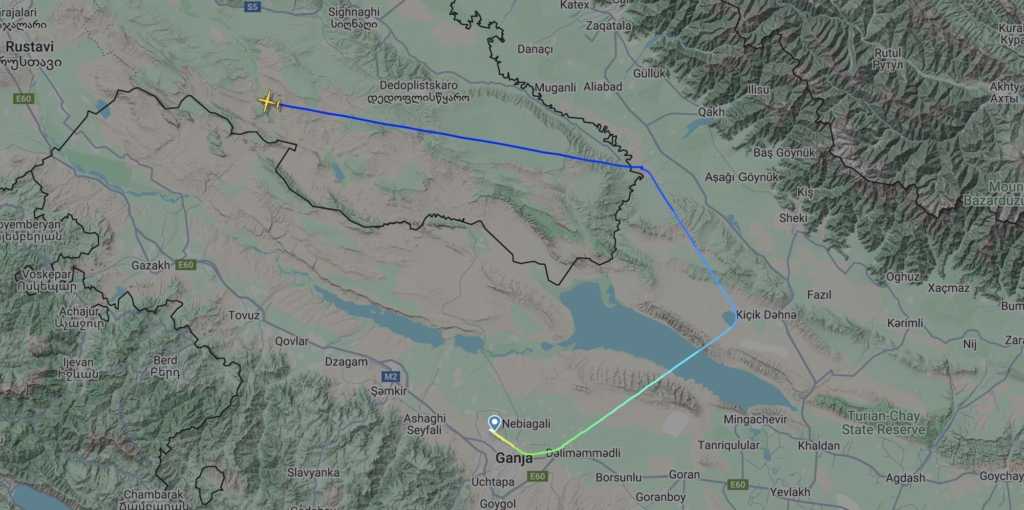
According to data from Flightradar24, the aircraft was flying under call sign TUAF543, and had departed Ganja International Airport in Azerbaijan at 10:19 UTC. The aircraft climbed continuously to its cruising altitude of 24,000 ft. The last ADS-B signal received by Flightradar24 occurred at 10:49:20 UTC.
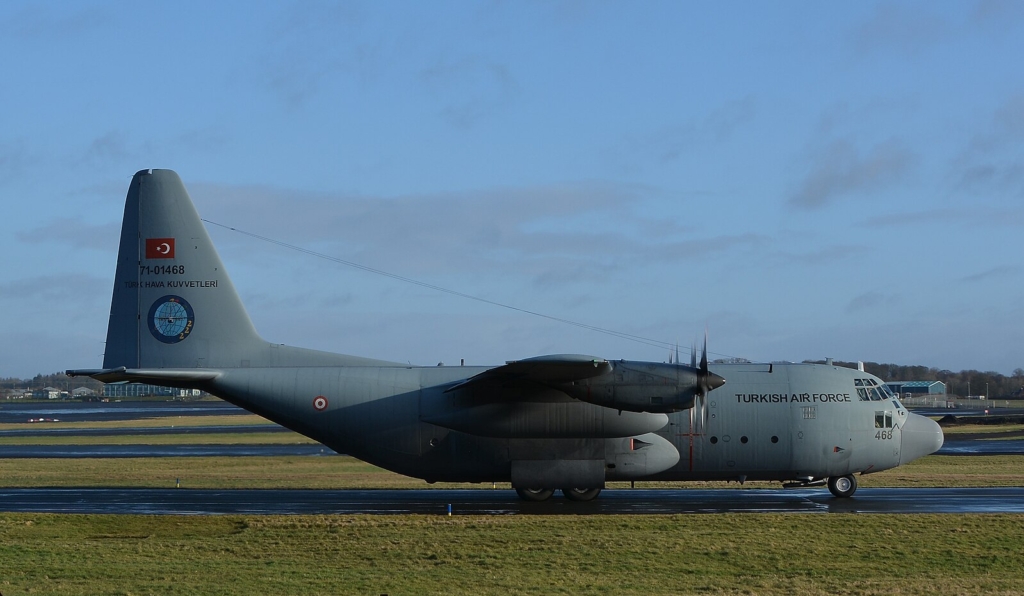
The aircraft was registered 68-01609, and is a Lockheed Martin C-130E Hercules, originally delivered to the Saudi Royal Air Force in the late 1960s. It was taken on by Turkiye in 2010 and is 56 years old.
20 personnel killed in C-130 crash
The Defence Ministry of Turkiye has said 20 people, including the flight crew, were on board the Hercules at the time of the crash. Later reports confirm that all 20 perished in the accident.
The wreckage was found in a mountainous area near the Sighnaghi municipality, around 40 miles from the Azerbaijan border. Emergency teams were dispatched from Turkiye, Georgia and Azerbaijan, but poor visibility initially hampered the search and rescue efforts.
The Georgian Interior Ministry confirmed that no survivors were found.
President Erdogan said he was “deeply saddened” by the crash and expressed his condolences for the “martyrs.”
“Türkiye deeply appreciates the coordination and assistance provided by Georgia’s government and emergency teams,” he stated.
Mechanical fault probed in Turkish C-130 crash
As with any aviation accident, the investigation will take time, but the nature of the break-up is already raising some serious questions about what went wrong.
According to ANewZ, the age and maintenance of the aircraft are under scrutiny as part of the investigation. Experts have pointed to metal fatigue, which was deemed complicit in a 2017 mid-air break-up of a US Marine Corps KC-130.
Another option under consideration is a misloading of the cargo on board. Improperly loaded cargo could potentially shift in flight, causing imbalance and vibration, which could compromise the integrity of the fuselage.
The flight was operating near a geopolitically sensitive border region, placing it in a zone where military activity is conceivable. A hostile hit cannot be discounted entirely from a location-risk perspective.
No Accident: Theory
— OSINT Intuit™ (@UKikaski) November 11, 2025
In th first image of the falling Turkish C-130, you can see through the center of the fuselage showing empty cargo space between the wings. In the second, the forward (fore cargo bay and cockpit) and rear fuselage sections (aft cargo bay and tail) have… pic.twitter.com/4I8mXVxeQ6
Many thoughts may turn to the accidental shoot-down of Azerbaijan Airlines Flight 8243 in December 2024. The Embraer E190 was severely damaged by a Russian surface-to-air missile, crash landing near Grozy in Kazakhstan. Putin later admitted a Russian missile was responsible.
Azerbaycan'dan kalkışından kısa bir süre sonra Gürcistan'da düşen Türk Hava Kuvvetleri'ne ait C-130 tipi kargo uçağının enkazında delikler var. pic.twitter.com/rjnr9sFcjk
— 𝐉𝐨𝐮𝐫𝐧𝐚𝐥𝐢𝐬𝐭 (@HamdiCelikbas) November 11, 2025
However, as yet, there have been no reports of missiles tracked or any military activity in the area, and no actors have come forward to claim or deny involvement.
Once the wreckage has been fully inspected, the cause of the C-130 mid-air break-up will likely become clearer.