Taiwan grounds F-16s and presses US to fast-track aircraft anti-collision software

January 8, 2026

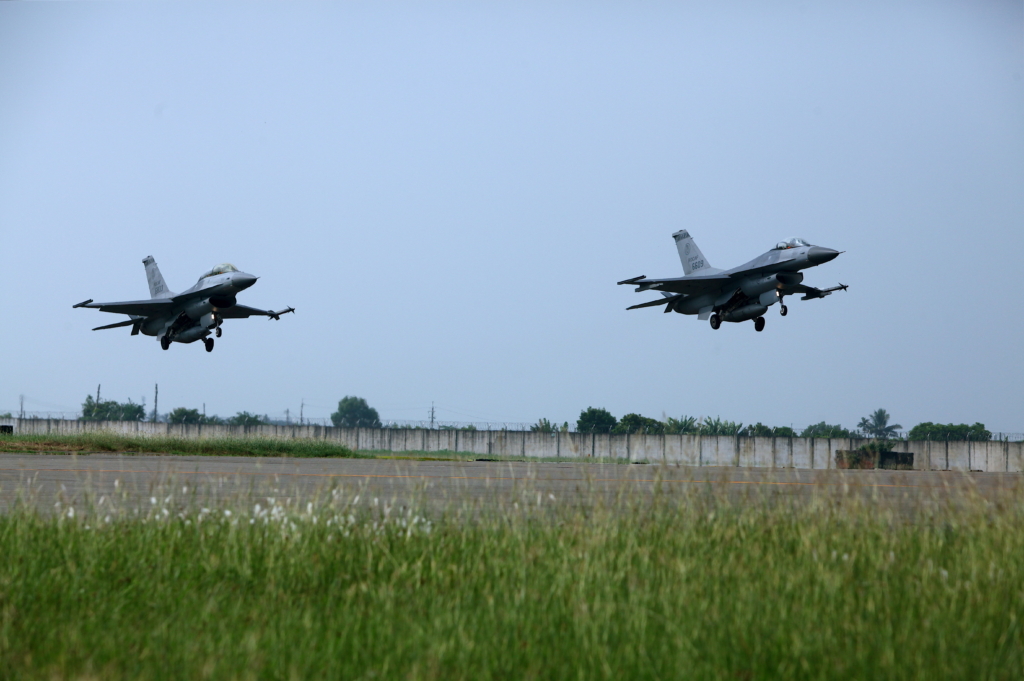
Taiwan has grounded its entire F-16 fighter fleet after one of its newest F-16V jets disappeared during a routine patrol last week. Neither the aircraft nor its pilot has yet been found.
As search efforts continue, the incident has sharpened concerns about flight safety across Taiwan’s most important combat aircraft. In response, Taipei is urging the United States to accelerate the rollout of a piece of software designed to prevent crashes.
Taiwan F-16 loss spurs renewed call for Auto-GCAS
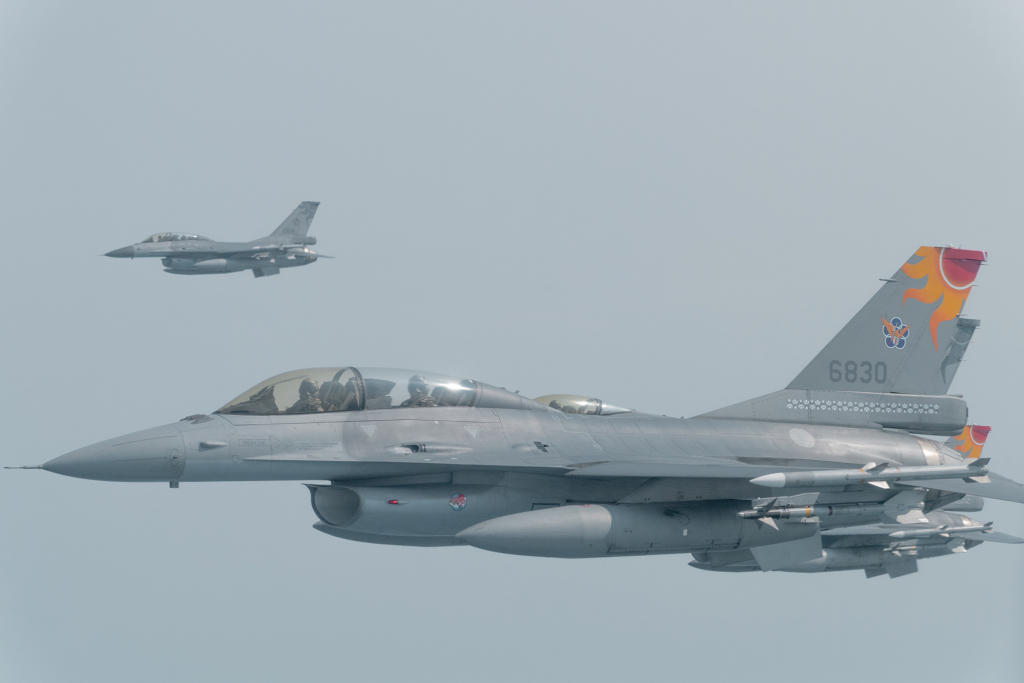
Following the loss of a Taiwanese Lockheed Martin F-16V fighter jet off the island’s east coast, Taiwan is urging the United States to accelerate work to install aircraft ground-collision protection software across its F-16 fleet, according to local media.
The Taipei Times reports that Taipei wants Washington to fast-track the installation of the automatic ground collision avoidance system, or Auto-GCAS, after the latest loss prompted renewed safety concerns.
Currently, the plans are for the system to be completed in 2028, but Taipei wants to speed this along following the latest crash. The Taipei Times says Taiwan is aiming to complete the process of installing Auto-GCAS by the end of the year, if possible.
Taiwan’s Inspector General Chiang Yi-cheng, “We hope the work will proceed as planned, if not ahead of schedule, so that we can receive Auto-GCAS and related equipment by the end of the year.”
The push comes as Taiwan’s Air Force has grounded its entire F-16 fleet pending inspections. Neither the pilot nor the aircraft has been located, and search and rescue operations remain ongoing.
New: Taiwan's Air Force has grounded its entire F-16 fighter fleet pending inspections following yesterday’s incident off Hualien.
— Taiwan Security Monitor (台灣安全觀測站) (@TaiwanMonitor) January 7, 2026
The downed pilot has not yet been located, and search-and-rescue operations in the area are ongoing. pic.twitter.com/wuBaROi9qD
While the United States has not approved the sale of the F-35 to Taiwan, citing security and regional stability concerns, it has continued to support Taipei’s air combat capability through sales of the latest F-16V Block 70 variant. All 66 of Taiwan’s new Block 70 aircraft are delivered with Auto-GCAS already installed.
By contrast, Taiwan’s fleet of 139 older F-16 Block 20 fighters still requires upgrades to add the system.
Taiwan’s F-16 thought to have crashed in the sea
Last Tuesday, a Taiwanese F-16V (tail number 6700), piloted by Captain Hsin Po-yi (辛柏毅), crashed into the sea off Fengbin Township, Hualien County, during a routine night training flight.
The aircraft took off from Hualien Air Base at 06:17 local time, with the radar return disappearing at 07:29. The F-16 was flying at 7,600 feet but then dropped to 4,000 feet in less than a minute. The aircraft then dropped to 1,700 feet 12 seconds later. Voice recordings show Hsin shouted “preparing to eject” three times before the radar signal disappeared.
The search mission has now entered its third day, with Taiwanese authorities launching 30 aircraft sorties and using 22 naval and coast guard vessels.
F-16 crash updates entering 1/8:
— Taiwan Security Monitor (台灣安全觀測站) (@TaiwanMonitor) January 8, 2026
• Pilot has yet to be found, search now entering day 3.
• 30 aircraft sorties, 22 naval & coast guard vessels, 2 UAVs, and 180 ground personnel involved in search.
• All F-16s grounded, inspections expected to be completed by 1/10. pic.twitter.com/xW2vXk0LU9
According to the OSINT account, Taiwan Security Monitor, Taiwan’s F-16 fleet will remain grounded until inspections are completed, a process authorities hope to finish by Sunday.
What is Auto-GCAS anti-collision software?
According to Lockheed, Auto GCAS was developed by the US Air Force, Lockheed Martin’s Skunk Works, and NASA, and is designed to reduce incidents of “controlled flight into terrain, or CFIT.”
Lockheed says around 26% of all aircraft losses are CFIT, which claim the lives of around 75% of all F-16 pilot fatalities. Auto GCAS is a safety system that will automatically pull up and avoid a collision with the ground (or sea) if it determines the pilot is unresponsive. The pilot does have the ability to override the system.
The system first entered service with the US Air Force in 2014, and Lockheed claims it has now saved the lives of around 12 pilots (a figure that may not be updated). It is now installed on hundreds of US F-16s and F-35s. The USAF and RAF are currently working to develop new F-35 software to avoid civil aircraft.
Featured image: Wikimedia Commons