Meet Tacit Blue: The great grandfather of the B-21 Raider stealth bomber

December 13, 2025
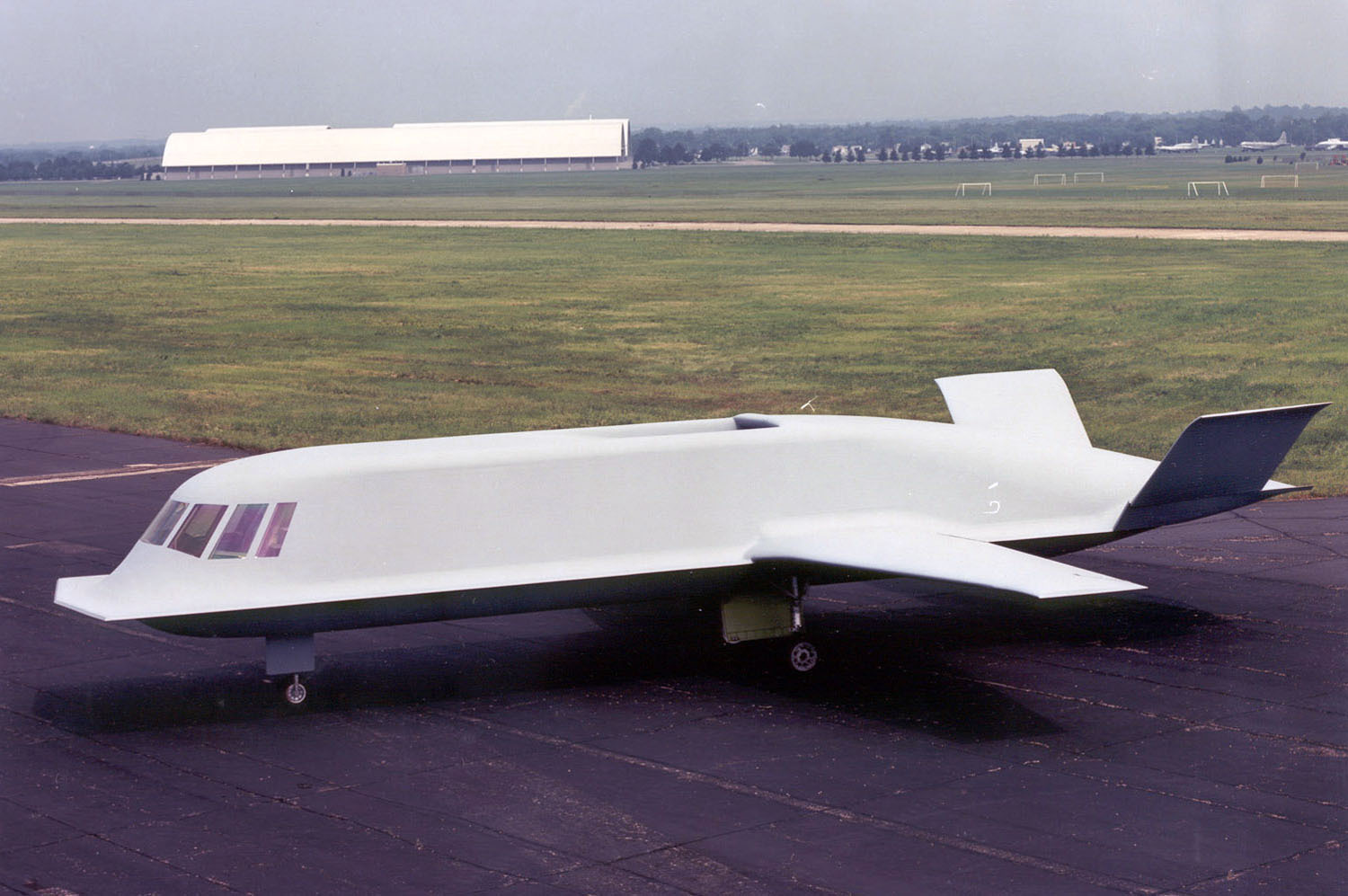
Tacit Blue may not look anything like a B-2 or B-21 flying wing bomber, but the demonstrator was key to testing technologies and concepts that would allow Northrop to develop them. With China reportedly running into design difficulties with its new Xi’an H-20 bomber (US officials don’t expect it to enter service until the 2030s), the United States remains the only country with flying wing stealth strategic bombers.
The B-21 Raider builds on the aircraft that went before
The old maxim “standing on the shoulders of giants” has much truth to it. The US Air Force recently received its second representative Northrop Grumman B-21 Raider stealth strategic bomber for testing.
While the B-21 Raider may superficially resemble the B-2 Spirit, it represents a generational leap over the 1990s-era bomber. The similarity is such that Trump apparently repeatedly referred to it as an “updated B-2”.
But the B-21 is more than a straight update of the B-2. For example, in the intervening time, Northrop Grumman has been innovating and perfecting its stealth flying wing designs with unmanned ISR aircraft like the RQ-170 and the widely rumoured RQ-180.
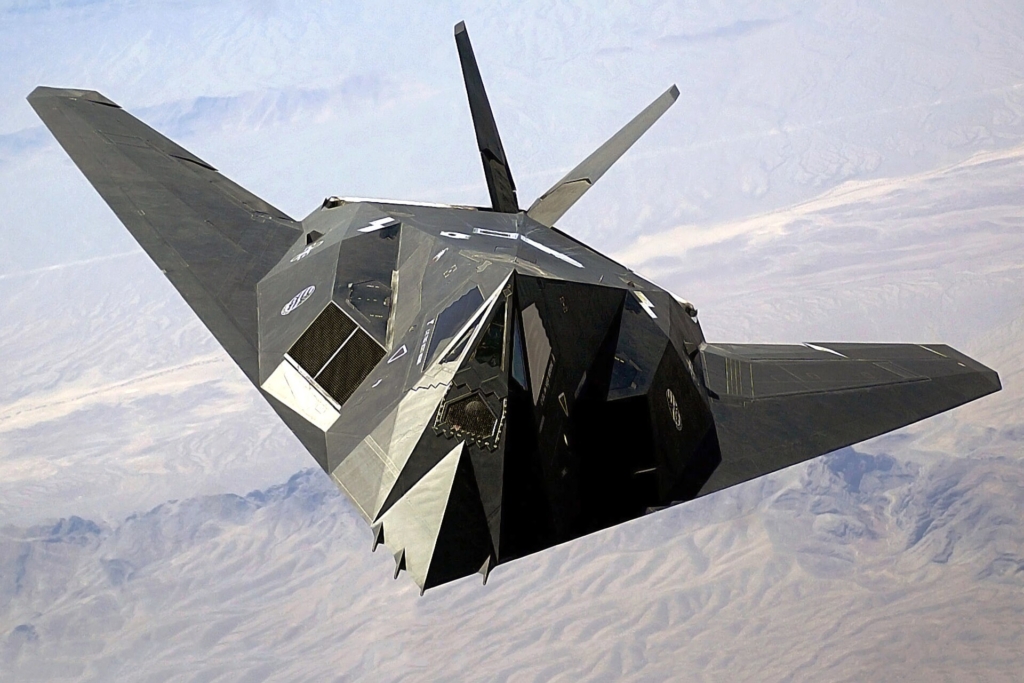
The B-21’s predecessor, the B-2 Spirit, also didn’t just pop into existence in a vacuum; before it, the US Air Force had developed the stealthy F-117 Nighthawk that was operationally more of a bomber than a fighter.
Between the B-2 Spirit and the F-117 Nighthawk was another programme, the top-secret Northrop Tacit Blue.
Get the latest aerospace defence news here on AGN.
From RCS to all aspect stealth
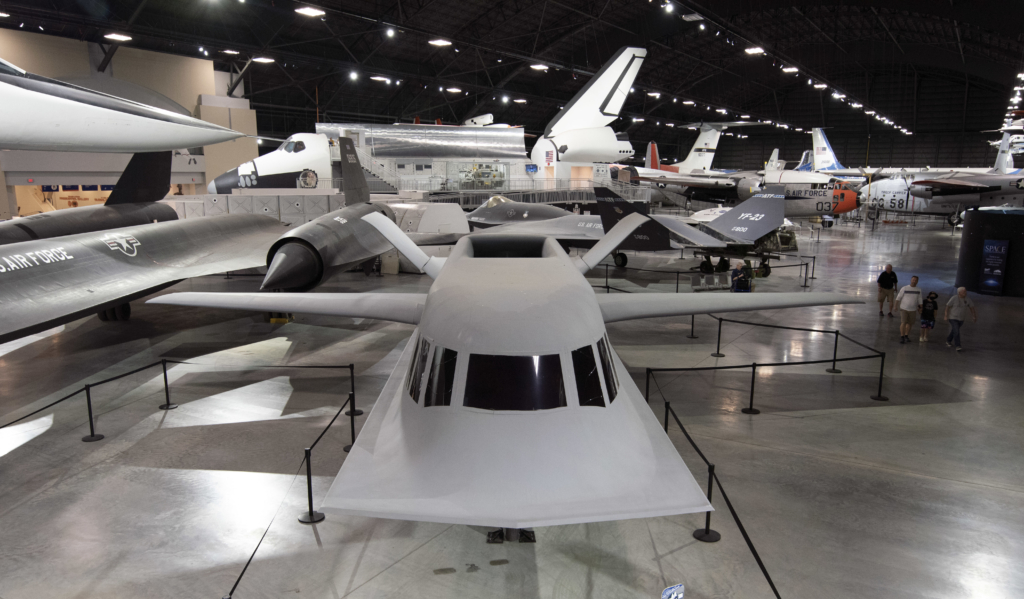
The National Museum of the United States Air Force says Tacit Blue was built in the early 1980s “in great secrecy.” It says, “the revolutionary Tacit Blue aircraft tested advanced radar sensors and new ideas in stealth technology.”
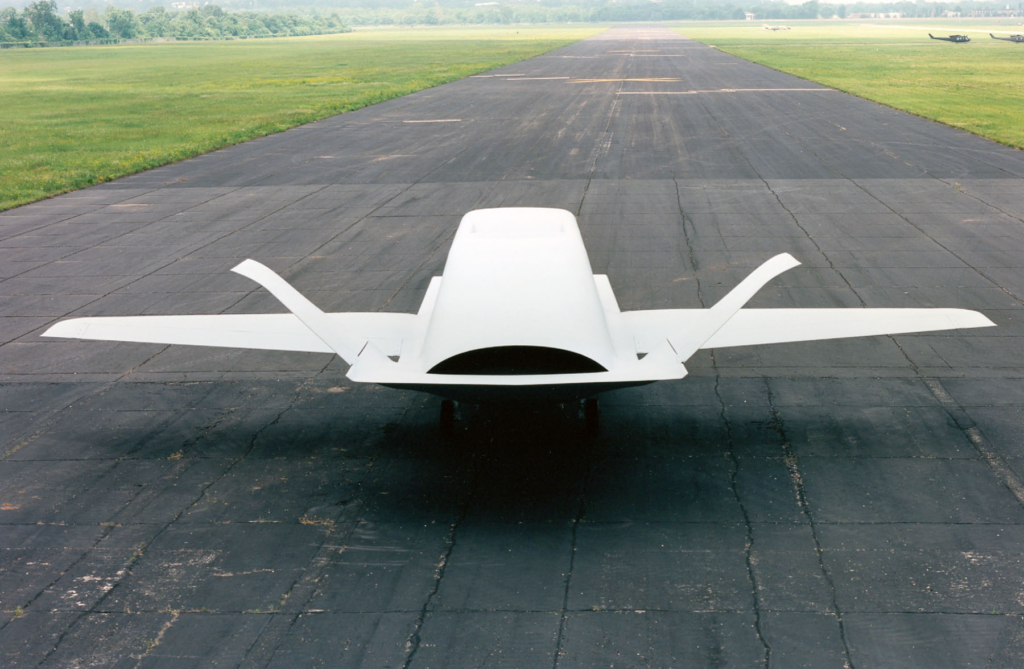
The experimental aircraft was built by Northrop. It turns out that not all Cold War black projects were Lockheed’s Skunk Works.
Whereas the earlier F-117 Nighthawk is noticeable for its faceted surfaces, Tacit Blue demonstrated that a stealthy aircraft could have curved surfaces.
Among the developments in Tacit Blue was also minimising the aircraft’s heat signature from the engines’ exhausts. While much discussion online focuses on stealth from a radar cross-section (RCS) standpoint, there is much more to a low-observable aircraft’s features than that.
Aircraft can be detected by their infrared signature from their engines, from the sound of the aircraft, from emissions of an aircraft’s onboard radars, and more. With the Tacit Blue, the Air Force was able to progress towards all aspect stealth.
The USAF Museum states, “With its low, ‘all-aspect’ radar signature, Tacit Blue demonstrated that such an aircraft could loiter over — and behind — the battlefield without fear of being discovered by enemy radar. ”

The aircraft was also designed with sensors that could function without giving away the aircraft’s location, allowing it to quietly monitor enemy forces, even behind the lines. It could then transmit that information through data links back to a ground command centre. Its sensors were able to function through clouds.
Tacit Blue allowed for aerodynamic instability
Tacit Blue was also able to take advantage of a new technology, a digital fly-by-wire system. Previously, aircraft had to be designed with aerodynamic stability in mind, and this was a major reason why the period saw many variable sweep wing aircraft developed, including the B-1 Lancer and F-14 Tomcat.
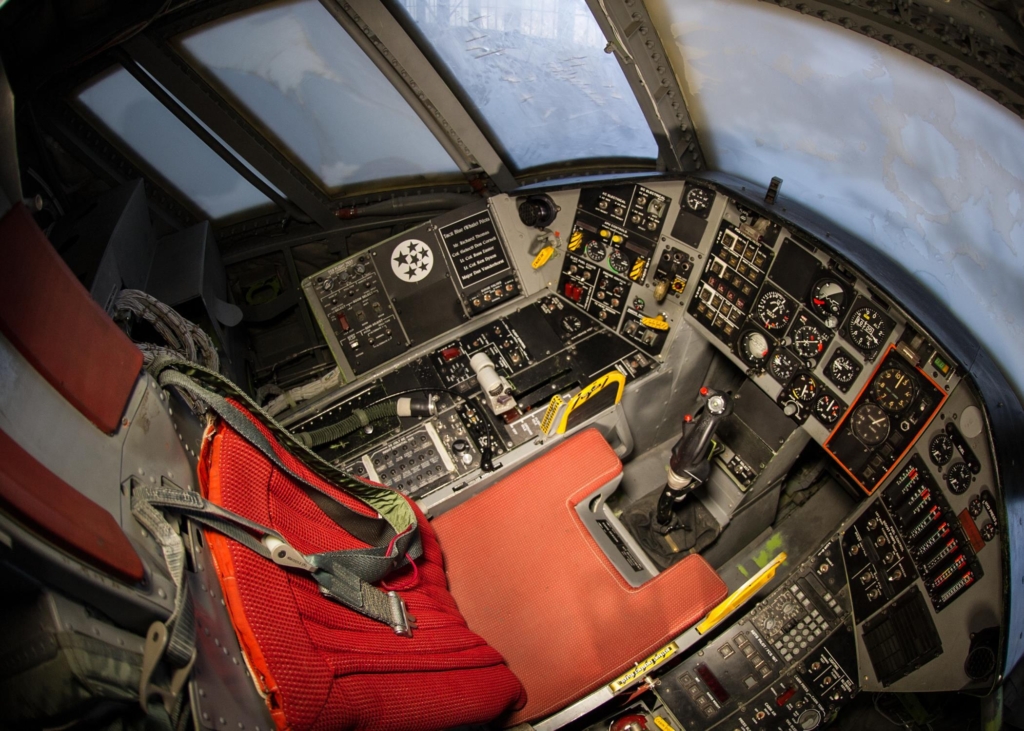
Fly-by-wire enabled aircraft, like Tacit Blue, to be aerodynamically unstable. The F-16 Fighting Falcon was the first fighter jet to include fly-by-wire controls, and today, most high-performance fighter jets, like the F-22, would be virtually impossible to fly without it.
From run, to ‘you can’t run, but you can hide’
The Tacit Blue programme greatly influenced the development of the Northrop B-2 Spirit, including its curved surfaces. It was designed to be a low-observable stealth surveillance aircraft with a low-probability of intercept radar (LPIR).
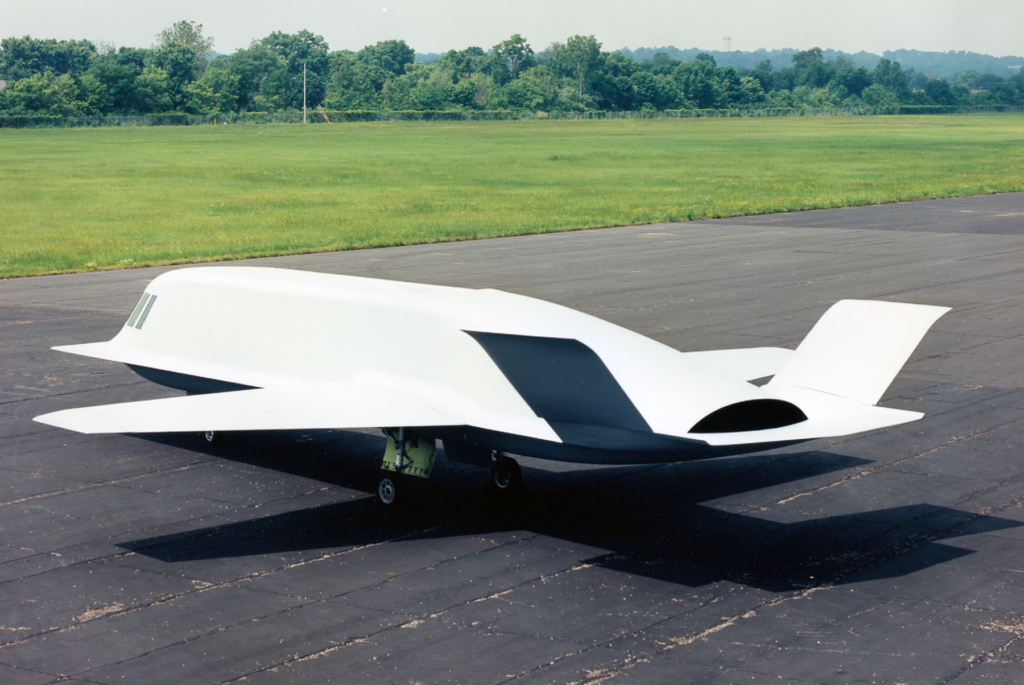
The programme was part of a larger trend in the Air Force to stealth over speed. The Lockheed SR-71 Blackbird may be a favourite of enthusiasts for its impressive and unbeaten Mach 3, but it was an outlier.
The early North American XB-70 Valkyrie became an early high-profile example of speed not offering the survivability over contested airspace that had been imagined. By the time its prototypes were flying, advancements in Soviet SAMs meant it was already obsolete.
Now, most military aircraft are built to hide. Whereas the F-4 Phantom II was built with a max speed of Mach 2.2, the F-35 maxes out at Mach 1.6. The B-1 Lancer can make Mach 1.25, but the B-2 and B-21 are both subsonic.

Meanwhile, the Lockheed U-2 Dragon Lady also showed that flying high was not a defence against surface-to-air missiles. Francis Gary Powers was famously shot down by the Soviets in 1960 as he flew at 70,000 feet.
Tacit Blue on display in Ohio
The Tacit Blue demonstrator flew 135 times before retiring in 1985 (its first flight took place in 1982). Besides the B-2, technology from Tacit Blue informed other aircraft and systems, including the radar used by the E-8 Joint STARS aircraft.
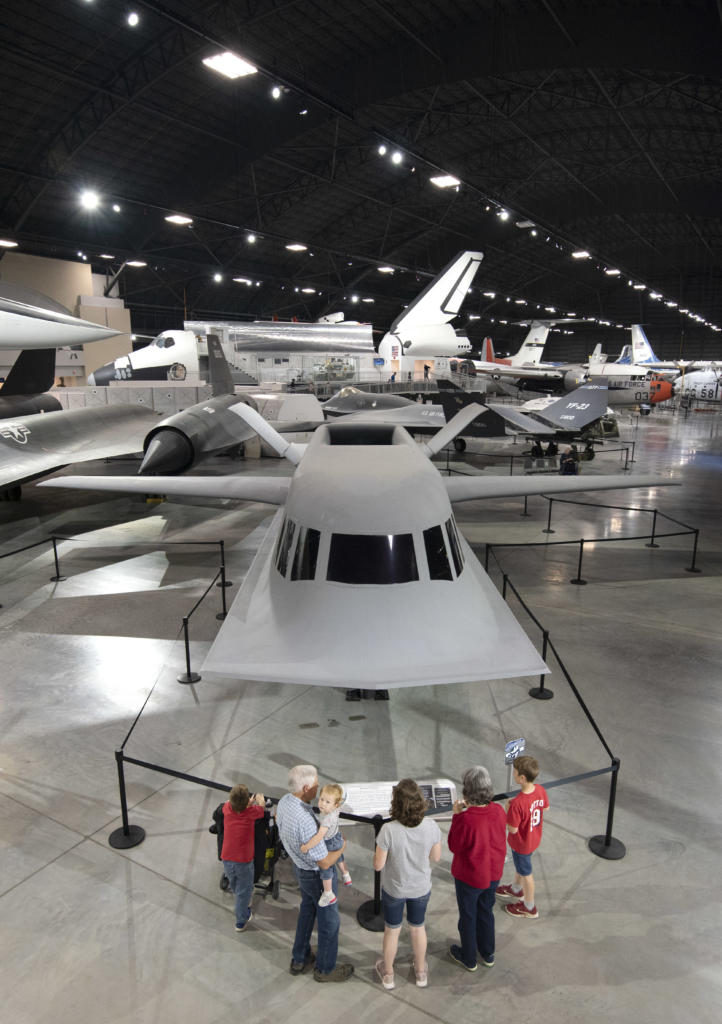
In 1996, one year before the B-2 entered service (the first had been delivered in 1993), the aircraft was declassified and placed on display at the Air Force museum, where people can see it today in Dayton, Ohio.
Only a single demonstrator was ever built, and it had a design operational speed of 287 mph and an altitude of 25,000-30,000 feet. It weighed 30,000 lbs and was powered by two Garrett ATF3-6 high-bypass turbofan engines.
A U.S. Air Force B-1B Lancer assigned to the 28th Bomb Wing, Ellsworth Air Force Base, South Dakota, flies over the National Mall in Washington, D.C., July 4, 2019. (U.S. Air Force photo by Airman 1st Class Helena Owens)
— Airpower (@RealAirPower1) August 25, 2023
While many new aircraft designs are surfacing in China, it is worth keeping in mind that it is frequently unclear if these are mockups, demonstrators, prototypes, or representative serial-production examples.
The US is known to have black box programmes that have still never been seen; perhaps the most famous is the open-secret massive RQ-180 ISR drone. Skunk Works previously said it was developing a hypersonic successor to its SR-71, but that programme has gone dark for years.
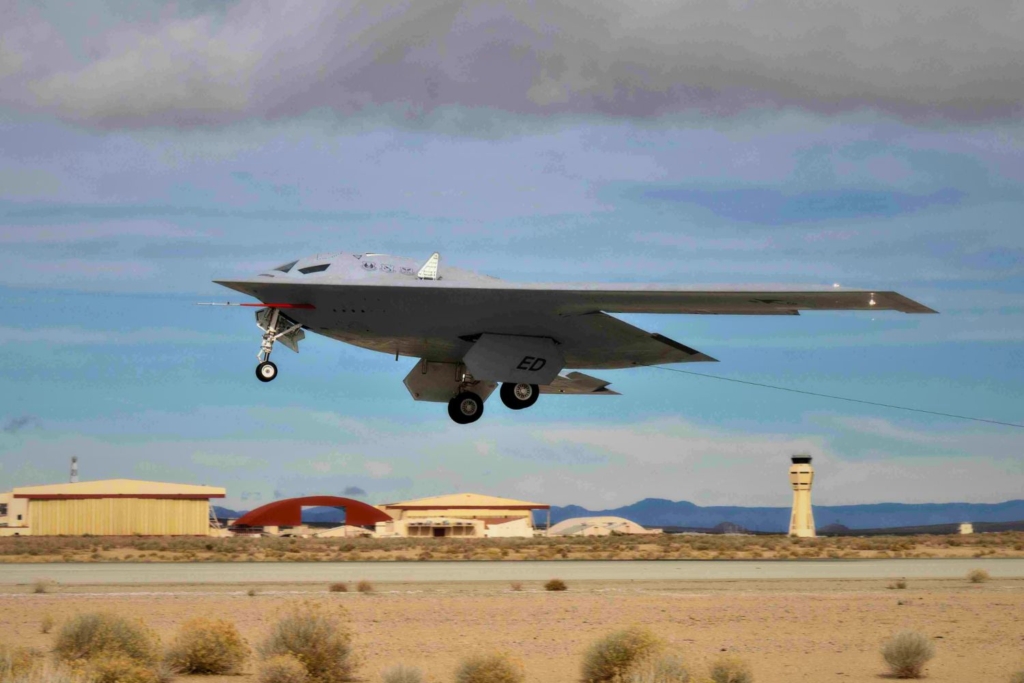
In 2020, the US Air Force flew Lockheed Martin, Boeing, and Northrop Grumman demonstrators for the 6th-generation NGAD programme (now Boeing F-47). None of these demonstrators has been seen in public or in pictures released.
Time will tell what other secret technology demonstrators like Tacit Blue are waiting to be declassified.
Featured Image: National Museum of the United States Air Force