What makes a fighter jet truly stealthy? A guide to the world’s top low-observable aircraft

November 30, 2025
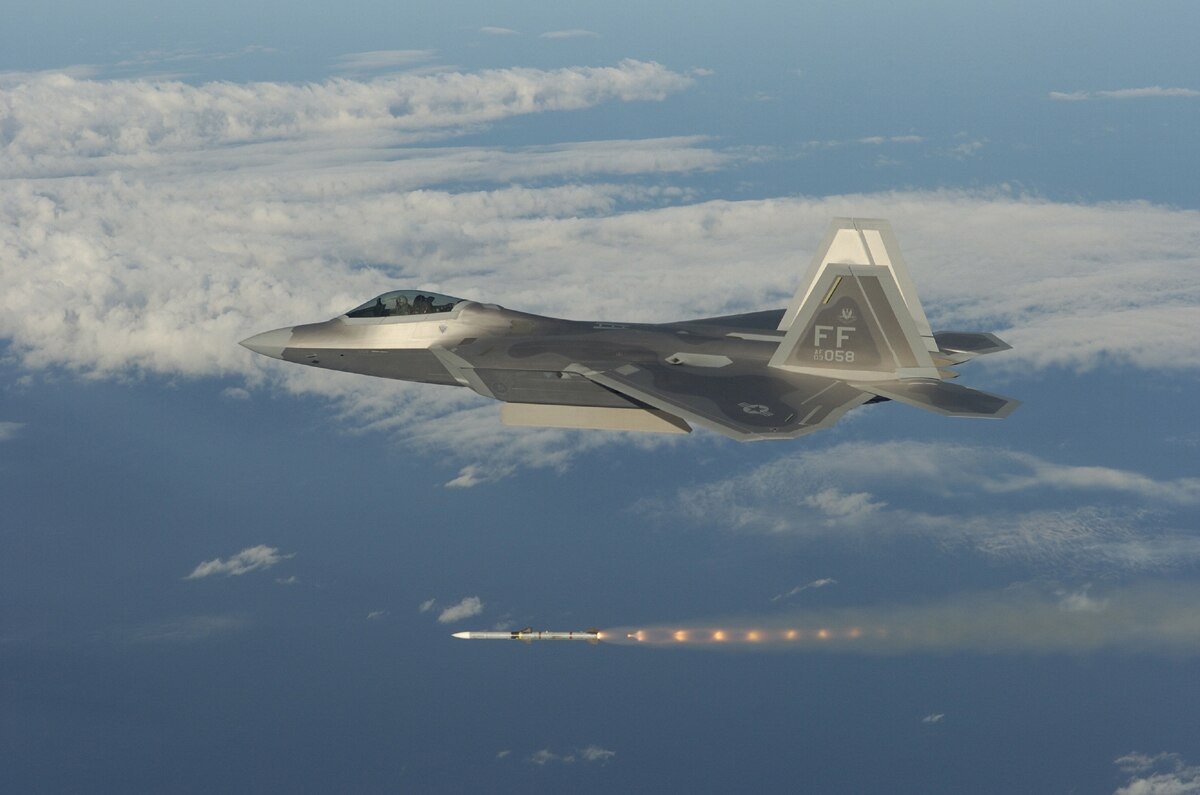
Only five fighter jets today are generally considered fifth-generation fighter jets, although this paints a too simplistic picture. A true stealth fighter combines low RCS, infrared cross section, acoustic reduction, visuals, electromagnetic emissions, and operational signature.
Stealth is a complicated spectrum
Stealth is more accurately termed low observability and is much more than just radar cross-section (RCS). The five fighters typically called 5th-generation stealth fighters are the F-22, F-35, J-20, J-35, and Su-57. The J-35 first entered service in 2025, making it the fifth aircraft to join the exclusive list.
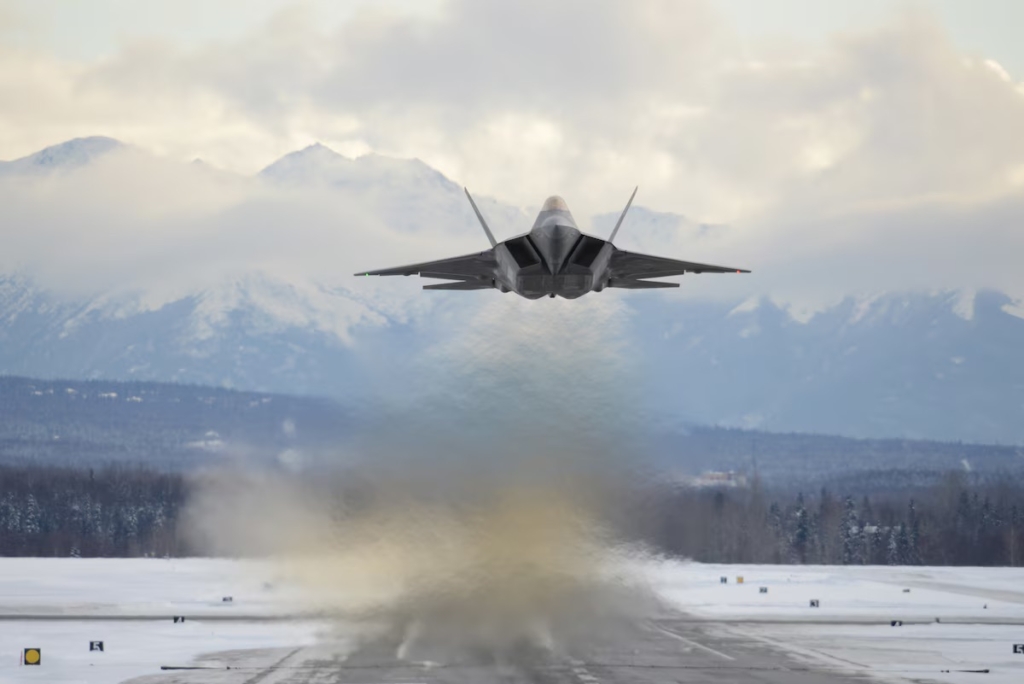
The first ‘stealthy’ or low-observable fighter to enter service was the F-117 Nighthawk. While designated “F” for “Fighter”, it was functionally more like a bomber. A limited number of F-117s remain in limited USAF service today.
Just because the five fighter jets above are typically labelled “5th-gen”, that doesn’t mean they are in the same class. The F-22 famously has excellent all-aspect stealth with a phenomenally low RCS. Meanwhile, the Su-57 comes in a poor fifth with a range of engineering issues limiting its effectiveness.
A U.S. Air Force B-1B Lancer assigned to the 28th Bomb Wing, Ellsworth Air Force Base, South Dakota, flies over the National Mall in Washington, D.C., July 4, 2019. (U.S. Air Force photo by Airman 1st Class Helena Owens)
— Airpower (@RealAirPower1) August 25, 2023
Additionally, 4.5th-generation fighters like the Super Hornet, F-15EX, Rafale, and Eurofighter have reduced RCS and enhanced low-observability. Stealth is more of a continuum (or confluence of multiple continuums) than a set category.
The US also has the B-2 Spirit and the B-21 Raider strategic bombers with extremely low RCS and low observability. While these are bombers, the B-21 Raider could function more as a multirole platform, potentially blurring the line between fighter and bomber more than the F-117 did.
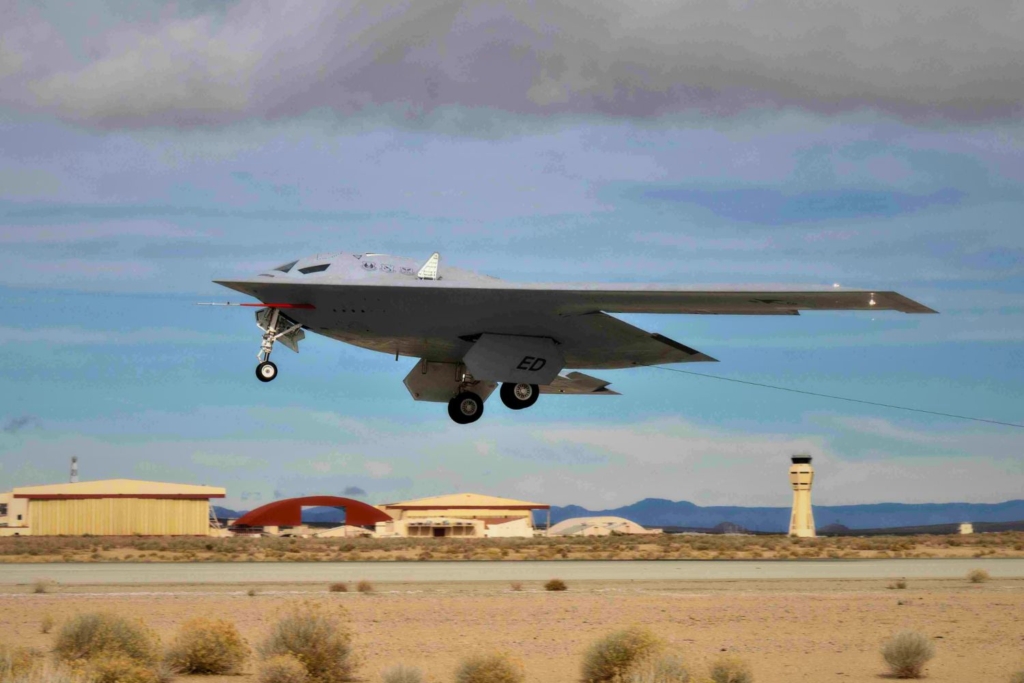
Even production numbers matter; in late 2024, RuAviation reported only 20 Su-57s had been delivered, although it added this could actually be as many as 30. By contrast, over 1,200 F-35s have been delivered with all the investment, industrial precision, and industrial learning that goes along with that, coupled with improvements from real-world use.
Measuring stealth: The lowest RCS fighter jets
The fighter jets with the lowest RCS are the F-22 Raptor and F-35 Lightning II, followed by the J-20 and J-35, and then the Su-57 (estimates are Su-57 ~0.5 m² frontal vs. F-22 ~0.0001 m² all-aspect RCS).

Radar stealth is the most talked-about aspect and is frequently misunderstood. Many stealth aircraft are optimised for a frontal reduced radar section, but are more easily detected from the sides or rear, like the F-117 found out the hard way over Serbia in 1999. The Russian Su-57 is also described as being optimised for frontal stealth.
The shaping of the aircraft’s surfaces deflects incoming radar away from the radar receiver. The F-22 Raptor was the first true stealthy aircraft that emphasised low observability across the board.
However, to maintain a stealthy profile, the F-22 (and F-35) needs to carry its ordinance internally, which limits the aircraft’s payload. Perhaps even worse is that it means they can’t carry drop tanks, dramatically affecting their range. The USAF is working on this by developing stealthy drop tanks for the F-22.
An important part of the RCS is the coatings on the aircraft and how well these are maintained. This “grey paint” is an important part of what makes the F-22 and F-35 stealthy, and is one of the US’s most closely guarded secrets.
Today’s 6th-generation programmes are working to reduce fighter jets’ stealth from all aspects.
Infrared (IR) cross section
One of the most important aspects of stealth is the heat signature from the engines. The engines on the F-22 and F-35, together with the exhaust nozzles, have been specially engineered to reduce the aircraft’s IR cross-section. These aircraft mix the hot exhaust with cooler bypass air to cool and break up the plume.

Here, Russia’s Su-57 and China’s J-20 have issues. The first Chinese J-20 fighter jets were powered by the older Russian-made AL-31F engines. China switched to the domestic and reportedly unreliable WS-10C engine as an interim measure.
However, these engines are not what the J-20 is meant to have. In 2023, China’s Global Times reported the first J-20s were spotted with the intended WS-15 engines. This was further reported on in 2024 by The War Zone. It’s unclear how many J-20s are fitted with the optimised engines.
Russia has a similar issue. The initial Su-57s produced were fitted with the older Saturn AL-41F1 afterburning turbofans. That is the same family of engine that powers some of Russia’s Flankers.

The engines are also an interim measure as Russia was unable to complete its Saturn AL-51 engine for the Su-57, which will help reduce the aircraft’s infrared cross-section. RuAviation reported in December 2024 that Su-57s are now being delivered with the new engines.
Reduced electromagnetic emissions
One of the important aspects of stealth is the type of radar the aircraft has. True stealth fighters use Low Probability of Intercept (LPI) radars and AESA waveforms. This is a major part of the Gripen E’s leap over the older Gripen C.
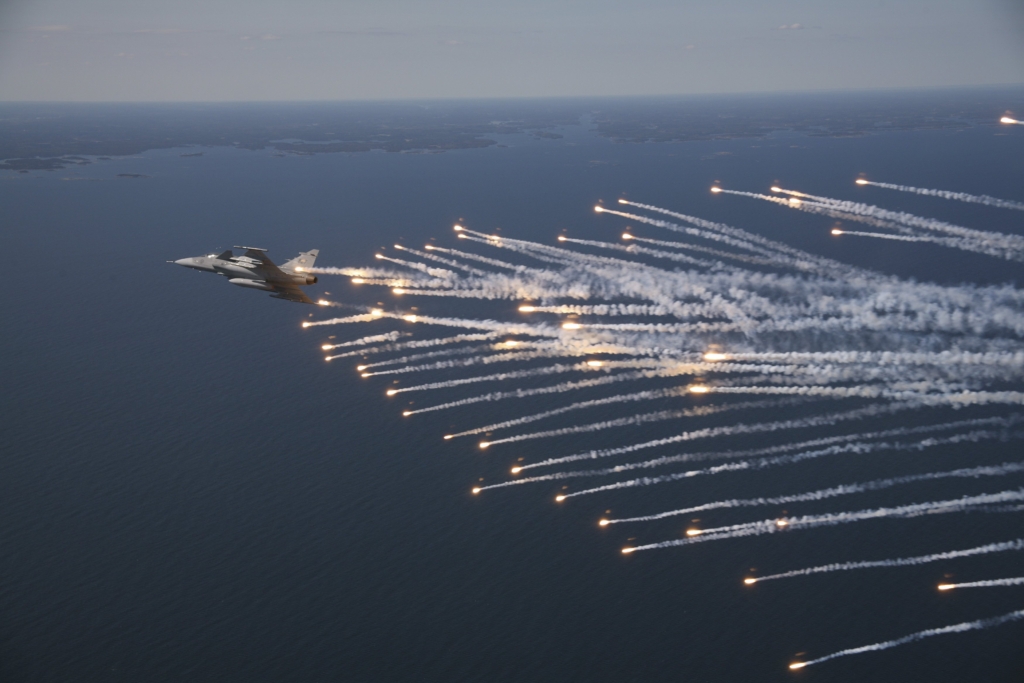
Modern low-observable aircraft have passive sensors, including Distributed Aperture Systems (DAS) and IRST, that let them maintain situational awareness while limiting electromagnetic emissions.
It’s not just about limiting electromagnetic emissions; low-observable aircraft also actively engage in jamming, deploying decoys (including virtual decoys), and other electronic tactics to reduce the aircraft’s risks of being classified and targeted.
Even networking allows an aircraft to maintain more of a stealthy profile by allowing it to rely more on other fighter jets or other assets’ sensors.
At the opposite end are aircraft like the Su-30 Flanker family, whose older PESA radar forces the aircraft to emit strong and relatively static signals that make it easier to detect.
An analogy of the wrong radar on a physically stealthy aircraft could be Harry Potter carrying the lantern out from underneath the invisibility cloak. The Su-57 uses a more advanced AESA radar.
Get the latest aerospace defence news here on AGN.
Acoustic, visual, and operational signatures
Aircraft can also be detected by the sounds they make. For example, Ukraine developed a system of detecting Russia’s Shahed-style drones by listening to their distinctive noise emissions. True low-observable aircraft reduce their noise emissions to reduce passive acoustic sensors and even human spotting.

Another way to see an aircraft is, well, to see it. The paint, shape, and contrast of the aircraft can help reduce the chance of people spotting the aircraft.
In 2024, the Military Times reported on Afghan Lt. Gen. Sami Sadat describing the first time the US Marines used the F-35 in combat in Afghanistan. He had been used to noisy F-16 Fighting Falcons and A-10 Warhogs that would show up and engage enemy targets.
But the day the F-35B arrived, it was different. He recalled being “confused,” adding that people “could hear no planes,” but the bombs fell through the clouds on target. He added Afghans were amazed and the Taliban were dumbfounded as “they have never seen planes that could bomb through the clouds.”
Other aspects of an aircraft’s stealth are influenced by training, tactics, flight routes, and when/where weapons are used. Even maintenance is a factor, with bad seals and eroded coatings diminishing stealth.
Stealth is a very complicated and nuanced topic that is very situationally dependent. For example, is the aircraft facing towards or away from the receiver? Is the fighter using afterburners? Is the aircraft carrying external payloads? What radars does it have, and are they switched on?
It is impossible to neatly categorise aircraft by low observability. Some modern 4.5th-generation fighters could boast lower observability than the Su-57 in some respects, but not in other respects.

For now, it is generally agreed that the F-22 and F-35 are at the pinnacle of today’s low-observability engineering, although they are set to be overtaken by the F-47. The F-47 will supposedly come with the RCS of an insect.
Featured Image: United States Air Force