73 aircraft gone: Spirit Airlines executes one of the fastest fleet cuts in history

February 17, 2026

Spirit Airlines has removed more than a third of its fleet in just over a year, withdrawing 73 aircraft since the start of 2025 alone as it fights to survive a second Chapter 11 restructuring.
Before its first restructuring, the ultra-low-cost carrier operated around 220 aircraft. Today, that figure stands at 125 active airframes, with further reductions expected.
In an October 2025 filing with the US Bankruptcy Court, Spirit confirmed it would reject 87 additional aircraft leases. Combined with earlier lease rejections, that brings the total number of aircraft exiting the fleet to 114, effectively halving Spirit’s pre-bankruptcy size.
But the contraction is not evenly spread across the fleet.
Spirit Airlines offloads Airbus A320neo fleet amid Chapter 11 restructuring
Of the 73 aircraft withdrawn in 2025, the overwhelming majority are Airbus A320neo and A321neo variants. Eleven A321neos alone exited the fleet last year, including aircraft delivered as recently as 2024.
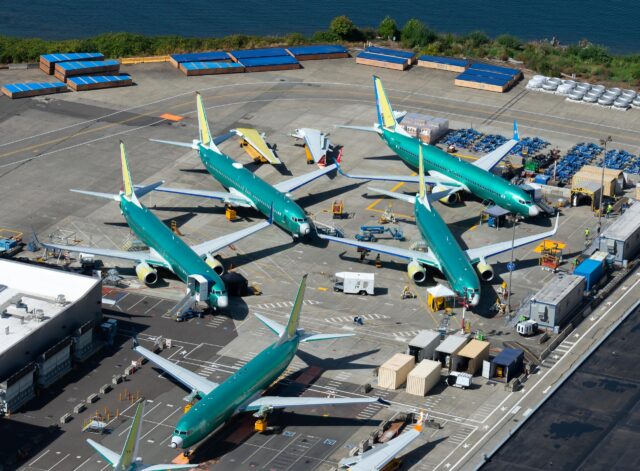
Almost all are now parked at Pinal Airpark in Arizona, the well-known storage and reclamation site that increasingly resembles Spirit’s holding ground for surplus narrowbodies.
Rather than retiring ageing metal, Spirit is shedding the very jets that were meant to power its next phase of growth.

Two aircraft illustrate the scale of the reset. MSN 10769 and MSN 10921, delivered new in December 2021 and July 2022, ceased operations in early 2025. Just four and three-and-a-half years old respectively, the aircraft are now being dismantled for parts, despite each carrying a list price above $110 million when new.
In an industry facing persistent spare parts shortages, young A320neo-family aircraft have become valuable sources of engines and components. For Spirit, however, their removal underscores how dramatically the airline is reshaping its future capacity profile.
Why is Spirit retiring young A320neo aircraft?
Spirit CEO Dave Davis has been explicit about the strategy.
“To ensure the long-term success of our company, Spirit must right-size its fleet to match capacity with profitable demand. This will mean less aircraft, but will materially lower Spirit’s debt and lease obligations and realise hundreds of millions of dollars in annual operating savings.”
The airline has said that, as of the effective date of its Chapter 11 Reorganisation Plan, it expects to retain “a leased fleet of no less than 10 and no more than 28 A320neo-family aircraft.”

Spirit currently operates far more neo variants than that. If the airline ultimately caps its A320neo-family fleet at 28 aircraft or fewer, it implies a further wave of reductions ahead and a dramatic shift in fleet mix.
Assuming most of the older A320ceo-family aircraft remain in service, Spirit could emerge from restructuring with a total fleet of roughly 100 to 120 aircraft, but with a far smaller proportion of next-generation narrowbodies than it operated at its peak.
Just two years ago, the A320neo represented the backbone of Spirit’s growth strategy. Now, it is the segment seeing the most aggressive cuts.
Spirit Airlines’ 2025 aircraft retirements
In total, Spirit Airlines has offloaded 98 aircraft to date, comprising 80 A320-family aircraft and 18 A321s across all variants.
The pace of that reduction has accelerated sharply. Of the 98 aircraft removed, 73 were withdrawn in 2025, accounting for 77% of all retirements. Neo variants dominate those exits: 64 of the 73 aircraft removed in 2025, or 87.6%, are next-generation models.
That 2025 breakdown includes:
- 2 A320ceos
- 53 A320neos
- 7 A321ceos
- 11 A321neos

With around 125 aircraft currently active, Spirit has already reduced its fleet by approximately 48% from its pre-Chapter 11 peak of around 220 aircraft. Roughly 35% of that contraction has occurred since January 2025.
The airline has previously stated that “over half” of its fleet would ultimately exit as part of the restructuring. Based on current numbers, it is close to that threshold but not yet there. If the carrier continues toward a target fleet of roughly 100 aircraft, further reductions remain likely.
The scale of the reset is difficult to overstate. In little more than a year, Spirit has executed one of the most aggressive fleet contractions seen in the modern US airline market, with the majority of cuts concentrated among its newer, fuel-efficient aircraft.
Can a smaller Spirit still compete?
Spirit’s retrenchment reflects more than balance-sheet repair. The US domestic market has changed significantly since the carrier’s rapid expansion years, with intense competition, high operating costs and muted demand in key leisure markets squeezing margins.
But cutting aircraft doesn’t just reduce lease obligations and operating expenses; it also reduces scale.
The ultra-low-cost model relies heavily on high utilisation and network density to spread fixed costs. By shrinking from around 220 aircraft to potentially close to 100, Spirit is reshaping its position in the US market and curbing any prospects of future growth.
The strategy may stabilise cash burn and strengthen the balance sheet. But it also raises a larger question: can a significantly smaller Spirit retain the critical mass required to compete effectively against larger low-cost and legacy rivals?
Featured image: Spirit Airlines