Spain shuts airspace and bases to US forces, exposing cracks in NATO unity

March 30, 2026
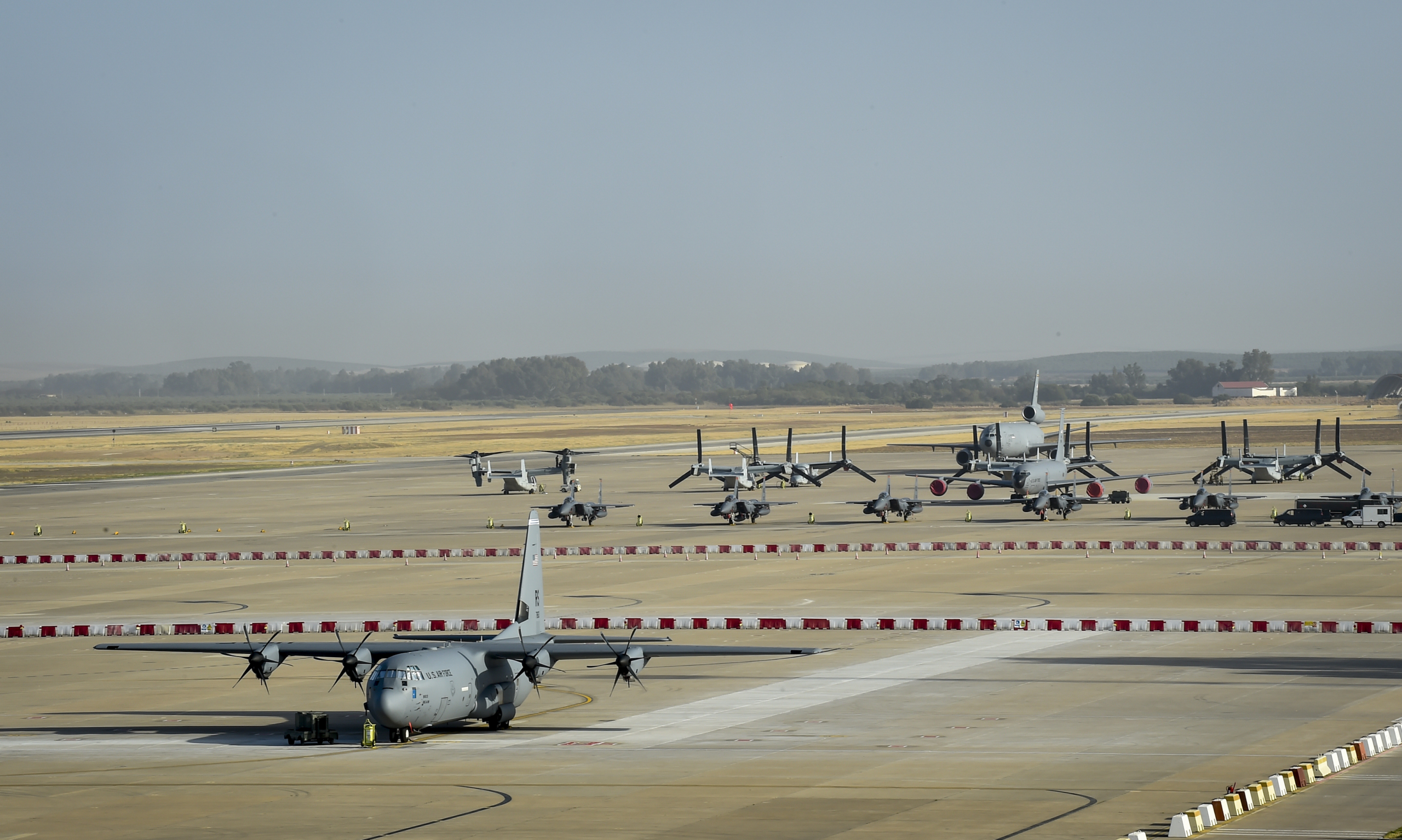
The Government of Spain will not authorise United States military aircraft to use its military bases or its airspace for operations related to the conflict with Iran.
First reported by Spain’s El País newspaper, the move was later confirmed by Defence Minister Margarita Robles, who called the war “profoundly illegal and profoundly unjust”.
“We don’t authorise either the use of military bases or the use of airspace for actions related to the war in Iran,” she said, adding that Spain had “made this clear to the American government from the beginning”.
Spain closes its airspace to the US Air Force
Spain’s closure of its airspace to US military aircraft involved in the Iran conflict will force those based in other parts of Europe, including the UK, to take an alternative route to reach the Middle East.
Spanish airspace extends well into the Atlantic to the west, and includes a chunk of the Mediterranean in the east. It also controls airspace around the Canaries.
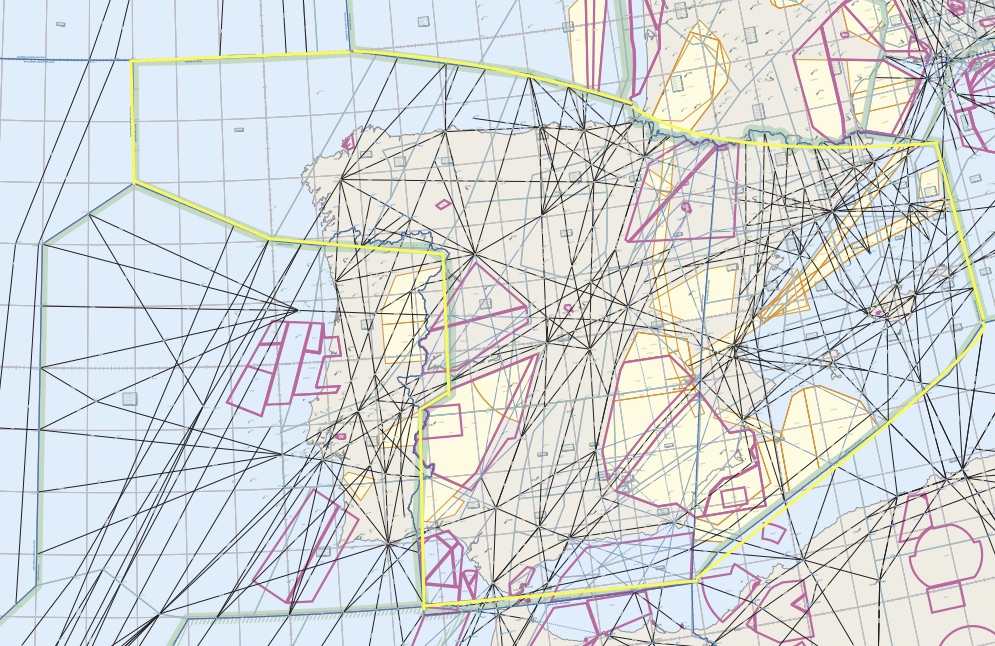
The Spanish government has confirmed that US Air Force aircraft will still be able to use its airspace in an emergency, but it will not allow flightpaths to cross its borders, nor activity such as refuelling to take place in its skies.
Worsening relations between Spain and the US over the war in Iran
Spain’s decision comes against a backdrop of increasingly sour relations between it and fellow NATO member, the United States.
Earlier in March, a huge number of US Air Force KC-135 tankers departed Spain for other NATO air bases, including Ramstein Air Base in Germany. This was widely seen as a withdrawal of the entire tanker fleet from Moron Airbase (LEMO) and Naval Air Station Rota (LERT).
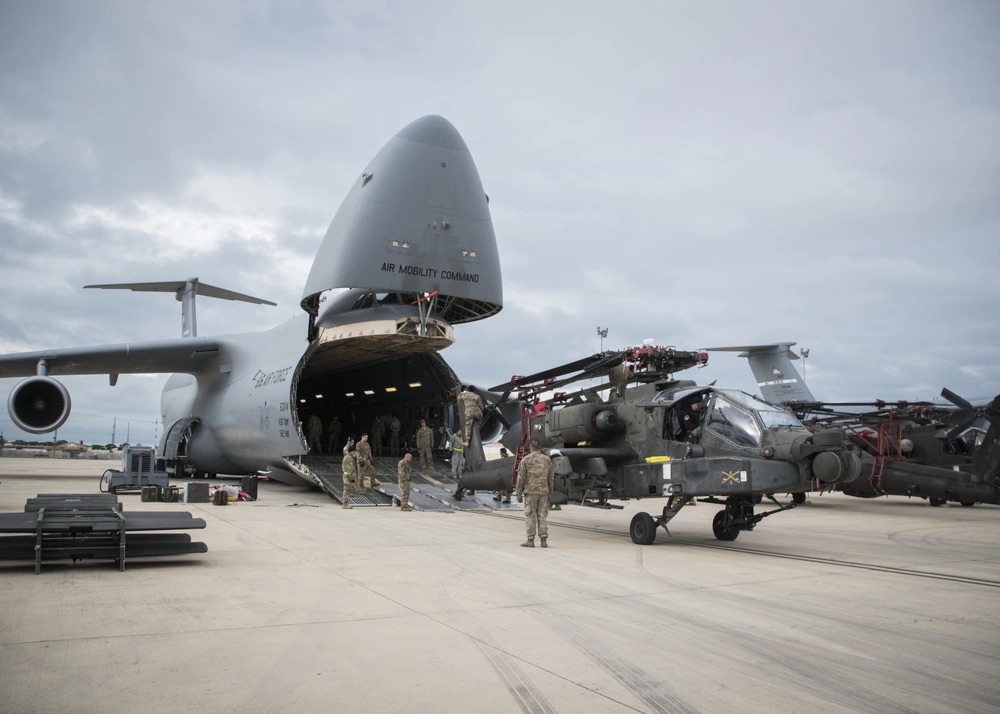
US President Donald Trump has previously threatened to impose a trade embargo on Spain over its denial of using such bases. “Spain has been terrible,” Trump told reporters during a meeting with German Chancellor Friedrich Merz, adding, “We’re going to cut off all trade with Spain. We don’t want anything to do with Spain.”
Nevertheless, Spanish Prime Minister Pedro Sanchez has stuck fast to his opposition to the war, repeatedly calling on the US, Israel and Iran to make peace. Last week, addressing Congress, he hinted that today’s announcement was coming.
“We have denied the US the use of the bases at Rota and Morón in this illegal war,” he said. “All flight plans related to the war in Iran have been rejected, including refuelling flights.”
Risks for NATO from very public rifts between allies
At its core, NATO works on consensus, and Spain is clearly signalling that it does not support the actions being taken.
It’s a clear example of a member state refusing to participate in a US-led operation, and a rare case of restrictions on allied military movements. It stands in stark contrast to the position of other members, such as the UK, which is allowing US forces to operate from its air bases.
![USAF B-52H taxis along runway at RAF Fairford on July 16, 2023 [Khalem Chapman]](https://aerospaceglobalnews.com/wp-content/uploads/2026/01/B-52H-02-Khalem-Chapman-1024x680.jpg)
NATO works best when it is acting under Article 5 – collective defence. Outside of this, participation is voluntary and shaped by national policy.
By refusing access, Spain is signalling that this is not a NATO war, and that it will not support operations it considers unlawful. That sets a precedent, one that Washington will hope is not followed by other member states.
NATO isn’t broken, but it is damaged, and the cracks are starting to show. These divisions may be interpreted by adversaries as evidence of reduced cohesion, bringing limitations on sustained operations.
Even if the military impact is manageable, that perception of fragmentation matters, not just to the US in Iran, but to the whole alliance.
Featured image: DVIDS