SpaceX launches US Space Force’s secretive X-37B spaceplane on 8th mission: Here’s what it’s doing

August 22, 2025

The US Space Force has successfully launched its uncrewed Boeing X-37B spaceplane into low Earth orbit on 21 August. It was hoisted into orbit with a SpaceX Falcon 9 rocket from Kennedy Space Centre, Florida.
Now on its eighth mission, designated OTV-8, the Boeing-built spacecraft is testing advanced technologies that promise to reshape the way the US communicates and navigates in space.
Liftoff! pic.twitter.com/oQFgBJqWg3
— SpaceX (@SpaceX) August 22, 2025
At the core of the mission are two experimental systems with significant implications: a laser-based communications payload and the most advanced quantum inertial sensor ever flown in orbit.
Both technologies are designed to reduce reliance on vulnerable satellite networks, reflecting the growing emphasis on contested and congested space.
What is the secretive Boeing X-37B space plane?
As space becomes more crowded and militarised, the X-37B has emerged as a vital platform for advancing orbital agility and survivability.
Originally a NASA project, the vehicle was transferred to the Department of Defense and has quietly completed seven successful missions since 2010, accumulating more than 4,200 days in orbit.
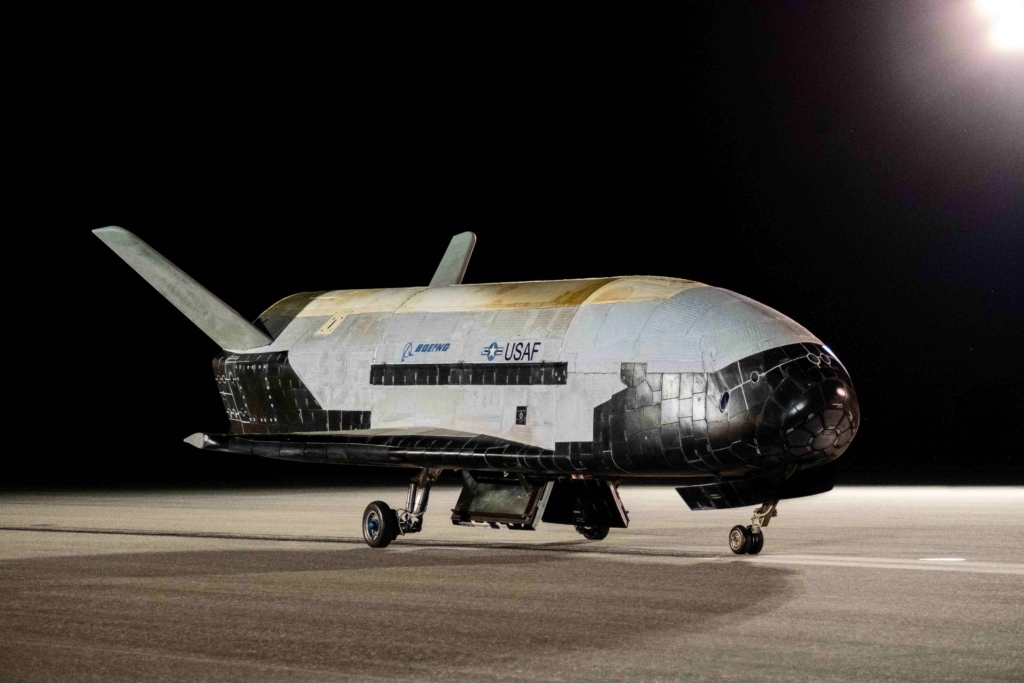
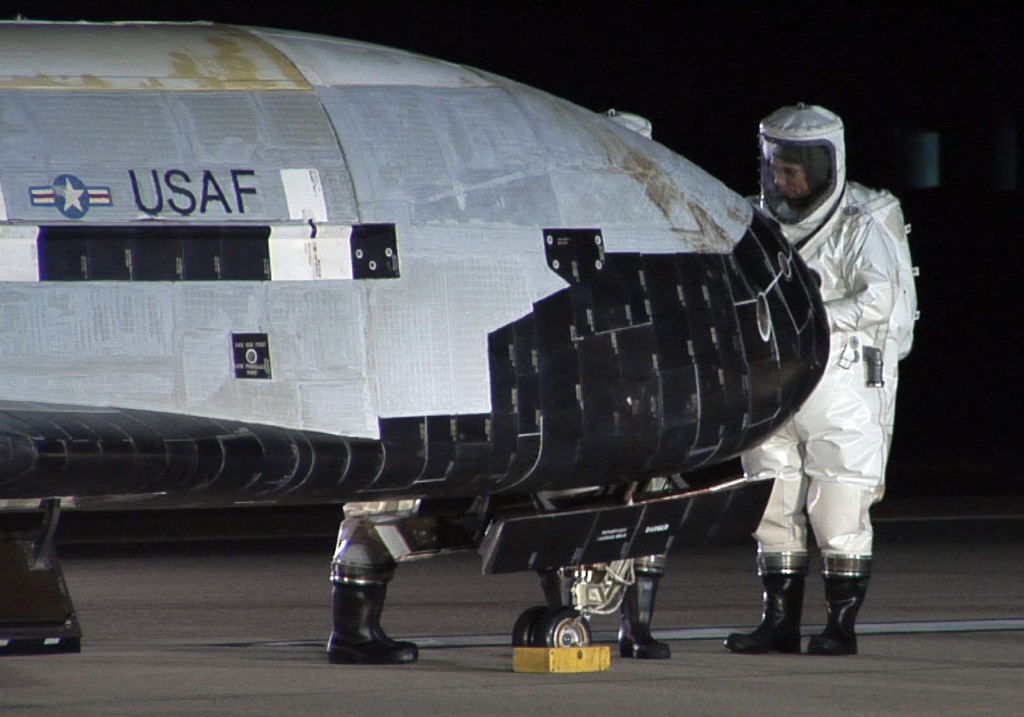
The vehicle launches vertically but lands on a runway like a conventional aircraft. This capability allows payloads to be retrieved, analysed, and the platform rapidly reconfigured for redeployment, making it an ideal testbed for classified systems.
Each flight builds new capability into the US space architecture, and OTV-8 may be its most ambitious mission yet.
What is the X-37 doing on this mission?
On Mission 8 (OTV-8), the X-37B is essentially acting as a flying laboratory for two main experimental payloads, both aimed at making US space operations more resilient if satellites are jammed, hacked, or destroyed.
Laser communications payload
A key objective of the mission is to demonstrate laser communications, using infrared light to transmit significantly more data at higher speeds than traditional radio frequencies.
These tightly focused beams are also less vulnerable to jamming or interception, making them ideal for secure, high-throughput data links in contested environments.
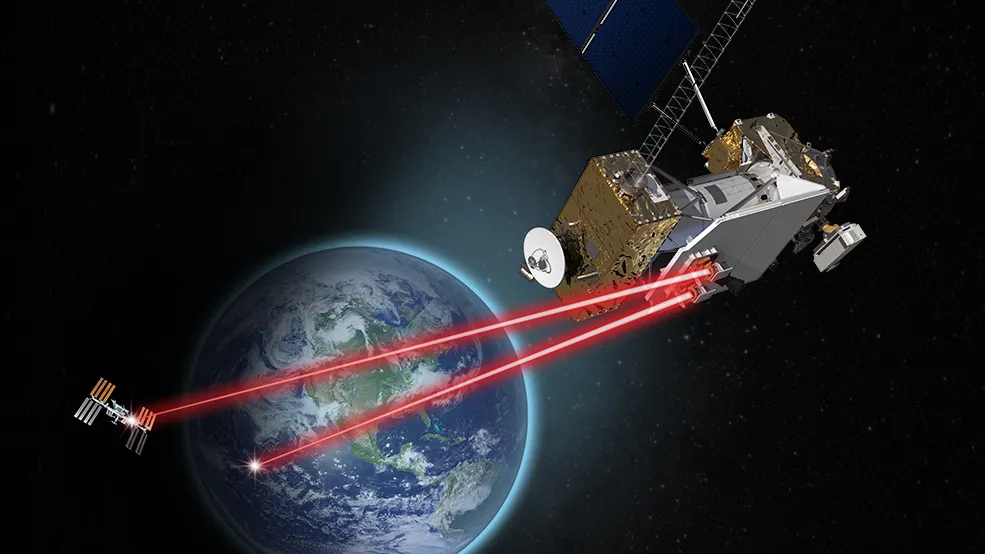
The system will be tested within low Earth orbit satellite networks to evaluate how distributed constellations can deliver faster, more resilient connections across space, air and ground domains, an essential requirement in future high-tempo operations.
Navigating without GPS
Also onboard is a quantum inertial sensor, described as the most advanced of its kind ever deployed in space. The device measures atomic movement to detect changes in velocity and orientation, enabling spacecraft to determine their position without relying on satellite-based GPS.
This technology could prove critical in scenarios where GPS signals are degraded or denied. It also opens new possibilities for missions in cislunar space beyond traditional navigation infrastructure.
“This is a welcome step forward for operational resilience in space,” said Colonel Ramsey Horn, commander of Space Delta 9. “Whether navigating in GPS-denied environments or beyond Earth-based orbits, quantum inertial sensing enables robust, autonomous movement.”
This spaceplane is a testbed for space superiority
Once a pure technology demonstrator, the X-37B now serves as a flexible testbed for systems that support the Space Force’s drive toward distributed, defensible space architectures.
Its ability to host experimental payloads and return them safely gives it a distinct edge over single-use satellites. One of its previous missions remained in orbit for over 900 days, a record for an uncrewed reusable spaceplane.
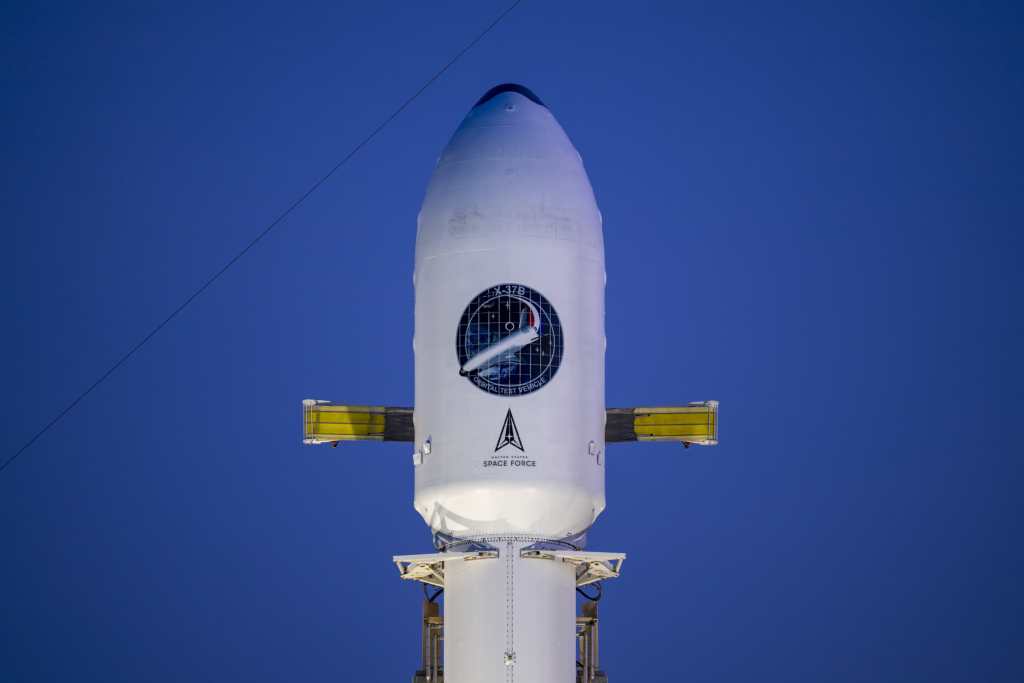
Mission 8 is backed by the Air Force Rapid Capabilities Office, the Defense Innovation Unit, and the Air Force Research Laboratory, reflecting a multi-agency effort to accelerate on-orbit innovation.
The X-37B’s growing strategic value is underscored by international developments. China’s Shenlong, a reusable spaceplane believed to mirror many X-37B capabilities, has completed several secretive missions involving satellite deployment and proximity manoeuvres.
In response, the X-37B’s long-duration flights, classified payloads, and ability to return hardware intact reinforce US efforts to maintain its lead in orbital technology.
Details of missions remain classified until landing, a reflection of the spacecraft’s sensitive role in space operations.
As the Space Force prepares to stand up its new Space Futures Command, data from OTV-8 is expected to inform future force design, training and wargaming efforts, ensuring readiness in an era where orbital freedom can no longer be assumed.
Future-proofing space operations
The launch of OTV-8 is more than just another milestone. It represents a strategic push to future-proof America’s presence in space.
As rivals develop systems to disrupt or deny satellite networks, the ability to operate autonomously, securely and flexibly becomes essential.
Through the X-37B, the US Space Force is not only testing cutting-edge technologies but also is shaping the future of spacepower in a domain where silence, speed and survivability are the new watchwords.