SITA: Apple AirTag partnership cuts permanently lost baggage by 90%, data shows

December 18, 2025

As millions of passengers take to the skies over the festive travel peak, new data from SITA suggests that airlines integrating Apple’s Find My technology into their baggage operations are seeing a dramatic reduction in permanently lost luggage.
One year after SITA integrated Apple’s Find My Share Item Location capability into its WorldTracer baggage management system, the aviation IT provider reports a 90% reduction in “truly lost” bags where passengers enabled location sharing via AirTag or other Find My network accessories. Airlines using the integration have also recorded a 26% reduction in the time taken to recover delayed baggage, according to SITA’s analysis.
The collaboration enables passengers to securely and temporarily share the real-time location of their bag with their airline during a disruption. That data feeds directly into WorldTracer, linking consumer-grade tracking to airline recovery workflows.
Apple AirTag ‘Find My’ sharing enables faster bag tracking during peak disruption
According to SITA’s latest Baggage IT Insights report, global baggage mishandling rates remain relatively low at 6.3 bags per 1,000 passengers, and 66% of mishandled bags are reunited with their owners within 48 hours, aided by improved data sharing and automation.
While airlines eventually return the vast majority of mishandled bags, SITA notes that a small percentage are never recovered. For bags equipped with an AirTag or Find My accessory, the number of permanently lost items fell sharply once passengers enabled location sharing through WorldTracer.
SITA says the integration has proven particularly valuable during periods of operational strain, such as the winter holiday season, when tight connections, adverse weather and high transfer volumes increase the risk of baggage delays.

“This year has shown the power of working together,” said Nicole Hogg, portfolio director for baggage at SITA. “When consumer technology and aviation infrastructure are connected in the right way, the results can be transformative. Travellers feel more confident, airlines make better decisions earlier, and the entire recovery process becomes more predictable.”
SITA finds that dynamically updating, passenger-authorised location data further strengthens that recovery process, helping airlines prioritise actions and resolve cases faster.
“The first year of this collaboration is also telling us something important about the wider market,” Hogg added. “Airlines everywhere are looking for ways to manage rising passenger volumes without adding complexity. When passengers choose to share high-quality location data, airlines gain a level of clarity that was not available before.”
More airlines adopt baggage tracking linked to consumer technology
According to SITA, 29 airlines are now using the Apple Find My integration within WorldTracer as part of their baggage recovery processes, with further carriers expected to adopt the capability in the coming months.
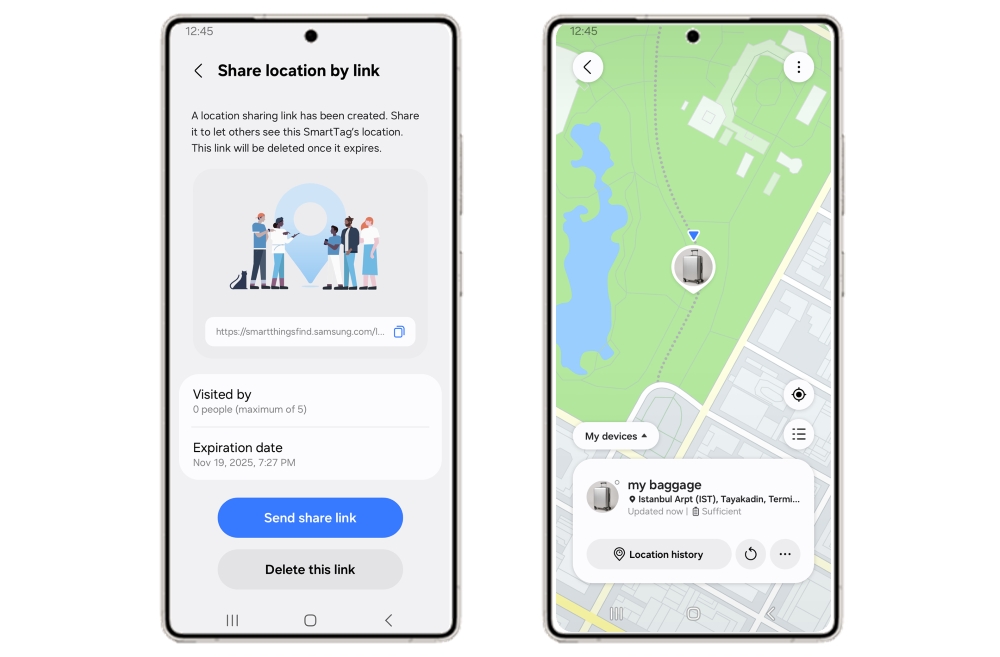
Airlines are also exploring other consumer technology solutions to aid baggage tracking. Turkish Airlines, an early adopter of Apple Find My integration enabled by AirTags, recently added Samsung SmartTags to its baggage-tracking solution, allowing passengers to locate their bags regardless of their preferred technology platform.
Global aviation IT infrastructure pairs well with consumer technology
WorldTracer is deployed at more than 2,800 airports and used by over 500 airlines and ground handlers worldwide. By integrating Apple’s Find My Share Item Location, SITA says it is connecting aviation-grade operational systems with secure consumer technology to deliver a more predictable baggage experience.
As global passenger numbers continue to rise, SITA argues that the first year of the Apple partnership shows collaboration between technology providers can deliver measurable operational gains—particularly when travellers are least tolerant of disruption.
Featured Image: United Airlines