Inside the top secret project to give a C-130 rocket powered STOL capabilities

December 24, 2025
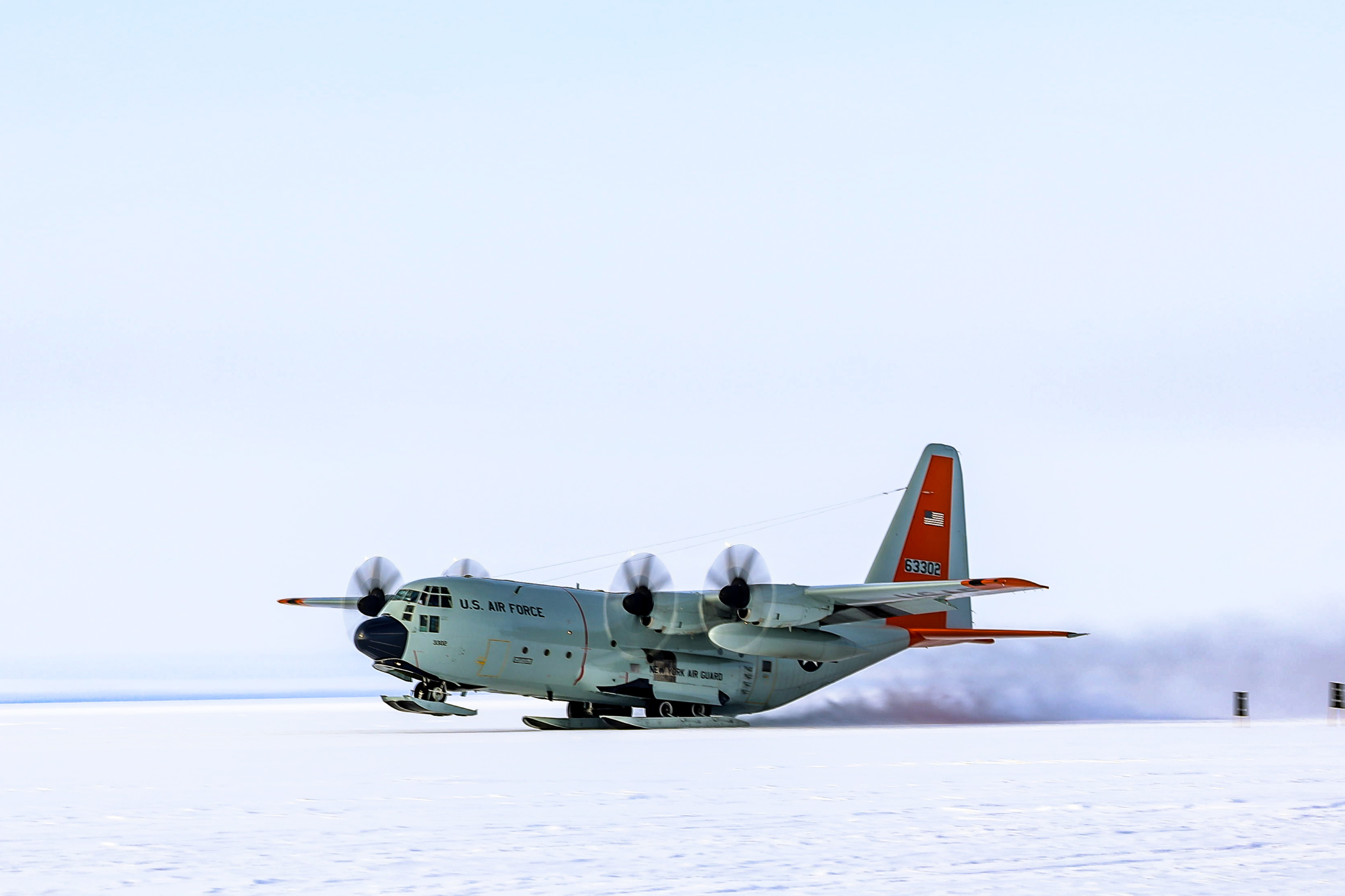
The Lockheed C-130 Hercules once flew as an STOL aircraft, being fitted with rocket pods to land and take off from an Iranian football stadium. While the operation never went ahead, the Marines moved to develop the V-22 Osprey, while Hercules continues to take off with rocket pods today.
Prelude: a hostage crisis and need for STOL aircraft
In 1979, revolution shook Iran with the US-allied Shah overthrown and 66 Americans, including diplomats, being taken hostage from the US embassy in Tehran.
Six US diplomats were rescued in a CIA operation after seeking refuge in the Canadian embassy in Tehran. The event was dramatized in the 2012 movie, Argo, starring Ben Affleck.
But while the movie focuses on the CIA’s success story, it glosses over the fact that Iran was still holding the US hostages, as well as the disastrous first rescue attempt called Operation Eagle Claw.
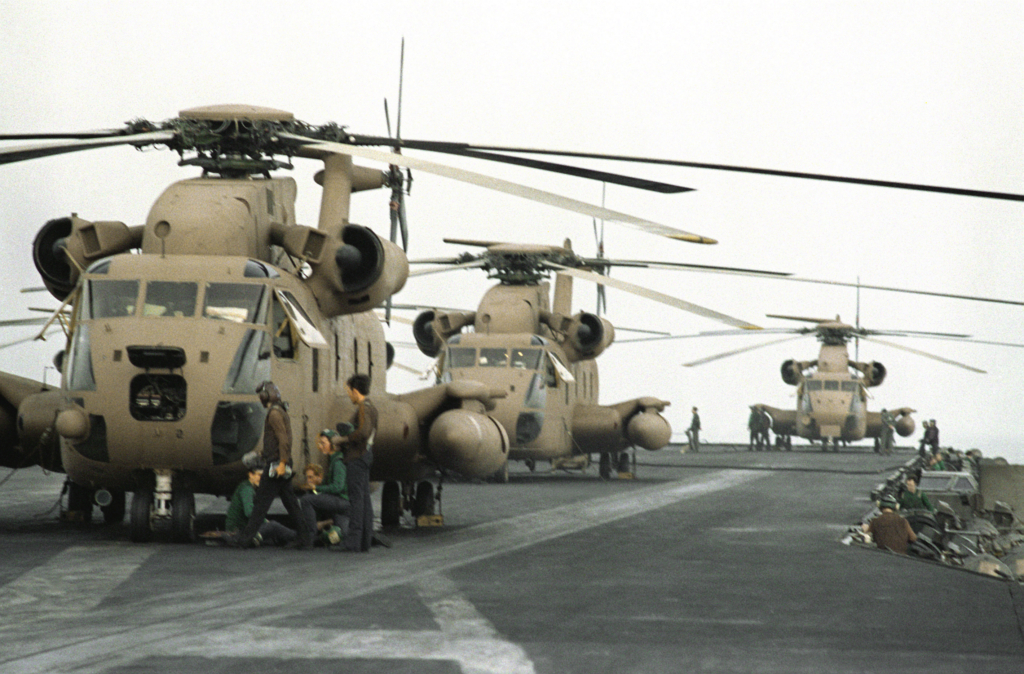
That operation saw an RH-53D Sea Stallion helicopter crash into a parked C-130 Hercules in the Iranian desert, ending the mission. The US moved to conjure up a second rescue operation to get the hostages back.
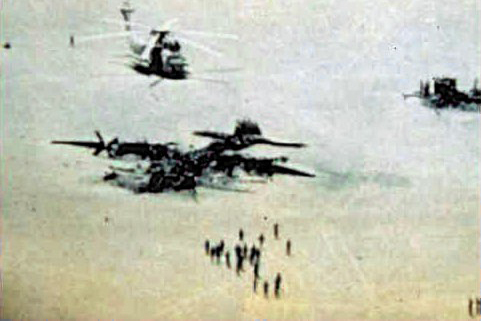
The US came up with a crazy idea called Operation Credible Sport to jerry-rig a C-130 Hercules into an STOL aircraft, land it in the football stadium, rescue the hostages, and then take off from the stadium.
The idea was to eliminate the need for helicopters, which were seen as the weak link in Operation Eagle Claw. They were prone to mechanical failure and needed refueling.
Of the eight helicopters used in the mission, two turned back after encountering mechanical problems, a third encountered hydraulic issues and then struck the transport aircraft, and the remaining five were abandoned in the desert and captured.
Operation Credible Sport to make rocket-powered C-130
The US learned where the hostages were being held, but it was in the middle of the dense city of Tehran, with only the stadium offering any amount of open land nearby.
According to Real Engineering, to transform the Hercules into an STOL airlifter, Lockheed planned to fit 58 rocket pods to the aircraft in three sets. The aircraft would have one forward-facing set that would slow the aircraft down on approach, making it lose airspeed quickly.
The second set was downward-facing to decrease the Hercules’ descent rate so that it wouldn’t just fall out of the air. The third set was pointed rearwards and was to provide the boost needed for a very short takeoff.
The configuration kind of worked, although it had problems. During a landing test, the pilot fired too many of the forward-facing rockets, causing the aircraft’s airspeed to fall to almost zero, causing it to crash land.
The US had a second C-130 ready with the rocket pods for the daring Iranian operation. But the whole thing was canceled after a diplomatic breakthrough made with the help of Algeria saw the hostages released.
It can be noted that the idea of strapping booster rockets to aircraft has been around since WWII, when the British and Germans experimented with it. The USAF used them to help lift heavily laden bombers during the Korean War.
Lockheed C-130s are still used with rocket boosters
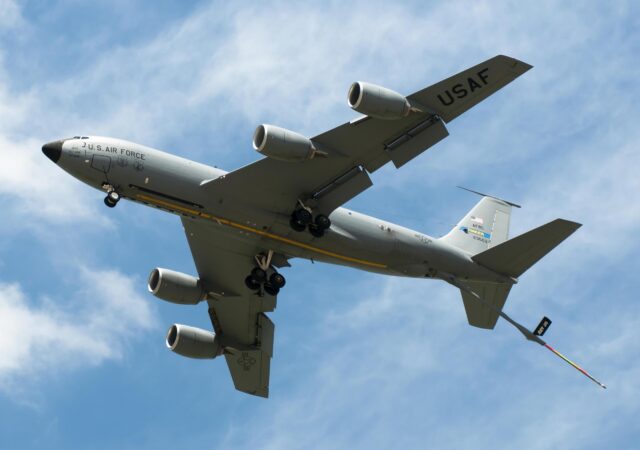
The Lockheed C-130 Hercules first entered service in 1956 at the beginning of the Vietnam War. Since then, thousands have been produced, and it has become “the” tactical airlifter of the United States and its allies and partners. The aircraft has proven an extremely versatile platform, being adapted to everything from the AC-130 Ghostrider gunship to WC-130 Hurricane Hunters.
Operating in Arctic conditions, the 109th Airlift Wing of the New York Air National Guard has snowskis for its legacy LC-130H-2s, and three are LC-130H-3s. However, snow creates resistance, and sometimes C-130 Hercules lack the power needed to take off under such conditions.
As a workaround, some C-130s are equipped with rocket boosters to give the aircraft the extra kick it needs to take off.
The USAF uses Aerojet 15-KS-1000 jet-assisted-take-off rocket pods to conduct jet-assisted takeoff (JATO) or rocket-assisted takeoff (RATO). Each rocket fires for 15 seconds and provides the aircraft with another 1,000 pounds of thrust.
While these JATO units are now out of production, a total of over a quarter million of them were produced. Even so, now the USAF is running low on them. But that doesn’t necessarily matter.
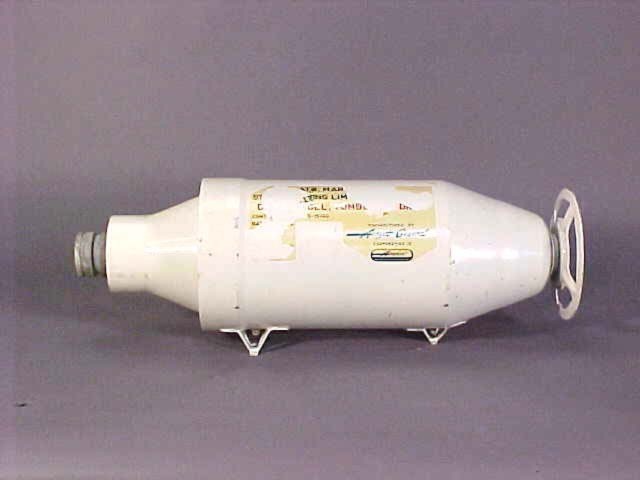
The Aerojet 15-KS-1000 was very useful for legacy Hercules, but these are being phased out and replaced by the Super Hercules.
The C-130J Super Hercules is powered by newer Rolls-Royce AE 2100 D3 turboprop engines in place of the legacy Hercules Allison T56-A-15 turboprop engines. They also have 6-bladed Dowty R391 propellers in place of the 4-bladed Hamilton Standard propellers.
The Super Hercules has enough power not to require assistance from rocket pods.
Enter the V-22 Osprey
The failure of the US hostage rescue in Operation Eagle Claw and the lack of an ability to land in the stadium led to the US Department of Defense initiating the Joint-service Vertical take-off/land Experimental (JVX)programme.

That effort sought a solution that would provide the US miltiary with a long-range, high-speed aircraft with vertical-takeoff capabilities.
The program led to the development of the Bell-Boeing V-22 Osprey tiltrotor. The contract was awarded in 1983, and the type first flew in 1989, although it wasn’t until 2007 that it first entered service with the Marine Corps.
As the Osprey is a novel design, it has taken time for the technology to mature, with plenty of negative press about mishaps over the years. But maturing it is, and the Osprey now provides the US Marines, Navy, and Air Force with a unique capability no one on earth has, other than Japan, which is the only export customer.
Tiltrotors are becoming the aircraft of the future. Notably, the US Army has selected the Bell MV-75 (formerly Valor V-280) to partially replace its fleet of Black Hawks, while China is now flying its first tiltrotor as it too seeks the capability. The Chinese tiltrotor resembles a European design.

Besides these manned tiltrotors, various defence contractors are developing unmanned tiltrotor aircraft and concepts.
In 1980, the need to be runway independent was the requirement to land in the stadium. Now, the requirement to be runway independent is driven by forward airbases coming under increasing threat of missile and drone attack.