Fond farewell: Samaritan’s Purse set to retire the last Douglas DC-8 in the USA today

November 14, 2025
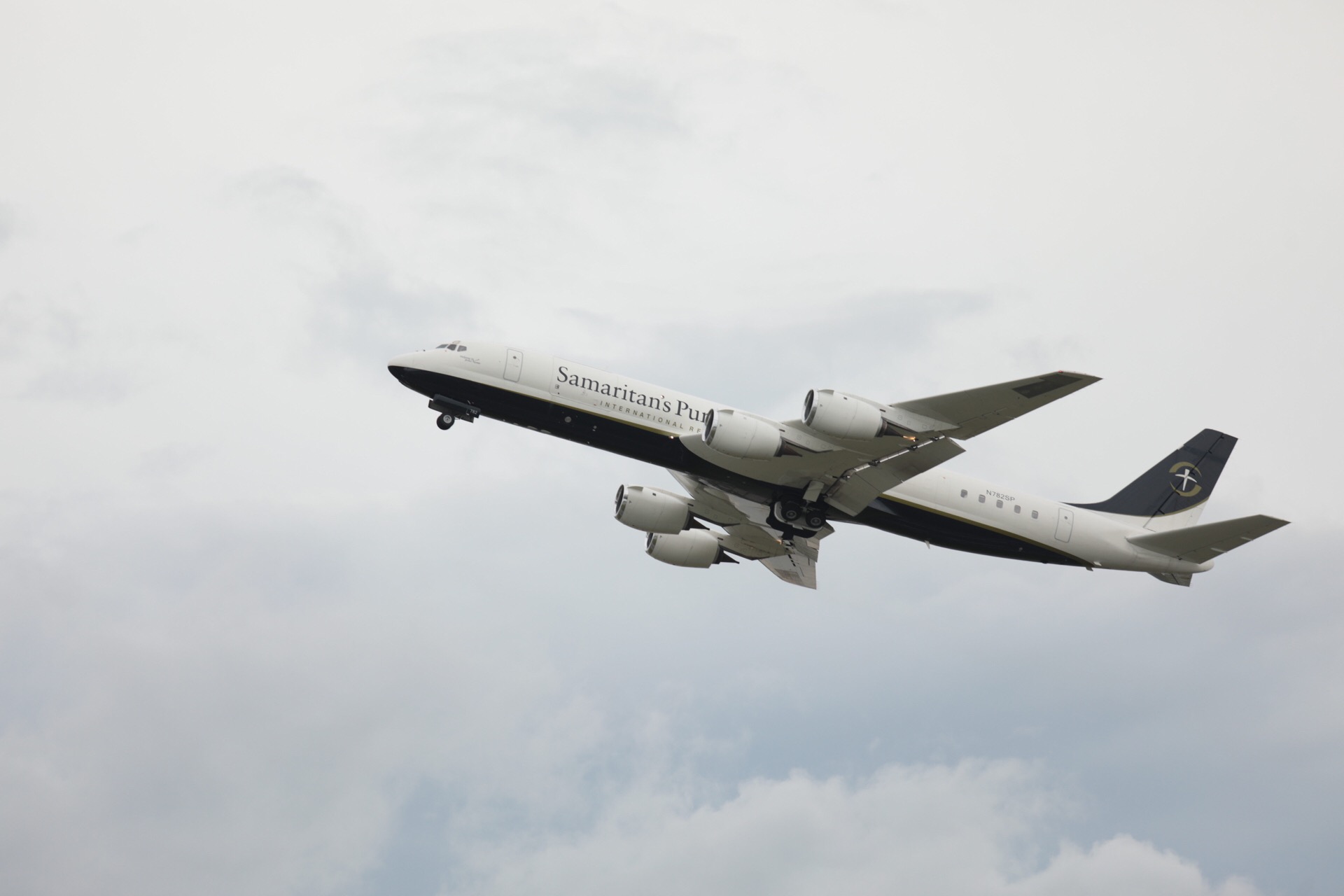
Later today, Samaritan’s Purse will gather its crews, volunteers and long-time aviation staff in Greensboro to say farewell to an aircraft that has defined its global relief operations for almost a decade. Its Douglas DC-8, registration N782SP, is expected to shut down its engines for the last time, ending one of the final active careers of a classic Douglas jet.
The organisation’s aviation workers have long treated the aircraft as more than hardware. Pilots, engineers and loadmasters routinely speak about it with the warmth reserved for colleagues rather than machines.
And unlike most retirements, this one has drawn attention far beyond the ramp: in recent years, wherever the DC-8 landed, photographers would line the fences knowing it might be their last chance to capture a Douglas jet still working for a living.
A DC-8 with a remarkable operational history
N782SP began life on Christmas Eve 1968 as a Finnair DC-8-62 before joining the French Air Force in the early 1980s. Air Transport International later converted it into a combi capable of carrying both cargo and passengers, with space for ten pallets and 32 seats.
By the time Samaritan’s Purse acquired it in 2015, the aircraft was parked in Roswell awaiting either a buyer or the scrapyard. Instead, it was refurbished in San Antonio and re-engined with CFM56 turbofans, returning to service as the organisation’s primary heavy-lift aircraft.
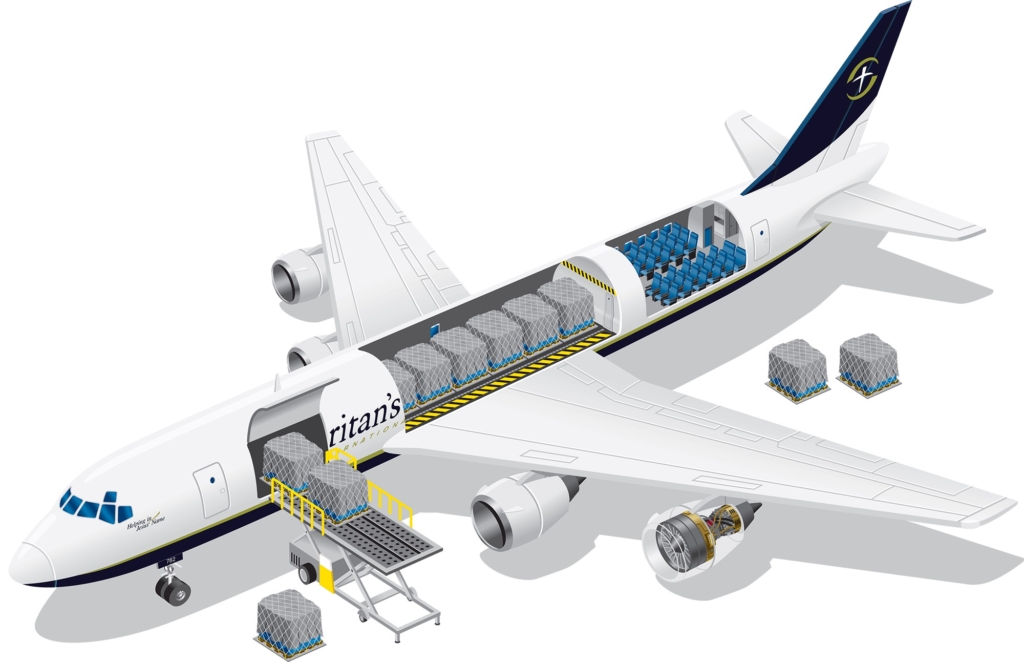
Across 217 missions, it has delivered more than 9.2 million pounds of aid — field hospitals, generators, water systems, medical supplies and blankets — into crisis zones from Haiti and Ethiopia to the Bahamas and Ukraine.
Even in its final months, it remained fully operational, flying more than 40,000 pounds of supplies to Jamaica after Hurricane Melissa and working alongside the organisation’s new 767 on its first full mobile emergency hospital lift.
Inside the cockpit: A crew fiercely loyal to the DC-8
For many on the organisation’s aviation staff, the DC-8 was not just an ageing jet but a piece of living history.
Flight engineer Joe Proffitt, who spent more than five years on board, described the aircraft in personal terms rarely used for machines.
He recalled how engineers, spotters and even air traffic controllers would come out just to see it. At one airport in Cyprus, documentarians asked for permission to climb aboard simply to stand in the cockpit, a space of analogue dials, mechanical trim wheels and the layout of a generation long gone from commercial flying.

Proffitt quoted a person documenting the DC-8 as saying: “Now this is a real aircraft! See that airplane that just took off? Nothing but plastic. The DC-8 even smells like a real aircraft!”
In Proffitt’s memories, the DC-8 was most alive during its missions: long, sometimes difficult flights, crews working through the night, cargo being offloaded into disaster-struck towns.
His most meaningful memories include flying Mongolian children home after heart surgeries during the pandemic, and the mission that delivered the 200-millionth Operation Christmas Child shoebox to Poland and onward to Ukraine. As he wrote: “It’s bittersweet. But she finished strong.”
The Douglas DC-8: An aircraft from the dawn of the jet age
The DC-8 belongs to the first wave of American jetliners that reshaped the world in the late 1950s and early 1960s.
When it first flew in 1958, it arrived in direct competition with Boeing’s 707. The Douglas design never outsold its rival, but it achieved something rarer: longevity.
Unlike the 707, which disappeared from major civil use decades ago, the DC-8 gained a second life as a cargo aircraft.

Re-engined Series 70 variants like N782SP dramatically reduced fuel burn and noise while extending structural life. These aircraft outlasted their passenger-carrying ancestors by decades and became fixtures in freight fleets through the 1980s and 1990s.
Even as most commercial DC-8s were retired or scrapped, a handful survived into the 21st century. NASA operated one of the most recognisable, a heavily modified DC-8-72 used as an airborne science laboratory.
NASA’s DC-8: A different kind of mission
NASA’s version of the aircraft, acquired in the mid-1980s, was effectively a mobile research centre.
Scientists fitted it with atmospheric sensors, chemistry instruments and prototype technologies that often could not yet fly on satellites.
It carried them over the Antarctic ozone hole, across Pacific wildfire smoke plumes, through tropospheric chemistry surveys and along the flight paths of early Earth-observation missions.

On board, graduate students worked beside senior researchers while engineers and flight crews kept the aircraft airborne under demanding conditions.
The programme built its own distinct community; for many young scientists, their first serious research paper came from data gathered on the DC-8.
When the aircraft was retired in 2024 and sent to Idaho State University for use as an educational airframe, the farewell echoed the emotions felt in Greensboro, a sense that an era had passed.
The last DC-8 in the USA
By the mid-2020s, fewer than a handful of DC-8s were still flying anywhere in the world, and Samaritan’s Purse operated the only one left on the US register.
As of 2025, it is thought that fewer than four other DC-8s remain in operational service worldwide.
Aviation enthusiasts tracked its missions religiously, photographing its landings at Oshkosh in 2025 and marvelling at an aircraft approaching 100,000 flying hours.

For pilots and mechanics, maintaining such a machine required deep expertise, not because it was unreliable, but because it came from a period when engineering relied on mechanical systems, thousands of wires and redundant hydraulics rather than digital automation.
Inside the cockpit, the navigation tables, physical circuit breakers and rows of gauges made it a living museum piece. Yet it was also a functioning cargo aircraft trusted to fly into crisis zones.
Why Samaritan’s Purse is retiring the last US-registered DC-8
After nearly six decades of flying, the airframe is approaching its structural life limits, and parts support for such a rare type has become increasingly difficult. Samaritan’s Purse is transitioning to a Boeing 767 freighter with far greater lift, modern systems and the ability to support larger-scale operations.
The 767 has already proven its capability, transporting more than 290,000 food packets, 12,000 blankets and thousands of solar lights to Gaza, and delivering a full emergency field hospital to Jamaica in a single lift.

When the engines spool down in Greensboro later today, the moment will mark more than the retirement of an aircraft. It will signal the end of a way of flying: mechanical, hands-on, analogue, and deeply human.
N782SP’s polished aluminium lines stand in stark contrast to the composites of its 767 successor, yet its impact is measured not in technology but in the communities it reached in their darkest hours.
As Proffitt said, “It’s not how you start, but how you finish that counts.”