Russia lost dozens of combat aircraft in 2025 as production struggled to keep pace

January 2, 2026
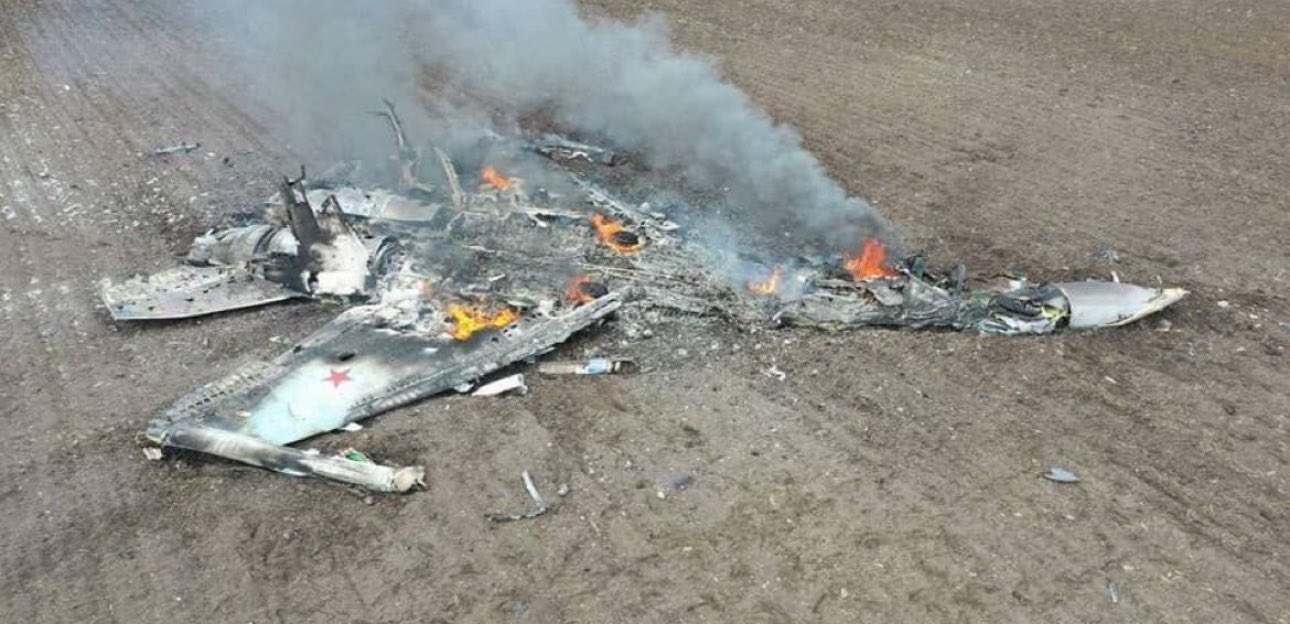
Despite campaign promises by President Trump in 2024 that he would end it ‘in a day’, 2025 has finished with the war in Ukraine continuing into 2026. During the year, the Russian Air Force continued to suffer substantial losses while seemingly ramping up fighter jet production
Russia’s combat fleet losses in 2025
According to the Ukrainian Armed Forces’ General Staff, Russia lost 65 fixed-wing military aircraft and 17 helicopters. Meanwhile, the respected OSINT blog, Oryx, has visually confirmed 40 fixed-wing combat aircraft and 17 helicopters for 2025.
A couple of things should be noted in these numbers. One thing is that Oryx counts non-combat losses from accidents, whereas the official Ukrainian tally does not.
Another is that not all losses will be visually confirmed, meaning that the Oryx number is conservative. Some losses may not be confirmed by third-party evidence, such as aircraft being hit on the ground and then cleared before satellites take images of the airbases.
Russian equipment losses added* to the Oryx loss list in 2025 by equipment category
— Jakub Janovsky (@Rebel44CZ) January 1, 2026
*includes losses from earlier years that were documented in 2025 pic.twitter.com/CUvwxndLBw
Overall, Ukraine claims to have destroyed 434 Russian fixed-wing aircraft over the course of the war. This is widely seen as an exaggeration, with Oryx tallying 150 destroyed and 24 damaged for a total of 174, including mishaps. British military intelligence reports have also mirrored the lower figure.
Get the latest aerospace defence news here on AGN.
Russia is sort of replacing combat aircraft losses
For the years 2022-2024, Russia was estimated to have delivered 20-30 fighter jets. In 2025, it is reported that this surged to 55 fighter jets. This is a mixture of Su-30s, Su-34s, Su-35s, and Su-57s.
Some of these aircraft were exported, including two Su-30SM2s to Belarus and more to Algeria.

Militaer Aktuell reported, “Including exports, the total number of fighter aircraft deliveries by the three Russian fighter aircraft factories is estimated at around 55 aircraft for 2025.” It also adds that the number of jets Russia could put into service (after exports, etc.) was around 33 for 2025.
This means Russia will have at least replaced the direct fighter jet losses it sustained in 2025. But looking a little more closely and the picture is much more complicated.
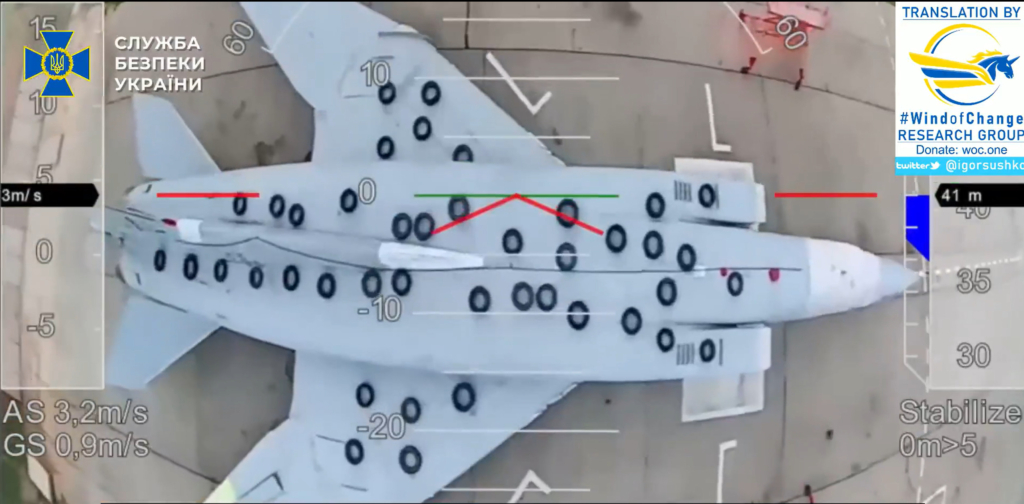
About half of the 40 fixed-wing losses were Russian Tu-22M3 and Tu-95 strategic bombers in Operational Spiderweb, which saw around 20% of its strategic bomber fleet wiped out.
🔥BREAKING: The SBU has released unique footage from the special operation "Spiderweb"
— Special Kherson Cat 🐈🇺🇦 (@bayraktar_1love) June 4, 2025
The video captures FPV drone strikes by the SBU on four enemy airfields: Olenya, Ivanovo, Dyagilevo, and Belaya. Among the aircraft hit are the A-50, Tu-95, Tu-22 as well as the An-12. pic.twitter.com/Jyu0bjwBvO
These cannot be replaced by Russia in the short or medium term. The old Tu-160 is back in production, but it has a delivery rate of 0-2 per year.
Another big factor is that the Russian fighter jet fleet is ageing, with older jets like Su-24s, MiG-31s, MiG-29s, Su-27s, and Su-25s (about half of the fleet) wearing out, having used up their flight hours, and/or approaching obsolescence.
Even if Russia can replace battlefield losses, even its surge production rate cannot keep up with the need to replace its ageing fleet. In 2024, the think-tank, Rand, reported Russia was on course to lose around 60 imputed aircraft losses from overuse and that by March 2024, adding that the Russian Air Force was at 75% of its pre-war strength.
It stated, “The [Russian Air Force] has fewer than 650 tactical aircraft when accounting for end-of-life aircraft; it has even less when accounting for accelerated usage. For reference, FlightGlobal’s 2026 report lists Russia as having 1,559 combat aircraft (likely including bombers and those in the Russian Navy).
Ukraine’s fighter jet picture is mixed
While the Ukrainian Air Force also suffered losses, overall, the air force may have ended the year in a better shape thanks to more F-16 Fighting Falcons and French Mirage 2000s arriving in the country.

One of the main limiting factors for the Ukrainian Air Force is the small pool of pilots trained for Western aircraft. The pilot shortage is one of the main reasons why Ukraine is negotiating for the transfer of Poland’s remaining MiG-29s.
The year saw Ukraine sign letters of intent to purchase around 100 French-made Dassault Rafales and 120-150 Swedish-made Saab Gripen Es. The intention is for these to form the backbone of Ukraine’s post-war fighter jet fleet and replace its remaining worn-out Soviet-era MiG-29s, Su-25s, Su-24s, and Su-27s.
Featured Image: Photo: Ukraine/X (Twitter)