Russia’s Soyuz reaches the ISS safely but blows apart its cosmodrome launch pad at Baikonur

November 28, 2025
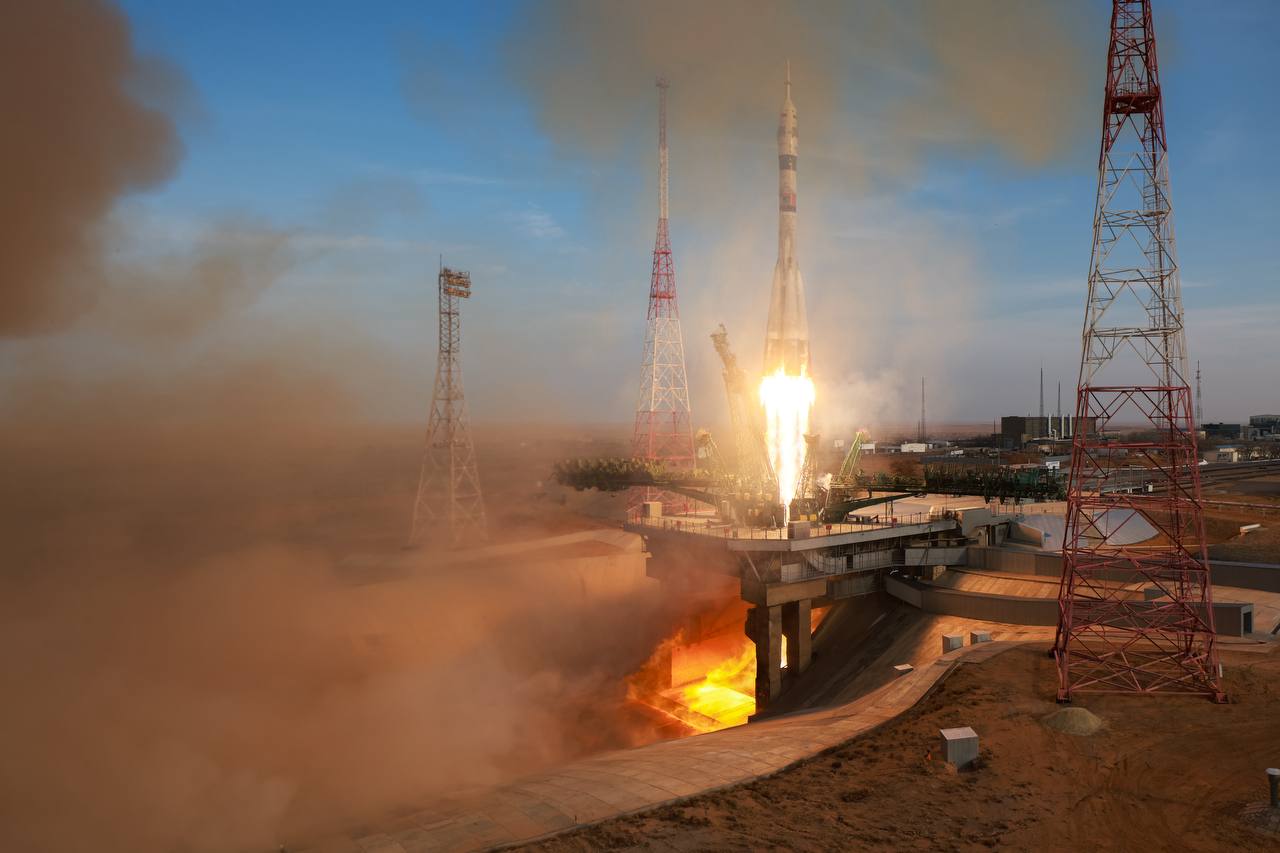
Russia has successfully launched three crew members to the International Space Station, but the achievement has been overshadowed by a serious incident on the ground: the Baikonur launch pad suffered structural collapse during liftoff, raising immediate concerns over Russia’s ability to sustain future crewed missions.
The Soyuz-2.1A lifted off at 2:27 p.m. Baikonur time (0927 GMT) on 27 November, sending the Soyuz MS-28 spacecraft into orbit with cosmonauts Sergey Kud-Sverchkov and Sergey Mikaev, and NASA astronaut Chris Williams. The spacecraft docked several hours later, and all three crew members were reported to be in good condition.
But while the flight itself was nominal, the aftermath on the ground was anything but.
Soyuz reaches the ISS safely as Baikonur pad suffers major damage
Shortly after celebrating the docking, Roscosmos acknowledged that engineers had discovered “damage to a number of elements” of the Baikonur pad following standard inspection procedures.
The agency’s statement on its official Telegram channel confirmed that a movable servicing cabin beneath the launch platform had been damaged, and Russian media reported that part of the structure collapsed into the flame trench moments after the rocket cleared the pad.
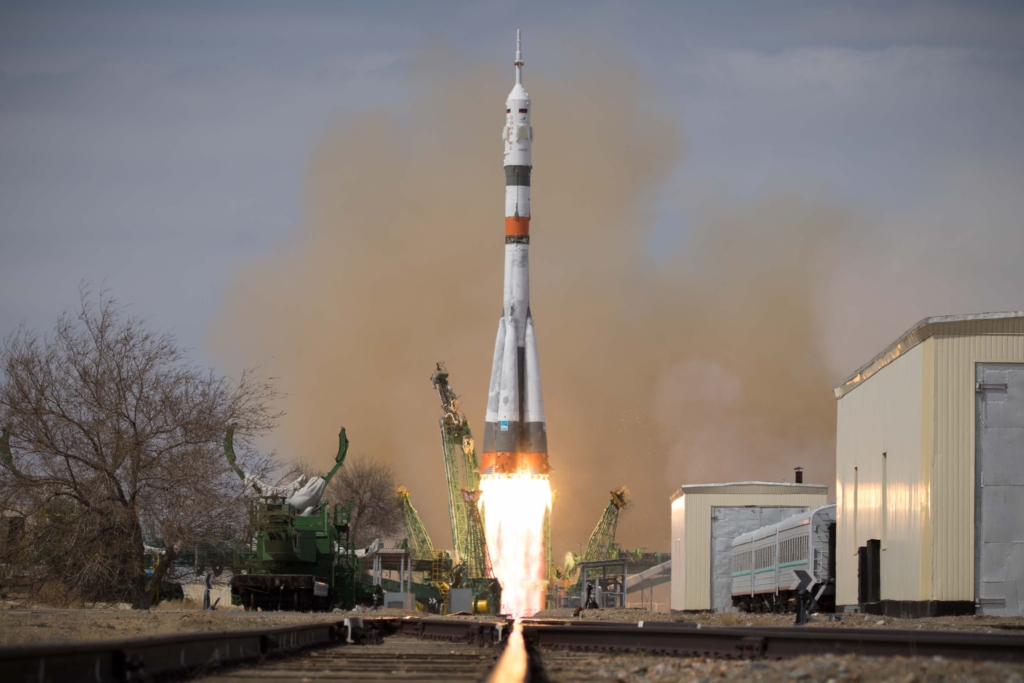
Roscosmos insisted the launch “took place normally and without comments”, adding that spare parts were already available and repairs would begin “in the near future”.
However, images and analyst commentary circulating in Russian media point to a significant failure of the mobile cabin, a critical structure used to prepare both crewed Soyuz spacecraft and Progress cargo vehicles.
Concerns grow over Russia’s only operational crewed launch pad
The significance of the collapse is magnified by the fact that Site 31/6 at Baikonur in Kazakhstan is currently Russia’s only functioning launch pad for human spaceflight.
Spaceflight analyst Gunter Krebs warned that the structure beneath the pad had “collapsed into the flame trench”, calling it a serious incident that could delay upcoming Progress cargo missions and future Soyuz flights.
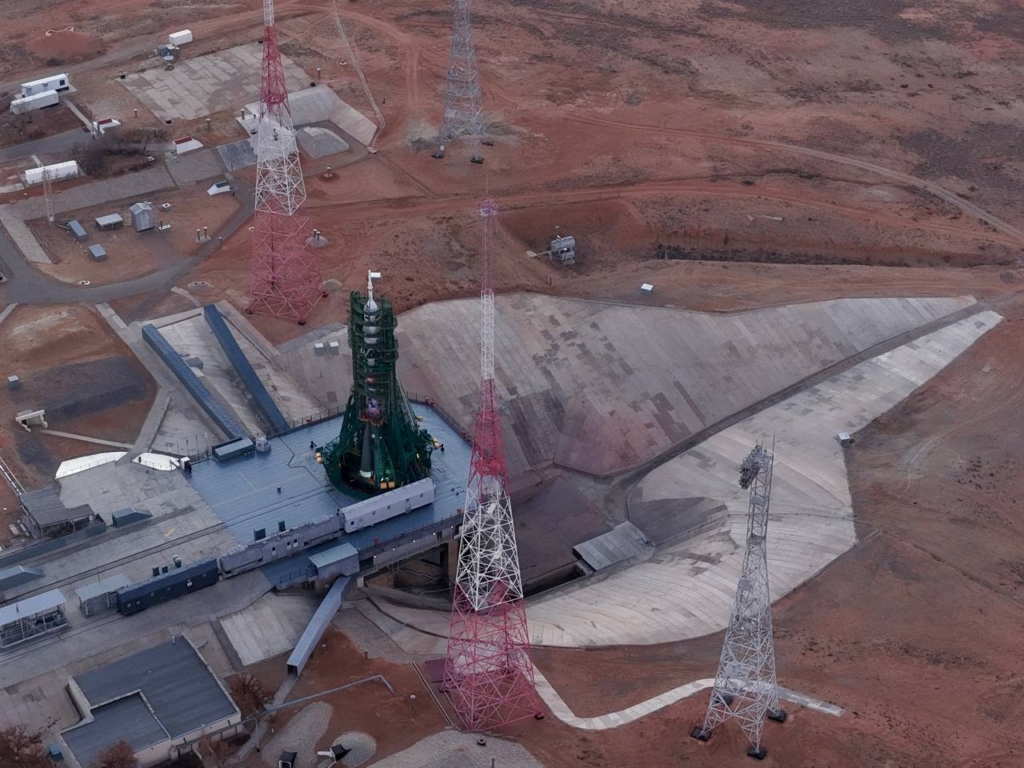
Some Russian commentators also noted that the damaged cabin plays an essential role in configuration, inspection, and access during crewed spacecraft preparation.
With the extent of the damage still not fully disclosed, technicians continue to assess the launch complex.
A rare interruption in Russia’s human spaceflight cadence
Russia has not faced an operational disruption like this in the entire Soyuz era since 1961.
Roscosmos maintains that the issue is fixable and that the schedule may not be significantly impacted, but until repairs are completed, the country’s only crewed launch capability is technically compromised.
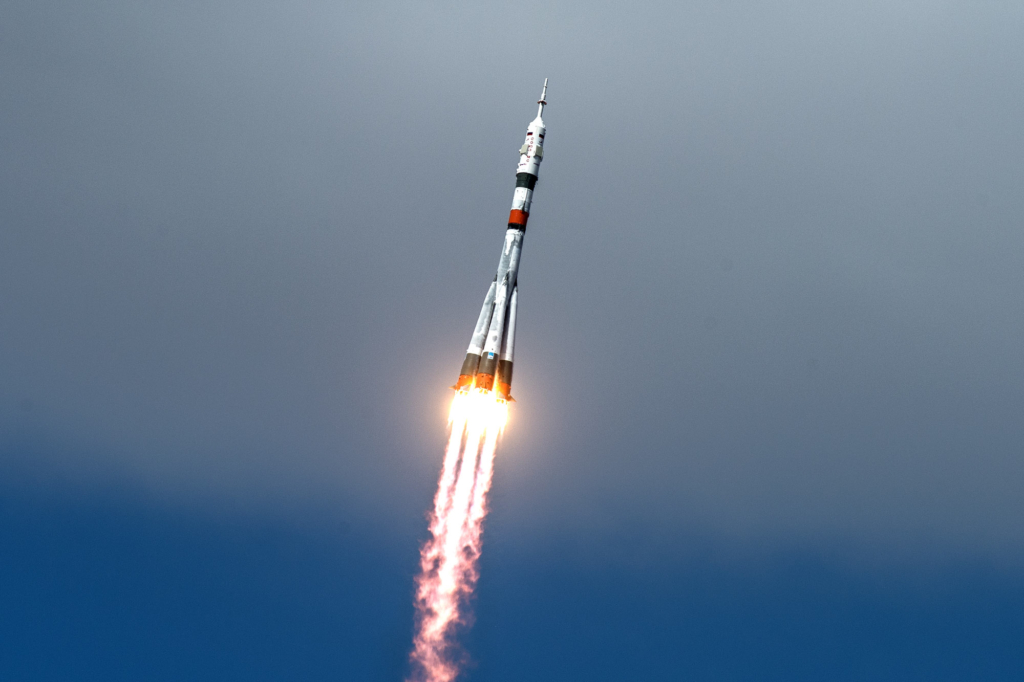
The MS-28 crew is expected to remain aboard the ISS for around eight months, joining NASA, Roscosmos and JAXA astronauts as part of Expedition 73.
Russia faces a rare challenge to its human spaceflight operations
The launch itself was routine and marked another instance of continued US–Russian cooperation in space amid geopolitical tension. But the structural collapse on the pad has overshadowed the success, drawing renewed scrutiny of Baikonur’s ageing infrastructure and Russia’s ability to sustain long-term human spaceflight operations.
Roscosmos says repairs will be “quick”, but until the pad is restored, the reliability of future crewed flights remains an open question.