Russia bombs itself at least 10 times in 2026 as glide bomb failures continue

March 9, 2026

According to reports, Russia has bombed itself at least ten times so far in 2026. Mistakes happen in war, a Kuwaiti F/A-18 Super Hornet recently shotdown three US F-15E Strike Eagles in an apparent friendly fire incident, while Russia continues to bomb itself.
Russia bombs itself 10 times so far in 2026
According to new reporting by ASTRA, Russia “Russian bombers have dropped at least 10 aerial bombs on Russian territory in 2026.” The Sukhoi Su-34 fighter-bomber is the workhorse for these Russian glide bomb strikes.
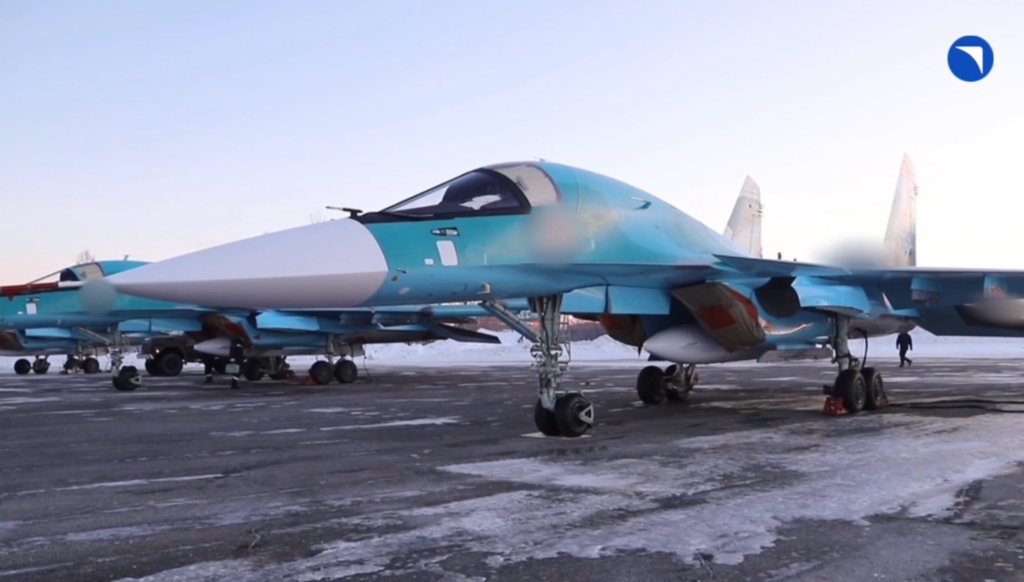
ASTRA adds that two more FAB (glide) bombs “fell off abnormally” into Russia’s Belgorod Oblast. Belgorod is the neighboring region to Ukraine’s eastern Kharkiv region. In this area, Russian jets need to fly over Russian airspace when they launch their glide bombs, whereas they fly over occupied Ukrainian airspace for much of the front.
ASTRA reports, “On February 3, a FAB bomb was found near the village of Setnoye in Korochansky District. On February 6, another Russian aerial bomb fell near the village of Khryashchevoye in the same district of Belgorod Oblast. The bombs did not explode, and no one was injured.”
Reports of an incident earlier tonight in the Western Russian city of Belgorod involving the Russian Air Force, with a FAB-1000 1,000lb Aerial Bomb claimed to have been accidentally dropped near a residential area and electrical substation near the city, which has since been… pic.twitter.com/RpPKktxRcA
— OSINTdefender (@sentdefender) December 6, 2025
It says that these mark at least the 9th and 10th aerial bombs Russian aircraft have dropped on Russian territory so far in 2026.
Russian authorities are reported to routinely try to cover these incidents up. When Russian civilians are injured, they typically blame attacks by Ukraine.
Russia’s failed bid for air superiority
The reason why Russia is bombing itself so much is that its air force was defeated by Ukraine’s air defence early in 2022. At the start of the war, the Russian Air Force made a bid for air superiority.
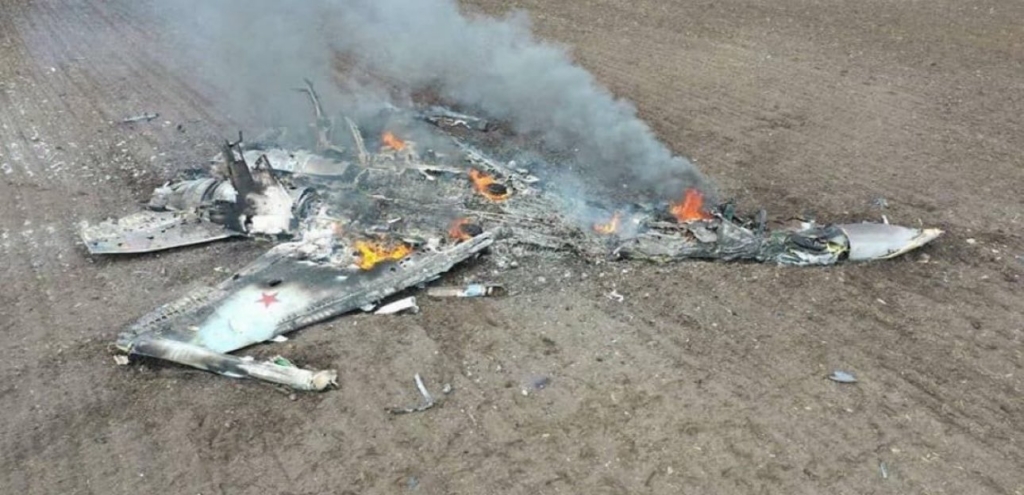
But unsustainable losses, the inability of the Russian Air Force to destroy Ukraine’s ground-based air defence, Russia’s shallow pool of trained pilots vulnerable to attrition, and structural weaknesses in its air force saw it abandon the effort.
The Russian Air Force is built for numbers and defence; it is incapable of Suppression of Enemy Air Defences (SEAD) and Destruction of Enemy Air Defences (DEAD) that more technologically advanced air forces like the Israeli Air Force and US Air Force are doing over Iran.
Since early 2022, Russian aircraft have been forced to operate out of range of Ukraine’s air defence using stand-off munitions. Expensive missiles are too expensive and limited in numbers to be used en masse for tactical targets.

In response, Russia has developed UMPK kits for its Soviet FAB bombs, giving them wings and satellite guidance. This transforms them into longer-range precision munitions that can be fired from Russian territory.
However, the glide kits often malfunction and fail to reach their targets, falling onto Russian territory instead.
Get the latest aerospace defence news here on AGN.
Russia has been bombing itself throughout the war
In December 2025, AGN reported Russia had accidentally bombed itself at least 143 times during 2025, a trend that’s continuing into 2026. This includes both Russian territory and Russian-occupied territory.
Another aerial bomb was dropped by 🇷🇺 plane in Belgorod region near a grain farm, As ASTRA sources in the region's emergency services reported, on Jan 9, FAB fell near a grain farm in the village of Ivanovskaya Lisitsa in Grayvoronsky District. There were no casualties or damage. pic.twitter.com/mTK1oeJTGn
— Vijesti (@Vijesti11111) January 13, 2025
In 2024, Russia was recorded as having dropped at least 165 FAB bombs on itself and the occupied territories.
ASTRA reports that the pro-Russian Aerospace Forces (VKS) Z-channel “Fighterbomber” has acknowledged that Russian aerial bombs have regularly fallen within Belgorod city limits.
🇺🇦✈️ Ukrainians have released the first video showing the use of their domestically produced guided (glide) aerial bomb.
— Visioner (@visionergeo) September 2, 2025
⚔️ The footage shows a 500-kilogram high-explosive aerial bomb (FAB) equipped with GPS guidance, with a publicly reported maximum range between 60 and 80… pic.twitter.com/t3dZX5zJEp
Fighterbomber is a Russian Telegram channel believed to have contacts with the Russian Air Force and is generally viewed as a credible source of information, especially when it comes to confirming Russian aircraft losses.
Photo: UAC