UK Royal Navy flies Leonardo’s Proteus uncrewed helicopter for the first time

January 16, 2026
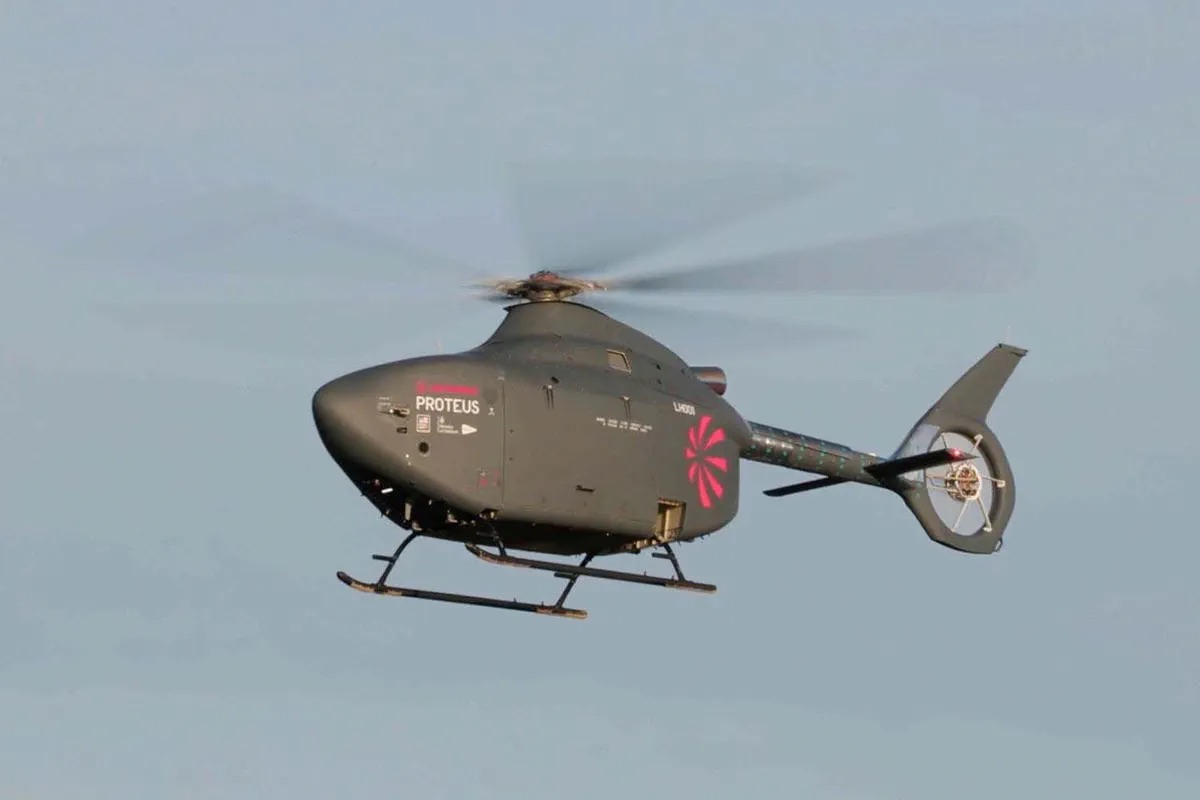
The Royal Navy has marked a quiet but highly significant milestone in British aviation history, with the first flight of Proteus, the UK’s first full-size, truly autonomous helicopter.
Designed and built by Leonardo, Proteus is a demonstrator designed to unlock the potential of uncrewed aerial systems, and to help the Navy move towards a future ‘hybrid air wing,’ one of the key comittments of the Strategic Defence Review.
While the Navy already operates several drone platforms, including the scaled-down helicopter Perigrine and the Malloy octocopter, Proteus eclipses them all in size, complexity and autonomy.
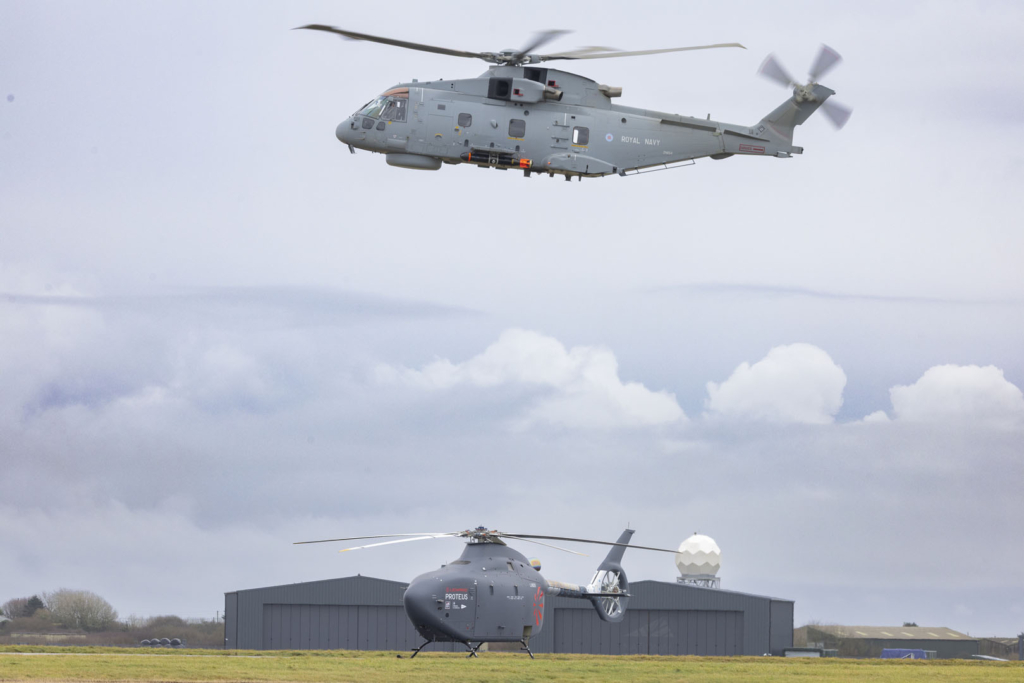
The first flight of the Royal Navy’s Proteus uncrewed helicopter
Following weeks of ground-running trials at Leonardo’s Yeovil facility, where engineers validated Proteus’ propulsion, sensors, and autonomous control systems, the time finally came for the aircraft to take off.
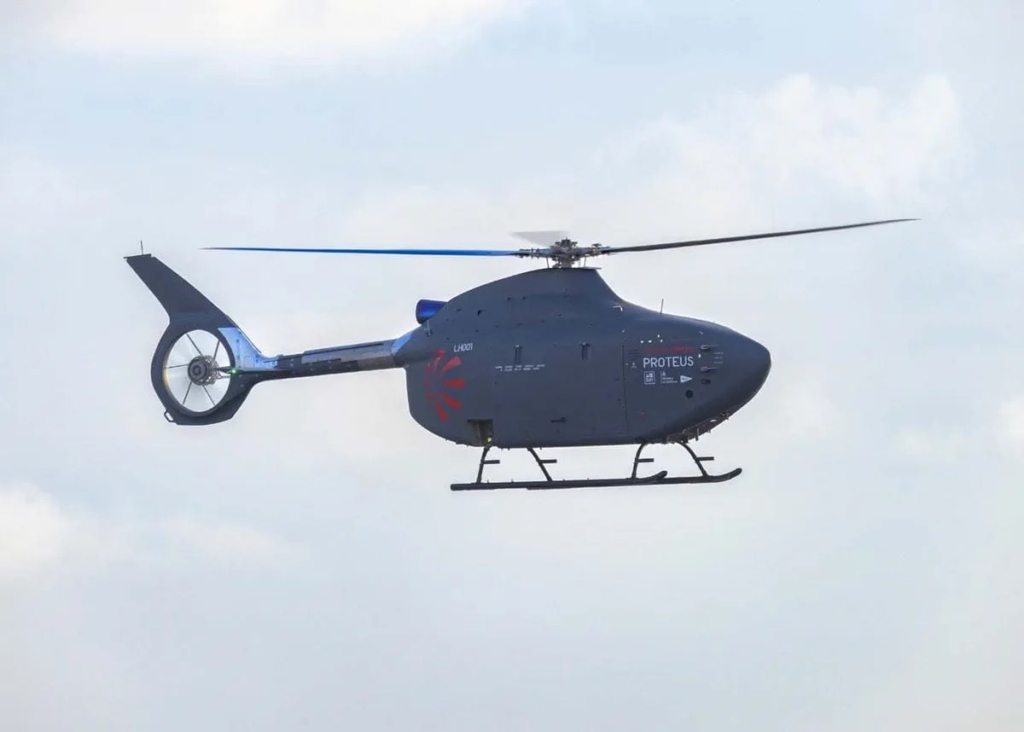
Watched by engineers, technicians and representatives from Leonardo, the Royal Navy and UK Defence Innovation, Proteus safely took off. It completed a short test routine, flying under its own controls independently of any human operator, although test pilots were monitoring for safety.
“This maiden flight is a proud moment for British innovation,” says Luke Pollard, Minister for Defence Readiness and Industry. “Autonomous systems like this will be vital in protecting our seas without putting personnel in harm’s way.”
The aircraft completed its maiden sortie from Predannack airfield in Cornwall. Predannack airfield serves as a satellite base for helicopters based at nearby RNAS Culdrose, but is also the National Drone Hub and a crucial site for developing uncrewed and autonomous systems.
“The successful first flight of Proteus is a significant step in delivering the Royal Navy’s maritime aviation transformation vision, and to demonstrating our steadfast commitment to investing in autonomy as part of a hybrid air wing,” sast Commodore Steve Bolton, Royal Navy Deputy Director Aviation Future Programmes.
“This milestone signals our intent to lead technological innovation, to enhance the fighting effectiveness of the Royal Navy in an increasingly complex operating environment, and to maintain operational advantage against evolving maritime threats.”
What exactly is the autonomous helicopter Proteus?
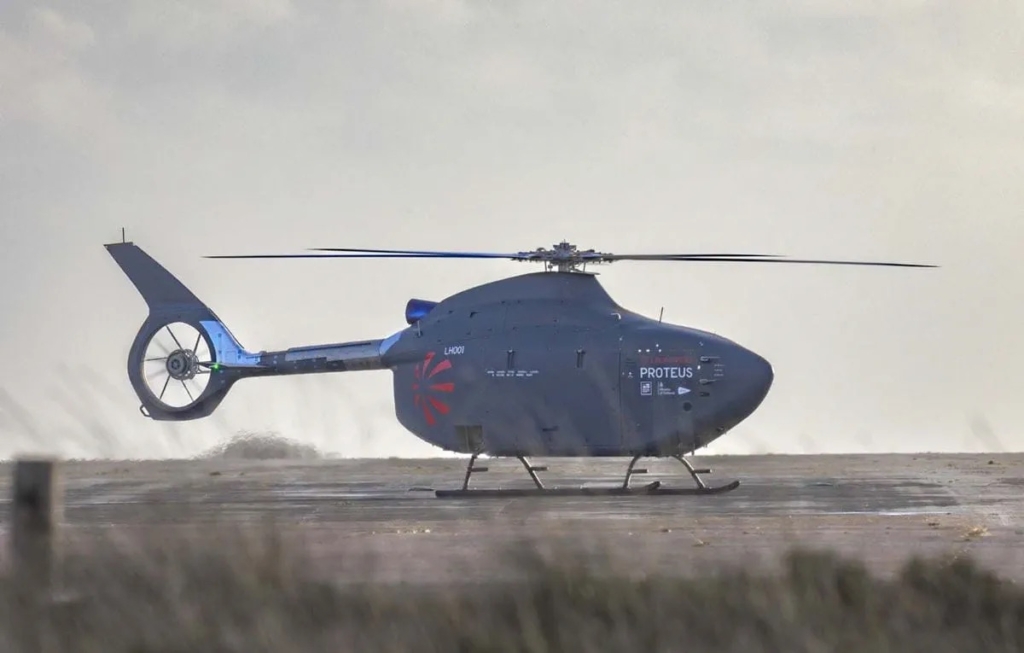
Proteus is a technology demonstrator developed by Leonardo under a £60 million UK-funded programme supporting around 100 high-skilled jobs at its Yeovil helicopter plant. Unlike smaller rotary-wing drones already in Royal Navy service, Proteus is a full-size helicopter, capable of lifting payloads in excess of one tonne and operating in demanding maritime weather conditions.
Rather than a cockpit, the aircraft’s internal volume is occupied by sensors, mission systems, and onboard computing. Advanced software allows Proteus to perceive its environment, process data from multiple sources, make decisions, and execute tasks autonomously.
In practical terms, this enables it to fly, navigate, and potentially conduct complex missions without direct human control, while remaining under human oversight.
Why the Royal Navy needs an uncrewed helicopter
The Royal Navy’s interest in autonomous helicopters is driven by both operational necessity and strategic geography. In the North Atlantic, anti-submarine warfare remains a resource-intensive task, requiring persistent surveillance across vast areas of ocean.
Uncrewed platforms like Proteus offer a way to extend coverage without overburdening scarce crewed helicopters and trained aircrew.
By taking on “dull, dirty, and dangerous” missions, such as long-duration maritime patrols or operations in poor weather and high sea states, Proteus can free up crewed aircraft for higher-risk or more complex tasks. Its payload capacity also allows it to carry sensors and mission equipment traditionally reserved for larger platforms, enhancing distributed maritime operations.
More broadly, autonomy aligns with the Navy’s push towards networked warfare. Proteus is designed to operate as part of a wider system-of-systems, sharing data with ships, submarines, crewed aircraft, and allied assets. In that sense, it is less a replacement for existing helicopters than a force multiplier, extending reach, persistence, and resilience at a time when maritime threats are growing more sophisticated.
Proteus’ first flight may have been brief, but it signals a long-term shift in how the Royal Navy expects to generate air power at sea, blending human expertise with autonomous capability in the decades ahead.
Featuered image: Royal Navy