Riyadh Air and IBM unveil world’s first ‘AI-native airline’ ahead of 2026 launch

December 8, 2025

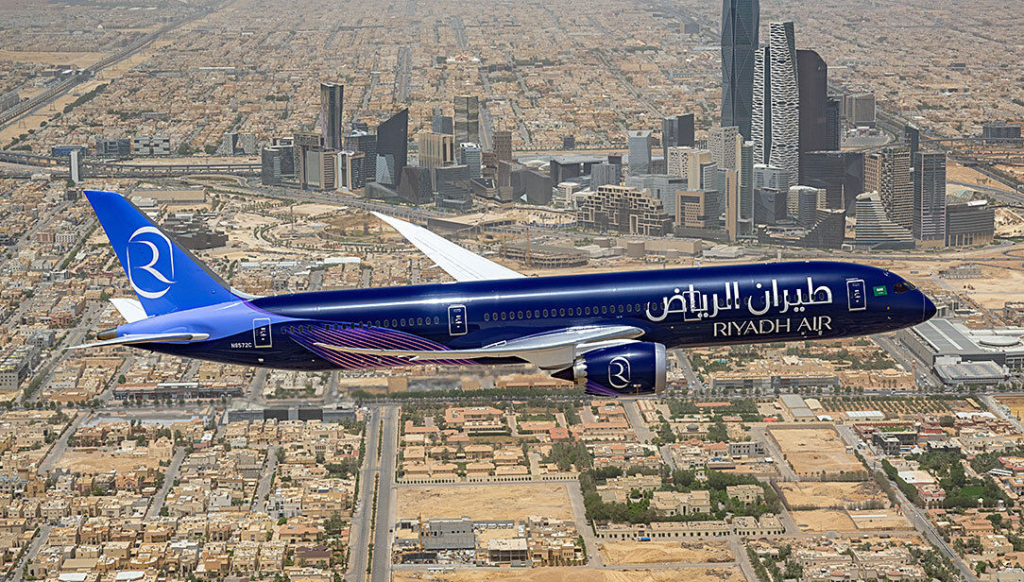
Riyadh Air has declared itself the world’s first “AI-native airline” after unveiling a sweeping technology partnership with IBM designed to embed generative and agentic AI into every layer of the carrier’s operations.
Riyadh Air opts to be first on platforms which “will define the next decade of aviation”
Announced at IBM Think Riyadh 2025, the milestone marks a pivotal moment in the airline’s three-year collaboration with IBM as it prepares for its first commercial flights in early 2026. Riyadh Air — launched in 2023 by Saudi Arabia’s Public Investment Fund (PIF) — is building its digital infrastructure “from the ground up,” avoiding the legacy systems that typically constrain established airlines.
“We had a clear choice — be the last airline built on legacy technology or the first built on the platforms that will define the next decade of aviation,” said Adam Boukadida, Chief Financial Officer at Riyadh Air. “With IBM, we’ve stripped out fifty years of legacy in a single stroke.”
Riyadh Air’s clean-sheet digital architecture
IBM Consulting acted as the orchestrator for the AI-native model, coordinating 59 workstreams and integrating technologies from more than 60 partners, including Adobe, Apple, FLYR, and Microsoft. IBM WatsonX Orchestrate sits at the centre of the system, allowing Riyadh Air to automate, scale and personalise both staff and passenger-facing processes.
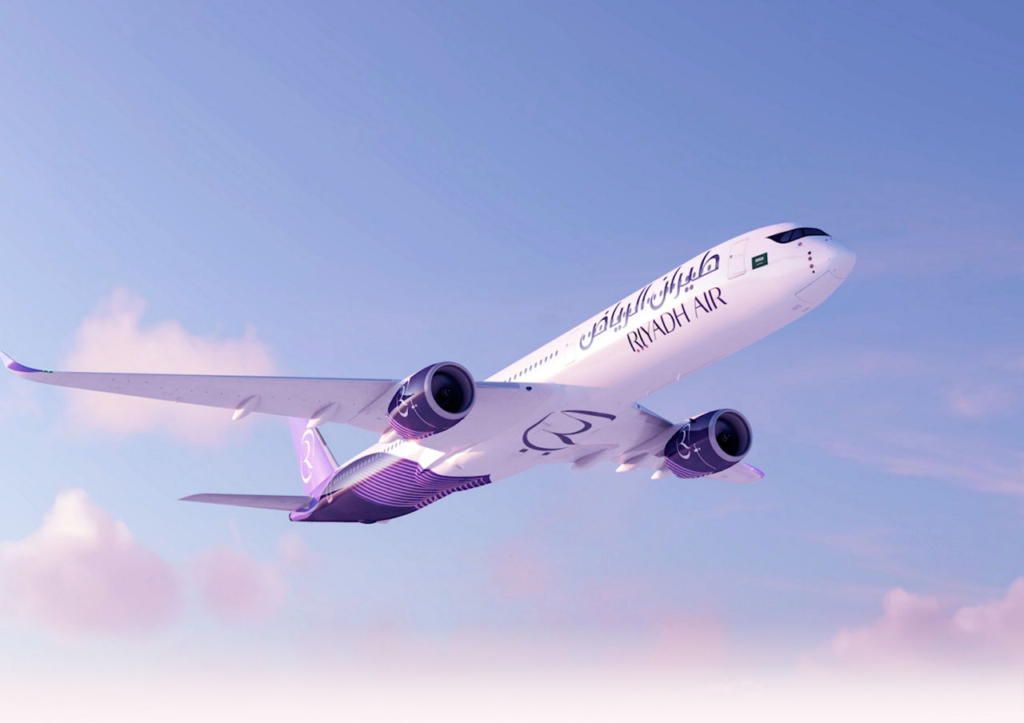
The airline is leveraging IBM Consulting Advantage — the consultancy’s AI-powered delivery platform — to accelerate implementation across its enterprise performance, crew management, customer care and commercial planning functions.
“By embedding AI into the very foundation of its operations, Riyadh Air is setting a new blueprint for what it means to build a modern, adaptive enterprise,” said Mohamad Ali, Senior Vice President, IBM Consulting.
Riyadh Air is employing AI to support its rapidly scaling workforce
Riyadh Air is positioning AI as the connective tissue between its people, its aircraft, and its passengers.
A personalised AI-driven digital workplace will give employees a single chat-first access point for HR tasks, self-service functions, and managerial workflows. This is designed to scale with the airline as it doubles its workforce over the next 12 months.

AI-powered mobile tools will provide real-time context for crew, including:
- Individual passenger preferences and travel context
- Alerts for service recovery (e.g., guests running late and a prompt to offer fast-track)
- Proactive suggestions for “next best action”
These use IBM’s agentic AI models to support cabin crews and ground teams through an integrated, context-aware concierge-style interface.
Riyadh Air also plans to deploy AI-enabled voice bots and agent-assist systems that use contextual data to anticipate traveller needs. While digital-first, the airline emphasises that the model remains “anchored in human values” to preserve personalised service.
Riyadh Air will also use AI as the structural backbone for its commercial and operational decision-making.
IBM implemented an enterprise performance management suite that unifies financial, operational and commercial data into a real-time planning and forecasting layer. This provides:
- Automated budgeting and forecasting
- Real-time route profitability insights
- Integrated scenario planning
- Data-driven network and revenue optimisation
This approach is designed to allow the airline to scale quickly as Saudi Arabia ramps up its aviation and tourism ambitions under Vision 2030.
Creating a new aviation blueprint for digitalisation
The collaboration aims to create a repeatable model for future airlines — one unencumbered by the gradual tech layering typical of established carriers. For Riyadh Air, the goal is to operate a unified, fully AI-enabled enterprise capable of serving more than 100 destinations by 2030.
The airline has also committed to advanced onboard digital systems and next-generation connectivity, aligning its cabin experience with its AI-native operational philosophy.
Aviation is transitioning to AI as digitalisation advances
Airlines and airports are advancing their digitalisation efforts to streamline operations and customer care, with many introducing AI applications. MarketsandMarkets projects that the AI aviation market will reach $4.86 billion by 2030, up from $1.75 billion in 2025.
In November, Emirates announced that it had signed a memorandum of understanding with OpenAI to explore artificial intelligence applications in its operations, commercial and customer-facing processes by deploying ChatGPT Enterprise.
Air Transat’s AI-native approach supports humans but doesn’t replace them
AGN recently interviewed Air Transat COO Marc-Philippe Lumpé during the World Aviation Festival in Lisbon, who said being “AI-native” will soon be essential for airlines. The aim for Air Transat is to become a data-driven network airline, applying predictive analytics to keep aircraft flying, optimising schedules, and using AI to improve sustainability and accelerate commercial decision-making.
“What people often forget in the frantic race towards artificial intelligence is that you have to make sure everything is digitalised first,” Lumpé said.
Lumpé shared details on the Canadian carrier’s plans to migrate its core operational backbone to Lufthansa Technik’s integrated digital ecosystem, including FlyDocs, AMOS, and AVIATAR.

“We’re going to be the first North American airline to transition fully to the Lufthansa Group system,” Lumpé told AGN. “It’s not just digitisation, it’s digitalisation, and it’s the backbone that’s required before you can even begin thinking about AI.”
Lumpé noted that humans remain critical to a successful implementation. “Digitalisation is probably 70% people, 30% technology,” he said. “If you don’t take your teams with you on this journey, it will fail.”
Despite the promise of AI, Lumpé also recognises that its inherent flaw of possible hallucinations still requires close human monitoring. “AI makes mistakes — and it can sell those mistakes in very convincing ways,” he warned. “You still need that second set of eyes.”
He views AI as a tool to support staff, not replace them. “Think of it as a good colleague who usually gives you the right advice, but not always. You check when it matters. That’s how we approach it.”
Featured Image: Riyadh Air