Italian Eurofighters intercept rare Russian “Black Pearl” Tu-134 over Baltic

November 24, 2025
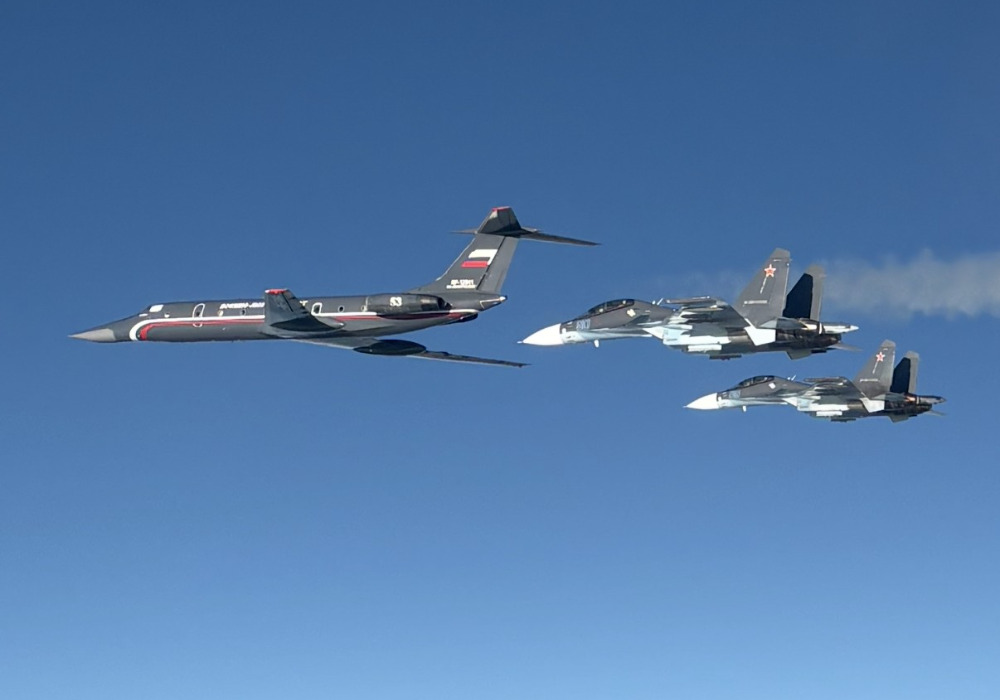
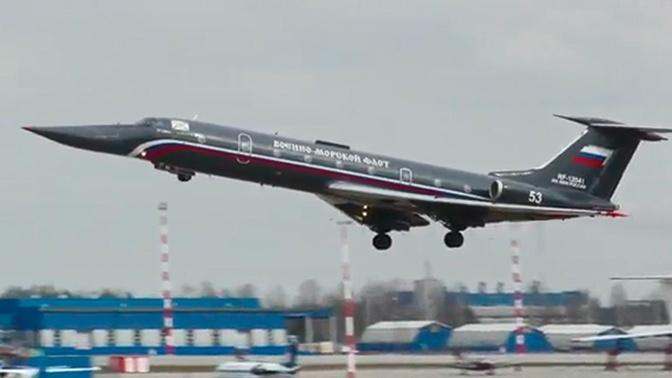
Italian Eurofighter Typhoons intercepted a Russian “Black Pearl” Tu-134 over the Baltic for the first time since 2020. Back then, the aircraft was used to train Russian bomber crews, but now it appears to be a VIP transport.
First NATO “Black Pearl” since Belgium’s in 2020
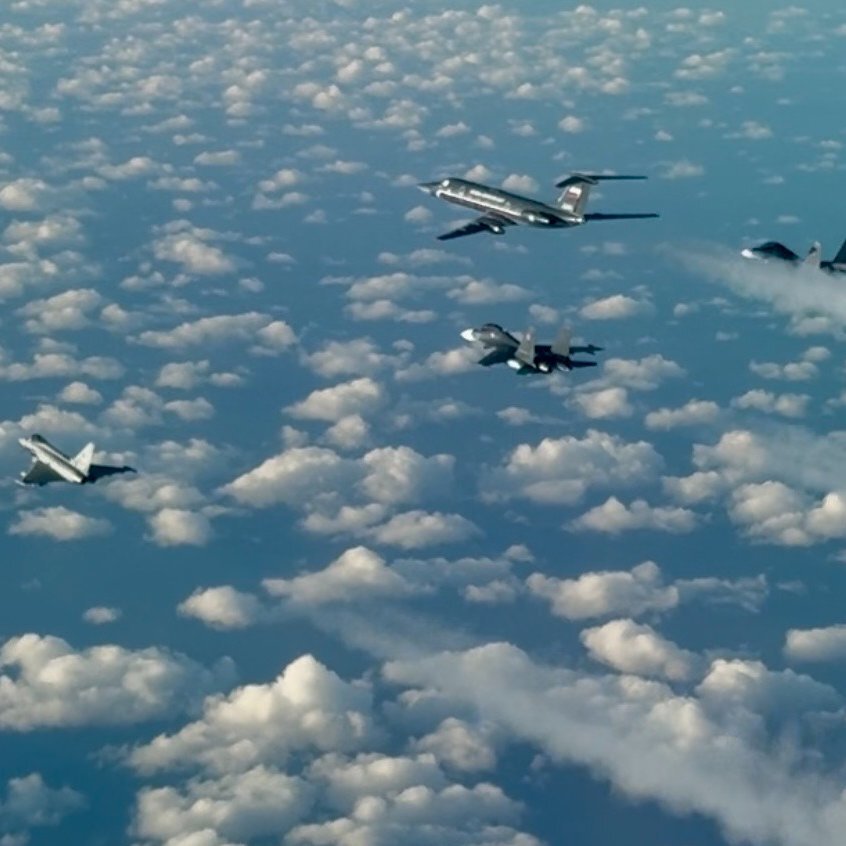
NATO aircraft have intercepted a rare Russian Tu-134UBL (now Tu-134A-4 VIP transport) over the Baltic. The aircraft was intercepted by Italian Air Force Eurofighter Typhoons, which were taking part in NATO’s Baltic Air Policing (BAP) mission in the region. The NATO took off from the Amari Air Base in Estonia.
Over the last week 🇮🇹 jets deployed at Amari 🇪🇪scrambled to intercept multiple 🇷🇺 assets. NATO Air Policing in the Baltic region ensures security of @NATO airspace under Eastern Sentry#EasternSentry is enhancing flexibility and strength to NATO's posture on the eastern flank pic.twitter.com/UElLnTi7VJ
— NATO Air Command (@NATO_AIRCOM) November 21, 2025
The Russian Tu-134 was accompanied by two Sukhoi Su-30SM2 Flankers and what appears to be a Su-24MR Fencer. The Su-30SM2s are from the Russian Navy, while the Su-24MR is operated by the Russian Air Force.
According to reporting by The Aviationist, this is the first time in five years that this aircraft has been intercepted.
In 2020, the Belgian Air Force posted, “Our F-16’s spotted quite a rare bird in the Baltic skies last week! This unique Tu-134 UBL “Crusty-B”, nicknamed ‘Black Pearl’ after its colour, is commonly used to train pilots and navigators from Tu-160 and Tu-22M3 strategic nuclear-capable bombers.”
Today our F-16s intercepted this rare Russian Tu-134UBL "Black Pearl" over the Baltic Sea.
— Belgian Air Force (@BeAirForce) February 14, 2020
It is used as a trainer for Tu-160 and Tu-22M3 bomber pilots.
Another successful mission for @thef35 and @NATO @NATOAIRCOM Air Policing!#WeAreNATO pic.twitter.com/9Xb7p2X5eK
The Aviationist states that while the Tu-134UBL was used to train pilots and navigators for Russia’s strategic bombers, it has since been converted to the Tu-134A-4 standard and is used for transporting senior Russian military officers.
The interception apparently took place between 10th and 16th November as NATO posted the interception on X (formerly Twitter) last Friday, saying the event happened “last week.”
Russia’s military Tu-134 airliners
The Tu-134 is a Soviet-origin narrowbody jet airliner designed for short and medium hauls. The type remained in production from 1966 to 1989, when the Soviet Union started to unravel.
According to Flight Global’s 2025 report, Russia has a total of 49 Tu-134 aircraft in its military inventory. Six of these are listed in service as training aircraft for the Russian Naval Aviation.
The rest are used by the Russian Air Force, 37 are listed as training aircraft, one is for reconnaissance, and five are transport aircraft.
The rare Tu-134UB-L variant that was used to train Russian Tu-160 and Tu-22M3 aircrews is easily recognizable by the nose cone that is shaped just like that of the Tu-22 Blackfire. Other Tu-134s in Russian service lack the distinct nose cone.
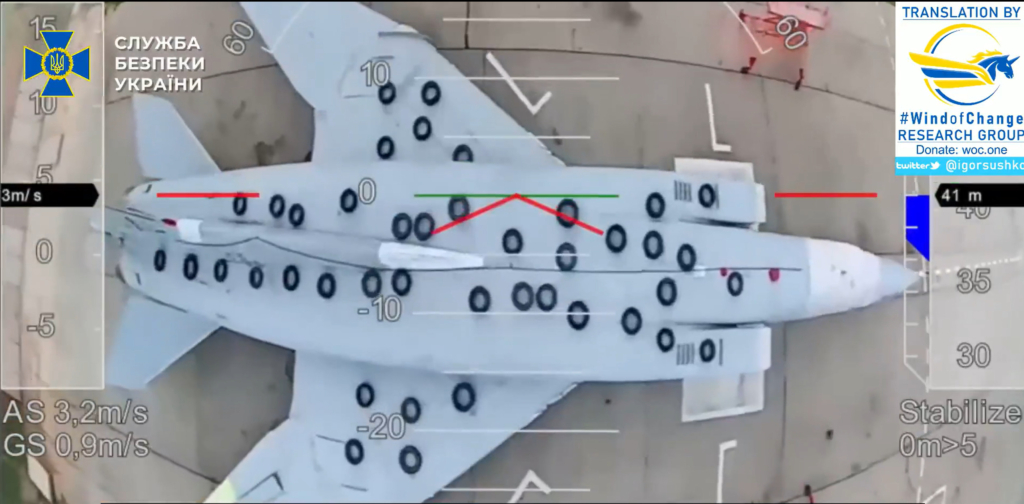
Separately, around 20% of Russia’s active strategic bombers (all Tu-22M3s or Tu-95s) were damaged or destroyed on the ground during Ukraine’s Operation Spiderweb earlier in 2025.
According to the Oryx list, 11 Tu-22M3 and 10 Tu-95MS bombers are visually confirmed to have been destroyed or damaged so far in this war. That is not counting other airframes that have used up their remaining useful flight hours.
Get the latest aerospace defence news here on AGN.
No Tu-134s lost, but have come close
Russian Tu-134UBLs appear to have come close to being hit at least a couple of times in the Ukraine war, although it appears none have been lost so far. No Tu-134s appear on Oryx’s list of visually confirmed losses.
One Tu-134UBL was reported by The War Zone to have been visible in satellite Saki Air Base in 2022. It escaped a particularly heavy Ukrainian attack that destroyed a large number of Russian aircraft on the ground.
The War Zone also reported that a Tu-134UBL had a close shave later the same year after Ukraine launched more deep strikes on Russian air bases targeting strategic bombers.
Featured Image: NATO