NASA advances laminar flow wing technology that could cut airliner fuel burn by 10%

NASA has taken another step toward improving the fuel efficiency of future commercial aircraft, advancing a wing-flow technology that studies suggest could reduce fuel burn by as much as 10% on large airliners.
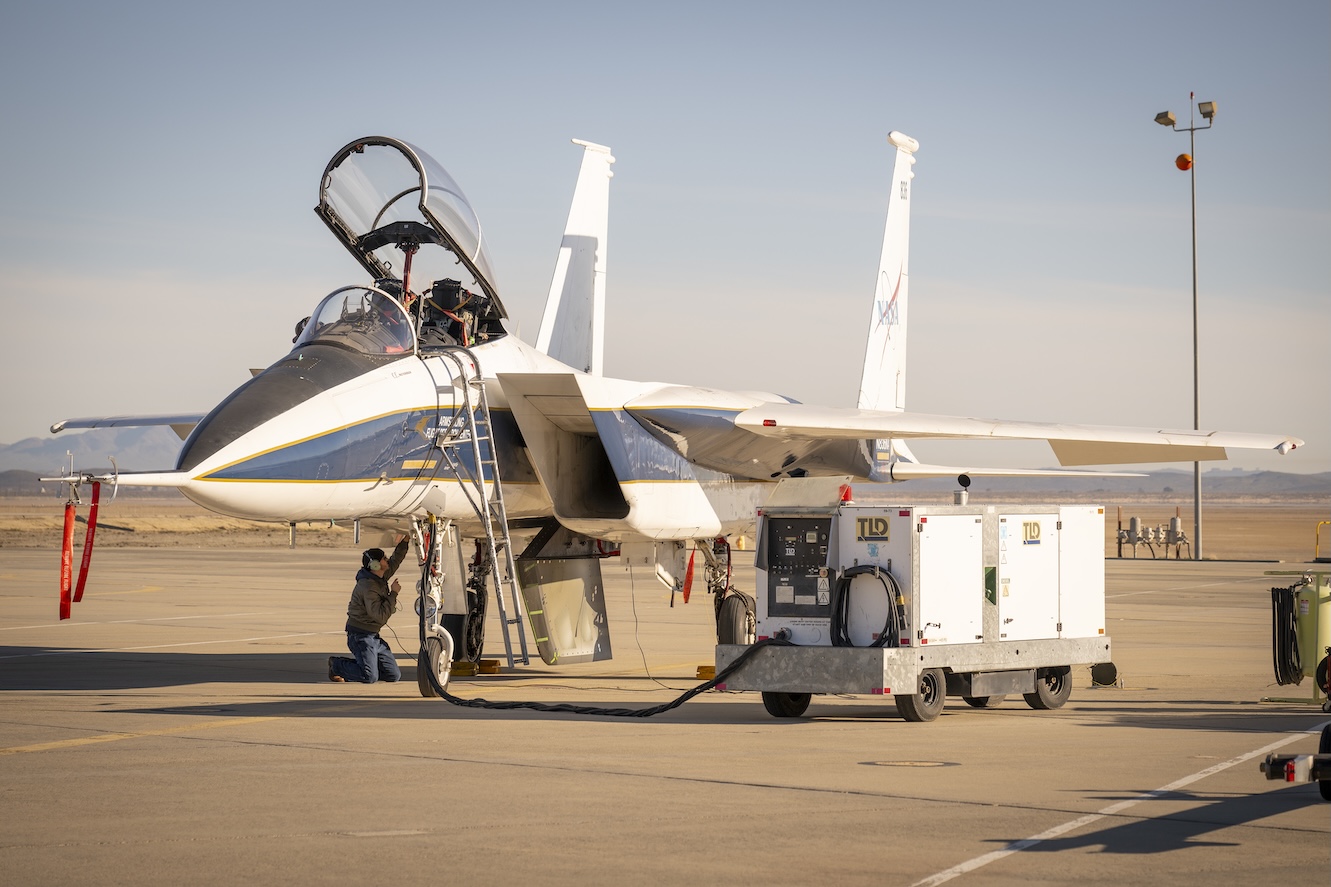
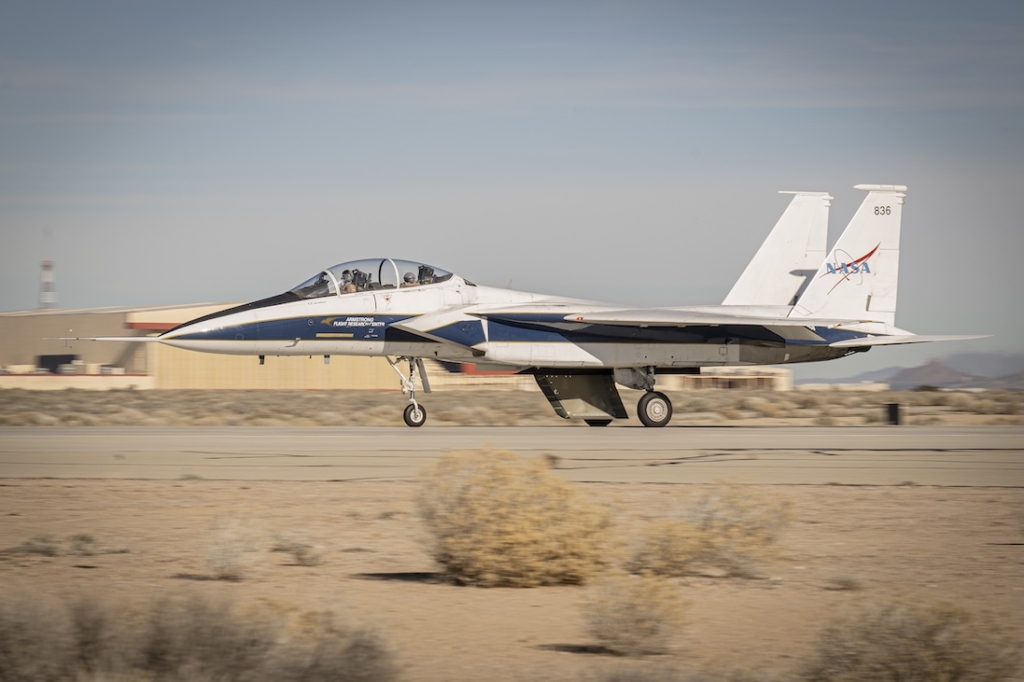
Engineers at NASA’s Armstrong Flight Research Center in California have completed a high-speed taxi test of the Crossflow Attenuated Natural Laminar Flow (CATNLF) concept, using an F-15B research aircraft as a flying laboratory.
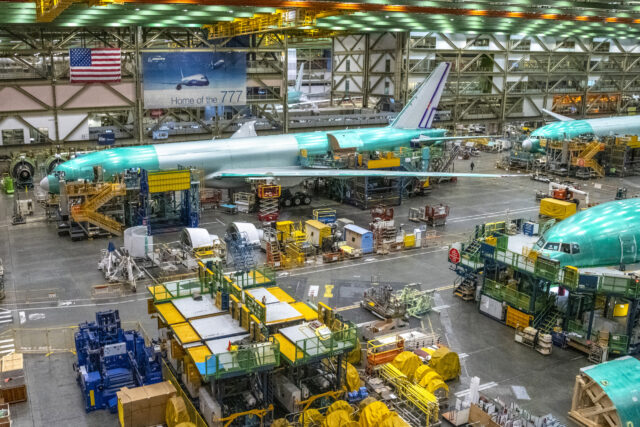
Previous NASA computational studies indicate that, if successfully applied to a widebody aircraft such as a Boeing 777, the technology could deliver annual fuel savings amounting to millions of dollars per aircraft.
NASA reaches key milestone in drag-reduction wing technology
The taxi test, conducted on 12 January, saw the modified F-15 reach speeds of approximately 144mph, marking the first major operational milestone for the CATNLF programme.
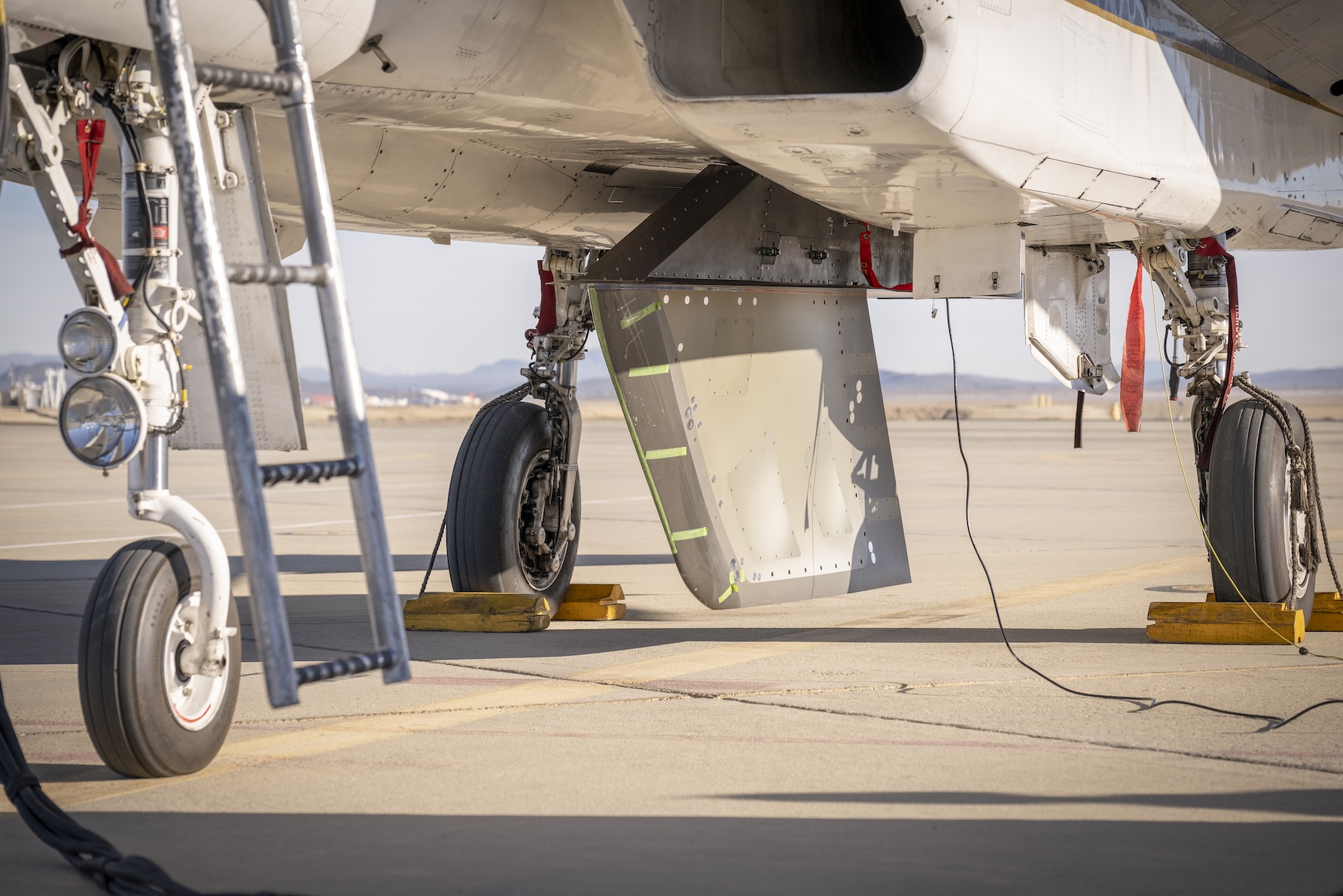
The aircraft carried a 3ft-tall experimental structure mounted beneath its fuselage, visually similar to a ventral fin but in fact representing a vertically oriented scale model of a swept wing.

NASA opted for this unconventional configuration to allow the wing design to be tested in flight without the cost and complexity of modifying an entire aircraft wing or developing a bespoke demonstrator.
Installed vertically, the model experiences airflow conditions comparable to those encountered by a conventional horizontal wing in cruise.
How NASA aims to extend laminar flow on swept commercial aircraft wings
The CATNLF concept is focused on increasing laminar flow across a greater portion of a wing’s surface.
Laminar flow describes the smooth, orderly movement of air close to the skin of an aircraft. When this flow breaks down into turbulence, frictional drag rises sharply, increasing fuel consumption.
Although laminar flow has been studied and applied in aviation for decades, its use on large commercial aircraft has been constrained.
Modern airliners rely on swept wings for aerodynamic efficiency at cruise, but these geometries are prone to “crossflow” effects that destabilise smooth airflow and trigger an early transition to turbulence.
CATNLF addresses this challenge through refined wing shaping intended to suppress crossflow movement, allowing laminar flow to be maintained and reducing overall drag.
NASA modelling suggests up to 10% fuel savings for widebody aircraft
Between 2014 and 2017, NASA conducted a series of computational studies to assess the potential impact of CATNLF on commercial aircraft. Those analyses suggested that fuel-burn reductions approaching 10% could be achievable on long-range twinjets.
While NASA cautions that real-world performance can only be confirmed through testing, even modest fractions of that improvement would represent a significant step forward for airlines facing rising fuel costs and tightening emissions targets.
From wind tunnel testing to flight trials of NASA’s laminar flow wing
Encouraged by earlier work, NASA researchers validated the concept in a 2018 wind tunnel campaign at the agency’s Langley Research Center in Virginia. Those tests confirmed that the CATNLF geometry could sustain extended regions of laminar flow under controlled conditions.
The current phase moves the technology into a flight-representative environment, where atmospheric turbulence is lower than in wind tunnels and scaling effects can be explored more effectively.
The F-15B testbed provides the necessary performance margin while keeping programme costs significantly below those of alternative approaches, NASA said.
NASA targets subsonic commercial aircraft efficiency gains
For now, the programme is aimed at subsonic commercial aircraft.
NASA notes that while CATNLF is optimised for subsonic flight, previous studies suggest similar principles could eventually be adapted for future supersonic designs, broadening the potential applicability of the research.
Next steps as NASA prepares CATNLF flight testing
With taxi testing complete, NASA plans to begin a series of initial flights to assess the aerodynamic behaviour of the CATNLF model in the air.
These tests will gather data on laminar flow extent, stability, and sensitivity to operating conditions.
“After the positive results in the wind tunnel test, NASA saw enough promise in the technology to progress to flight testing,” said Michelle Banchy, Langley principal investigator for CATNLF.
“Flight testing allows us to increase the size of the model and fly in air that has less turbulence than a wind tunnel environment, which are great things for studying laminar flow.”
Although still at a relatively early stage of development, CATNLF illustrates how targeted aerodynamic innovations could deliver disproportionately large benefits.
If the technology proves viable at scale, it could form part of a wider programme of measures shaping the next generation of fuel-efficient commercial aircraft.
“Even small improvements in efficiency can add up to significant reductions in fuel burn and emissions for commercial airlines,” said Mike Frederick, principal investigator for CATNLF at NASA’s Armstrong Flight Research Center in Edwards, California.
Featured image: NASA/Christopher LC Clark