Why NASA is flying a U-2 Dragon Lady at 70,000 feet to capture moonlight

March 3, 2026
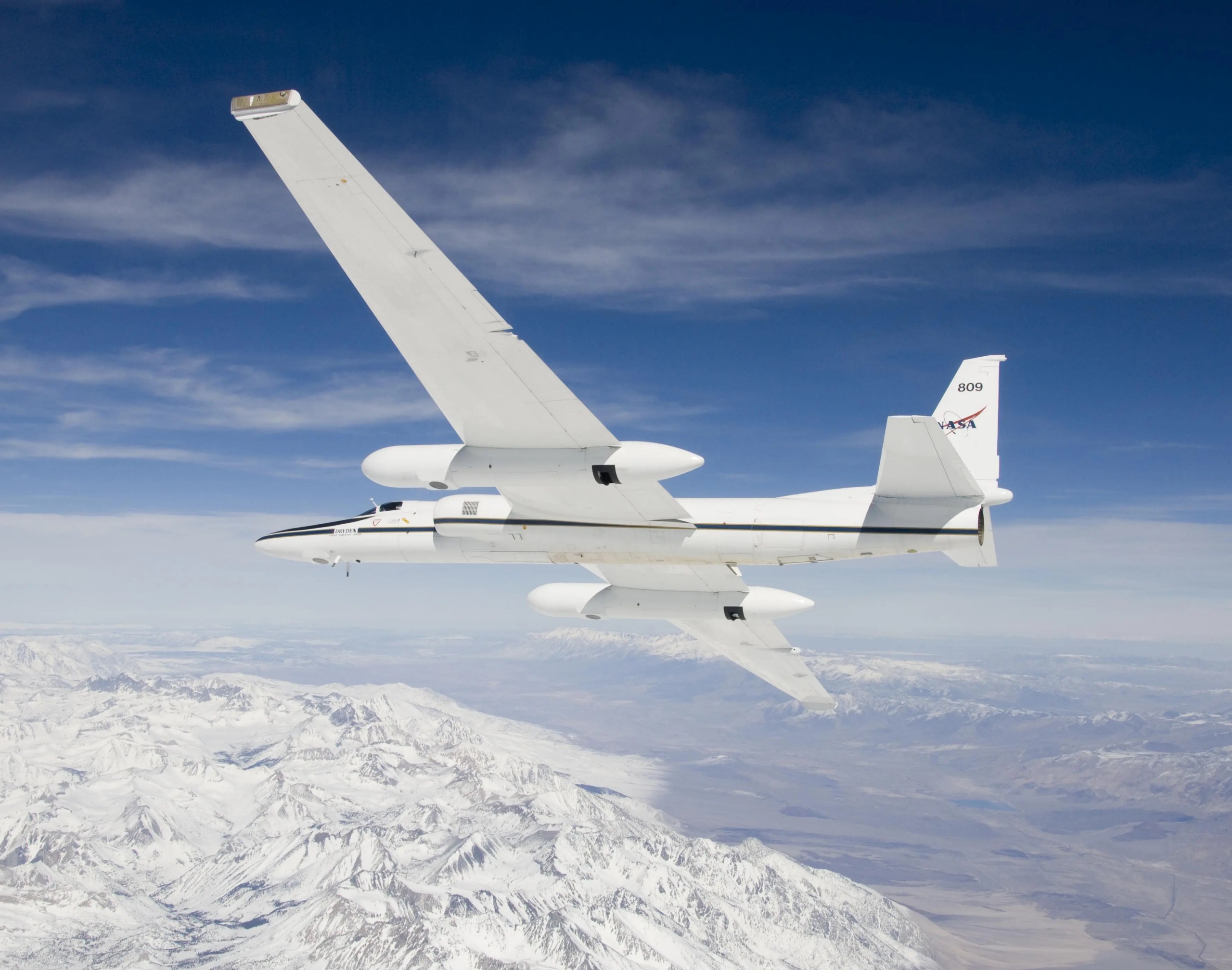
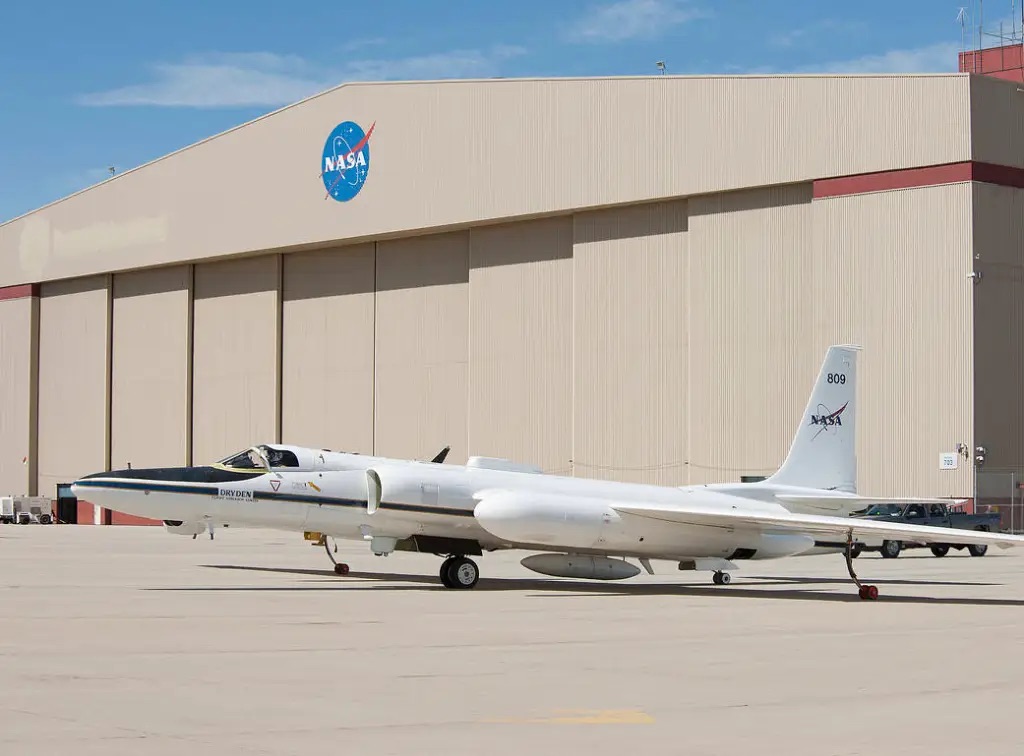
NASA has completed a three-week high-altitude campaign using its ER-2 research aircraft to measure the Moon’s brightness in order to improve the accuracy of satellite sensors in orbit.
The Airborne Lunar Spectral Irradiance instrument, known as air-LUSI, flew at approximately 70,000 feet above the US West Coast, collecting precise measurements of lunar light.
The data will be used to calibrate Earth-observing satellites that monitor weather systems, agricultural activity and environmental change.
The campaign concluded on 5 February and marks the latest step in NASA’s effort to establish a more reliable standard for on-orbit sensor calibration.
Why NASA uses the Moon to calibrate Earth-observing satellites
Satellite instruments degrade over time. Exposure to radiation, temperature swings and the harsh environment of space can gradually affect sensor performance. To ensure that long-term datasets remain accurate, scientists regularly calibrate instruments against known reference sources.
The Moon provides one of the most stable natural references available.
Unlike the Earth’s surface, which changes constantly due to vegetation growth, urban expansion, snowfall and seasonal variation, the Moon’s reflectance characteristics remain largely constant. Its surface reflects sunlight consistently and measurably.
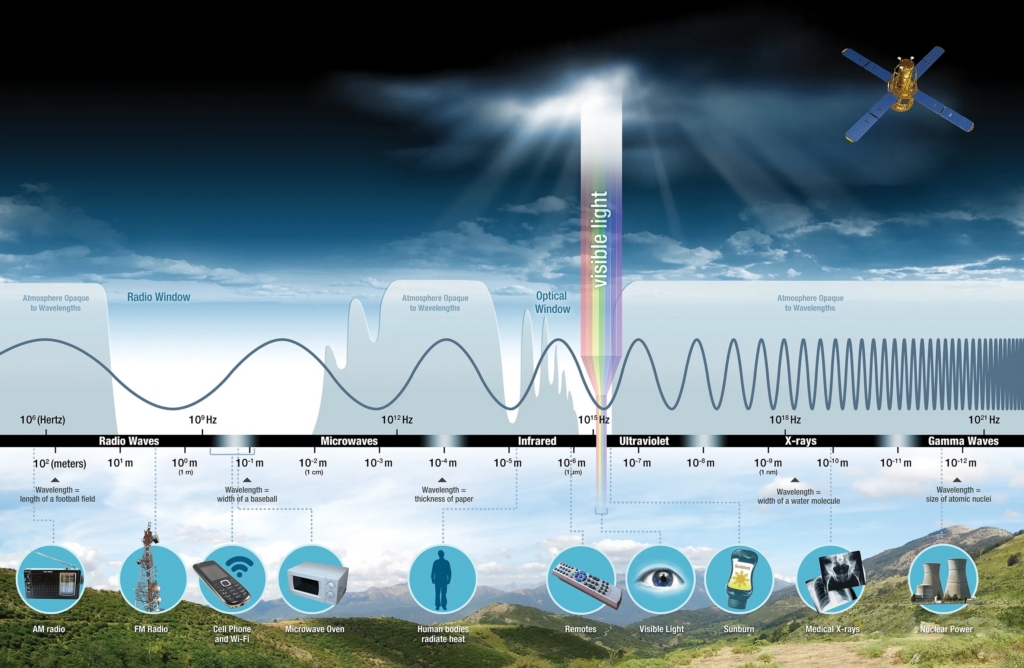
The Sun is also used for calibration, but its brightness is significantly higher than that of the Earth, making it less suitable for instruments designed to observe relatively faint reflected light from the planet’s surface. The Moon’s brightness more closely matches the operational range of Earth-observing sensors.
By measuring lunar spectral irradiance or the amount of light reflected by the Moon across different wavelengths, scientists can verify whether satellite instruments are drifting from their original calibration and correct them accordingly.
How NASA’s air-LUSI instrument measures lunar spectral irradiance at 70,000 feet
Measurements taken from ground level are affected by atmospheric interference, including water vapour, aerosols and cloud cover. To minimise those effects, NASA carries the air-LUSI instrument to near-space altitudes.
At 70,000 feet, the ER-2 operates above roughly 95 per cent of the Earth’s atmosphere, providing far clearer observing conditions.
Air-LUSI makes highly accurate, traceable measurements of lunar spectral irradiance. These measurements are used to validate and refine existing lunar reflectance models that satellite operators depend on for calibration.
Current exo-atmospheric lunar irradiance models carry an uncertainty of around five to 10 per cent. Improving those models would allow satellites to calibrate more precisely and more quickly without relying on additional onboard hardware.
The air-LUSI project is a collaboration involving NASA, the National Institute of Standards and Technology, the US Geological Survey, the University of Maryland, Baltimore County, and McMaster University in Ontario.
The team has been conducting lunar measurement flights since 2022.
NASA’s Arcstone mission takes lunar calibration into orbit
NASA is also advancing lunar calibration from space itself through the Arcstone mission, launched in 2025.
Arcstone is the first mission dedicated exclusively to measuring sunlight reflected from the Moon from orbit. It carries a spectrometer designed to separate incoming light into its constituent wavelengths, allowing detailed measurement of lunar spectral reflectance.
“One of the most challenging tasks in remote sensing from space is achieving required instrument calibration accuracy on-orbit,” said Constantine Lukashin, principal investigator for the Arcstone mission and physical scientist at NASA’s Langley Research Center in Hampton, Virginia.
“The Moon is an excellent and available calibration source beyond Earth’s atmosphere. The light reflected off the Moon is extremely stable and measurable at a very high level of detail. Arcstone’s goal is to improve the accuracy of lunar calibration to increase the quality of spaceborne remote sensing data products for generations to come.”
Arcstone’s six-month technology demonstration aims to establish a universal, high-accuracy reference standard that can be used across government, academic and commercial space programmes.
“The mission demonstrates a new, more cost-efficient instrument design, hardware performance, operations, and data processing to achieve high-accuracy reference measurements of lunar spectral reflectance,” Lukashin added.
NASA’s ER-2 high-altitude aircraft and its role in satellite research
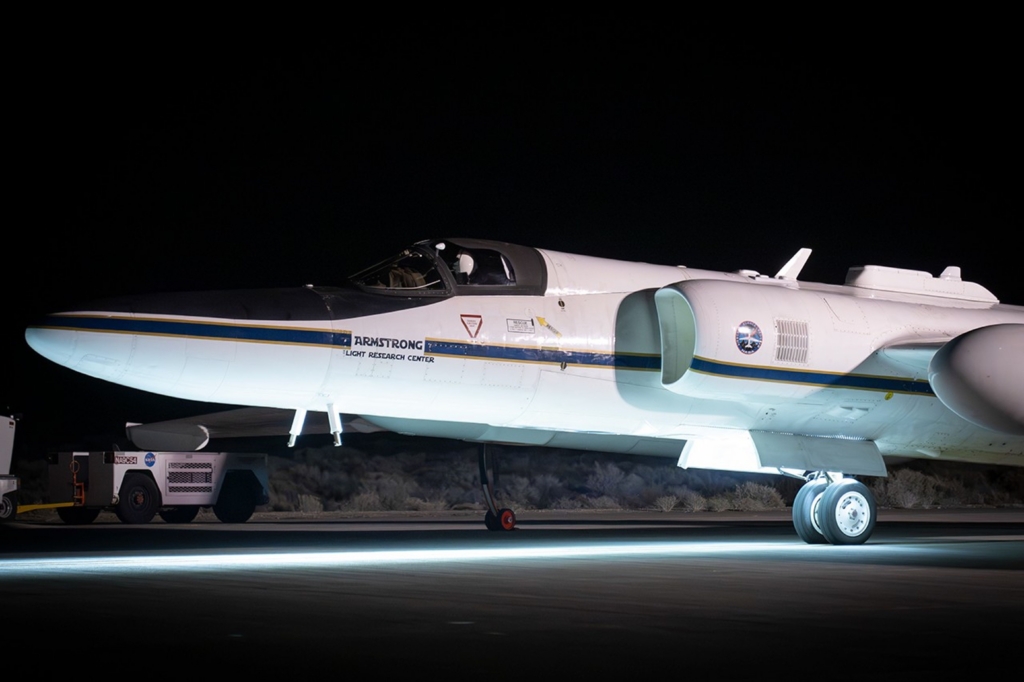
The ER-2 aircraft plays a central role in NASA’s Airborne Science Program. Derived from the Lockheed Martin U-2 high-altitude intelligence, surveillance and reconnaissance (ISR) platform, it has been adapted to carry scientific instruments at extreme altitudes.
NASA operates two ER-2 aircraft based at Armstrong Flight Research Center in California. The aircraft can reach 65,000 feet within about 20 minutes of take-off and cruise at approximately 410 knots. A typical eight-hour mission allows around seven hours of data collection at altitude.
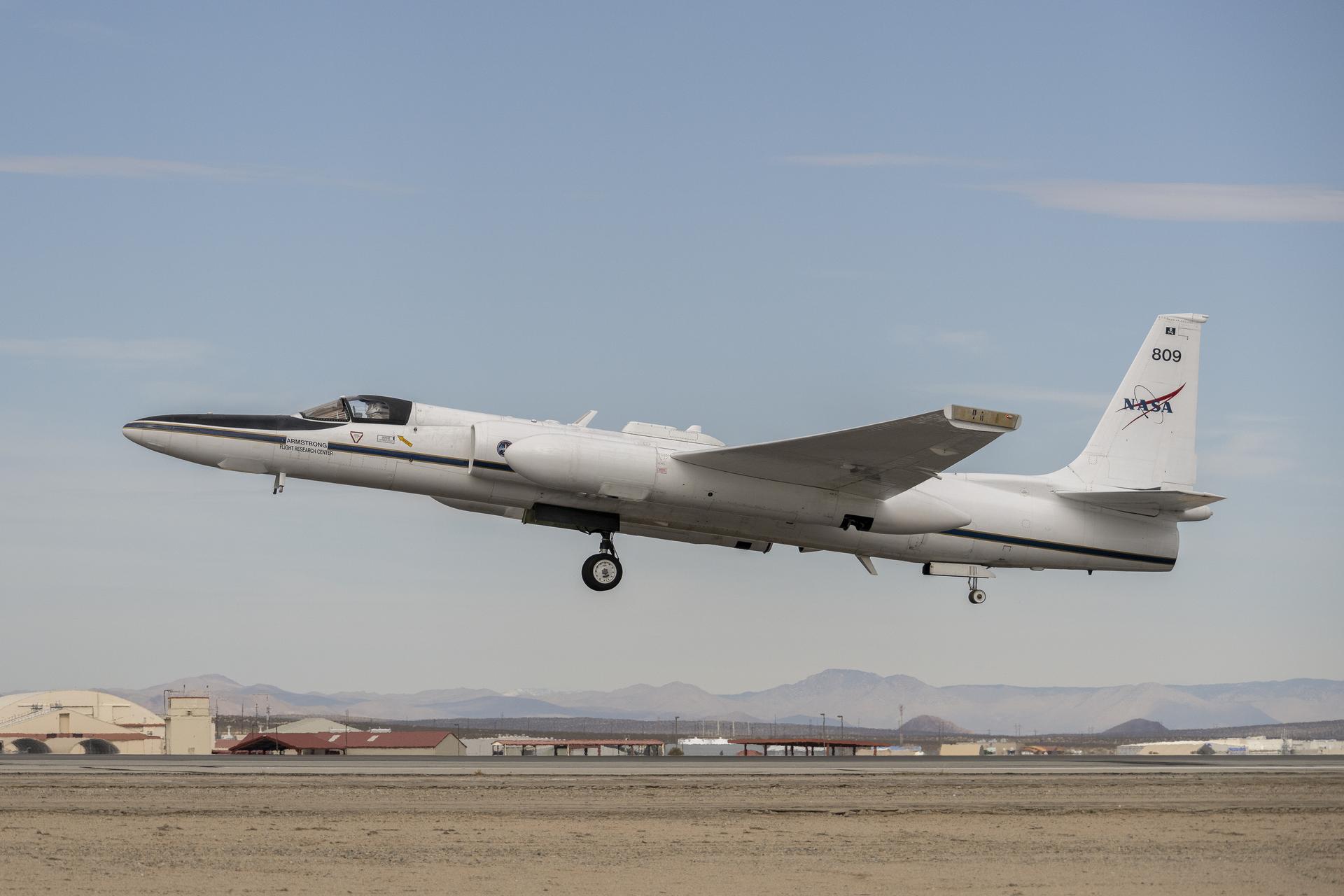
The aircraft can carry up to 2,600 pounds of scientific payload distributed across pressurised compartments in the fuselage and wing pods. Its modular configuration allows instruments to be installed or removed quickly depending on mission requirements.
NASA acquired its first ER-2 in 1981 and a second in 1989, replacing earlier U-2 aircraft that had supported scientific research since the early 1970s. Since the programme’s first flight in August 1971, NASA’s high-altitude aircraft have flown more than 4,500 research and test missions.
The ER-2 has contributed to research on ozone depletion, stratospheric chemistry, snowstorm formation, monsoon dynamics and satellite sensor development. It also supports validation of instruments such as the Airborne Visible Infrared Imaging Spectrometer (AVIRIS), used to study climate and environmental processes.
How improved lunar calibration strengthens climate and environmental data
Accurate calibration underpins decades of climate and environmental research. Small calibration errors can accumulate over time, affecting trend analysis and long-term datasets.
By refining lunar calibration techniques through both airborne campaigns and orbital missions, NASA aims to reduce uncertainty and improve confidence in global observations.
While the Moon itself remains unchanged, the instruments observing Earth do not. The work carried out by air-LUSI aboard the ER-2 and by Arcstone in orbit is designed to ensure that the satellites monitoring weather systems, agricultural productivity and ecosystem change continue to deliver dependable data.
Featured image: NASA