Herringbone or throne: Which lie-flat seat layout works best on narrowbody jets?

November 30, 2025

Lie-flat beds used to be available only on widebody aircraft, but the long-range narrowbody – especially the Airbus A321LR/XLR – has changed the rules for getting a good night’s sleep in-flight. Airlines are squeezing surprisingly sophisticated business cabins into a single aisle. The variety of lie-flat seats now available raises a question: What’s the best way to arrange seats that extend to a long bed in a narrow fuselage?
Why are lie-flat seats on narrowbodies suddenly everywhere?
Long-range narrowbodies like the A321LR/XLR let airlines fly “long and thin” routes – transatlantic city pairs and secondary destinations that don’t justify a widebody but still need a proper premium cabin. That’s why you now see lie-flat seats on single-aisle jets with carriers such as JetBlue, Aer Lingus, TAP Air Portugal, SAS, La Compagnie and, more recently, Etihad Airways.

To make the numbers work, airlines need:
- True lie-flat beds (premium fare-paying passengers won’t tolerate recliners overnight to the US or the Middle East anymore).
- As many seats as possible in a narrow cabin cross-section.
- Enough “wow factor” – doors, privacy, storage, large IFE screens – to justify airlines charging a widebody-style fare.
The geometry on a narrowbody doesn’t leave much room for creativity, but industry designers have done their best.
Some airlines have used classic herringbone layouts, others use reverse herringbone, and some have mixed staggered layouts with throne-style seats to make the most of the space. So which is best? To answer that, let’s take a closer look at what airlines are flying.
Narrowbody layout option 1: staggered with “throne” seats
The workhorse layout on A321LR/XLRs so far has been the staggered Thompson Vantage style: seats alternate between pairs and singles, giving a 2-2/1-1 pattern. TAP Air Portugal, Aer Lingus and SAS all use variants of this on their A321LRs, with 16 lie-flat seats that flip into roughly 6’–6’5” beds. JetBlue’s original Mint A321 configuration used a similar alternating 2-2/1-1 layout.
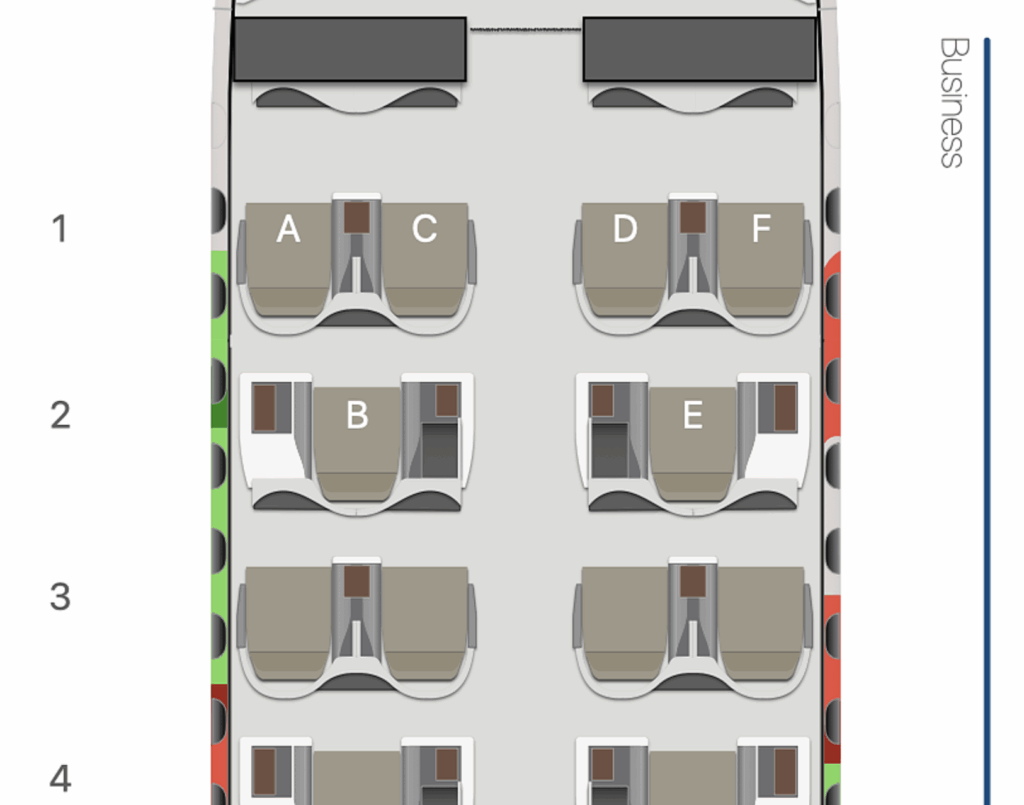
Within that layout, the “throne” seats – the solo seats with big tables on both sides – have become mini-cult favourites. They offer lots of room with dual side consoles for a laptop, drinks, an amenity kit, and other personal items. There’s no neighbour to climb over; it’s entirely aisle access.
If you’re travelling on your own and like having space to keep your personal items at hand, a throne-style seat is hard to beat.
For couples travelling together, the doubles are just right.
Narrowbody layout option 2: herringbone
Where narrowbodies go “all-suite” (like JetBlue’s latest Mint), they have adopted inward-facing herringbone pods. The herringbone stack is space-efficient, but some passengers feel awkward facing the aisle. JetBlue addresses this issue by adding privacy doors.
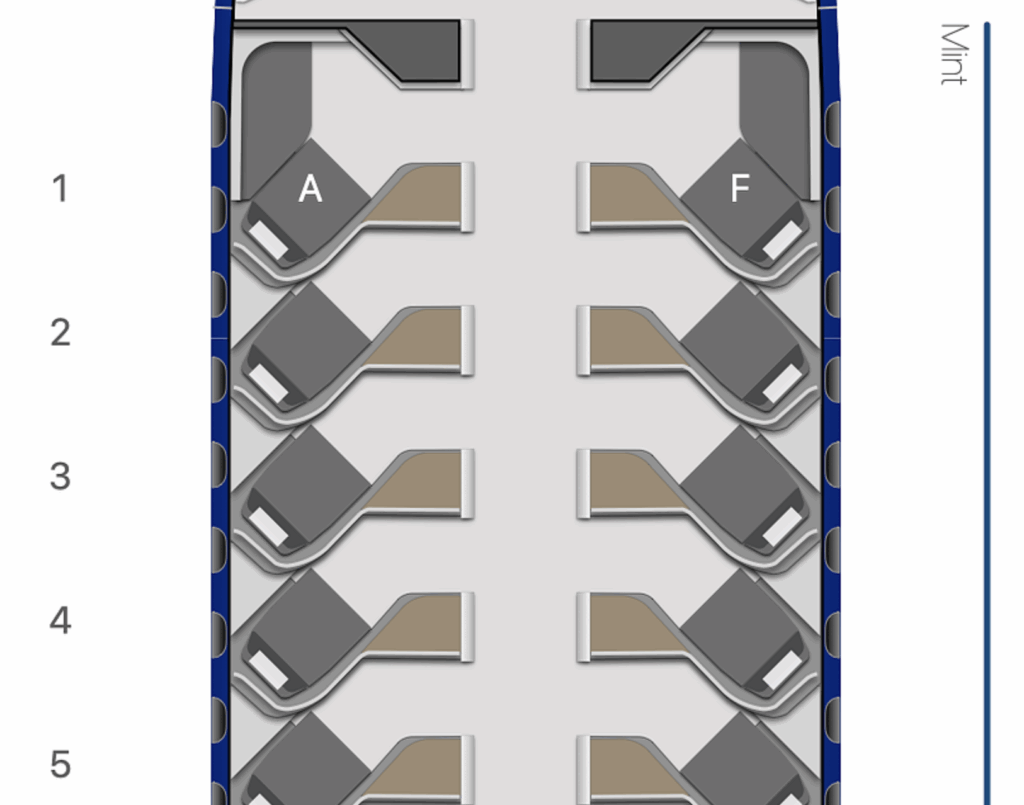
The airline also got creative with the leftover room at the front of the aircraft, debuting Mint Studio seats that offer more space, a side ottoman, additional storage, and a larger retractable 22″ HD touchscreen display for in-flight entertianment. Technically, it’s a first class suite in the front row.
Narrowbody layout option 3: reverse herringbone
Etihad’s new Airbus A321LR has 1-1 reverse herringbone pods (the seats angle to face the window), each converting to a 78” bed with lots of personal space.
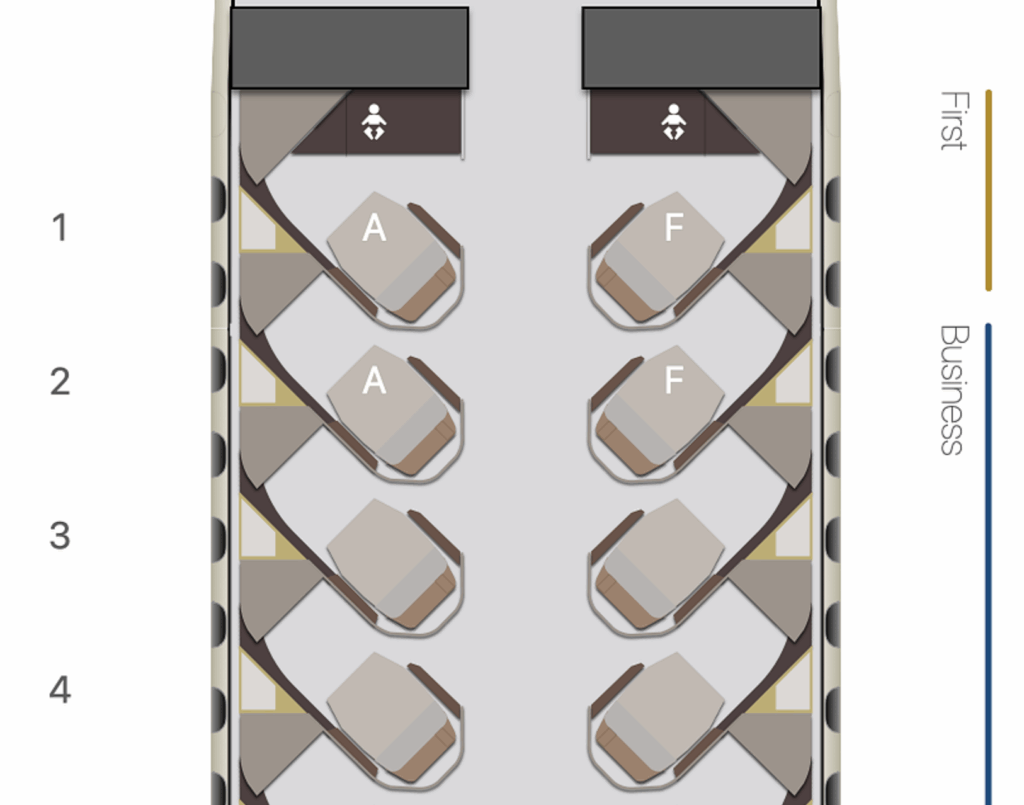
The reverse herringbone is also space-efficient, and it eliminates the awkward issue of facing the aisle. Like JetBlue, Etihad has used the extra space at the front to create a larger suite, with an ottoman and privacy doors. Etihad sells this as a first class suite.
Herringbone, reverse herringbone or staggered with throne – which is best?
The short answer is that the best seat choice on an aircraft depends on what passengers value most.
For solo travellers who want to cocoon, “throne” seats are perfect. JetBlue’s Mint Suites/Studios herringbone or Etihad’s A321LR reverse-herringbone pods will also suit. JetBlue’s privacy doors make facing the aisle less of an issue. Both of them offer privacy, no sleeping neighbours to climb over, and lots of storage.
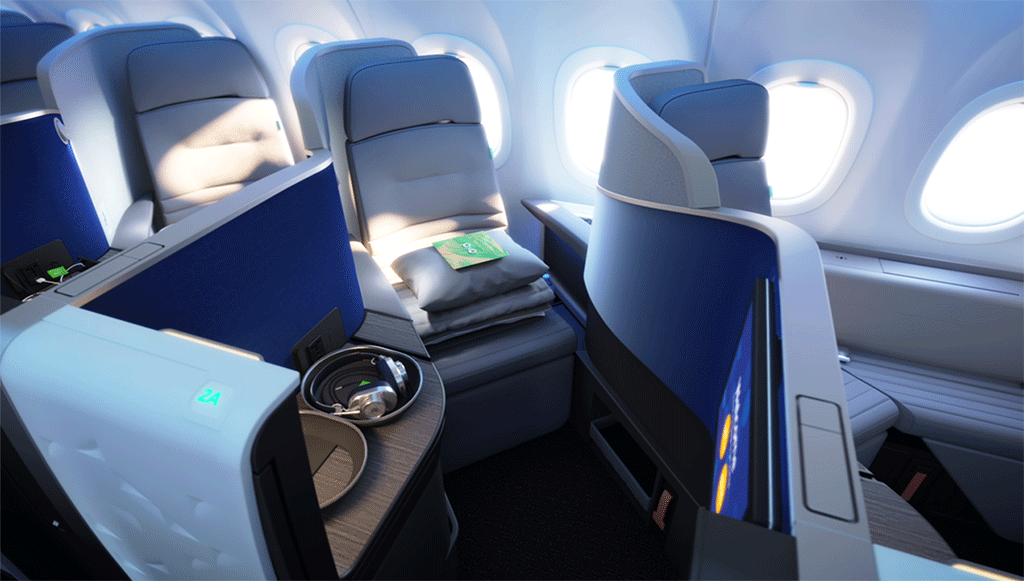
For those flying with a partner, a staggered cabin with some paired seats is more sociable. TAP, Aer Lingus, JetBlue classic Mint, and SAS all offer 2-2 rows where you’re properly side-by-side.
Taller passengers may dislike the narrower footwells of throne seats, and may be more at ease on front row “specials” like JetBlue’s Mint Studios and Etihad’s narrowbody first class.
Find the latest aviation industry news right here.
Featured Image: Etihad Airways