Lufthansa’s Iran flight resumption scuppered by new NOTAM

January 15, 2026
Lufthansa has further disrupted its Middle East operations after Iran issued a Notam temporarily closing its airspace and national authorities warned about flying in the region, highlighting the uneven and evolving response among international airlines to rising tensions in the region.
The directive, circulated via a Notam which was in effect for just over two hours overnight on Thursday and was flagged publicly by Flightradar24, prompted Lufthansa to rework its flight schedules at short notice. Germany also reportedly issued formal communication to its airlines cautioning them from entering Iranian airspace.
Lufthansa delays Iran restart and restricts regional services
Lufthansa confirmed that it is now bypassing both Iranian and Iraqi airspace until further notice, adding that some services may be delayed or cancelled as a result.
It has also restricted flights to Tel Aviv and Amman to daytime operations only, a measure that will remain in place until at least early next week.
The changes will have knock-on effects across Lufthansa’s long-haul network, particularly for services linking Europe with Asia, where Iranian airspace has traditionally provided a key corridor.
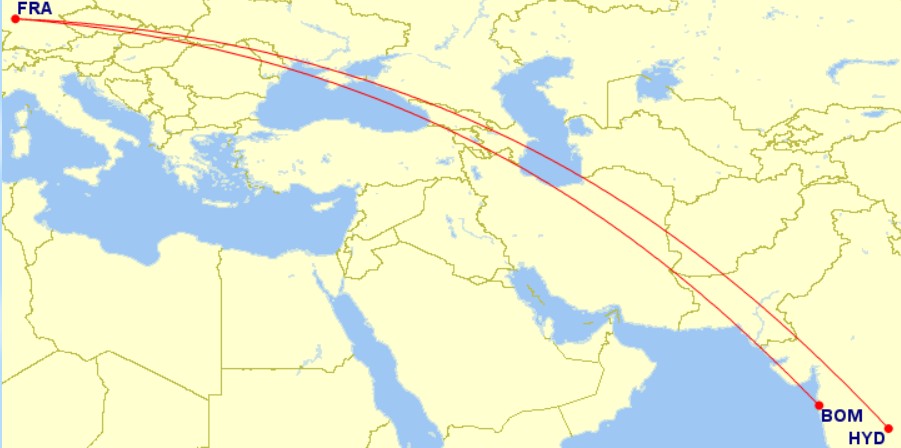
The airline has also delayed the planned resumption of its own flights to Iran, reflecting what it describes as a cautious, security-led approach. It is understood to have delayed the resumption of services until at least the end of January. It was saying as early as the start of the week that it planned to resume flights to Tehran on Friday, 16 January.
Airlines continue Iranian overflights despite warnings
The move contrasts with the position of several other carriers, at least in the short term.
On Thursday morning, multiple international airlines were still operating through Iranian airspace, according to flight-tracking data.

Etihad Airways, flydubai and Air Arabia were among those continuing to use Iranian overflight routes, while Belarusian carrier Belavia was also observed transiting the airspace.
Emirates, meanwhile, was still operating scheduled passenger flights to Tehran.
Flight disruptions and longer routings expected to continue
The differing approaches underlines the fragmented nature of airspace risk management, which remains largely the responsibility of individual states and airlines rather than global regulators.
The reality for those in the region is that Iran occupies a large area and avoiding overflights entirely comes with significant cost and scheduling implications which has the potential to make some routes unviable.
While cautious European carriers have increasingly opted for avoidance in response to official guidance, some Middle Eastern and non-EU operators have continued operations, weighing the risk assessments differently.
Lufthansa said the latest adjustments were made “until further notice”, indicating that further changes remain possible as the security situation develops.
For passengers, the immediate impact is longer routings, potential delays and uncertainty.
Featured image: Markus Kämpfer / stock.adobe.com