Happy birthday, Lufthansa! Germany’s flag carrier marks 100 years of commercial passenger flights

January 6, 2026
On 6 January 2026, German carrier Lufthansa celebrates its centenary, marking 100 years since the company was first founded. Although the company’s history may have been marked by challenges and service interruptions, the company has since grown into one of the world’s largest airlines, carrying over 150 million passengers annually on a fleet of over 300 aircraft.
Indeed, the carrier’s parent company, the Lufthansa Group, has developed into one of the world’s strongest airline groups, incorporating SWISS, Austrian Airlines, Discover Airlines, Eurowings, ITA Airways, and Brussels Airlines.
Aerospace Global News takes a closer look at Lufthansa’s history – where it came from, how it has evolved into the carrier it is today, and how the company intends to mark its centenary year throughout 2026.
Lufthansa: A German icon is born
The company was first established on 6 January 1926 as Deutsche Luft Hansa, formed following the merger between two smaller German airlines, Junkers Luftverkehr and Deutscher Aero Lloyd. On 6 April 6 of the same year, the carrier made its maiden flight.
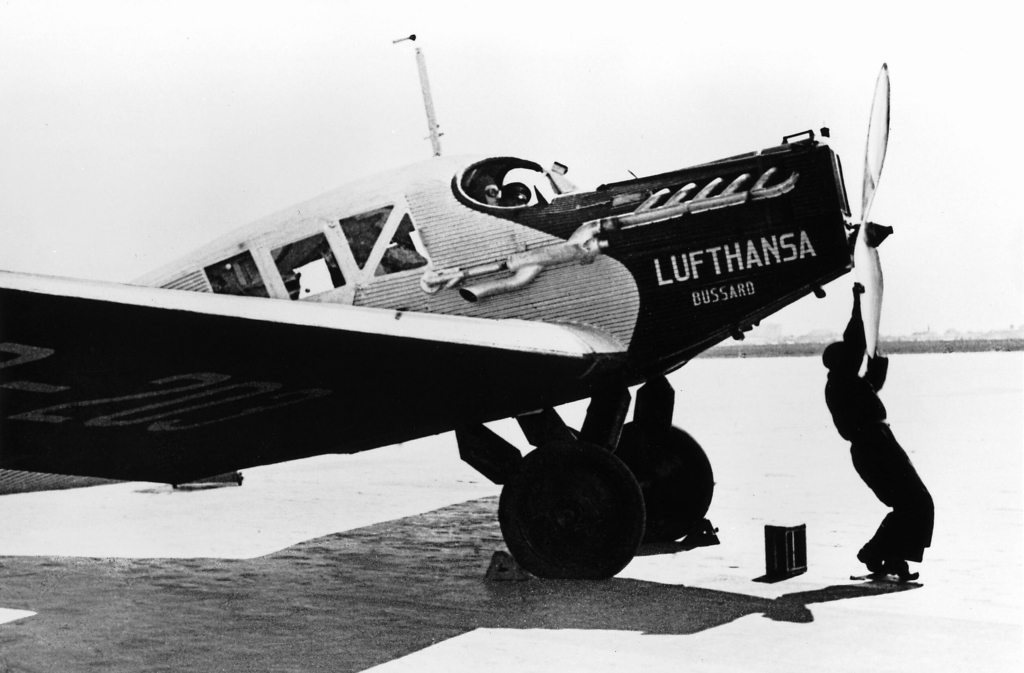
Deutsche Luft Hansa was Germany’s designated flag carrier until the outbreak of the Second World War, when it came under the command of the German Air Force, the Luftwaffe. The darkest chapter in Lufthansa’s history was the Nazi era.
The airline became an integral part of the regime and played an active role within it. Throughout World War II, the airline was tasked with pilot training as well as aircraft maintenance and repair on behalf of the Luftwaffe. Forced labour was used for this purpose, with the majority of the work being carried out at Berlin’s famous Tempelhof Airport.
With the end of the war in 1945, and the subsequent occupation of Germany by Allied forces, all the company’s remaining aircraft were grounded, and on 1 January 1951, Deutsche Luft Hansa was closed down, with all remaining assets being liquidated.
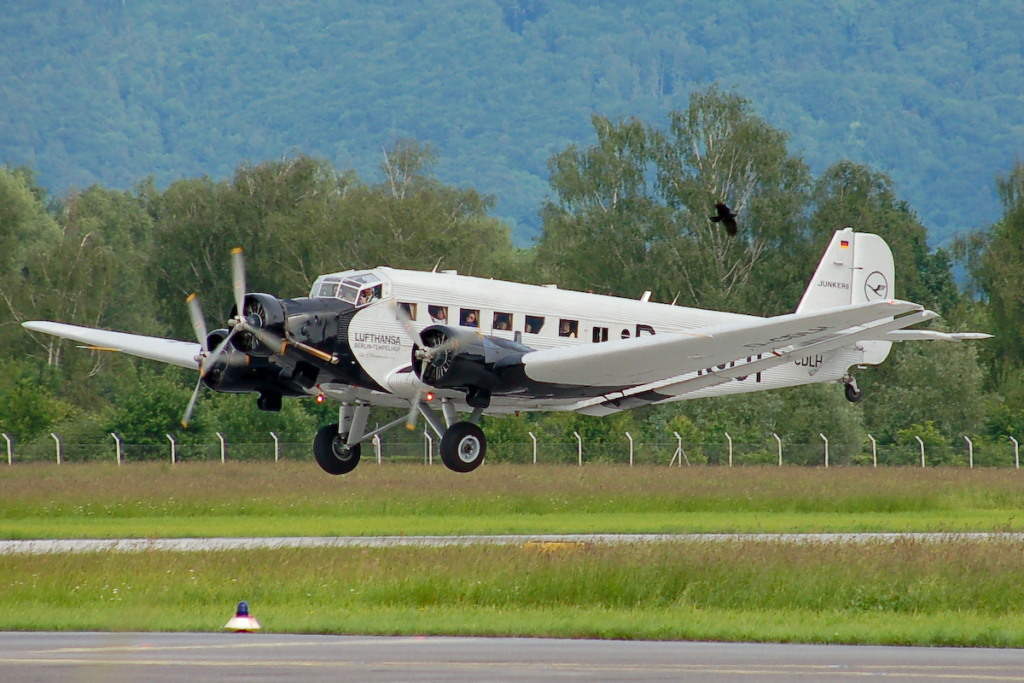
With Germany eventually reassuming its own airspace sovereignty, the country set out to establish a new national airline. The company, initially to be known as Aktiengesellschaft für Luftverkehrsbedarf (Luftag), was established in Cologne in 1953.
Although still unable to operate flights in its own right, the airline placed orders for four Convair CV-340s and four Lockheed L-1049 Constellation Starliners with a view to commencing domestic and international operations by the time the planes were delivered.
In 1954, the new company acquired the rights to use the name of the former pre-war national airline (to be reframed simply as ‘ Deutsche Lufthansa’), and the history of German airlines using this brand was continued.
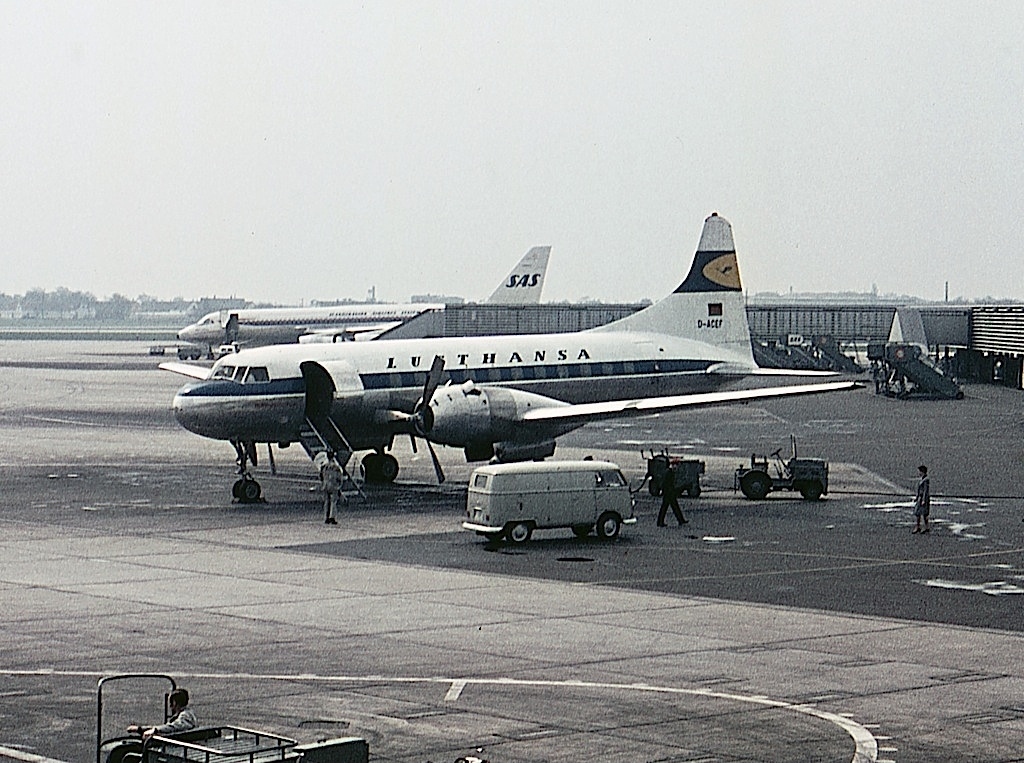
On 1 April 1955, Lufthansa won approval to commence operation of scheduled domestic flights. The airline’s initial network linked Hamburg, Düsseldorf, Frankfurt, Cologne and Munich.
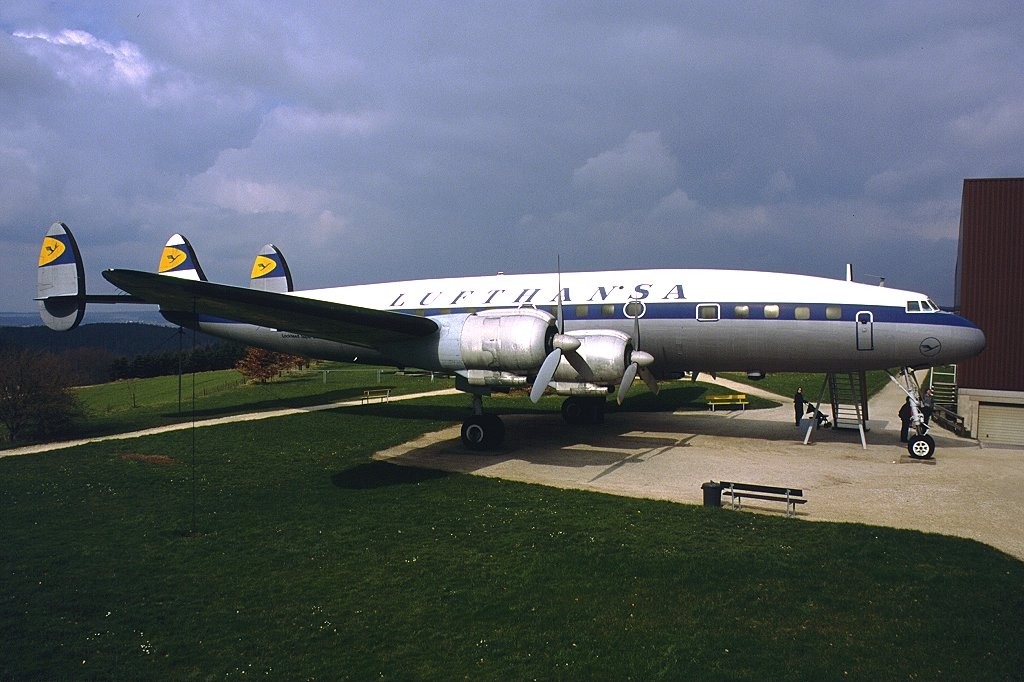
International flights would begin on 15 May 1955 with services from Germany to Paris, London and Madrid. With the delivery of its new Constellation aircraft (known within the airline as the ‘Super Star’), flights to New York began in June 1955.
Since then, the airline has gone from strength to strength to become the formidable force it is today in European commercial aviation. Although there have been bumps along the way, the Lufthansa Group continues to grow.
During summer 2025, the airline group’s members served over 300 destinations in more than 100 countries, with more than 12,000 weekly departures. Lufthansa alone served around 180 international destinations and 15 domestic cities, ones, with plans to add more in 2026.
According to the company, Lufthansa’s 100th anniversary will be a “moment of pride and reflection. At the same time, it is a bold look into the future and the start of the company’s second century.“
Key Lufthansa milestones throughout the decades
In the 1920s and equipped with some of the earliest passenger aircraft, Deutsche Luft Hansa took to the air in April 1926, serving a handful of domestic and European destinations.
With the airline showing early aspirations to grow and develop, the route network expanded as the airline’s management set out to build an airline for Germany’s future.
Throughout the 1930s, the number of destinations served by Luft Hansa continued to grow. Larger aircraft followed, opening up longer routes, with air mail flights to South America and East Asia being examples.
With the development in aircraft and navigational equipment, planes could fly faster, further and higher, allowing airlines such as Luft Hansa to embrace technology to allow for quicker expansion. During the decade, Luft Hansa became an integral part of Germany’s National Socialist system.
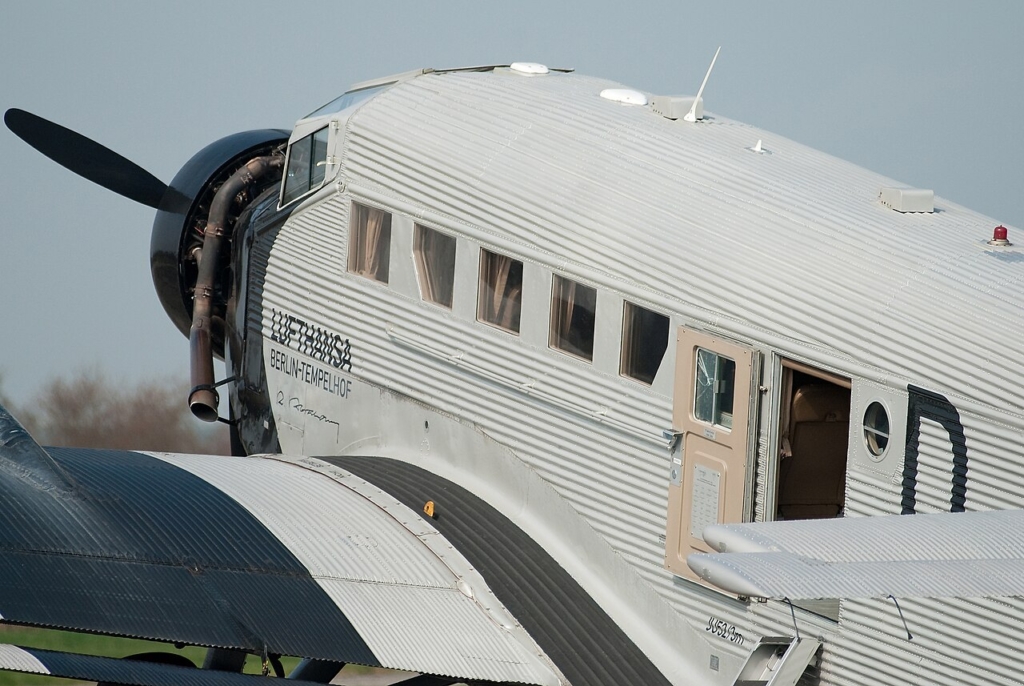
In the early 1940s, Luft Hansa supported the National Socialist regime’s military build-up and trained pilots for the Luftwaffe. But behind the technical advances being made lay labour exploitation, with workers from occupied countries forced to work in the company’s facilities to keep it afloat during the war.
With the birth of the second incarnation of Lufthansa in 1953, the airline set about restoring air links both across Germany and to major European capitals. Modern aircraft, an expanding network, and an audacious introduction of long-haul routes such as those to New York and South America marked the dawn of a new era of international travel from Germany’s major airports.
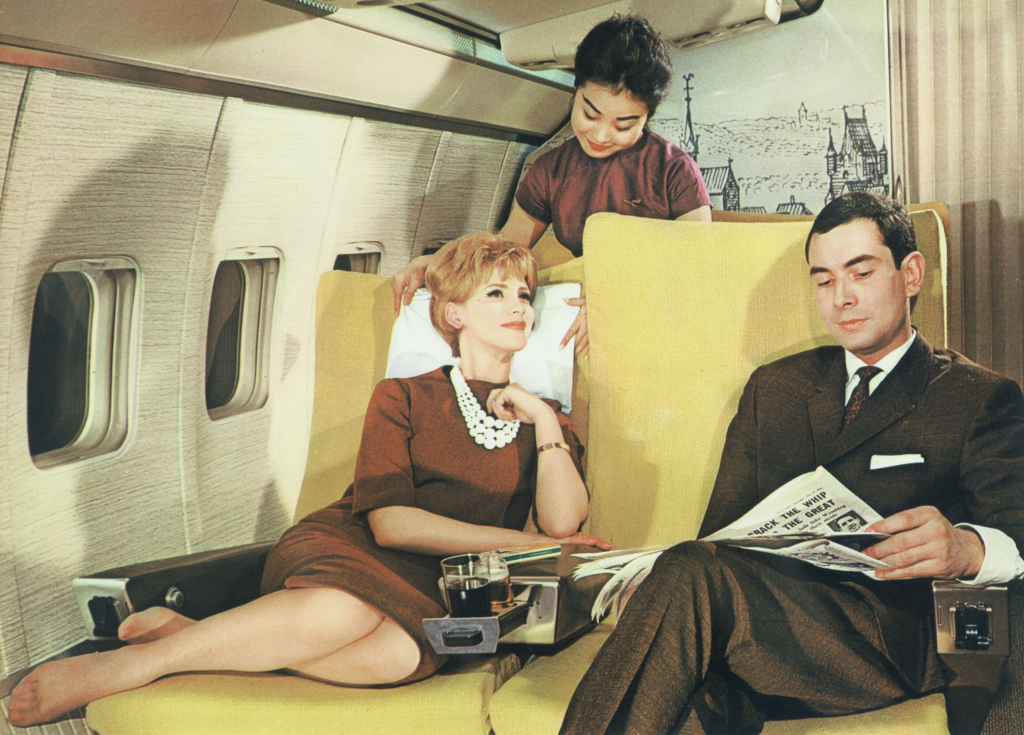
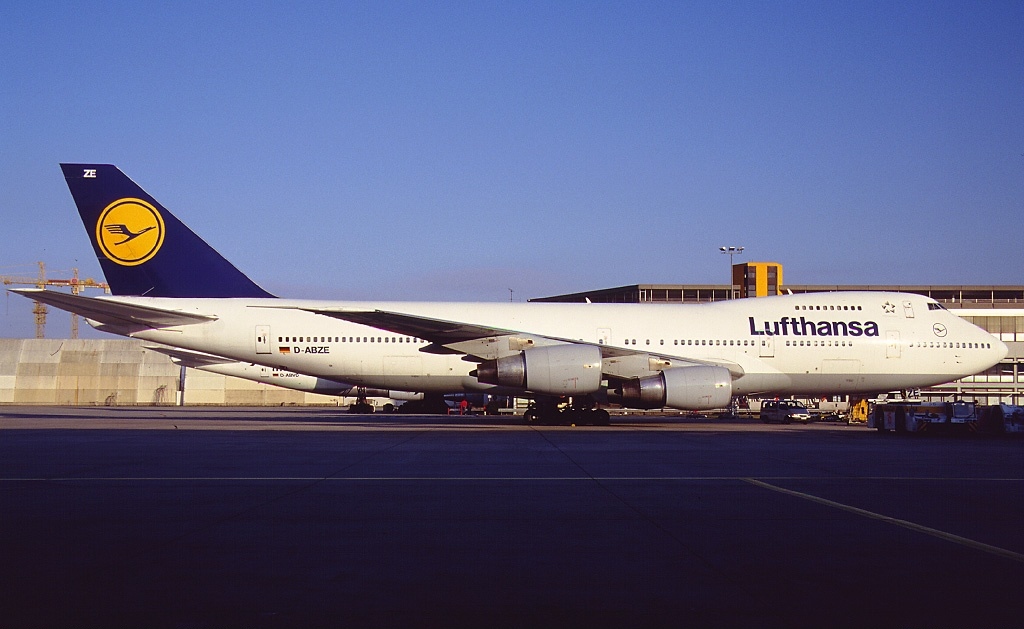
With the dawn of the jet age in the early 1960s, Lufthansa was an early pioneer in the brave new world of jet-powered air travel. Four-engined Boeing 707s arrived to replace the Lockheed Constellations operating long-haul routes, significantly cutting down journey times and expanding the airline’s range capabilities.
The airline would also become Europe’s first operator of the venerable Boeing 737, with the first of the airline’s 737-100s commencing passenger flights in 1968.
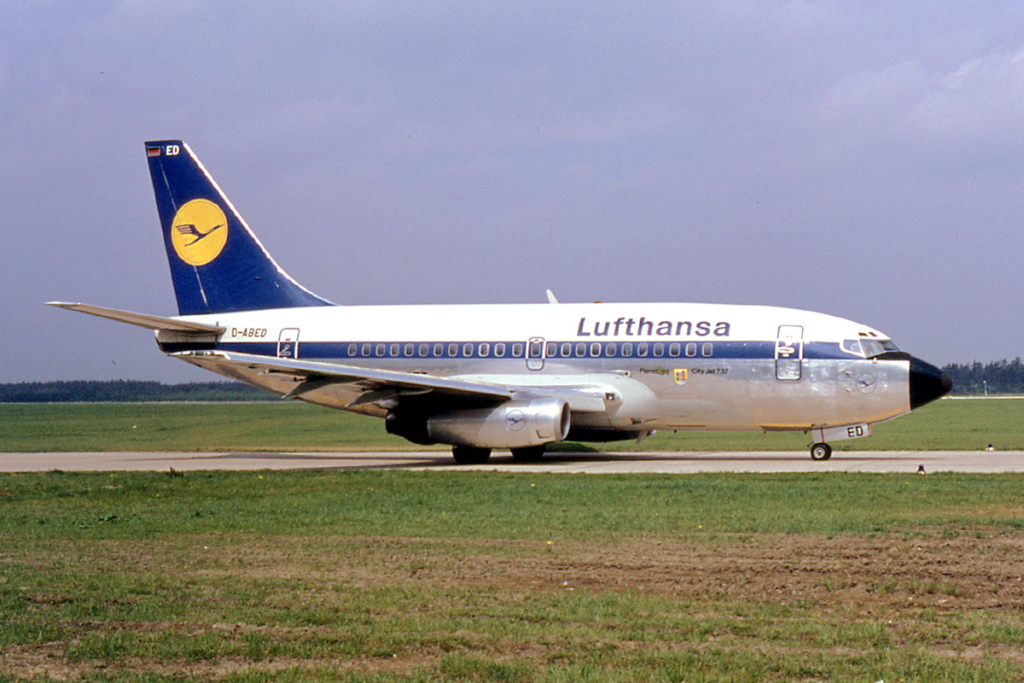
The 1960s also marked a transition for the airline’s branding, with the airline’s ‘Flying Crane’ logo becoming encircled for the first time, creating an iconic new logo for the carrier. The iconic crane, designed by Otto Firle in 1918, remains Lufthansa’s global symbol today.
Although the 1970s were tough for the airline industry following the oil crisis, geopolitical unrest and economic recessions worldwide, Lufthansa weathered the storm. In 1977, the airline suffered its first hijacking when Lufthansa Flight 181 (operated by a Boeing 737-200) was hijacked by four militants of the Popular Front for the Liberation of Palestine en route from Palma to Frankfurt.
After five days and with the aircraft by then in Mogadishu (Somalia), the aircraft was stormed by German special forces, with 91 people on board the aircraft being freed.
In the 1980s and with growth back on the table, Lufthansa introduced a business class to elevate travel for corporate customers. The airline also diversified into rail services with the Lufthansa Airport Express, bringing the Lufthansa experience to German domestic rail services. In 1989, in a historic moment, a Lufthansa aircraft landed at Berlin Airport again for the first time since 1945.
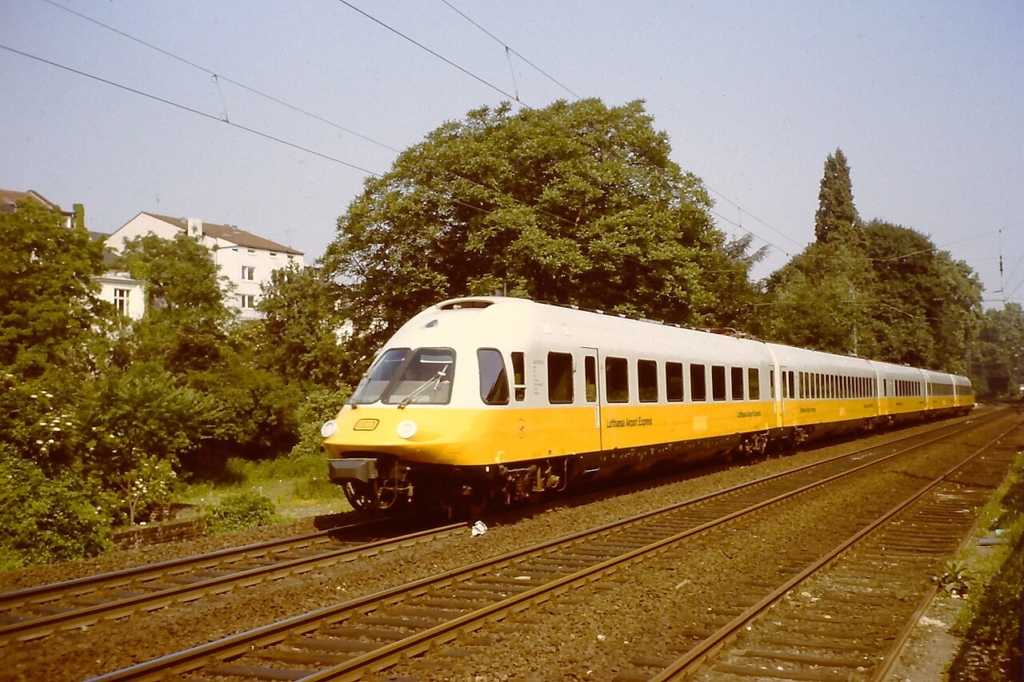
The 1990s saw a period of major transition for Lufthansa as it prepared for the new millennium. Lufthansa became a private company with the formation of the Lufthansa Group, while Lufthansa Cargo and Lufthansa Technik were established as independent entities.
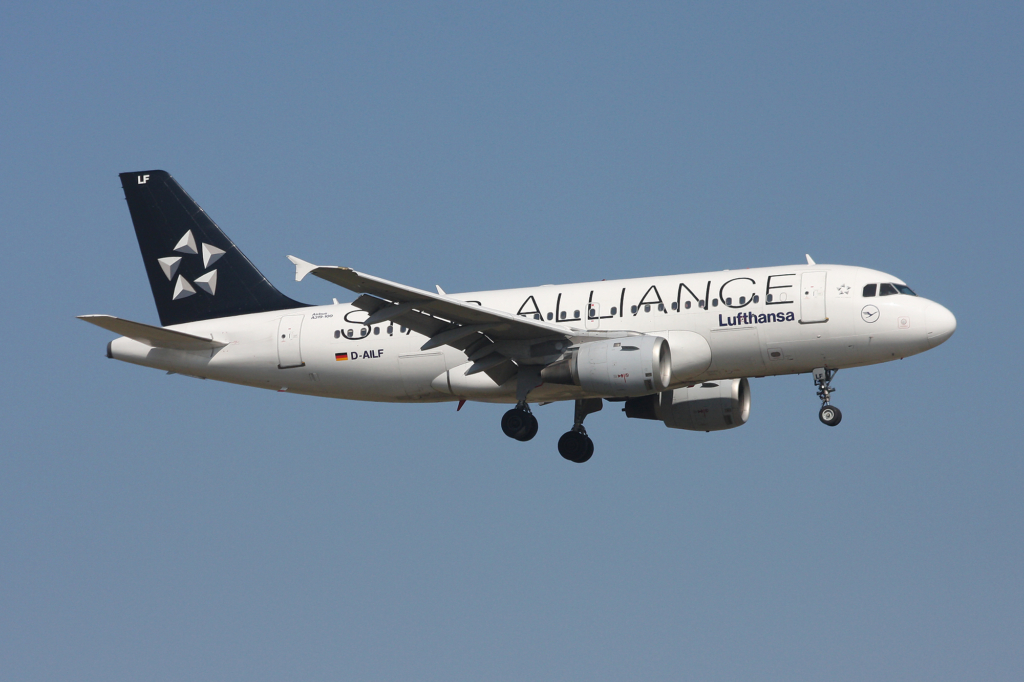
With major global airline partners such as United Airlines, Air Canada, and Singapore Airlines, Lufthansa became a founding partner in Star Alliance, the largest global network in commercial aviation, which continues today.
2000 marked another turning point for world aviation. With high hopes for the decade ahead, these were soon dashed with the terrorist attacks on 9/11, grinding world aviation to a halt.
A low recovery in the years post saw Lufthansa regain its former position and build on its strengths to become a world carrier once again.
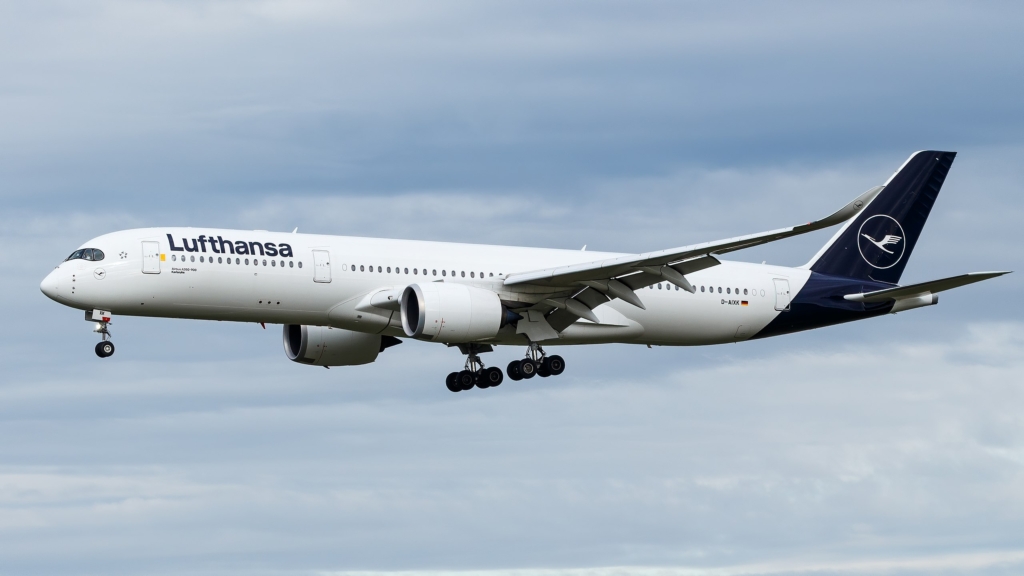
From 2010 onwards, the Lufthansa Group has evolved into a global aviation company with over 400 subsidiaries. To meet rising mobility needs, the Group launched the largest fleet renewal in its history, focusing on flying quieter, further and more efficiently. Orders for new types such as the Airbus A320neo family, the Airbus A350 and the Boeing 787 were placed, modernising the Lufthansa fleet in preparation for the decades ahead.

In 2020, the COVID-19 pandemic brought public life and global aviation to a standstill once again. The impact of the pandemic was severe for many airlines, including Lufthansa, which relied on temporary state financial support to survive. However, the airline paid the loans back once flying resumed and resumed growing for the future to meet the post-pandemic surge in travel demand.
How Lufthansa will mark its centenary year
Lufthansa will celebrate its centenary in 2026 under the motto “We are the Journey,” a message that the airline says will “highlight the shared journey of employees, passengers, and fans of the brand. Since its first flight 100 years ago, Lufthansa has not only written its own history but has also significantly shaped the future of aviation.”
The motto is described as embracing the concept of the Lufthansa family of staff members employed worldwide. Today, 40,000 people from 122 nations work for the Lufthansa brand, and 100,000 people from over 160 nations are part of the Group.
In the anniversary year 2026, Lufthansa will organise a variety of activities and events to honour the history and future of the aviation group. These include a permanent centenary exhibition at the Lufthansa Group Hangar One visitor and conference centre, just completed adjacent to the airline’s offices at Frankfurt Airport.
The exhibition will include special events, a history book, film and video productions, employee celebrations, customer events, as well as examples of marketing and product campaigns over the decades.
The anniversary year will be visible and tangible for Lufthansa customers starting in January 2026. A special ‘100 Years of Lufthansa’ logo will begin to appear on boarding passes, at airports, and onboard Lufthansa flights in many locations. Away from airports, in many city centres in Germany and beyond, a billboard poster campaign will tell Lufthansa’s story through iconic images and messages.
Flying Ambassadors: The Lufthansa Anniversary Fleet
A highlight of the airline’s celebrations is the rollout of a special centenary aircraft livery. The key sub-fleets of Lufthansa’s core brand will feature one aircraft with the new 100-year special livery.
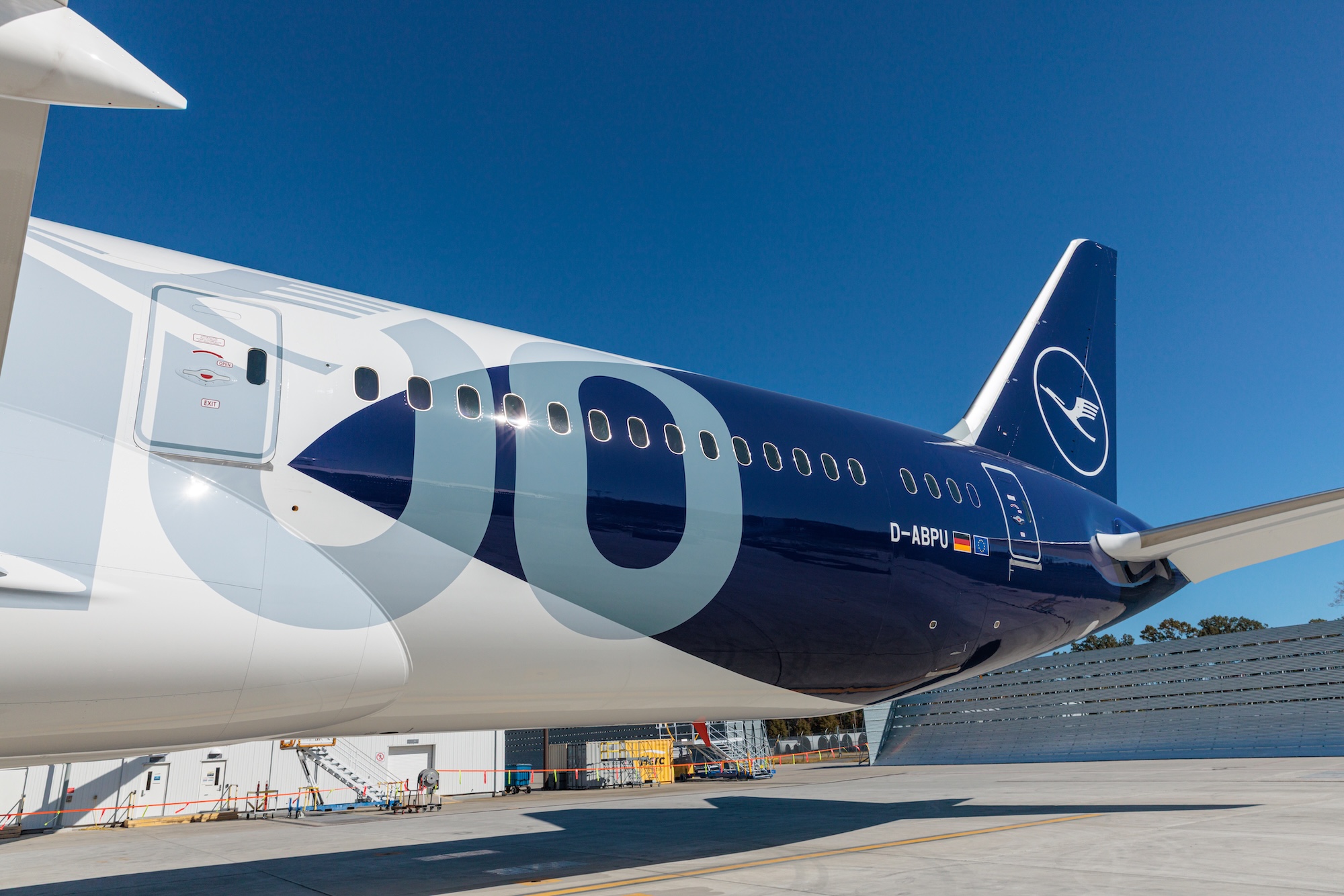
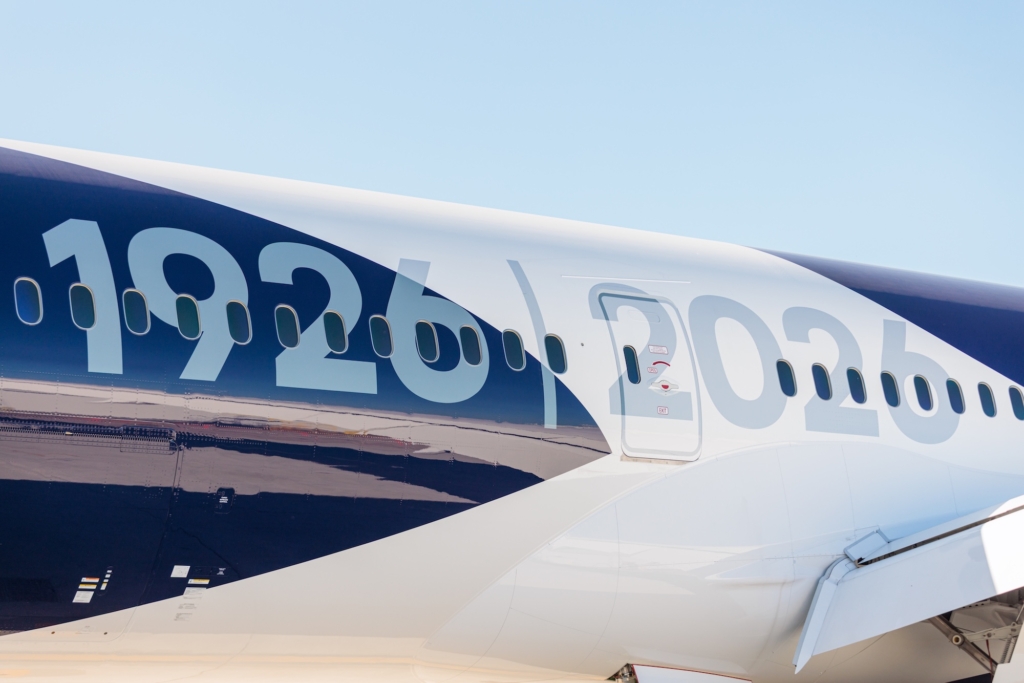
The commemorative colour scheme features a midnight blue fuselage backdrop with the airline’s Flying Crane motif emblazoned across the aircraft in white. The figures ‘100’ and ‘1926 / 2026’ also appear on the rear fuselage in light blue, on the left and right sides, respectively.

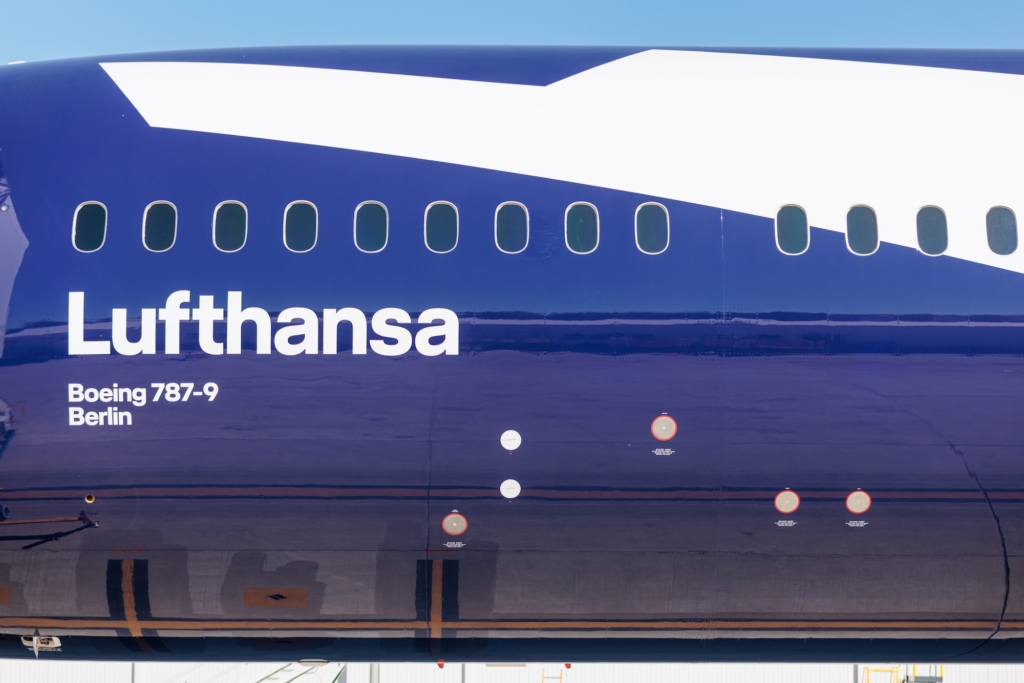
The Lufthansa anniversary fleet will consist of six aircraft – an Airbus A380, an Airbus A350-1000, an Airbus A350-900, an Airbus A320, and a Boeing 747-8. Leading the anniversary fleet is the Boeing 787-9 named ‘Berlin,’ which was delivered from Boeing’s factory in Washington State, USA, to Germany shortly before Christmas 2025 and landed at its new home airport in Frankfurt.
Soon, this state-of-the-art aircraft, registered as D-ABPU, will enter scheduled service.
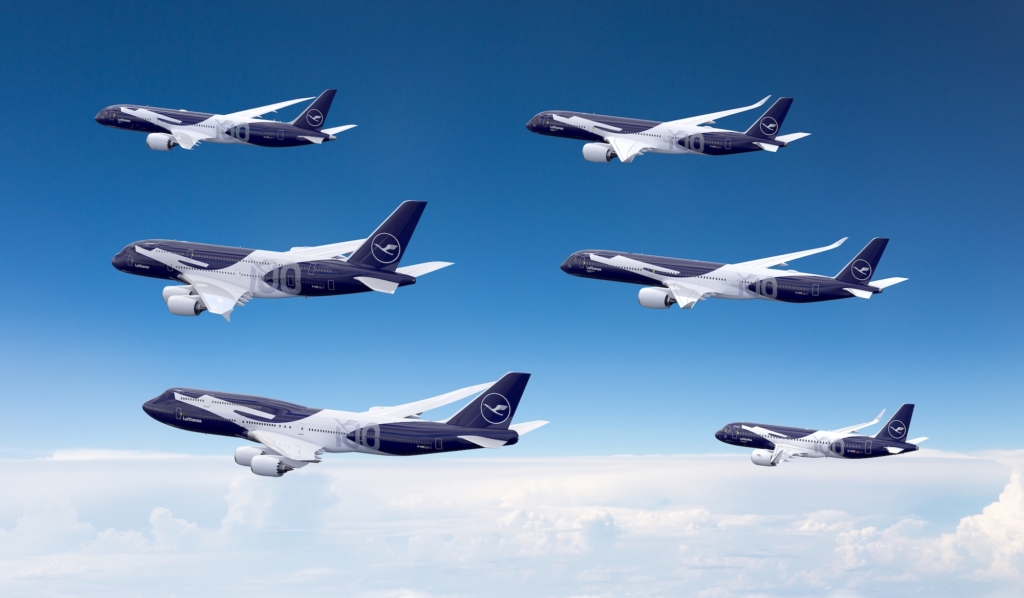
In addition to the six aircraft in the special centenary livery, two other Lufthansa aircraft, an Airbus A321 and a Boeing 747-8, will continue to feature retro liveries, denoting the development of the airline’s brand and visual identity over the years.
Ground ambassadors: Two vintage Lufthansa aircraft
Along with the commemorative aircraft mentioned above, two vintage aircraft that represent key eras in Lufthansa’s history have been restored and brought together under one roof for the first time at the airline’s new visitors and conference centre located at Frankfurt Airport.
Following years of painstaking restoration work, the aircraft, a Junkers Ju 52 and a Lockheed L-1649A Starliner, have been brought together to form the centrepiece exhibits at Lufthansa Group’s new Hangar One centre.
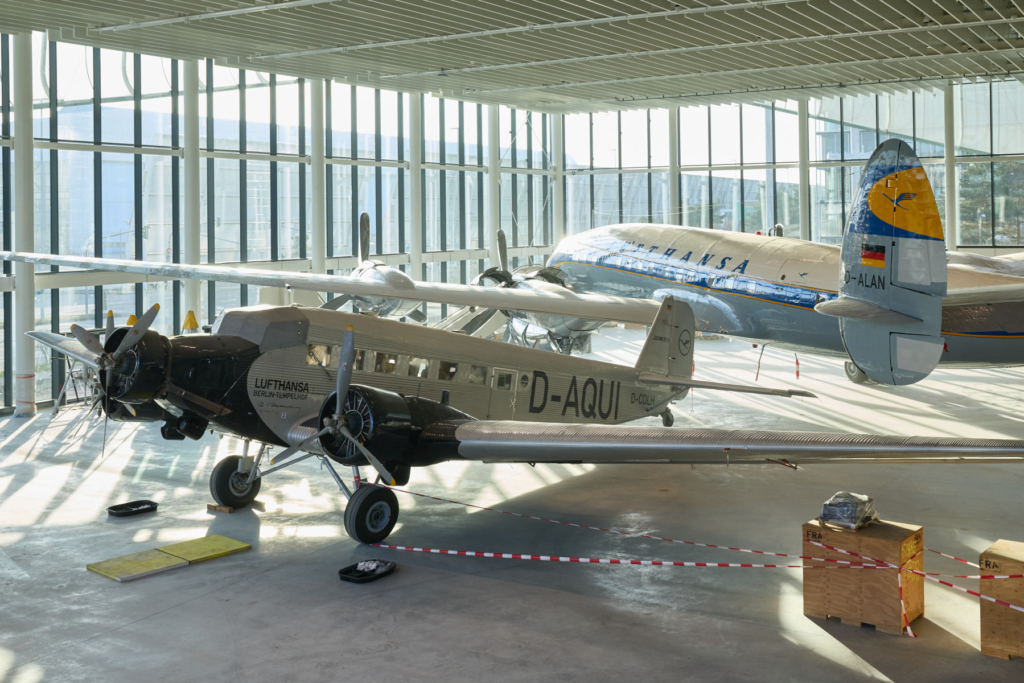
Construction of the new conference and visitor centre at Frankfurt Airport began in 2024, which, according to the airline, will become “a place for new forms of collaboration for employees and, at the same time, for customers, business partners, and aviation enthusiasts.”
Constructed to incorporate as much natural light as possible, a high-level glass façade of Hangar One will allow visitors to see the two vintage airliners as they take centre stage in the atrium of the new centre, which is due to open in early 2026.
Lufthansa’s centenary is part celebration and part reflection
Lufthansa says its 100th anniversary is both a moment of reflection and a forward-looking statement, “honouring the loyalty of its passengers and the contribution of its workforce, while standing as a tribute to the pioneering spirit, innovation, and connection of people, cultures, and economies that have shaped Lufthansa for a century.”
Lufthansa is also taking its 100th anniversary as an opportunity to critically examine its responsibility during the Nazi era and to continue to come to terms with it on the basis of historical research. In looking back on its history, Lufthansa does not limit itself to the post-war chapters of its history.
“The years from the founding to the decline of the first Lufthansa are also a key part of the company’s history,” said the airline, explaining why the period up to the Second World War is as important to the organisation as the period since.
Featured image: Lufthansa