80 years ago this week: London Heathrow Airport marks the start of regular passenger services

March 29, 2026
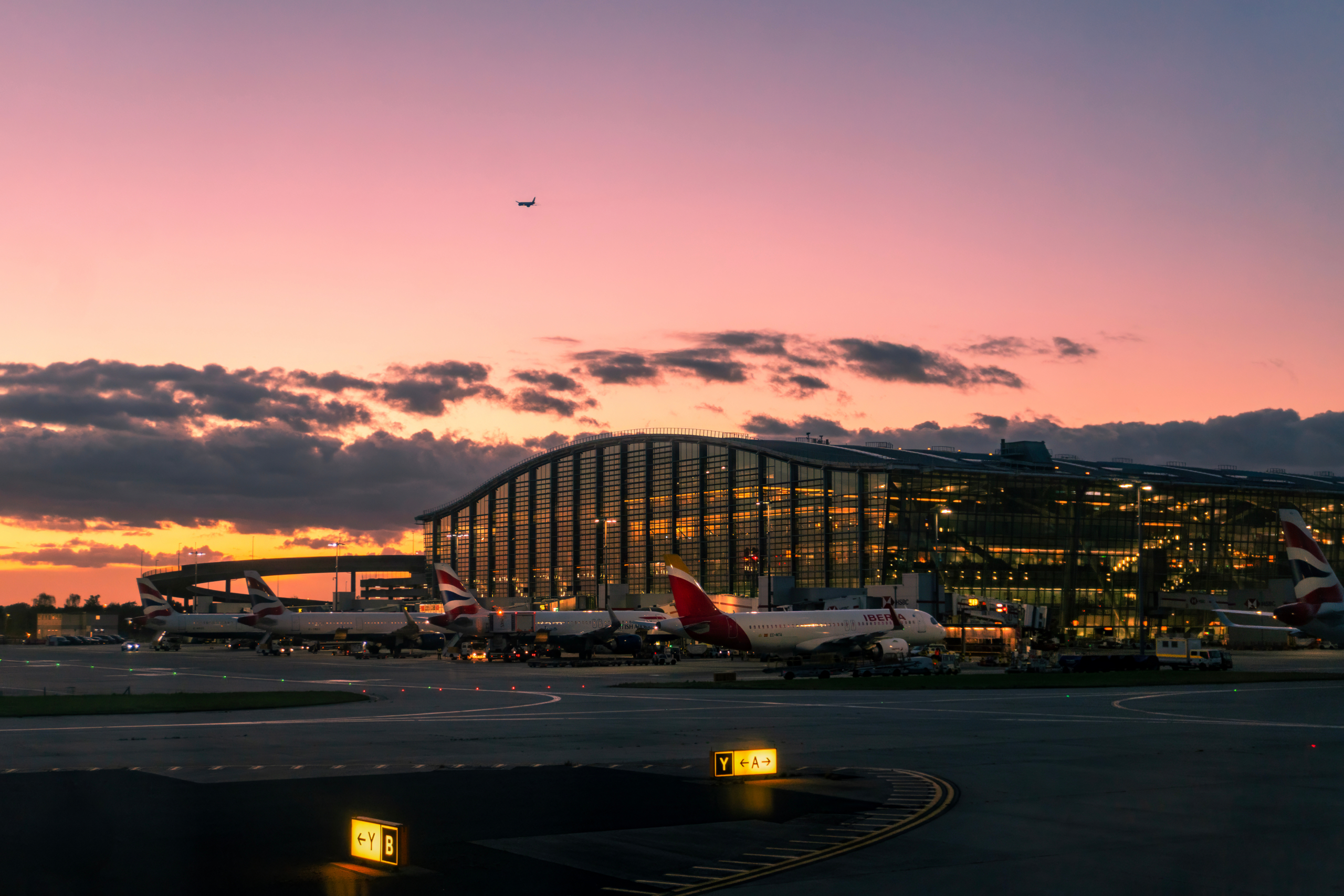
On 25 March 1946, London Heathrow Airport (LHR) handled its first commercial passenger flight. Since then, hundreds of millions of passengers have used the airport either at the start or end of their journeys by air. The airport is currently the largest in the UK and was the world’s seventh busiest airport in terms of passengers handled in 2025.
Aerospace Global News takes a closer look at the key milestones that have marked the airport’s development over the past 80 years and looks ahead to where the airport will be in the years to come.
London Heathrow Airport – the UK’s gateway to the world
Heathrow is the UK’s primary international gateway as well as the most connected international airport in the world. The airport currently offers connections to 230 destinations across 85 countries worldwide.
Each day, Heathrow has a throughput of over 200,000 air passengers and handles around 1,300 arriving and departing flights. The airport is seen as a vital link for the UK economy, serving as the country’s hub for trade, tourism and investment.
Employing over 80,000 staff (higher than many major UK towns), the airport itself employs around 10% of these workers directly, while the remainder work for other employers at the airport, including airlines, ground handlers and retailers.
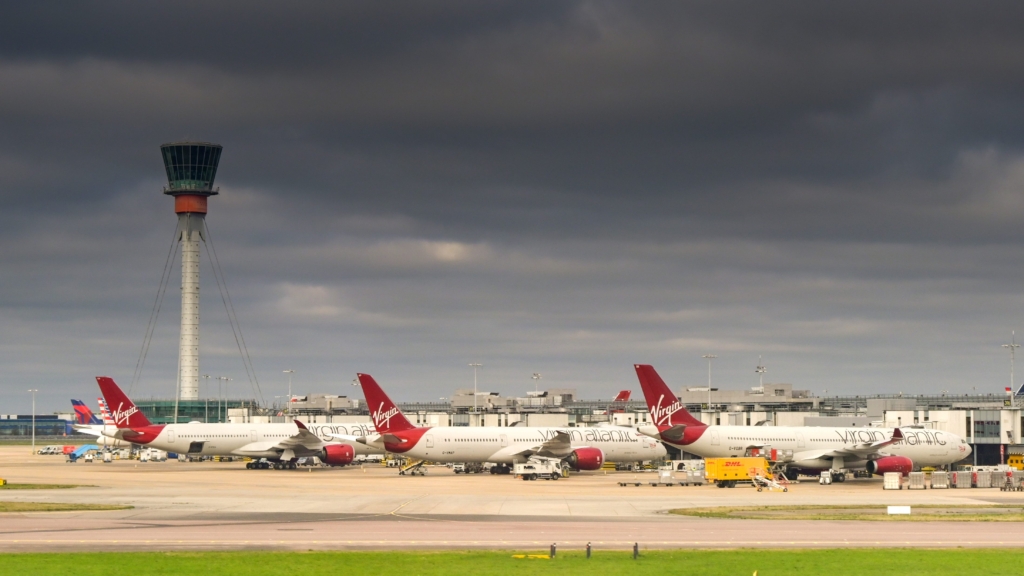
Heathrow Airport recorded its busiest year ever in 2025, with 84.5 million passengers travelling through the airport. The record-breaking year included the busiest December on record (7.2 million passengers) and also a peak daily record, with over 270,000 passengers using the airport on 1 August 2025. The hub maintained its position as Europe’s busiest airport for 2025.
Yet it was not always like this. Heathrow grew up from the humblest of beginnings, with no fixed terminal buildings and just a handful of flights flown by converted former World War Two bombers.
Fast forward eight decades, and Heathrow has been visited by almost every type of civil aircraft ever produced and continues to serve as the primary gateway to the UK capital city. But what were the milestones that took Heathrow from its greenfield beginnings to the mini-city it is today?
Heathrow turns 80: A look back at the key moments in the airport’s development
London Heathrow Airport handled its first passengers on 25 March 1946, marking the start of its journey to become the world’s most connected airport. Officially opened as London Airport in 1946, and built to replace London’s earlier primary airport, Croydon Aerodrome, the airport’s original construction took two years to complete.
London Heathrow at 80: Key milestones in the airport’s evolution
Heathrow’s transformation over 80 years can be traced through a series of defining milestones that have marked its transition from a field on the outskirts of London to a world-class international gateway.
| Year | Milestone | Why it matters |
|---|---|---|
| 1946 | Heathrow handles its first commercial passenger flight | Marks the start of the airport’s life as a civil aviation hub and its transition from a wartime airfield to a gateway for international travel. |
| 1955 | Europa Building opens | Gives Heathrow its first purpose-built passenger terminal and introduces a more modern, centralised approach to passenger handling. |
| 1961 | Terminal 3 opens as the Oceanic Terminal | Supports the rapid growth of long-haul and transatlantic jet travel as Heathrow enters the jet age. |
| 1968 | Terminal 1 opens | Expands short-haul and domestic capacity during a period of rapid passenger growth and helps establish Heathrow’s multi-terminal layout. |
| 1970 | First Boeing 747 arrives at Heathrow | Brings the widebody era to Britain’s main international gateway and reshapes long-haul travel capacity. |
| 1976 | Concorde begins commercial service from Heathrow | Places Heathrow at the centre of supersonic passenger travel and one of aviation’s most iconic chapters. |
| 1986 | Terminal 4 opens | Adds major new capacity beyond the central terminal area as Heathrow continues to expand in the 1980s. |
| 2008 | Terminal 5 opens | Becomes one of Heathrow’s biggest and most important infrastructure projects, despite its troubled launch. |
| 2013 | British Airways introduces the Airbus A380 at Heathrow | Reinforces Heathrow’s role as a global hub capable of handling the world’s largest passenger aircraft. |
| 2014 | New Terminal 2 opens | Replaces the old terminal complex with a modern, more efficient facility and consolidates Star Alliance operations. |
| 2025 | Heathrow records its busiest year ever | The airport handles 84.5 million passengers, underlining its continued growth and strategic importance to the UK. |
| 2026 | Third runway planning work moves forward | Signals the next major chapter in Heathrow’s long-term development, although the expansion remains highly contested. |
1946: London Airport opens to passengers for the first time
The first flight to depart the newest airport in the UK was a British Overseas Airways Corporation (BOAC) multi-leg flight to Buenos Aires in Argentina. The aircraft operating that first flight was an Avro Lancastrian named ‘Starlight’, a converted former Royal Air Force Lancaster bomber that flew during World War Two.
However, the flight was not a direct service due to the limited range of the Avro Lancastrian. Instead, the journey took around four days to complete, with several intermediate stops in places such as Lisbon (Portugal), Dakar (Senegal) and Rio de Janeiro (Brazil).
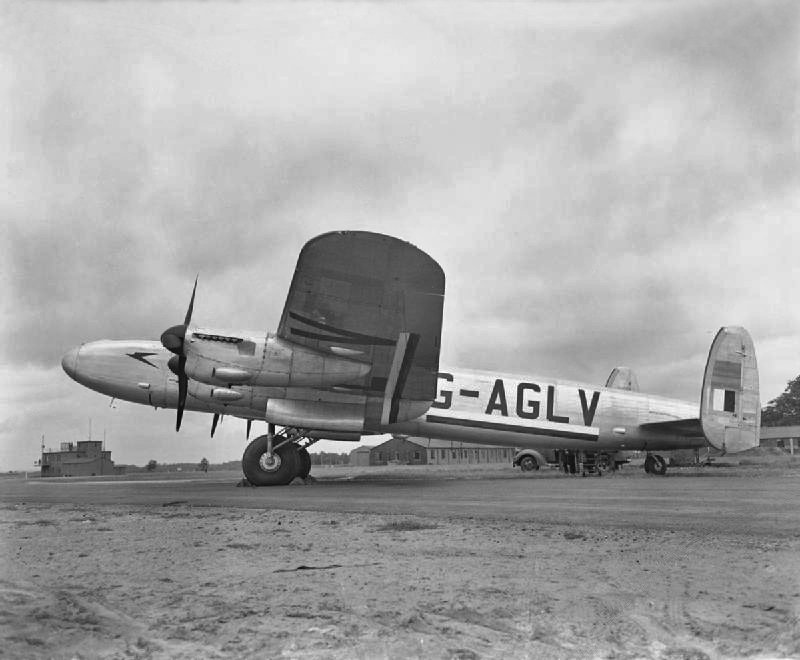
The flight would have been noisy and bumpy, flown at lower altitudes due to a lack of pressurisation and still low enough to be affected by weather. Contrast this with today’s flights, which generally take less than 13 hours to complete the route and have no intermediate stops.
Despite the relatively rudimentary conditions on that first flight, the operation marked Heathrow’s transition from a former wartime RAF base into a global hub for civil aviation. It symbolised Britain reopening international travel and trade routes after the war.
The pioneering route to South America was especially important for economic and diplomatic links with other key routes to other parts of the British Commonwealth, such as South Africa, East Asia and Australia, to follow soon afterwards.
Early passenger terminals were ex‑military marquees, which formed a tented village that served as the airport’s first terminal complex. While the tents were basic, they were comfortably appointed and equipped with floral‑patterned armchairs, sofas and small tables containing vases of fresh flowers.
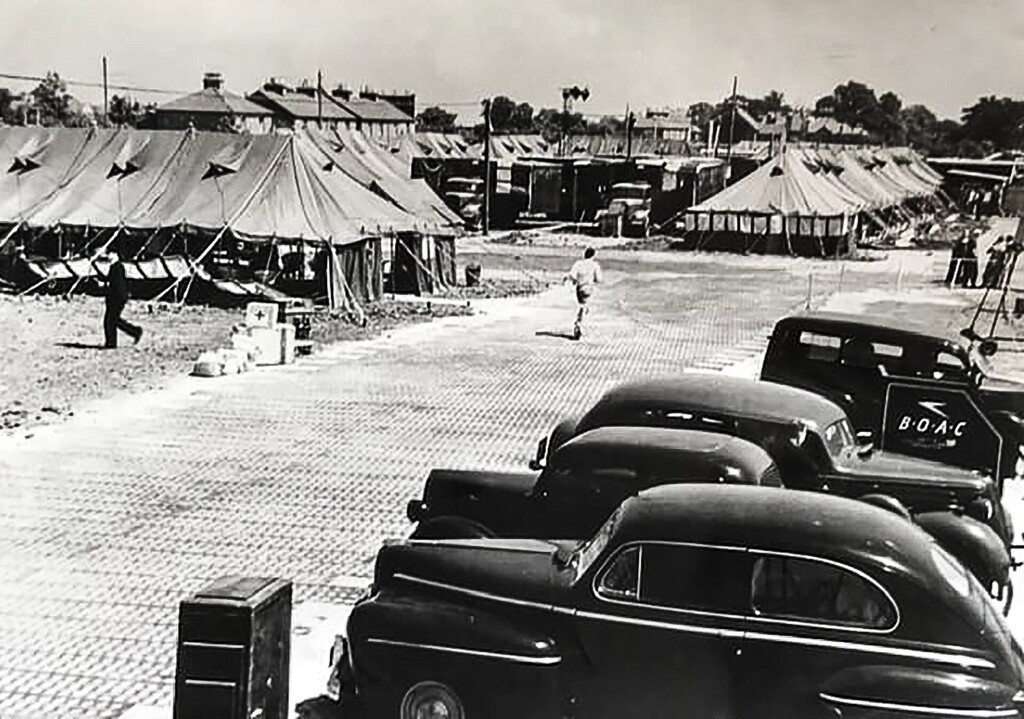
However, in the winter months, due to a lack of heating, the tents could be bitterly cold, while in the summer, the fabric walls could be removed to allow warm air to circulate through. In these early days, passengers walked across wooden duckboards to protect their footwear from the muddy grass airfield as they reached their aircraft.
In its first year, 63,000 passengers took to the skies from Heathrow. Compare this to the 85 million expected to pass through the airport in 2026.
1955: The opening of Heathrow’s first passenger terminal
With an immediate need to introduce more modern facilities, the British Airports Authority (BAA), set up by the UK government to manage its UK airport portfolio, set about building more permanent terminal buildings.
In 1955, the airport opened its Europa Building (later renamed the Queen’s Building). This was the airport’s first purpose-built passenger terminal and introduced a centralised passenger building, which became the blueprint for many other terminal buildings worldwide in the years to come. The Europa Building, built to serve both short and long-haul flights, was described as symbolising Britain’s post-war ambition to lead in global aviation.
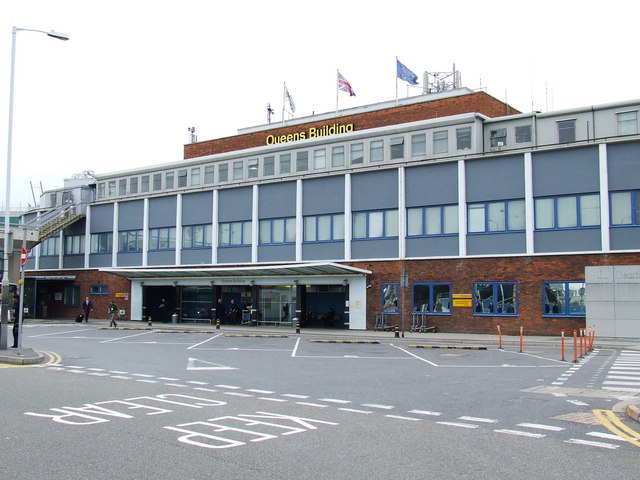
The Europa Building offered all check-in desks under one roof, separate passenger lounges, customs and immigration areas, and direct apron access to aircraft (there were no air bridges supplied at first). The building quickly became the main gateway to the UK for international travellers during the rise of commercial air travel.
Eventually, the Europa Building was incorporated as part of a redevelopment of Terminal 2 at the airport and was operational until it was eventually demolished in 2009, to be replaced by a new terminal building to be known as ‘Terminal 2 – The Queen’s Terminal’.
1961: The opening of the airport’s Terminal Three
The opening of Heathrow Terminal 3 reflects the moment Heathrow fully stepped into the long-haul jet age, especially with the boom in transatlantic travel. Terminal 3 opened in 1961 and was originally called the Oceanic Terminal.
By the late 1950s and early 1960s, Heathrow (then still often referred to as London Airport) was seeing rapid growth in long-distance flights. Airlines were launching more transatlantic services to North America with jet aircraft such as the Boeing 707 and Douglas DC-8, which were transforming journey times and passenger numbers.
The existing terminal could not efficiently handle the surge in international passengers, and so Terminal Three was purpose-built to handle this new wave of long-haul, intercontinental travel.
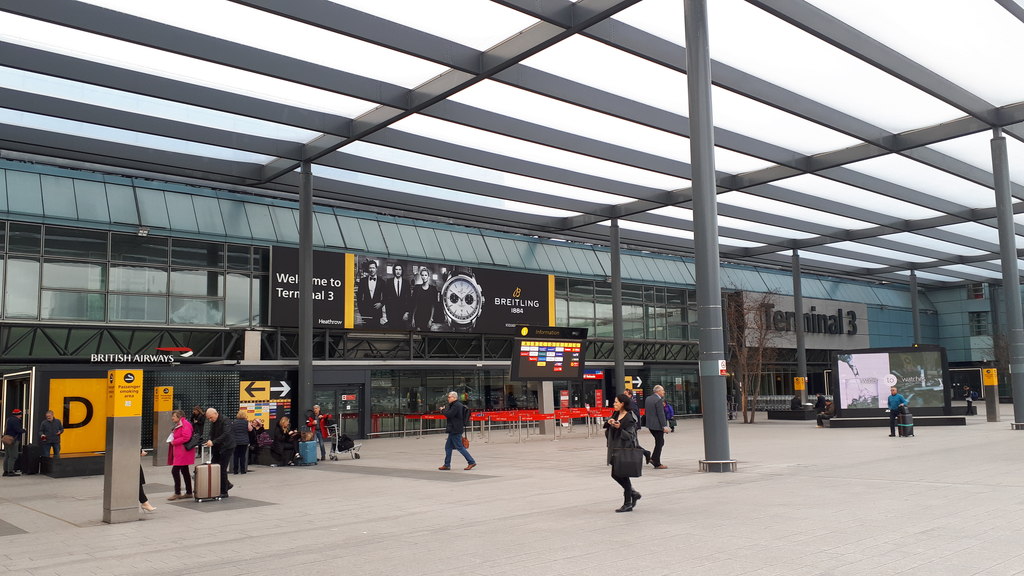
Operations at the new Oceanic Terminal were dedicated to long-haul overseas flights, especially across the Atlantic, and it became the main terminal for many foreign carriers arriving in the UK.
The terminal, like the Europa Building, featured centralised passenger processing (and the improved separation of arriving and departing passengers). It offered a larger handling capacity compared to earlier facilities and, for its time, offered passengers a modern and efficient terminal for the early 1960s.
The terminal changed its name from the Oceanic Terminal and was renamed Terminal 3 when Terminal 1 opened in 1968, as the airport adopted a terminal numbering system that continues today.
1968: Heathrow’s Terminal One opens
The opening of Terminal 1 at Heathrow Airport marked the next major milestone in the airport’s post-war expansion and the rise of modern air travel in Britain. Opened to passengers in 1968, the building was officially inaugurated by Queen Elizabeth II in April 1969.
At the time, Heathrow was rapidly growing due to the arrival of newer and larger jet aircraft, which continued the transformation of long-distance travel. Terminal One was built to handle this surge and, upon its opening, became the largest short-haul terminal in Western Europe.
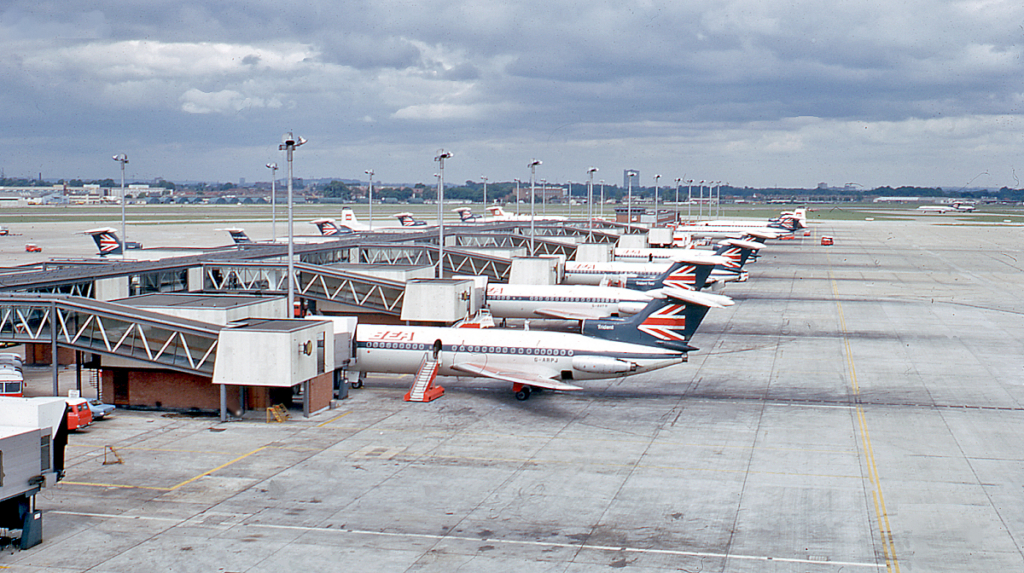
The terminal became part of Heathrow’s new central terminal area layout and mainly handled UK domestic and European flights, with many of the BEA/BOAC (predecessors to British Airways) operations operating from the building.
The first flight from Terminal 1 was a British Airways service to Edinburgh. The terminal quickly became a key hub at the airport, eventually handling millions of passengers a year as air travel became more affordable and widespread. Its opening also represented a broader shift to a multi-terminal system, the first of its type in the UK.
1970: Heathrow welcomes the first Boeing 747 Jumbo to Britain
In January 1970, with its three terminals and improving ground transportation links, Heathrow marked a major milestone in commercial aviation when the first scheduled passenger flight by a Boeing 747 landed at the airport.
The Pan Am ‘Jumbo Jet’ touched down on 22 January 1970 from JFK Airport in New York, and the arrival of the first twin-aisle widebody aircraft marked the start of things to come.
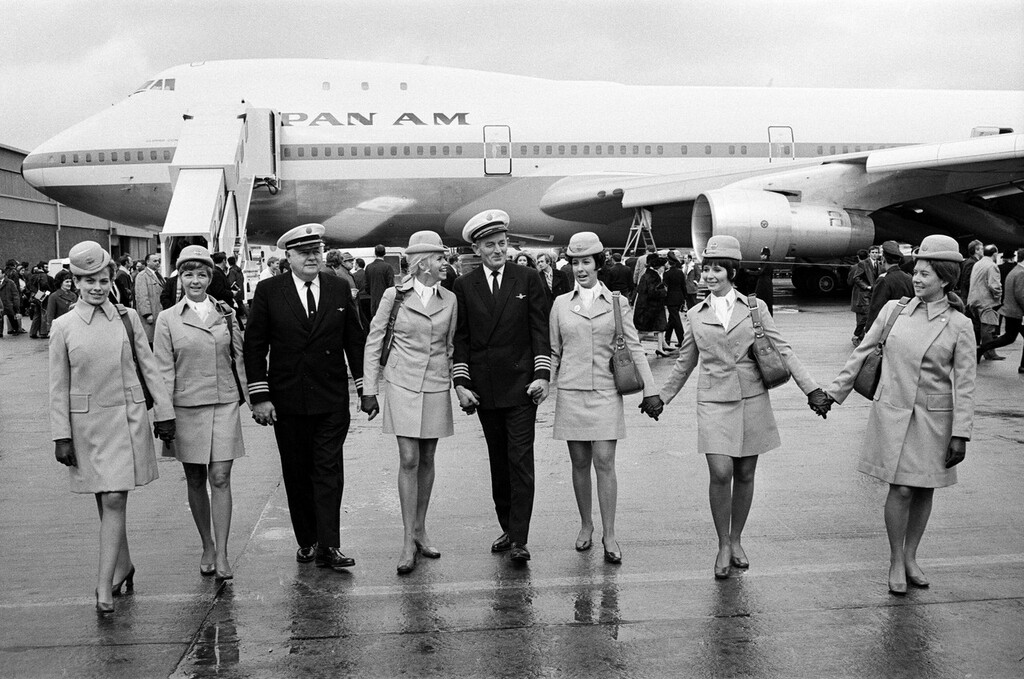
Over the years, countless airliners have operated 747s into Heathrow Airport, with all of British Airways fleet of 56 aircraft based at the airport at one stage.
With its capacity to carry up to 450 passengers on a single flight, Terminal 3 was reconfigured to handle such huge numbers of passengers, with the 747 becoming the number one aircraft for long-haul airlines serving Heathrow in the 1970s and 1980s.
1976: Concorde commercial flights take to the air from Heathrow
Like the first arrival of the Boeing 747 six years earlier, the next major milestone in Heathrow’s history would also come in the form of an iconic passenger plane.
Seven years after Concorde’s maiden test flight, on 21 January 1976, the first supersonic commercial flights took place, leaving Heathrow for Bahrain at 11:40. A simultaneous flight also departed from Paris to Rio via Dakar as part of the spectacular dual launch event.
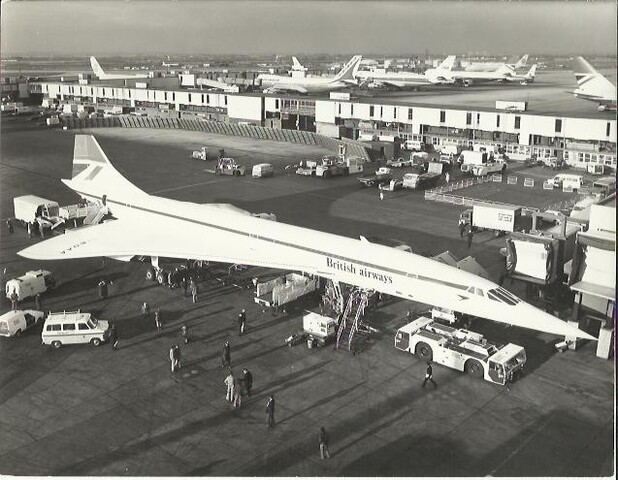
The sleek airliner would become a regular sight at the airport, with British Airways’ fleet of seven Concordes being based and maintained at the airport. It is somewhat fitting that after 27 years, Heathrow would also host the last departure of a Concorde as it headed off into retirement.
1986: Heathrow expands again with the opening of Terminal Four
On 1 April 1986, Prince Charles and his then-wife Princess Diana opened the airport’s Terminal 4. The opening of the airport’s newest terminal coincided with the continued growth in air travel in the 1980s and also the privatisation of British Airways, which was earmarked to become the terminal’s primary user.
Plans for a fourth terminal were approved in 1979 after a public inquiry, with construction beginning in the early 1980s at a cost of about £200 million. The new building was built south of the airport’s southern runway, on a large new site that would allow for expansion and was not constrained within the airport’s central terminal area.
The terminal had been originally expected to open in 1985, although delays pushed the launch to April 1986.
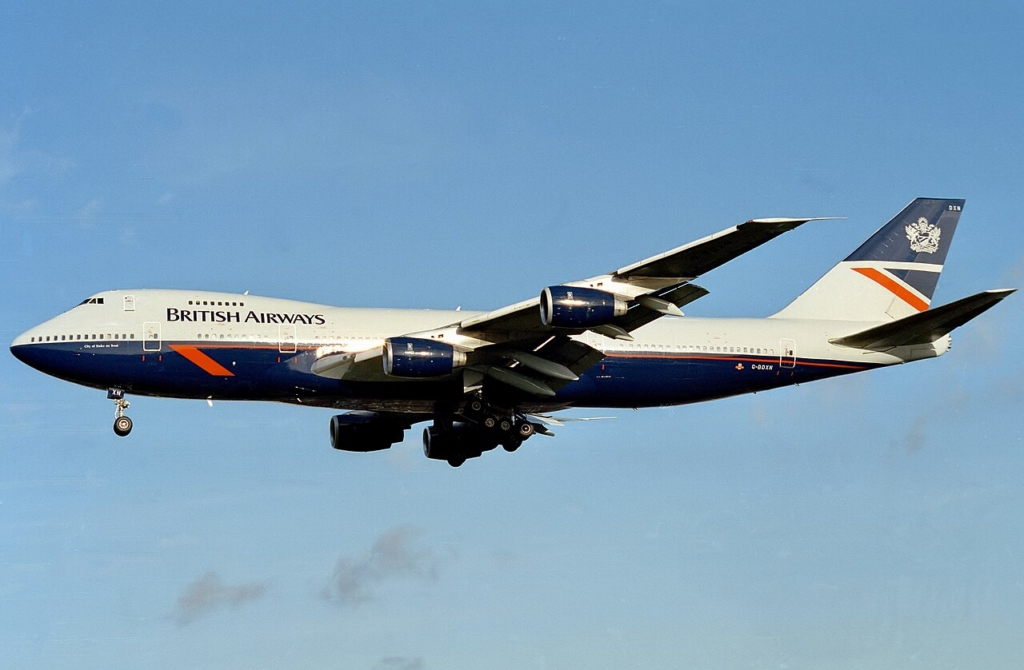
Although British Airways was the terminal’s main resident airline, when Terminal 5 opened in 2008, the airline relocated there to have its short and long-haul operations all under one roof.
Since then, Terminal 4 has evolved and is now largely used by airlines from the SkyTeam alliance, along with various other long-haul carriers
2008: Queen Elizabeth opens Terminal 5
The opening of Heathrow Terminal 5 was one of the most high-profile and initially chaotic events in UK aviation history. Accompanied by Prince Philip, the Queen officially opened Heathrow’s Terminal 5 on 14 March 2008. Her Majesty addressed 800 guests and described the new building as a “21st‑century gateway to Britain” and declared it “ready for business”.
The construction of Terminal 5 took 20 years of planning (including a long public inquiry) and about six years to build, at a cost of around £4.3 billion. Designed to handle 30+ million passengers a year, it included a huge main terminal (T5A) and two outlying satellite buildings (T5B and later T5C), plus an advanced baggage system and underground transit system for passengers.
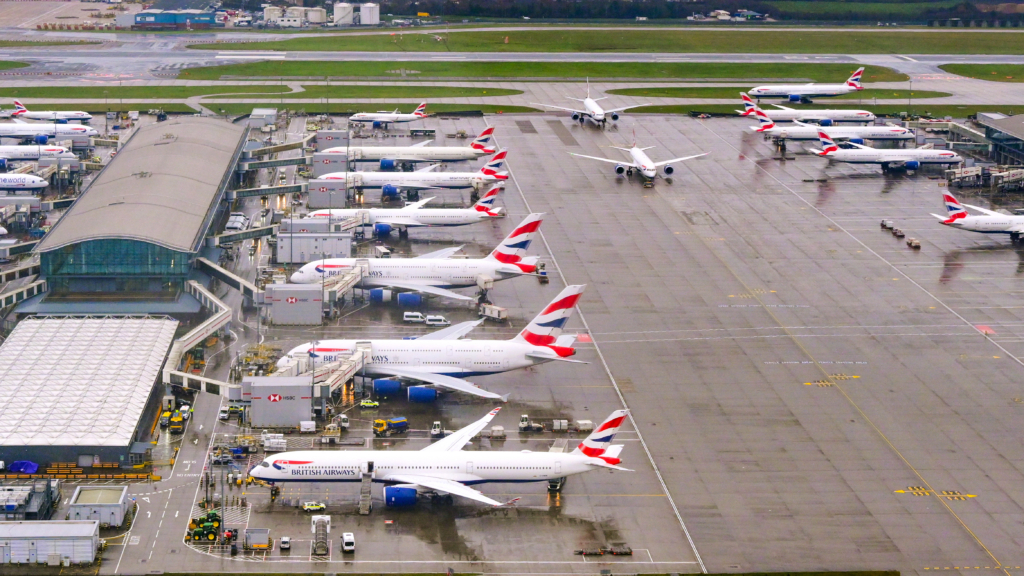
However, on the morning of the first day of operations, due to a baggage system error, hundreds of flights were cancelled, mostly affecting British Airways, with the issue causing the loss and delay of thousands of passenger bags. Simultaneously, staff struggled with new systems and security procedures within the terminal.
Around 15,000 bags were reported misplaced in the first few days, with the issue being widely covered in the media. It became known as the model for how not to open a major infrastructure project.
Despite this, and once the teething issues were overcome, passengers would go on to vote Terminal 5 as the best airport terminal in the world for several years, cementing its reputation as a benchmark for service and design.
2013: British Airways takes delivery of the UK’s first Airbus A380
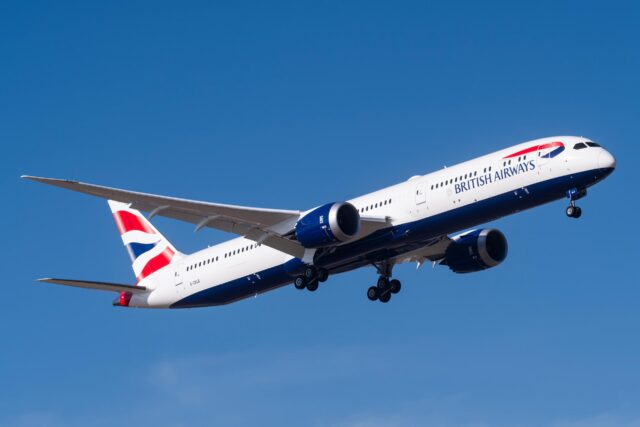
Heathrow became the home base to the Airbus A380 in 2013 as British Airways became the first UK airline to operate the world’s largest aircraft. The first and only full‑length double‑deck airliner to carry 500 passengers, the airline became the first in Europe to operate both the Airbus A380 and the Boeing 787 Dreamliner as part of the airline’s strategy to carry more travellers without increasing flight numbers or airport movements.
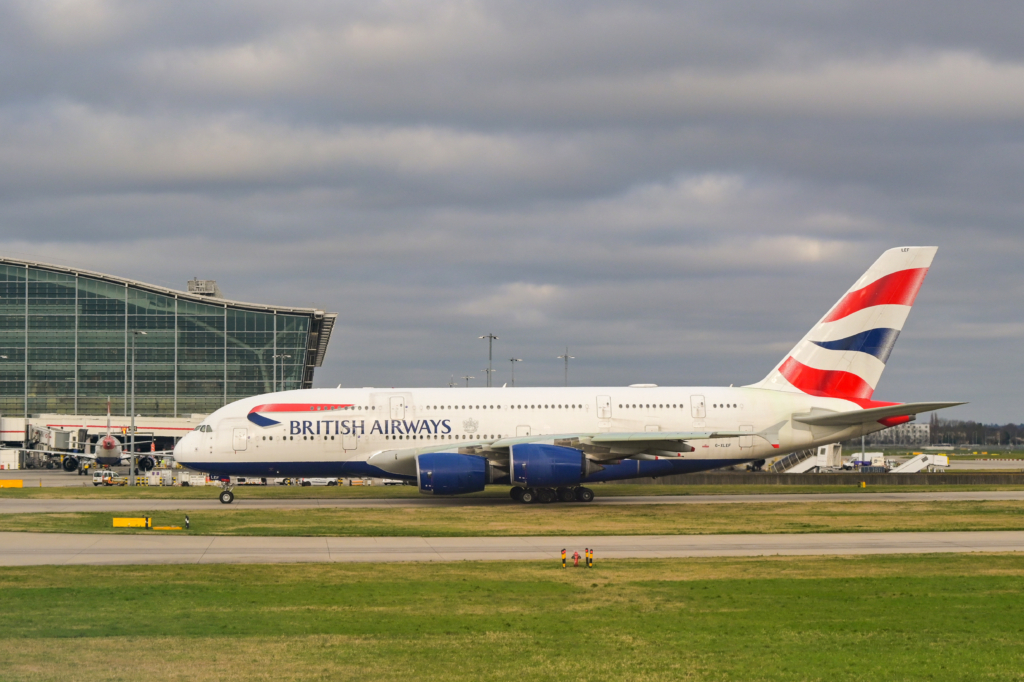
The airline currently operates 12 of the Airbus A380 superjumbo aircraft from the airport, using the type to connect to destinations such as San Francisco, Johannesburg, Miami and Dubai.
2014: Heathrow opens the new Terminal 2 – The Queen’s Terminal
In June 2014, Heathrow opened the new Terminal 2, designed to serve 20 million passengers a year and built with sustainability and efficiency at its core.
The terminal brought Star Alliance airlines, including a sizable United Airlines operation, under one roof, with the airport’s new terminal being built on the footprint of the former Europa Building/Queen’s Building site within the central terminal area.
2026: Work begins on the planning application for a third runway at Heathrow
Following Government support in early 2025 and the confirmation of Heathrow Airport Limited’s own development scheme later that year, Heathrow approved new investment to kick‑start work on the planning application for a third runway, marking a significant step forward for the UK’s most important growth project.
Fully funded by private investment, the expansion of the new project is expected to deliver more flights and more airlines at Heathrow. According to the airport, independent analysis by Frontier showed a third runway at Heathrow could unlock £79 billion in passenger savings, giving travellers better value, more destinations and a stronger, more competitive UK hub.

The proposed third runway at Heathrow Airport is one of the UK’s most debated infrastructure projects, aimed at expanding capacity at the country’s busiest airport. The new runway would be built to the northwest of the existing ones, increasing annual flights from about 480,000 to over 700,000 per year. The construction would also include the creation of new terminals, taxiways, and transport links over time.
To be built at an estimated cost of £14–£18 billion, supporters of the project argue that the new runway would help the airport to boost trade and global connectivity, create tens of thousands of new jobs, and strengthen the UK’s role as a global aviation hub.
However, various parties continue to oppose the scheme, saying that the expansion will result in increased carbon emissions, more environmental noise around the airport and the unnecessary demolition of homes and disruption in surrounding areas.
While the project has the green light in principle, at the time of writing, not a single spade has been stuck in the ground to get the project underway.
Heathrow’s development over the past 80 years
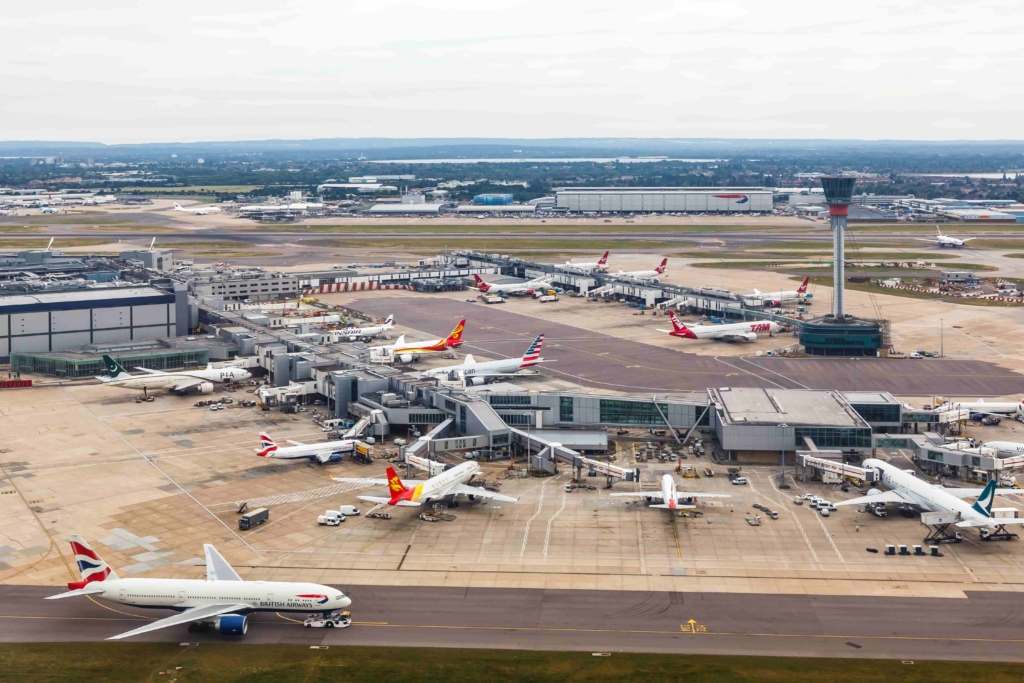
As seen above, London Heathrow Airport has come a long way in 80 years. From a row of tents in a soggy West London field to the mini-city and global mega hub it has become today, millions of passengers will benefit from its route network, destination list and choice of airlines in this anniversary year.
“Over the last 80 years, Heathrow has been the backdrop to some of Britain’s most memorable moments, from landmark arrivals and maiden flights to the everyday reunions that matter most,” commented Ross Baker, Heathrow’s Chief Customer Officer.
“As we celebrate this milestone, we are proud of the role Heathrow has played in people’s lives, British culture and the UK economy, and we remain focused on delivering an airport that serves our customers and the nation for decades to come.”