JetBlue narrowly avoids midair collision with US Air Force KC-135 tanker near Venezuela

December 15, 2025
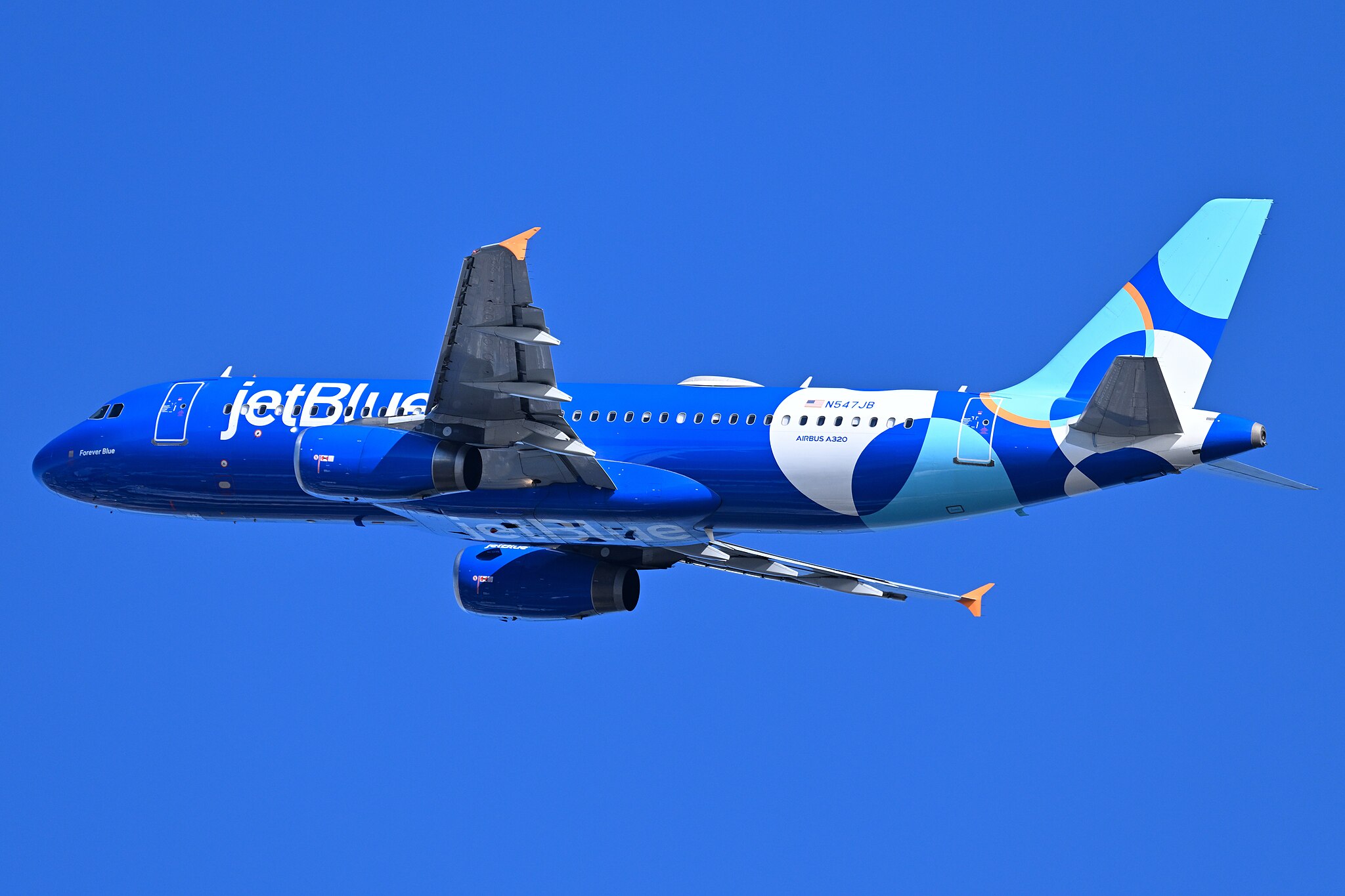
A JetBlue Airways flight narrowly avoided a potentially catastrophic mid-air collision with a US Air Force aerial refuelling tanker near Venezuelan airspace on Friday, raising concerns about airspace safety amid intensified US military operations and President Donald Trump’s escalating rhetoric toward Venezuela.
JetBlue flight had a close call with a US Air Force tanker on ascent
The incident occurred on December 12, 2025, when JetBlue Flight B6-1112 departed Curaçao International Airport (CUR) for New York’s John F. Kennedy International Airport (JFK).
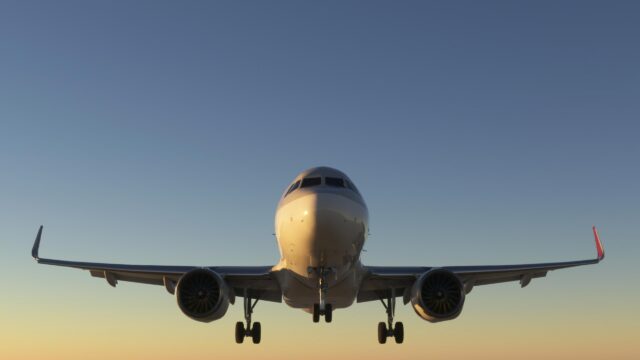
As the Airbus A320 climbed toward its cruising altitude, the flight crew was forced to halt their ascent when a US Air Force KC-135 tanker crossed directly into their flight path at the same altitude. The military aircraft reportedly had its transponder deactivated, making it invisible to the airliner’s traffic-collision avoidance systems.
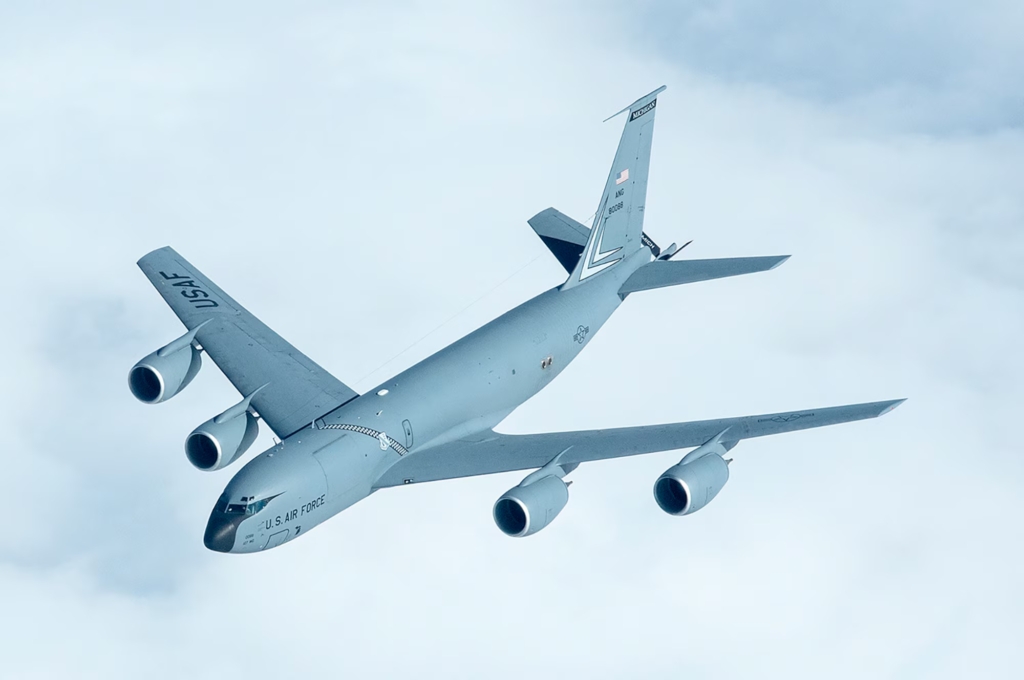
“We almost had a midair collision up here,” the pilot of the JetBlue flight told air traffic control, according to AP reporting of the recorded communication. “They passed directly in our flight path. … They don’t have their transponder turned on, it’s outrageous.”
Trump threatens to close Venezuela’s sovereign airspace
The near-miss comes amid heightened political and military tensions between the United States and Venezuela. As widely reported, in late November 2025, Trump took to social media to declare that the airspace “above and surrounding Venezuela” should be considered “closed in its entirety.”
Trump’s comments, posted on his social media platform Truth Social, instructed “airlines, pilots, drug dealers and human traffickers” to view Venezuelan airspace as closed, even though such a unilateral declaration does not legally empower the US to shut another country’s sovereign airspace under international law.
The announcement drew widespread condemnation, with the Venezuelan government denouncing it as a “colonialist threat” that violated international norms and undermined regional stability.
US military operations raise airspace safety concerns
Trump’s airspace declaration followed a series of US military deployments and operations in the Caribbean, which the administration has framed as part of a campaign against drug trafficking and criminal networks, including strikes on vessels allegedly linked to drug trafficking. The US has deployed the aircraft carrier USS Gerald Ford near Venezuela.
While the US president cannot legally impose a no-fly zone over Venezuelan territory, the declaration could influence airlines and pilots to avoid the region for safety or legal compliance, effectively chilling commercial traffic between the Americas.

The Federal Aviation Administration (FAA) earlier issued advisories warning pilots of a “hazardous situation” over Venezuela due to increased military activity and security risks. These warnings predated the JetBlue incident and did not extend across the entire Caribbean. The incident demonstrates that the airspace is broad and that the impact of US military action extends beyond Venezuelan territory.
Despite the close call, JetBlue Flight 1112 continued safely to New York and landed without further incident.
The near-miss highlights the complexities and operational challenges of civilian air traffic in the vicinity of conflict zones with heightened military activity and political friction. This near-miss, which could have led to US flyers being killed in a mid-air collision with a US military aircraft, for the second time in a year, has raised alarms.
As the FAA and the recently renamed US Department of War investigate the tanker’s conduct and communication procedures, airlines and pilots will be waiting for answers about what went wrong and how to avoid it in future.
Featured Image: 4300streetcar | Wikimedia Commons