Italian jets scramble to shadow unique Russian Be-200 flying boat

January 19, 2026
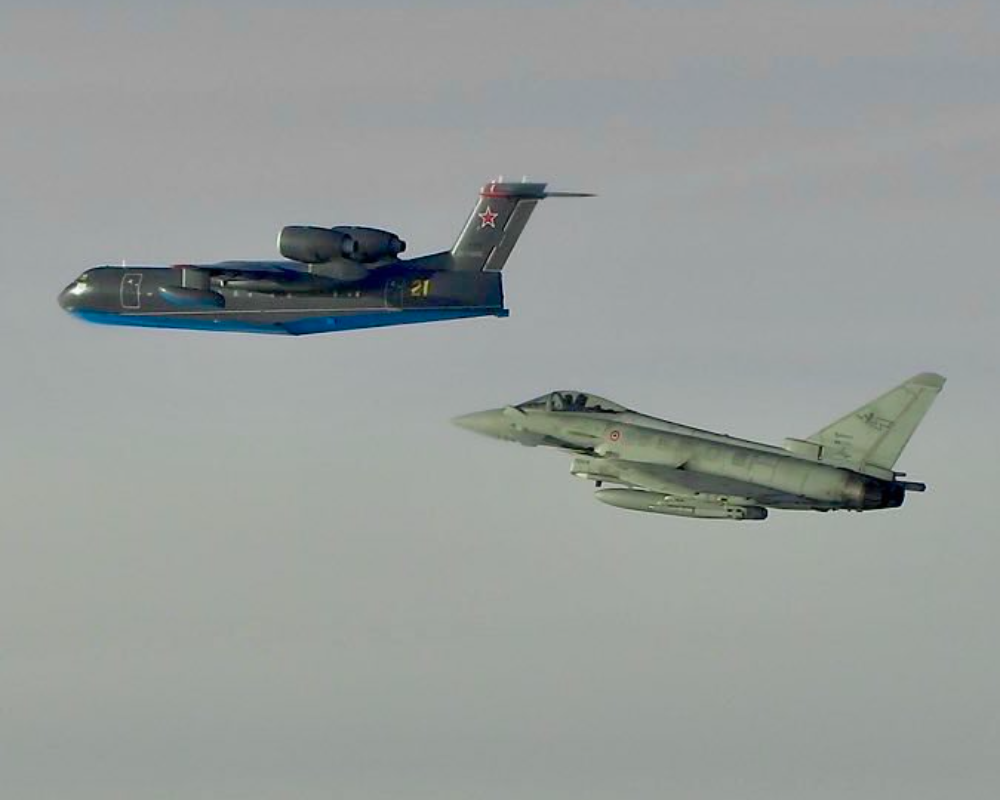
Italian Eurofighters have once again scrambled to intercept a rare Russian bird flying the air corridor over the Baltic Sea that connects to Russia’s Kaliningrad exclave. The Beriev Be-200 could be the only such aircraft in Russian Navy service, if not, it is one of less than a handful.
Italian Eurofighters intercept Russian Be-200
On Saturday, Italian Eurofighter Typhoons stationed at Estonia’s Ämari were scrambled to intercept a rare Russian Beriev Be-200 flying boat over the Baltic Sea. The Be-200 was transiting through international airspace close to NATO airspace, likely flying between mainland Russia and its Kaliningrad exclave.
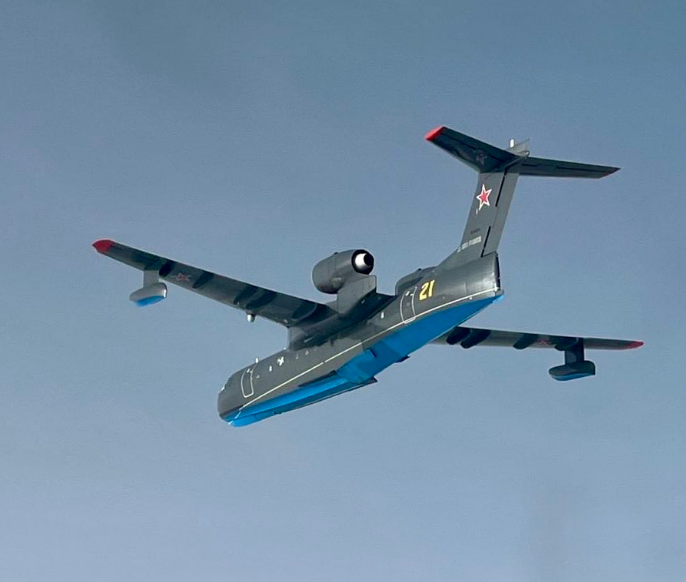
Counting its Beriev A-40 predecessor, the Be-200 is the only jet-powered amphibious aircraft in the world. Other amphibious aircraft, such as China’s new AG600 Kunlong, are now in flight testing and are propeller-driven.
The NATO Air Command noted, “In 2025, over 500 scrambles have been executed across NATO airspace. Air Policing and enhanced Vigilance Activities ensure Allied security 24/7.”
The Be-200 is designed as a multipurpose amphibian carrying out aerial firefighting, search and rescue, maritime patrol, cargo and passenger transport, and ambulance roles.
11:30 today, 🇮🇹 Eurofighter Typhoons deployed at Ämari, 🇪🇪, were scrambled to intercept a 🇷🇺 BE-200 aircraft approaching the Baltic Sea
— NATO Air Command (@NATO_AIRCOM) January 16, 2026
In 2025, over 500 scrambles have been executed across NATO airspace.
Air Policing and enhanced Vigilance Activities ensure Allied security 24/7 pic.twitter.com/SgyeaRVnNN
The particular Be-200 intercepted is “21” Yellow / RF-88456, which first flew in 2020. It is the Be-200PS variant, which is often referred to as a Be-200ChS without firefighting equipment.
Be-200: The Russian Navy’s very rare bird
The Be-200 is operated by the Russian Navy, although in very low numbers; some estimates place the quantity at three, while others suggest just one. In the Russian Navy, they are used for maritime patrol and search and rescue.
The largest operator is the Russian Ministry of Emergency Situations (EMERCOM), which is believed to have a fleet of around 12 such aircraft.

A single example is in service with Azerbaijan, while Algeria is believed to have now received the first two of the four it has ordered. In total, only around 20 to 22 of these aircraft are believed to exist.
This isn’t the first time Italian Eurofighters stationed in the Baltics participating in air policing missions have intercepted rare Russian birds.
In November 2025, they released photos intercepting a Russian “Black Pearl” Tu-134UBL (now Tu-134A-4 VIP transport). It was being escorted by a pair of Russian Sukhoi Su-30SM2 Flankers and a Su-24MR Fencer.
Get the latest aerospace defence news here on AGN.
Russia still working to increase Be-200 production
The Be-200’s roots trace back to the USSR, although its first flight took place in 1998 before being introduced in 2003.
One Russian Navy Be-200 (No “20” Yellow / RF-88450) crashed into mountainous terrain in 2021 as it took part in firefighting operations in Turkey, claiming the lives of all eight on board.
2 🇫🇷 Mirage 2000-5 took off from Šiauliai Air Base 🇱🇹under #NATO orders to conduct a visual identification of a 🇷🇺 Il-78 that was flying over international waters off the 🇪🇪 coast
— NATO Air Command (@NATO_AIRCOM) February 22, 2024
Read more: https://t.co/MEliKykJ1s#SecuringTheSkies pic.twitter.com/kfgHiFTUql
The open source Oryx blog lists that one Be-200 has damaged from a Ukrainian attack on the main Beriev base at Taganrog, where it also maintains the important Beriev A-50U AWACS aircraft. The damage was assessed from satellite photos, but the extent of the damage was unclear.
The Be-200 has only been produced in low numbers. Part of the issue has been its engines, as a pair of Ukrainian Progress D-436TP turbofan engines power the aircraft.
Russia is working to replace these Ukrainian engines with its domestic PD-8 engines and update the aircraft to the Be-200ChS-8 variant.

Russia is currently producing the Be-200 at a low rate of 1-2 per year and is not expected to produce them in larger numbers until after 2028, after it overcomes the challenges of Russifying the aircraft.
Featured Image: NATO Air Command