Debate rages over whether Iran hit a US F/A-18 Super Hornet over Chabahar

March 26, 2026
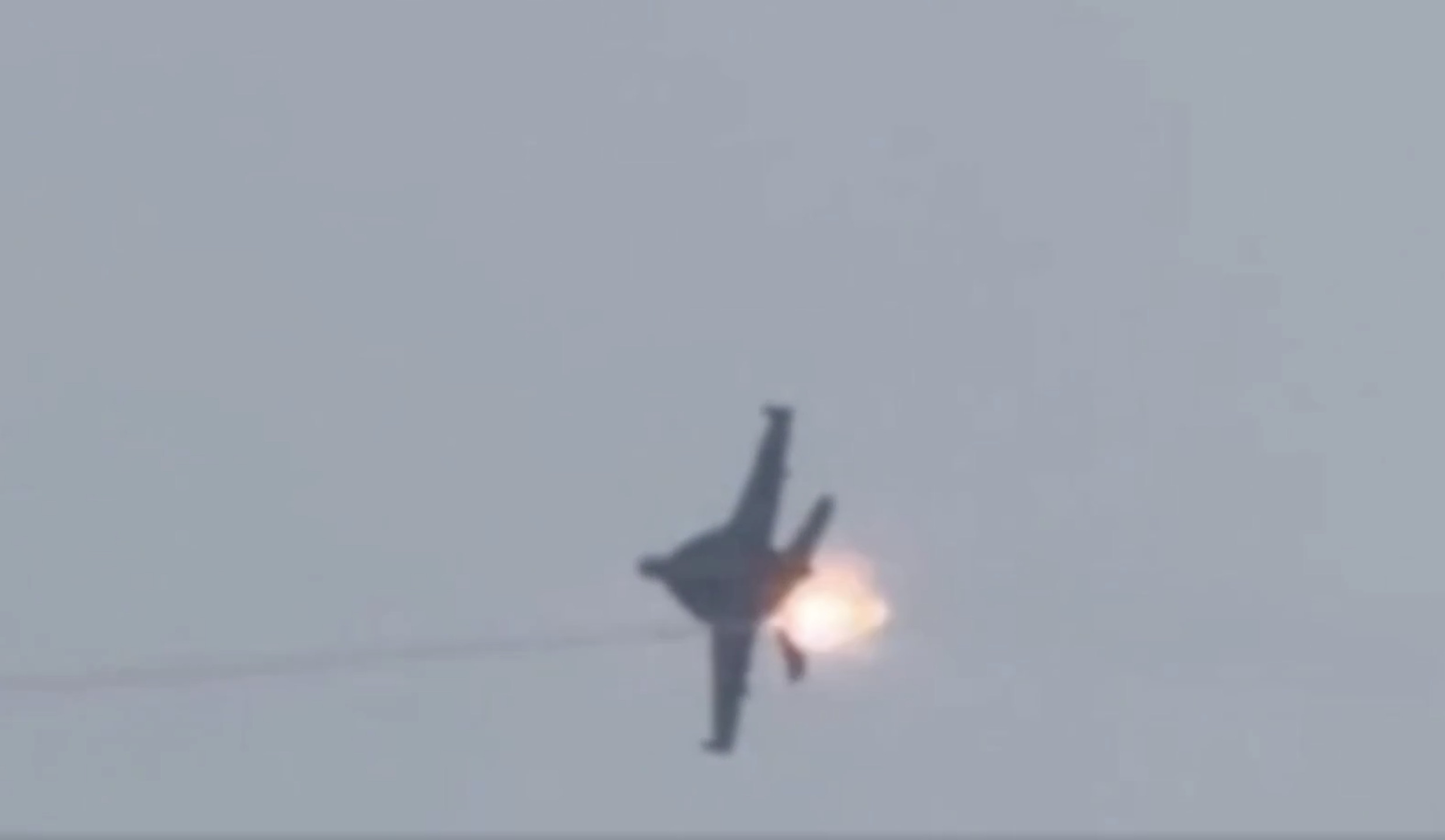
Videos have emerged showing what appears to be a near miss between a US F/A-18 Super Hornet and an Iranian missile.
The incident, allegedly filmed over the city of Chabahar in southeastern Iran, was immediately claimed by the IRGC as a successful hit on the US fighter jet. Fars News published the statement, which read,
“The enemy F-18 fighter jet was accurately hit in the sky of Chabahar by the missiles of the IRGC Navy’s new advanced air defence system, under the command of the country’s integrated air defence network, and fell into the Indian Ocean.”
Shortly after, CENTCOM responded with a firm rebuttal of the ‘fake news’, stating that ‘No US fighter aircraft have been shot down by Iran.’
🚫FALSE: The Islamic Revolutionary Guard Corps announced a U.S. F/A-18 fighter was struck over Chabahar using new advanced air defense systems.
— U.S. Central Command (@CENTCOM) March 25, 2026
✅TRUE: No U.S. fighter aircraft have been shot down by Iran. pic.twitter.com/I25QFjYo0l
However, many have noted the careful wording of the message, and that ‘shot down’ is not the same as ‘hit’. As armchair analysts pore over the video frame-by-frame, the picture of whether the jet was indeed damaged becomes ever more murky.
Did Iran shoot down an F/A-18, or was it a near miss?
The video that is doing the rounds appears to show an F/A-18 flying at low altitude, potentially strafing (apparent by the sound at 00:03). It abruptly pulls into a sharp turn, reversing direction.
An Iranian MANPADS struck the tail of an U.S. F/A-18 fighter jet over southeastern Iran earlier today, just barely missing the body of the aircraft. pic.twitter.com/kNCenYhwzx
— AMK Mapping 🇳🇿 (@AMK_Mapping_) March 26, 2026
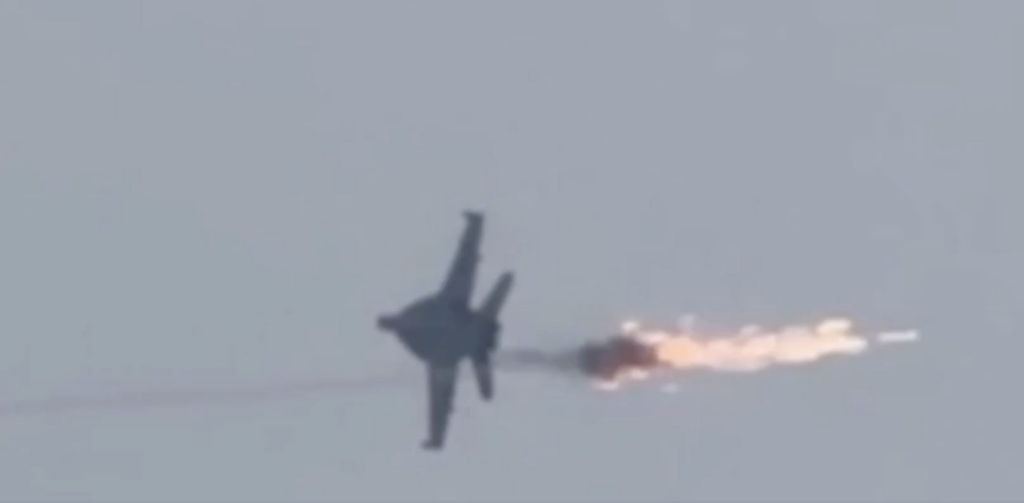
As it pulls out of the turn, an object passes in the opposite direction, appearing to explode as it draws level with the aircraft’s tail.
The manoeuvre the F/A-18 took is known as a break turn, a maximum performance, high-G turn used to evade threats or reverse direction rapidly. It’s achieved by rolling to bank and pulling back on the stick.
In the case of a guided or heat-seeking missile, this rapid reverse course forces an overshoot. The F/A-18 pilot pulled it off wth textbook precision.
Another video, of even worse quality, similarly shows an explosion in the vicinity of the aircraft, but it’s impossible to see if any damage occurred.
Video reportedly of a US Navy F/A-18 getting hit by IRGC Air Defense over Chabahar.
— Mehdi H. (@mhmiranusa) March 25, 2026
IRGC Public Relations Office claimed the fighter crashed in the Indian Ocean.https://t.co/0k4NXBJl0R pic.twitter.com/jS8Jur2HSp
The angle of the videos, coupled with the zoom distortion, removes any sense of depth from the image. The missile could be on top of the fighter, or dozens of feet away.
There are even doubts over whether it was indeed an air defence missile, as the IRGC is claiming, or a projectile launched from MANPADS.
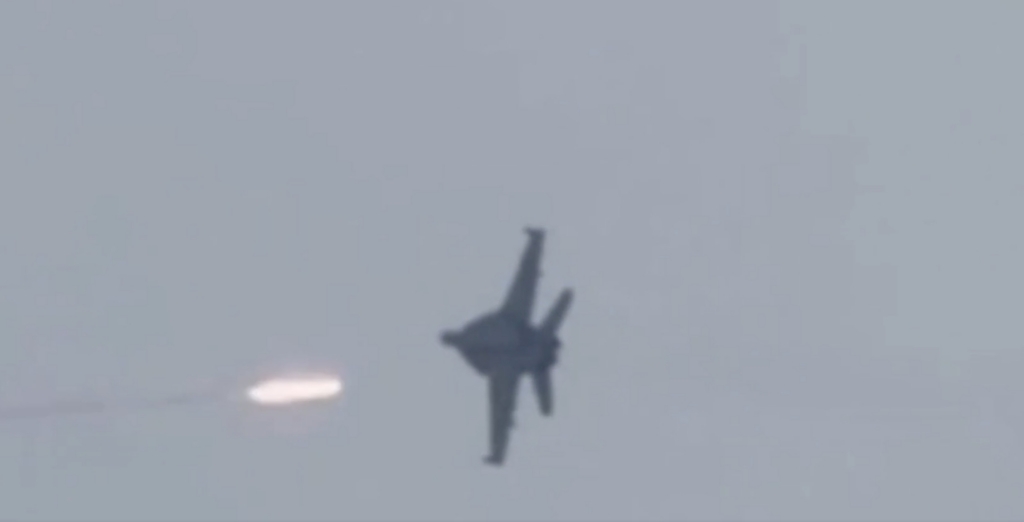
Whether or not the missile struck the F/A-18, there’s no doubt that it exploded very close by. That could have been a proximity fuse on the missile, or the missile striking a towed decoy.
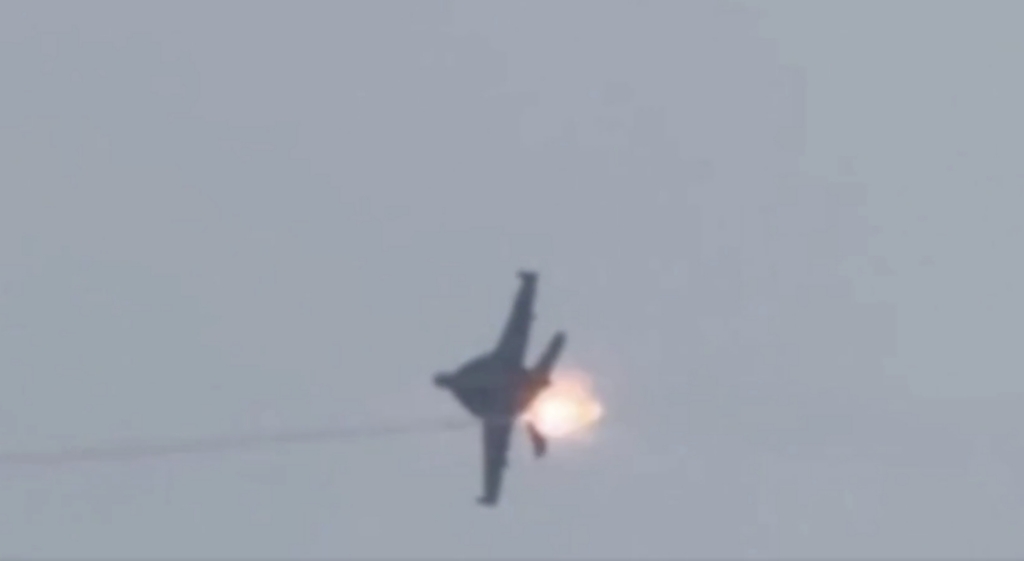
After the explosion, shrapnel can be seen ejecting from the missile. Most of it travels away from the fighter, but that’s not to say some damage did not occur.
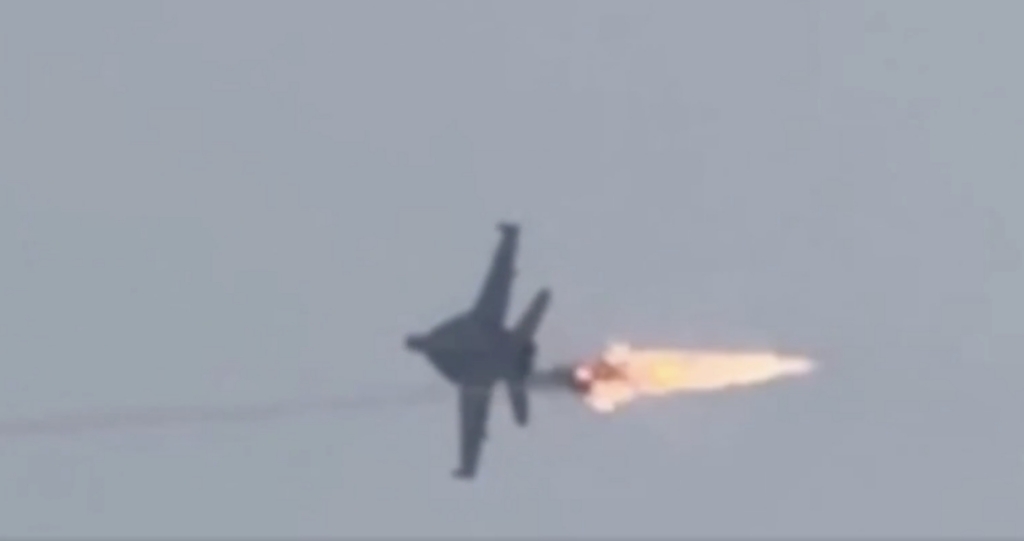
Whatever shrapnel the F/A-18 might or might not have taken, the jet is seen flying away straight and level, without any visible smoke or damage.
Why the US is flying F/A-18s on low altitude strafing missions
US Navy Boeing F/A-18 Super Hornet jets have been repeatedly observed flying low-level missions over Iran, including port areas such as Chabahar, in what appears to be a shift in tactics during Operation Epic Fury.
Videos emerging since the second week of the campaign suggest some aircraft are conducting strafing runs, a notable change from earlier footage released by U.S. Central Command showing stand-off strikes. The move to low altitude indicates parts of the airspace are now permissive enough for closer-range operations.
U.S. Navy F/A-18 Super Hornet making a low-level strafing run with its gun over the Iranian port city of Chabahar. pic.twitter.com/7xbdt68Zsz
— OSINTtechnical (@Osinttechnical) March 15, 2026
It also raises a key question: why use Super Hornets for missions typically associated with dedicated close air support aircraft?
One likely factor is tasking. With the A-10 ‘Warthog’ reportedly focused on maritime operations in the Strait of Hormuz, the Super Hornet’s flexibility allows it to step into the role.
While not purpose-built for sustained gun runs, it can still deliver effective strafing and close support, especially once air defences are degraded. Just as importantly, carrier-based aircraft are already in theatre and can be rapidly retasked as operational priorities shift.
Featured image: via X