Indian Air Force instructors to train RAF Hawk pilots in first-ever deployment to UK

February 13, 2026
Nearly a century after the Royal Air Force trained India’s first military pilots, Indian Air Force instructors will now teach British fast-jet trainees at RAF Valley.
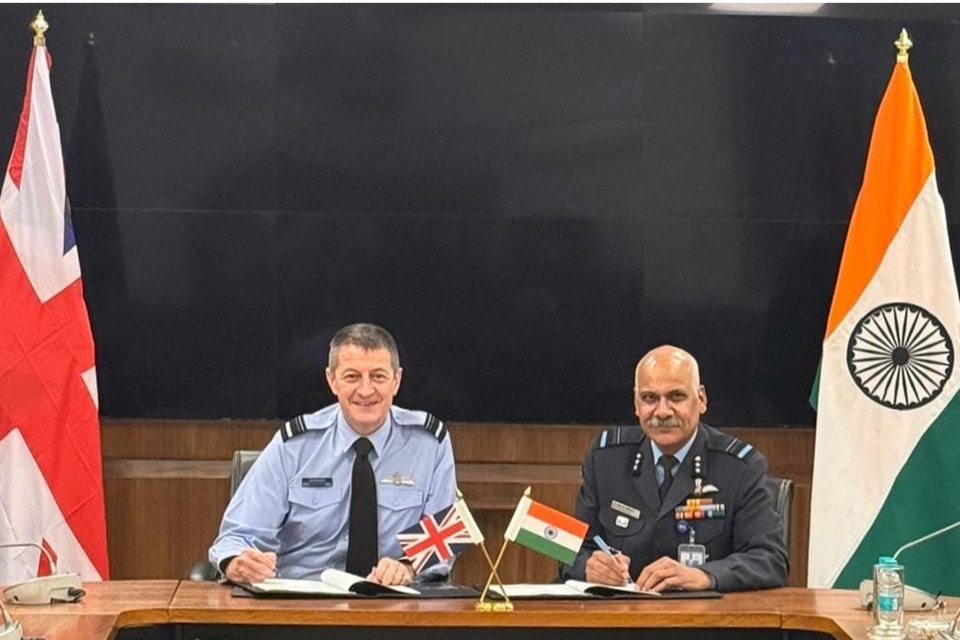
“For the first time, Indian Air Force instructors will train RAF fast-jet pilots in the United Kingdom,” Commodore Chris Saunders MBE, Royal Navy, Defence Adviser, British High Commission, said.
It reinforces the mutual trust and shared experience that underpins our training cooperation and exemplifies the increasingly sophisticated levels of interoperability we are building together across our services.”
The collaboration was decided at the 19th UK-India Air Staff Talks in New Delhi on 12 Feb.
Three Indian Qualified Flying Instructors (QFIs) will be deployed to RAF Valley in Wales, home of the RAF’s advanced jet training system, Commodore Saunders said.
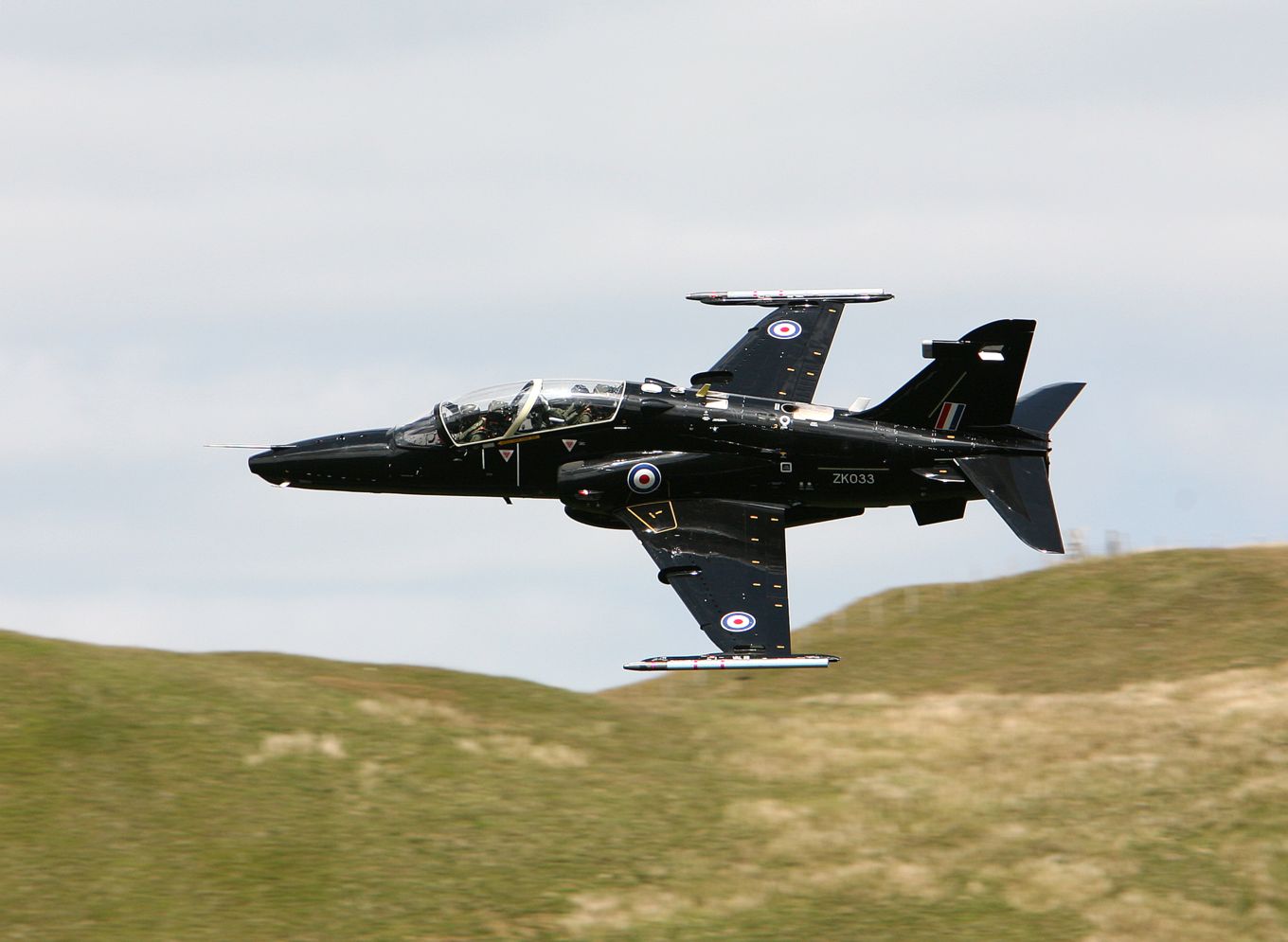
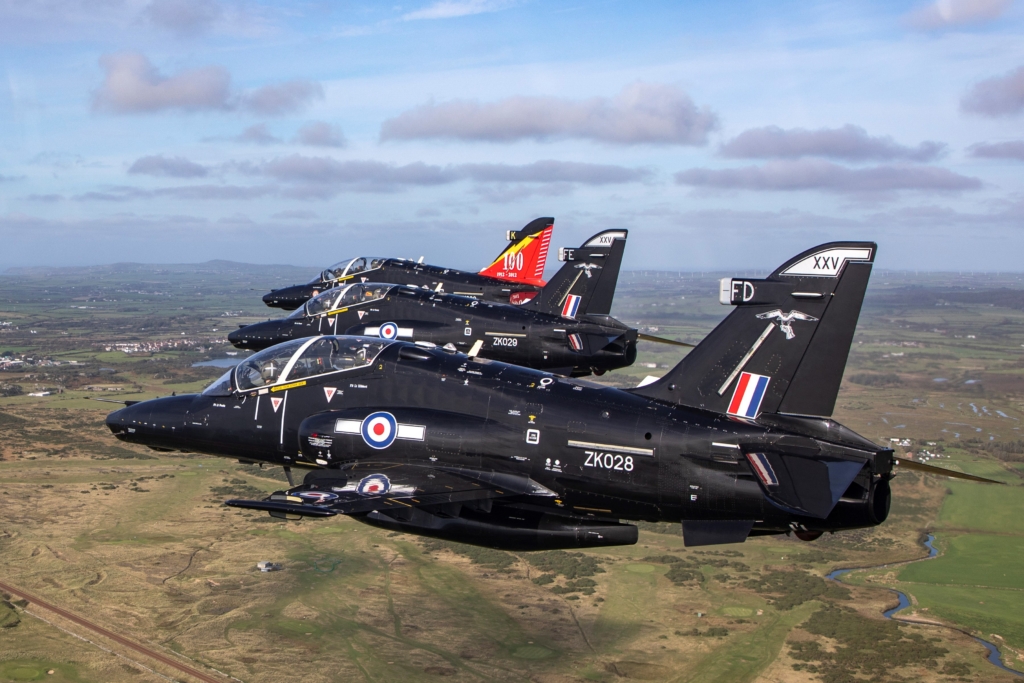
The posting, initially for two years, will see Indian instructors teaching on the BAE Systems Hawk T2, the aircraft used to prepare RAF pilots for frontline types such as Typhoon and F-35.
During their tenure, the officers will remain under Indian Air Force command while carrying out instructional duties within RAF squadrons.
The move forms part of a broader military training cooperation agreement signed during Prime Minister Keir Starmer’s visit to Mumbai in October 2025, and follows the earlier posting of an Indian Air Force officer to the Royal Air Force College Cranwell.
Hawk T2 training at RAF Valley anchors UK-India instructor exchange
RAF Valley is home to No. 4 Flying Training School, which conducts Advanced Fast Jet Training for RAF and Royal Navy pilots.
The Hawk T2 represents the final stage of flying training before pilots convert to operational combat aircraft. The syllabus includes advanced handling, formation flying, tactical manoeuvring, air combat training and weapons employment.
The Indian Air Force operates the Hawk as its Advanced Jet Trainer, manufactured under licence in India by Hindustan Aeronautics Limited.
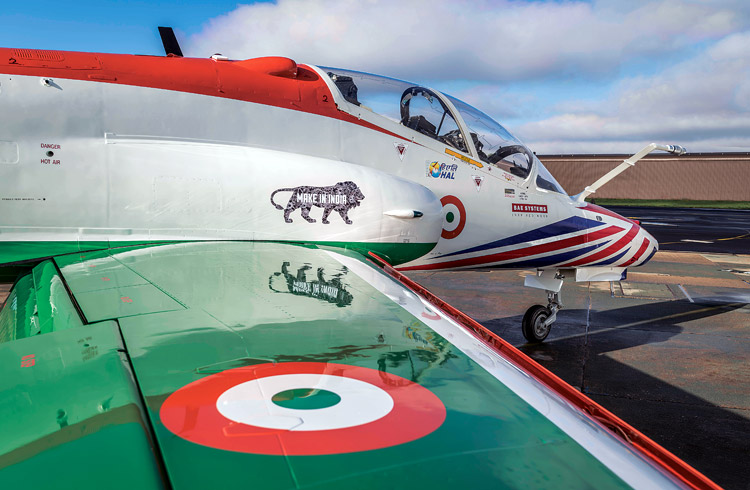
The aircraft is used to bridge the gap between basic jet trainers and frontline fighters, allowing pilots to develop advanced flying and tactical skills before progressing to aircraft such as the Su-30MKI, Rafale and LCA Tejas.
Indian QFIs selected for the Valley posting will bring experience from that advanced training pipeline. The exchange will integrate them directly into Britain’s Military Flying Training System, instructing RAF trainees on the same Hawk T2 platform used by British instructors.
Air Vice Marshal Ian Townsend, Assistant Chief of the Air Staff, described the agreement as strengthening the longstanding relationship between the two air forces and deepening cooperation within military flying training systems.
“Bringing Indian QFIs into UK Military Flying Training Systems deepens our cooperation, enhances interoperability and reinforces our shared commitment to excellence in aircrew training,” he said.
“Together, we are investing in the foundation of a long-term collaboration and shaping a partnership that is both enduring and strategic in its outlook,” he added.
From RAF dependence to Indian Air Force instructors in the UK
In purely numerical terms, three instructors represent a modest exchange. Such secondments between allied air forces are not uncommon. However, the development carries historical resonance.
When the Indian Air Force was established in 1932, it relied entirely on the Royal Air Force for training and instructional oversight. Initial courses were conducted in the United Kingdom. Even after training shifted to India, RAF instructors dominated flying schools.
A Central Flying School was established at the northern Indian town of Ambala in early 1940 to expand India’s own instructional cadre, yet by January 1946, nearly 90% of the instructors remained RAF personnel. Indian officers were urgently required in operational squadrons, limiting the pool available for instructional roles.
From the mid-1940s, Indian officers travelled to the UK to qualify as flying instructors before returning home to build domestic capability. Between roughly 1946 and 1952, around 90 Indian officers graduated from UK Central Flying School courses as part of a deliberate effort to reduce dependence.
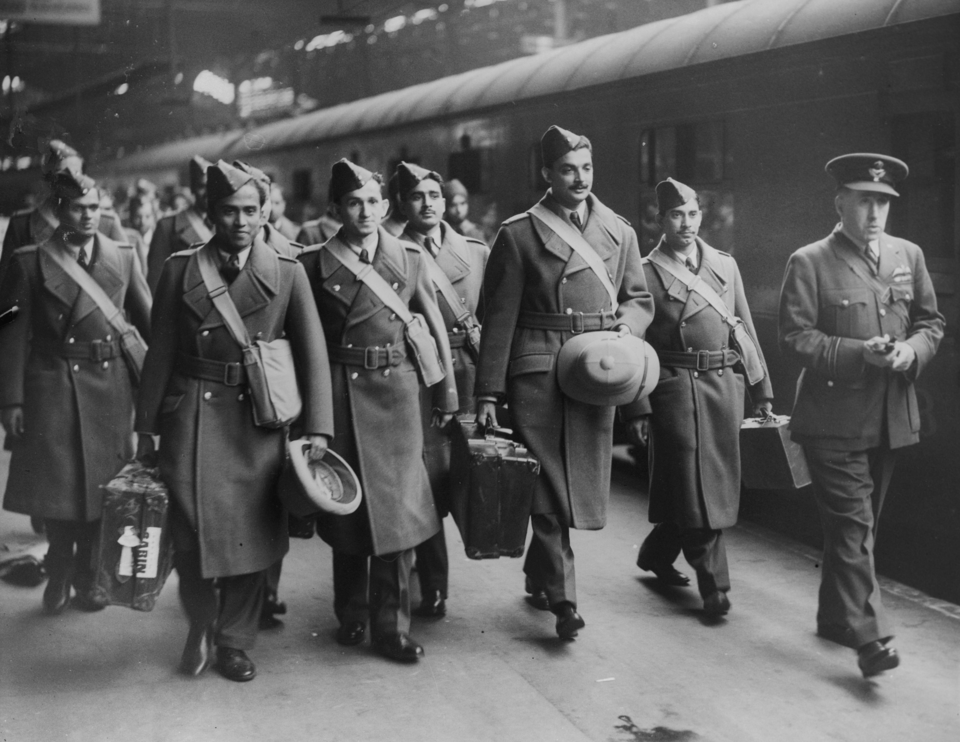
In 1948, India established its own Flying Instructors School at Ambala, later relocating it to Tambaram in 1954. Over the decades, more than 150 courses have produced over 3,000 instructors, creating a fully self-sustaining system.
According to a defence analyst, from 1956 onwards, the Indian Air Force began deputing instructors abroad, supporting training establishments in countries including Egypt, Iraq, Ghana, Nigeria, Singapore and Indonesia. These deployments reflected confidence in Indian instructional standards and professional depth.
Against that background, according to the analyst, Indian instructors teaching at RAF Valley is not an extraordinary operational development. It is, however, a reversal of early dependence.
A service that once relied on RAF instructors now contributes to training within Britain’s own advanced jet pipeline.
Cobra Warrior, Tarang Shakti and growing UK-India air force ties
The Valley deployment sits within a steadily expanding training relationship. An Indian Air Force officer was posted earlier this year to instruct at RAF College Cranwell.
Indian Navy and Army officers are already serving as instructors at Britannia Royal Naval College, Dartmouth and the Royal Military Academy Sandhurst.
Operational engagement has also deepened. The Indian Air Force participated in the UK’s Cobra Warrior exercise in 2023, while the Royal Air Force joined India’s Tarang Shakti exercise in 2024. In 2025, the two countries conducted their largest maritime exercise to date involving carrier strike groups.
The Hawk instructor exchange is therefore less an isolated initiative than the latest step in a structured programme of professional integration.
Featured image: RAF