India’s AMCA fighter: 28 private firms line up to join HAL in stealth jet race

September 24, 2025
In a development that underscores the rising stakes in India’s aerospace ambitions, as many as 28 private sector firms have expressed interest in partnering with Hindustan Aeronautics Limited (HAL) to develop the country’s first 5th-generation stealth fighter, a senior HAL official told AGN.
The state-owned manufacturer is now in the process of shortlisting potential partners for what is being billed as one of the most consequential defence projects in India’s history – the Advanced Medium Combat Aircraft (AMCA).
HAL has formed a high-level committee to whittle down the applicants to a maximum of two companies with which it will form a consortium.
This consortium will respond to the Aeronautical Development Agency’s (ADA) call for Expressions of Interest (EOI), due by September 30.
Earlier this week, HAL Chairman DK Sunil told Hindustan Times that “Almost all major private firms are keen to tie up with HAL. The committee has evaluated them on metrics such as capability, technology, financial standing and prior experience. Its report is almost ready, and we will respond to the EOI with either one or two partners.”
Why HAL cannot go it alone in the AMCA project
The AMCA programme, executed by ADA under the Defence Research and Development Organisation (DRDO), is designed to be India’s leap into the elite club of nations with stealth-capable fighters. However, the qualifying terms in the EOI have created unique challenges.
“There are clauses that have loaded the dice against HAL,” Sunil said. “The EOI says if a company’s order book is three times its turnover, then it will get zero marks. In HAL’s case, it is almost 8X. It means someone who has fewer orders will get more marks. I don’t know why they have done this. Still, we will go with some partnerships and pursue the project.”
The ADA’s criteria stipulate that the winning consortium must be capable of building prototypes, supporting flight tests, and setting up facilities for series production, all within a strict eight-year timeline.
The Ministry of Defence’s approval in May of a competitive industry-execution model opened the door to private participation, ending HAL’s long-held monopoly in combat aircraft manufacturing.

The move has unlocked new possibilities for the Indian aerospace industry, drawing in heavyweights such as Larsen & Toubro, Tata Advanced Systems, Adani Defence and Aerospace, and the Mahindra Group.
The model allows for participation either as a single company, joint venture, or consortium, reflecting the government’s intent to foster a broad-based industrial ecosystem.
What the AMCA fighter jet will bring to the table
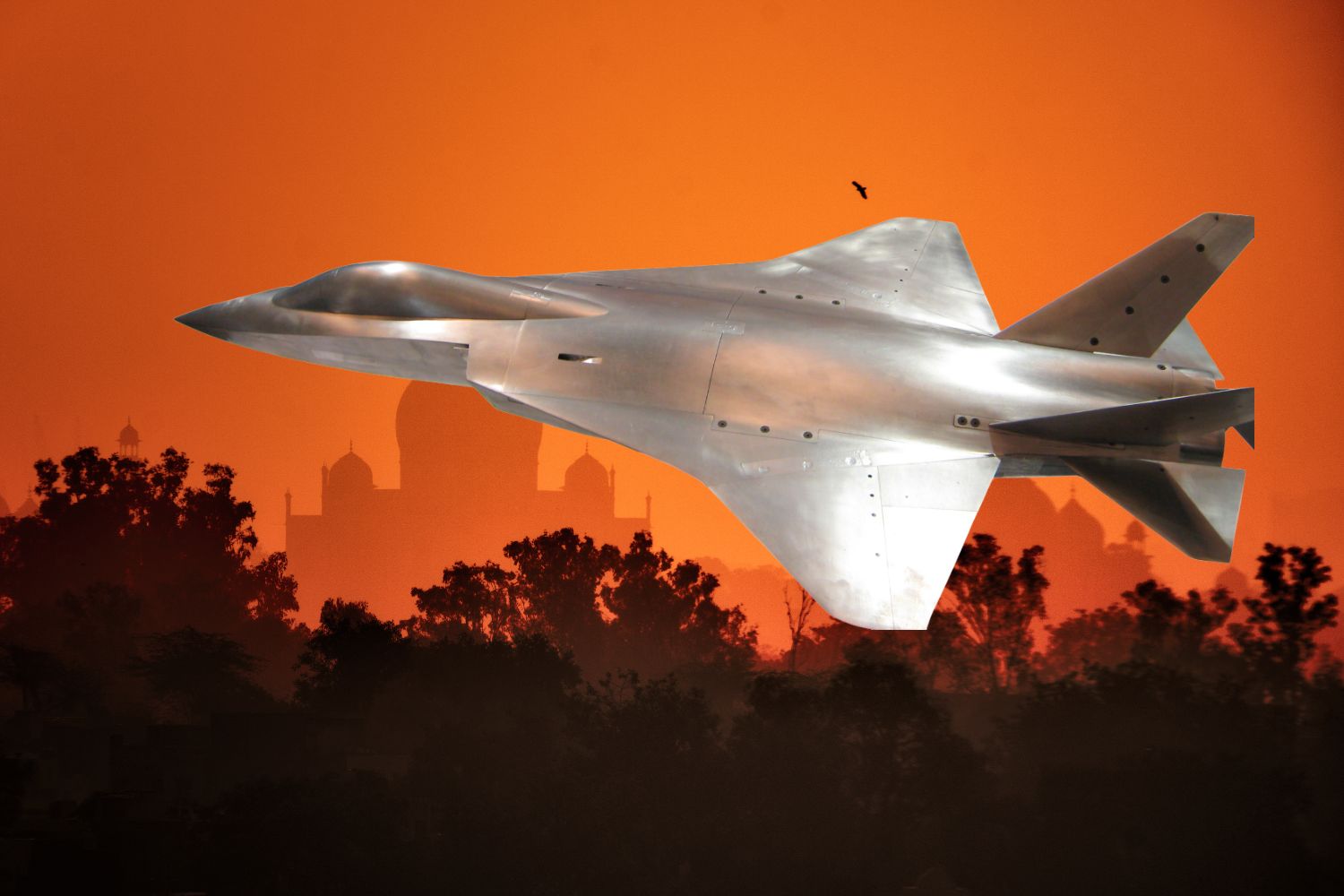
The AMCA, with a projected weight of 25 tonnes, is being designed as a swing-role aircraft with stealth shaping, internal weapons bays, advanced avionics, and super-cruise capability, which means the ability to fly supersonic without afterburners.
Two operational variants are planned:
- Mk-1 version powered by American GE F414-INS6 engines.
- Mk-2 version powered by a next-generation 120-kilonewton engine to be co-developed by Safran of France and India’s Gas Turbine Research Establishment (GTRE).
The first prototype is expected to fly by 2029, with development completion by 2034 and induction into the Indian Air Force from 2035.
The IAF’s modernisation roadmap envisages around 120 AMCA fighters (six squadrons), with the first two squadrons built around the Mk-1, followed by four squadrons of the more powerful Mk-2.
In a landmark Indo-French agreement, Safran and GTRE will jointly develop the 120-kilonewton engine, with nine prototypes to be built over 12 years and complete technology transfer to India.
Valued at nearly ₹610 billion ($6.9 billion), the project marks the country’s most ambitious propulsion development effort since the ill-fated Kaveri engine.
The first tranche of AMCA will use GE’s F414 engines, but the Safran partnership is seen as crucial to achieving true self-reliance. It will also establish an engine development ecosystem in India, a long-missing pillar in the country’s aerospace ambitions.
AMCA: Designed for stealth, survivability and flexibility
According to AMCA Project Director Krishna Rajendra, the aircraft will feature twin tails, a blended fuselage, and radar-absorbing shaping for maximum stealth. It will support two operational modes:
Stealth mode, with up to 1.5 tonnes of weapons stored internally.
Non-stealth mode, with external hardpoints allowing up to 5 tonnes of payload for missions where stealth is not the priority.
The fighter will incorporate advanced systems, including an AESA radar, infra-red search and track (IRST), indigenous electronic warfare suites, and AI-enabled mission support through a digital “electronic pilot.”
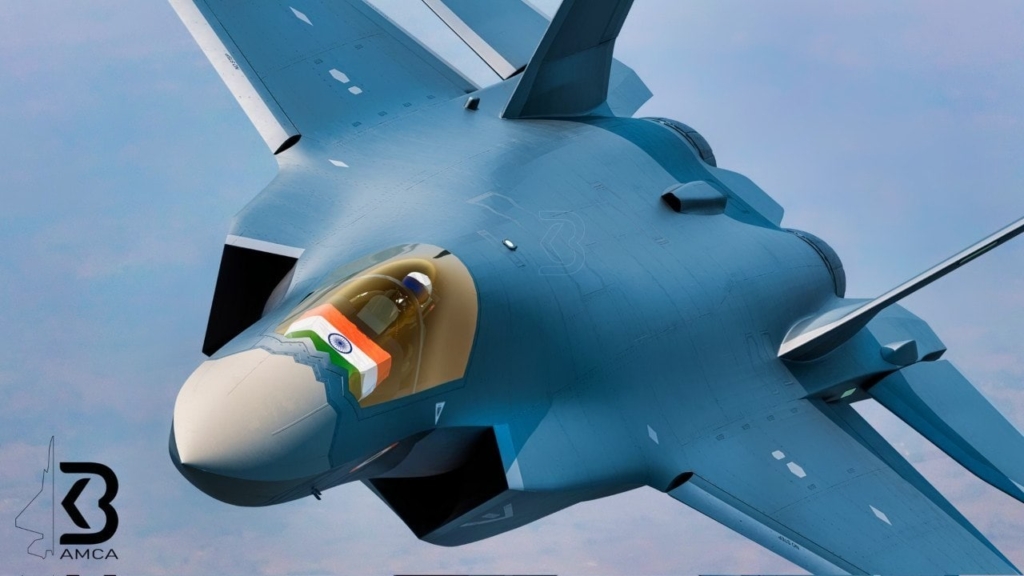
“This aircraft will not be noticed on enemy radar; that is the stealth feature of this aircraft,” Rajendra said.
India’s urgency in pushing forward the AMCA programme is also shaped by regional dynamics.
China has already deployed its J-20 5th-generation fighters and is advancing the J-35 stealth fighter, which Pakistan is considering. Beijing has also test-flown 6th-generation prototypes, the J-36 and J-50.
India, meanwhile, has only recently completed the design phase of the AMCA. Last year, the Cabinet Committee on Security approved design and prototype development at a cost of ₹150 billion ($1.7 billion), providing the political push needed to accelerate timelines.
India’s strategic autonomy through aerospace
The AMCA project is more than a technological leap; it is intended as a pillar of India’s strategic autonomy. By combining HAL’s experience, ADA’s design expertise, and private sector capacity, the programme promises not only to deliver a 5th-generation fighter but also to transform India’s aerospace industry into a globally competitive force.
If the programme stays on course, the AMCA will stand as a powerful symbol of India’s ambition to move from being the world’s largest arms importer to a nation capable of designing, developing and producing world-class combat aircraft.