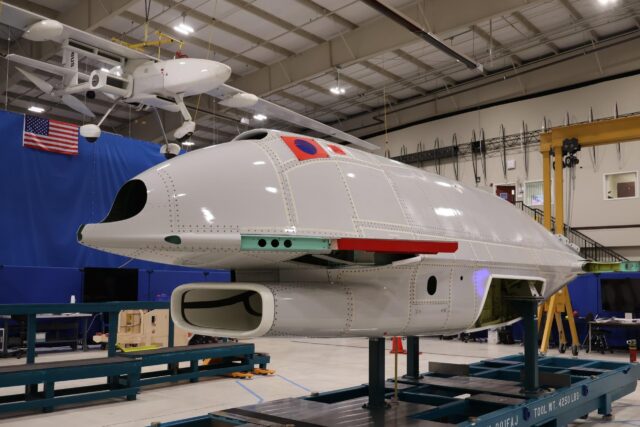
Hermeus fast-tracks F-16-sized unmanned jets as Quarterhorse scales towards Mach 3

April 9, 2026
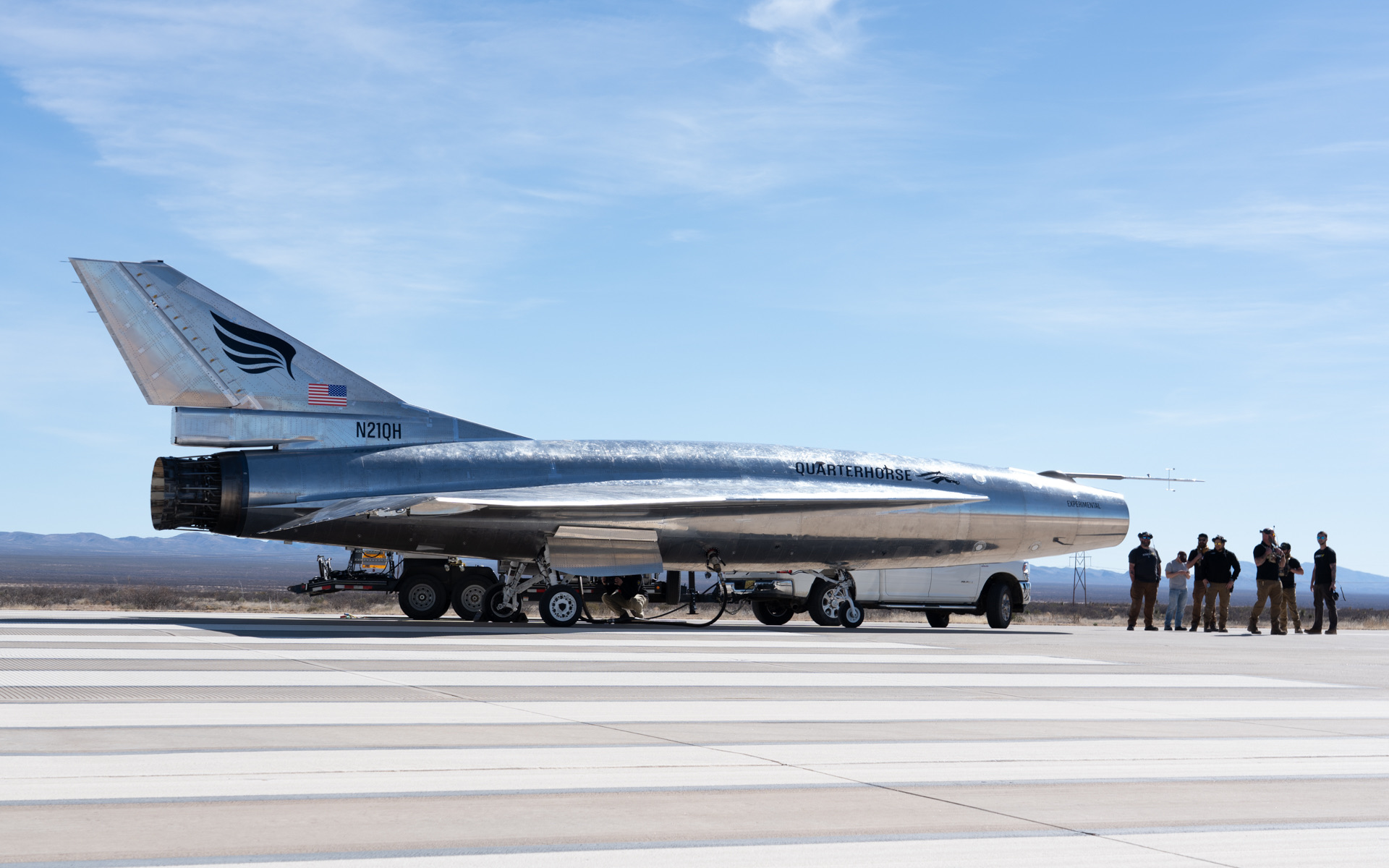
Hermeus is moving to scale its Quarterhorse high-speed aircraft programme after securing $350 million in fresh investment, shifting from rapid prototyping to building a fleet of F-16-sized unmanned jets as it pushes towards Mach 3 flight, ramjet propulsion and operational payload integration.
The funding underpins a transition from rapid prototyping to fleet-level development, following the first flight of its latest demonstrator and the launch of a structured flight-test campaign.
The round takes total capital raised past $500 million and values the company at around $1 billion, signalling growing investor confidence as it transitions from experimental aircraft to scalable high-speed capability.
“This new funding lets us build multiple aircraft at the same time and scale our manufacturing capabilities, adding more hardware richness and robustness to our programme,” founder and chief executive AJ Piplica said. “That accelerates our path to ramjet-powered flight.”
Quarterhorse cleared for flight testing as campaign begins
The shift comes after the company’s Quarterhorse Mk 2.1 aircraft received a Special Airworthiness Certificate in the experimental category from the Federal Aviation Administration, clearing it for flight testing.
The approval followed more than a year of engagement with the regulator and allowed Hermeus to begin a structured test campaign at Spaceport America in New Mexico, within White Sands Missile Range airspace.
ICYMI: Quarterhorse Mk 2.1 is airborne.
— Hermeus (@hermeuscorp) March 4, 2026
Nine months after flying our last aircraft, we already built and flew another — proving how fast this team can build, test, and fly high-speed aircraft.
The work has just begun. With first flight complete, the campaign continues toward… pic.twitter.com/8JIksVm3o2
The aircraft has already completed its first flight, marking a key step in the programme’s progression from ground testing to airborne validation.
“We’re building and flying aircraft on timelines that match the urgency of the world we’re in,” Piplica said.
The Mk 2.1 aircraft is flown remotely from a ground-based control station, with early sorties focused on validating handling, systems performance and operational procedures before expanding the envelope towards supersonic flight.
Hermeus scales Quarterhorse to F-16 size as supersonic tests near
Quarterhorse Mk 2.1 represents a significant jump in capability compared with earlier demonstrators.
Roughly the size of an F-16 fighter, it is nearly three times larger and four times heavier than the company’s first aircraft, while also being significantly faster.
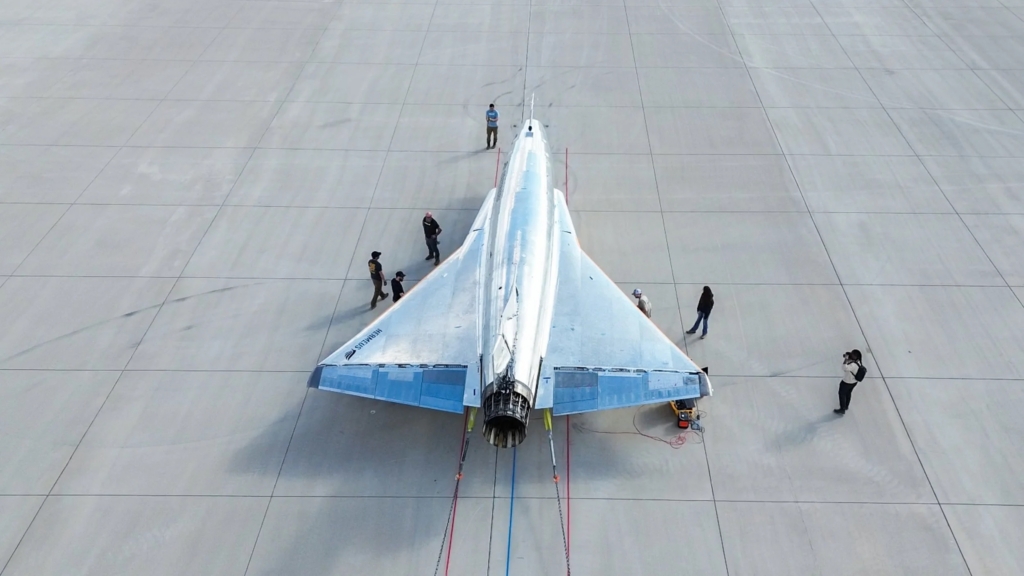
Powered by a Pratt & Whitney F100 engine, the aircraft is designed to validate baseline performance and flight control at speeds up to around Mach 1.5, laying the groundwork for subsequent variants.
The rapid progression from a smaller demonstrator to a full-scale unmanned jet in a short timeframe reflects Hermeus’ approach of building and flying hardware early rather than relying solely on modelling.
Quarterhorse fleet expands as Hermeus targets Mach 3
With Mk 2.1 now in flight test, the programme is expanding.
Hermeus plans to scale to a fleet of three F-16-sized aircraft, each introducing additional capability as the company works towards sustained high-speed flight.
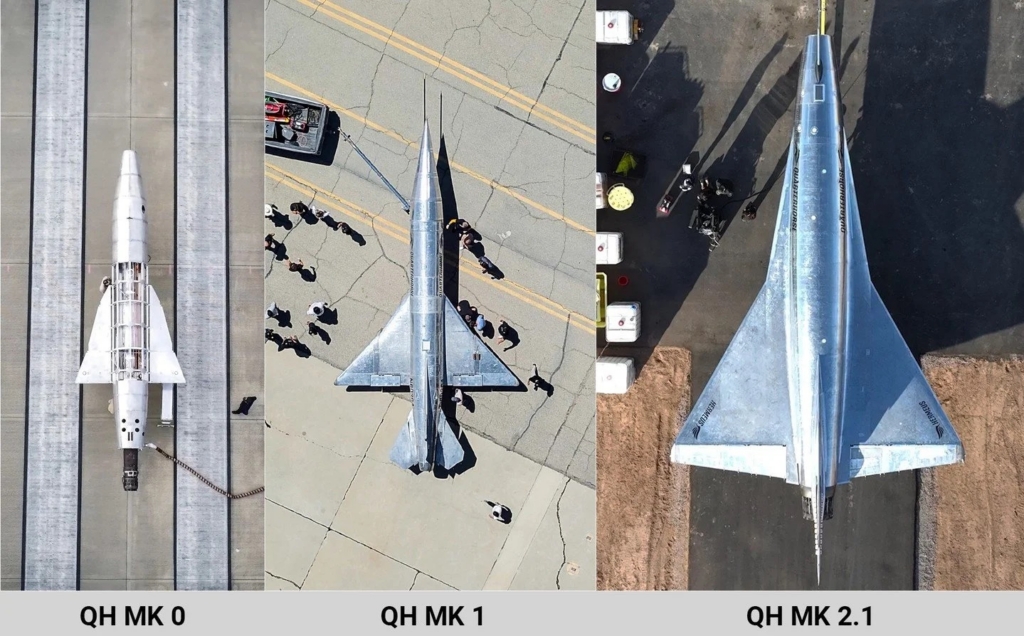
“With the successful flight of Quarterhorse Mk 2.1, supersonic flight is now imminent,” Piplica said, adding that it is “scaling to a fleet of three F-16 scale aircraft, accelerating our path to Mach 3 and starting customer payload integration.”
This marks a shift from pure demonstration towards operational relevance, with payload integration emerging as a key focus area.
“This is a mandate to build, fly, and deliver products for our customer – the American warfighter,” Piplica said.
Hermeus maps path to ramjet propulsion and Mach 3 flight
The Quarterhorse programme is designed as a staged pathway to high-Mach capability.
The Mk 2.1 aircraft validates basic performance using a conventional turbojet engine. The next iteration, Mk 2.2, is expected to introduce elements of Hermeus’ Chimera turbine-based combined cycle propulsion system, including advanced inlet geometry and pre-cooling.
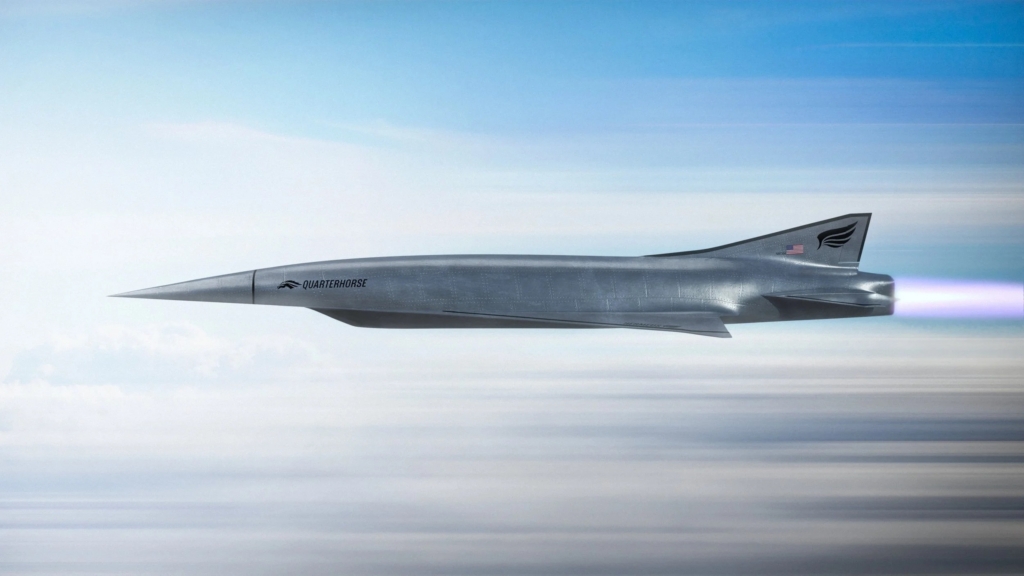
A further variant, Mk 2.3, is planned to incorporate the full propulsion architecture, including a ramjet, enabling sustained flight at around Mach 3.
A ramjet operates by compressing incoming air using the aircraft’s forward speed, mixing it with fuel and igniting it to produce thrust. Unlike rockets, it does not carry its own oxidiser, making it more efficient for sustained high-speed flight within the atmosphere.
However, it requires the aircraft to already be travelling at high speed, which is why Hermeus is advancing through progressively faster platforms.
Hermeus embraces SpaceX-style rapid iteration
The Hermeus approach to aircraft development is built around rapid, iterative timelines.
“The open secret in aviation is that we’ve become so afraid of risk, we’ve analysed our way out of speed,” Piplica said. “At Hermeus, we’re doing the opposite… everything we do is focused on maximising speed of learning.”
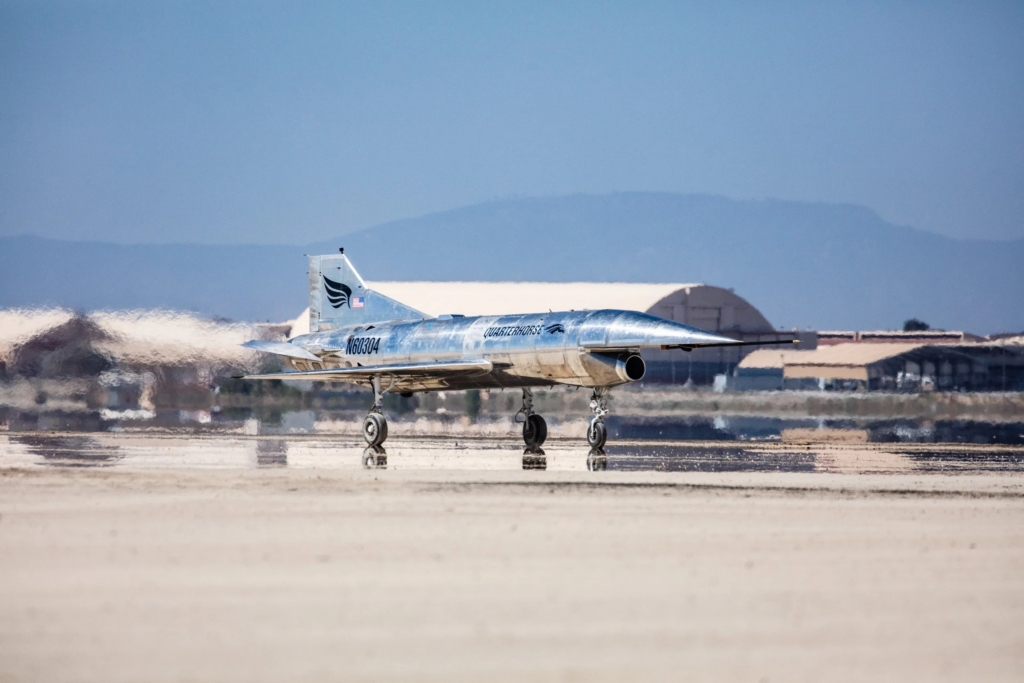
The company has already flown two new aircraft within months of each other, compressing development timelines that traditionally take decades.
“The challenge is, how do you pick the right kind of risk to take on?” Piplica said, adding that building multiple aircraft is essential to maintaining momentum. “If you don’t build a lot, it takes you a lot longer … we wonder why it takes 20, 25 years to develop a new aircraft.”
New facilities support Quarterhorse production ramp-up
The latest funding will support a broader expansion of the company’s industrial footprint.
Hermeus is establishing a new headquarters in El Segundo, California, focused on prototyping and engineering, while its Atlanta facility transitions towards production.
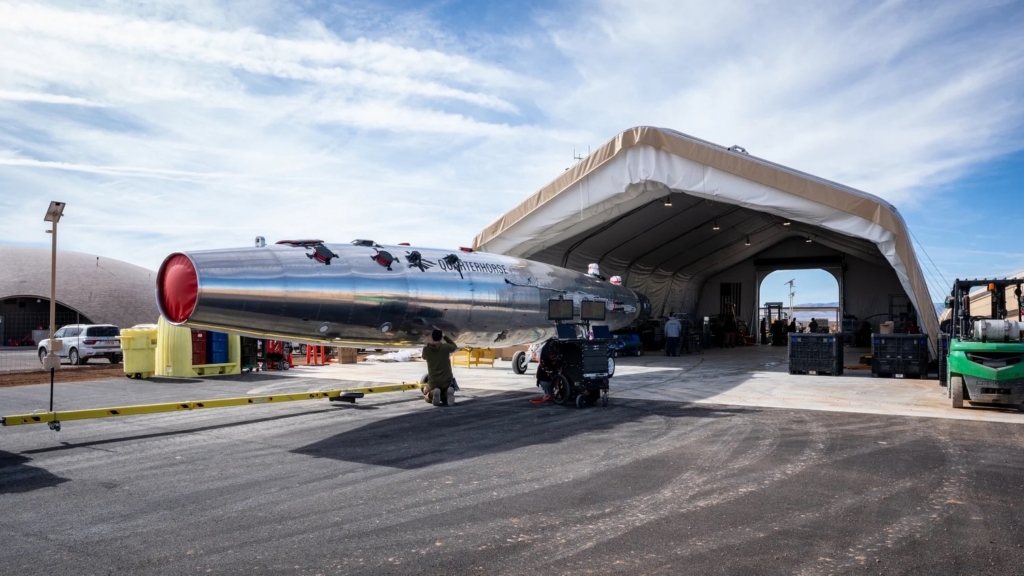
The move reflects a shift from single-aircraft development to building multiple platforms in parallel, a necessary step if the company is to maintain its pace while increasing output.
“Together, these next milestones put us at an inflexion point – poised to deliver on the promise of high-speed aircraft for the Air Force, Navy, and beyond,” Piplica said.
Quarterhorse shifts from demonstrator to operational capability
With flight testing underway and additional aircraft in development, the Quarterhorse programme is entering a new phase.
The focus is no longer just on proving that high-speed aircraft can be built quickly, but on demonstrating that they can be produced, scaled and integrated into operational use.
“We’ve earned the opportunity to swing. And swing big we will,” Piplica said. “To those who want to build the fastest aircraft in the world – we’re hiring.”
The focus is no longer just on proving that high-speed aircraft can be built quickly, but on demonstrating that they can be produced, scaled and integrated into operational use, a shift that could reshape how advanced air systems are developed and fielded.
Featured image: Hermeus