What exactly is a ‘geared turbofan’ aircraft engine and how does it work?

November 29, 2025
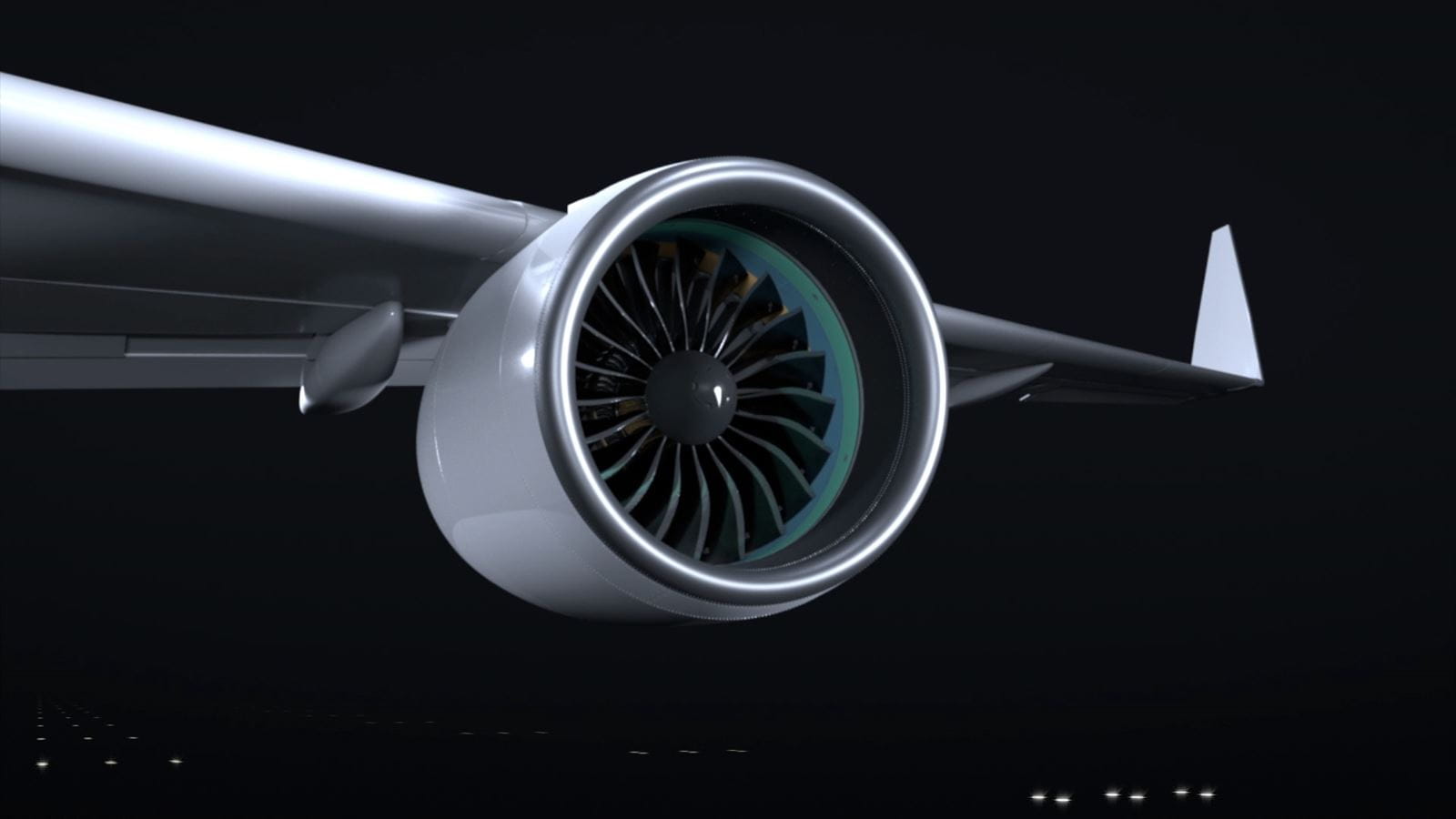
A geared turbofan (GTF) engine features a reduction gearbox between the fan and the low-pressure (LP) compressor to enhance operational efficiency and minimize noise footprint. On conventional turbofan engines, the fan, LP compressor, and LP turbine rotate at the same speed.
The maximum tip speed of the fan blades limits the maximum rotational speed of the LP shaft. The geared design, on the other hand, allows the compressor and turbine to rotate at higher speeds while limiting fan speed. The design enables lower fan pressure ratios, resulting in optimal performance and lower noise levels.
Optimal performance demands a relatively low fan speed
The ever-growing need for enhanced operational efficiency has led to high bypass ratio engine designs. The bypass ratio is the ratio of the air entering the engine core to the air bypassing the core flow. Optimal performance achieved from high bypass ratio airflow demands a relatively low fan speed, necessitating lower than optimal compressor and turbine speeds.
Conventional turbofan engines use additional compressor and turbine stages to compensate for efficiencies lost at the component level. The addition of the reduction gearbox between the fan and the LP shaft (compressor and turbine) allows it to rotate faster, while limiting the fan speed.

By optimizing efficiencies of all components, the GTF design requires fewer compressor and turbine stages and a smaller engine core. Moreover, lower fan blade tip speed means quieter operations.
Pratt & Whitney claims that aircraft powered with its family of GTF engines deliver up to 75% smaller noise footprint and offer up to 25% fuel savings per trip compared to previous-generation aircraft. Pratt & Whitney GTF engines power a range of narrowbody jets, including the Airbus A220 family, A320neo family, and Embraer E-Jets.
Specifics of the dynamic geared turbofan design
A specialized reduction gear between the fan and the LP shaft is unique to the GTF design. Enabling an output thrust ranging from 15,000 lbf to 33,000 Ibf, these gearboxes typically offer 3:1 reduction of speeds.
For example, the Pratt & Whitney PW1000G engines use gearboxes rated between 16,000 hp (12 MW) and 32,000 hp (24 MW) to allow optimal spinning speeds for each spool. As such, the fan rotates at its optimal speed of 5,000 RPM, whereas the LP spool rotates at approximately 14,000 RPM. The high-pressure (HP) shaft connecting the HP compressor and HP turbine spins at speeds approaching 20,000 RPM.
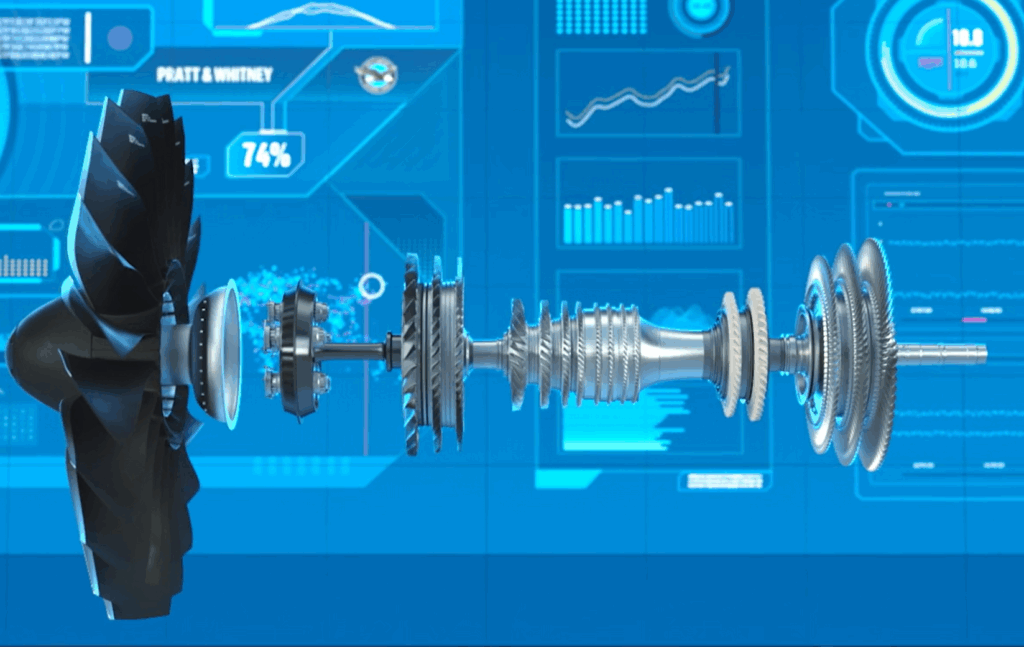
Controlling the fan speed minimizes tensile stresses on blades while achieving optimal noise outputs. The PW1000G gearbox requires minimal or no scheduled maintenance, reducing operating costs. According to Pratt & Whitney,
“The GTF engine family is the quietest and most fuel-efficient in its class of single-aisle aircraft. With unmatched fuel efficiency, payload, and range, GTF engines are helping airlines open new routes and fly more people, farther, on less fuel. The game-changing geared fan technology will be the foundation for more efficient propulsion in the decades ahead.”
Challenges and future advancements of the GTF
The high-power density achieved from the reduction gear makes the design complex, requiring advanced materials and efficient thermal management. While the design aims to transmit maximum energy through the gearbox, approximately 3-5% energy loss is incurred.
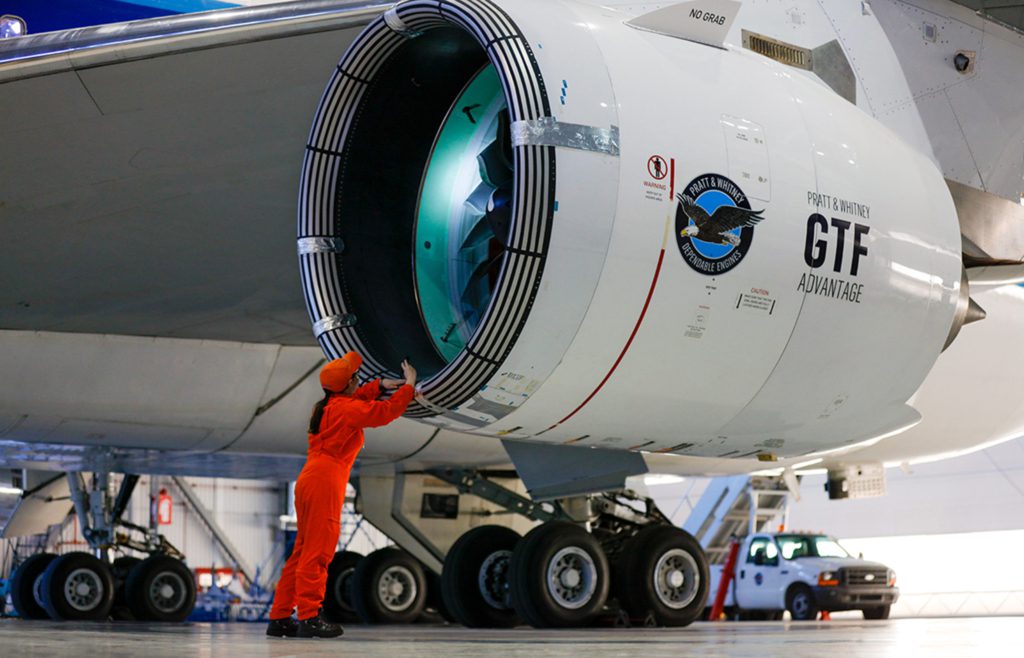
While GTF’s operational advantages offset its design shortcomings, efficient manufacturing and cooling techniques further enhance reliability and on-wing time.
Featured Image: Pratt & Whitney