From Mecca to Mumbai: Flyadeal CEO maps bold expansion into India and beyond

November 6, 2025
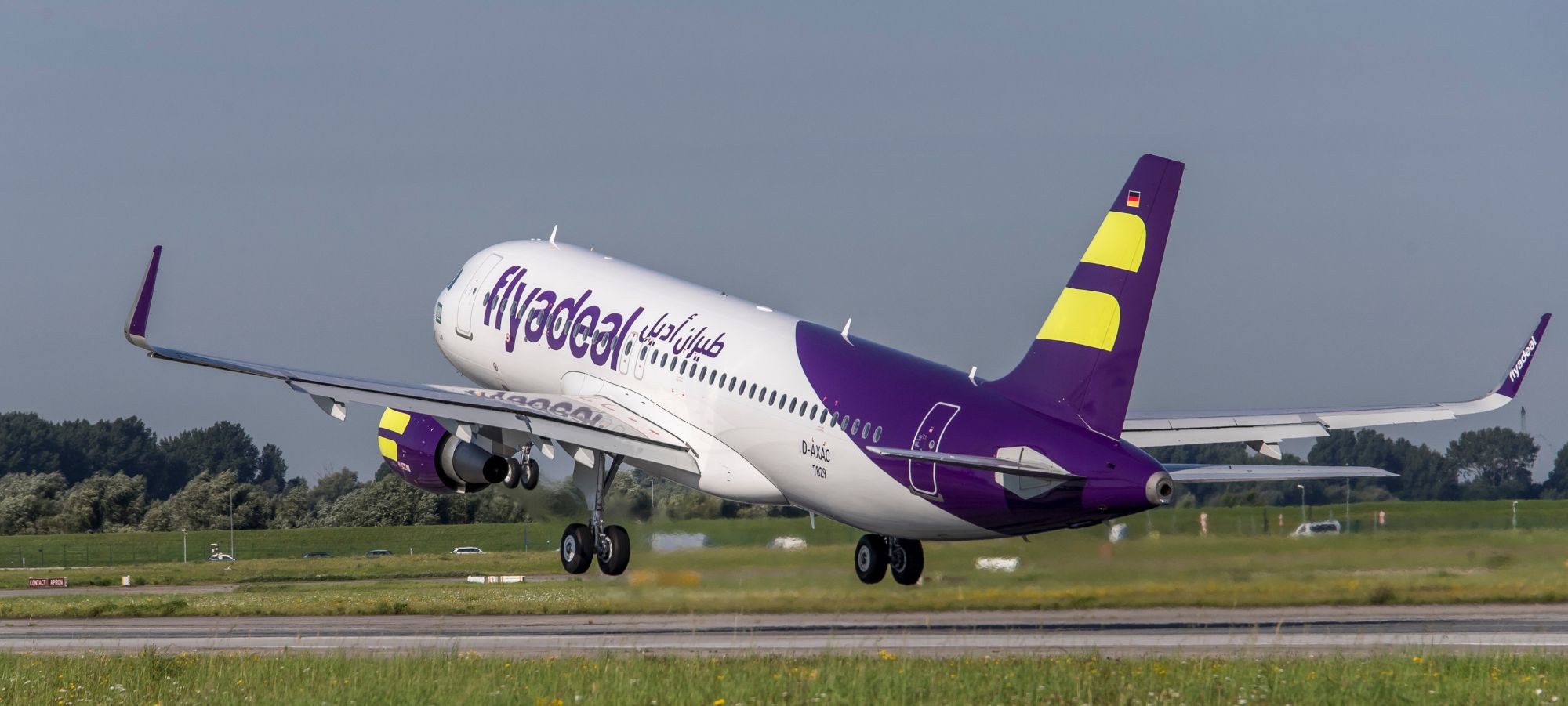
Saudi Arabia’s low-cost carrier (LCC), flyadeal – the sister airline to Saudia Airlines – is preparing for its next big flight. The LCC’s expansion into India is part of the airline’s impressive growth strategy that will see it double its fleet within the next four years.
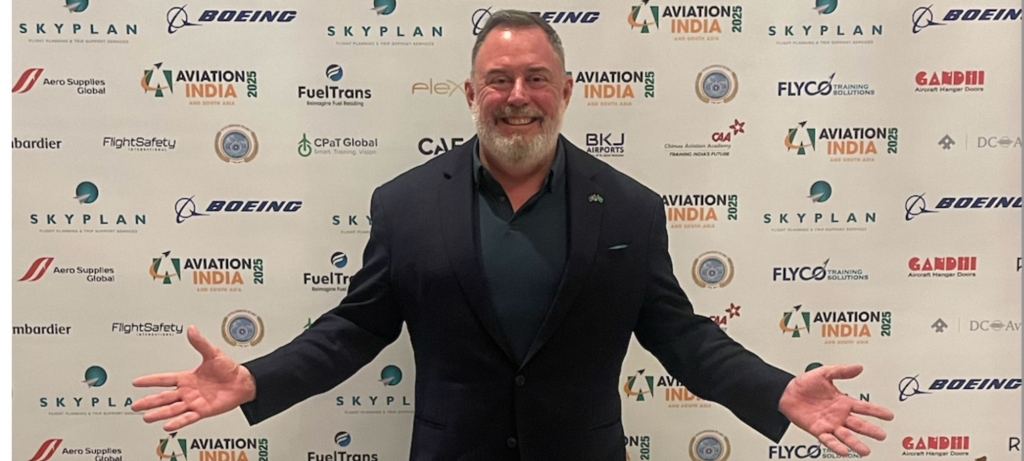
Speaking to Aerospace Global News on the sidelines of this year’s Aviation India summit and exhibition, which took place in Delhi, 29-30 October, Greenway revealed that flyadeal, which started operations in 2017, is evolving from being a largely domestic carrier into an international player.
“When I first joined, [Greenway was appointed CEO in January 2024], the airline was 80% domestic and 20% international,” he said. The airline now aims to have much more of a 50:50 split by the end of the decade.
“With our fleet expected to grow from 43 aircraft today to 98 in three to four years, the vast bulk of our expanded destination network will be international.”
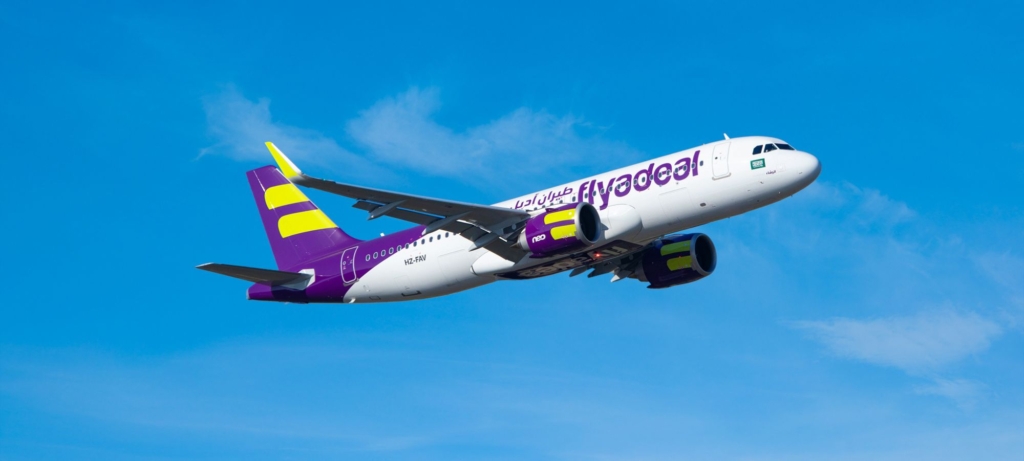
Expanding flyadeal’s horizons from the Gulf to South Asia
Until recently, flyadeal’s international services were limited to relatively nearby destinations, such as Dubai, Cairo and Istanbul. But the carrier’s expansion into South Asia is now in motion.
“Pakistan was our first step – we’ve now got five destinations there and critical mass,” Greenway said. “It’s been an incredible achievement to build a countrywide operation from one to five cities in eight months.”
The airline currently flies to Karachi, Islamabad, Peshawar, Sialkot and Lahore in Pakistan. It also launched twice-weekly flights to Bangladesh on 22 October.

“India is next with flights planned to begin in the first quarter of 2026,” confirmed Greenway. While the airline has not confirmed which destinations it will serve in India, reports suggest that Mumbai and Delhi could be among the cities served from flyadeal’s bases in Jeddah, Riyadh and Dammam. By the end of 2026, it is anticipated that flyadeal will connect to up to six destinations in India.
Explaining that he would have liked to launch India in 2025, Greenway said, “What’s really slowed our progress is aircraft availability. But with the new aircraft arriving next year, including the A321neo, we will have the capacity to launch services to India.”
Why India for flyadeal?
The airline is targeting two high-volume market segments: pilgrimage traffic and labour traffic.
With more than 3 million Indians living and working in Saudi Arabia, Greenway sees huge potential in connecting these communities.
“There’s that natural affinity of traffic going back and forth to visit friends and family, religious journeys and labour traffic,” he explained.
Flyadeal’s fleet expansion plans
The Saudi-based LCC’s fleet expansion underpins its international ambitions. Once the expansion is complete, the airline’s fleet will include 49 A320s, 39 A321s and 10 A330s.
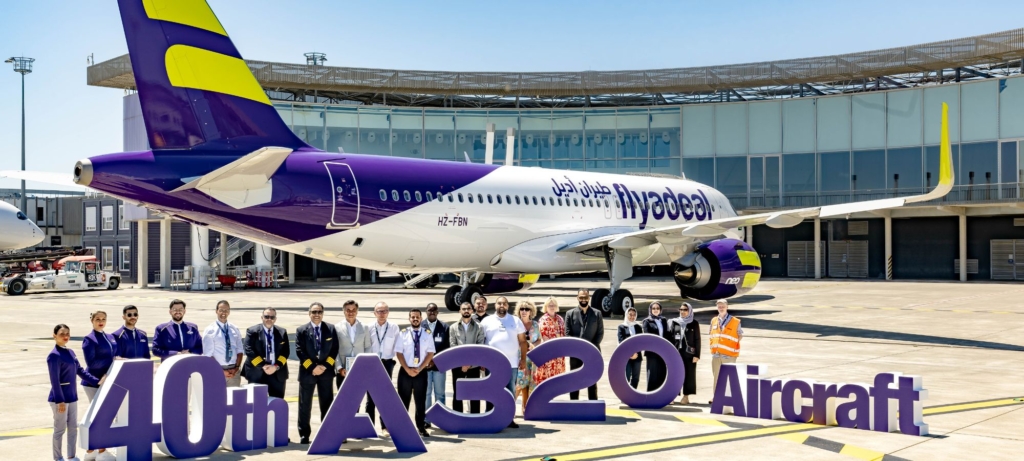
“The A321s will offer longer range and around 18% lower cost units compared to the A320s,” noted Greenway. “It’s not revolutionary, but it allows us to stretch further into Southeast Europe and the subcontinent.”
With the A330s set to join flyadeal’s fleet by June 2027, a move that Greenway says is “giving him grey hairs he didn’t need”, the addition of these widebody aircraft marks a “fundamental change”, opening up 10- to 12-hour sectors for the budget carrier. Configured with 420 seats and a small premium cabin, flyadeal’s A330s will target pilgrimage and labour traffic.
The LCC already operates three to four widebody aircraft under wet-lease arrangements for Umrah services, peaking at six or seven during Hajj. It has also begun wet-leasing aircraft from its own fleet to other carriers, including a partnership with Turkish company, Air Anka.
“We’re the first Saudi carrier to ever wet-lease out to a foreign airline,” Greenway said. “So far, it’s gone really, really well. It’s a reciprocal arrangement whereby we operate Air Anka’s A330s and they use our A320s depending on each airline’s peak seasons.”
Navigating supply chain challenges
Like many of his fellow airline leaders, Greenway laments the global supply chain challenges that continue to impact aircraft and engine availability worldwide.
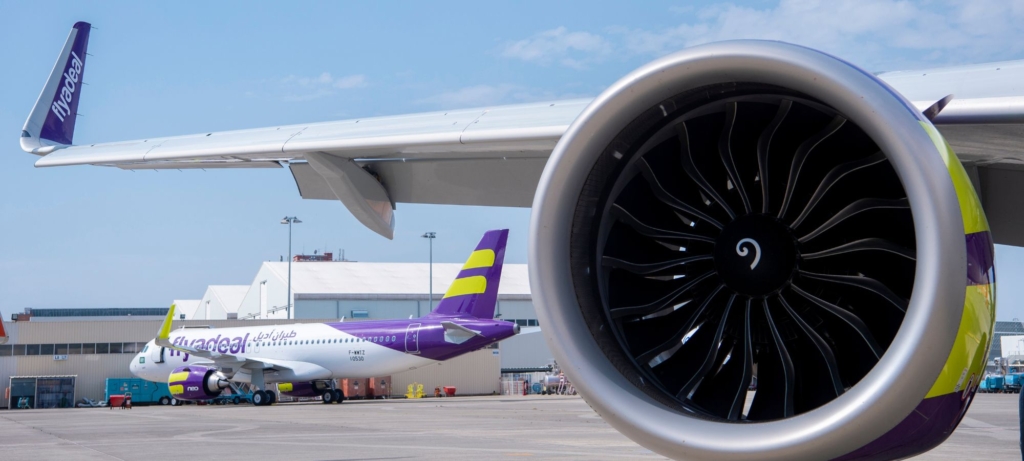
“It’s frustrating,” Greenway admitted. “We’ve got more aircraft on the ground than we should, and that impacts unit costs. But we are seeing gradual improvements and there is light at the end of a very long tunnel. I wouldn’t go so far as to praise engine manufacturer CFM, but I do acknowledge the improvements they’ve made. We now have four aircraft equipped with the durability kit.”
He adds with a laugh, “But ask me again in a year. If I’m crying, you’ll know how it turned out. If I’m smiling, it means it’s working and we’re getting more on-wing time.”
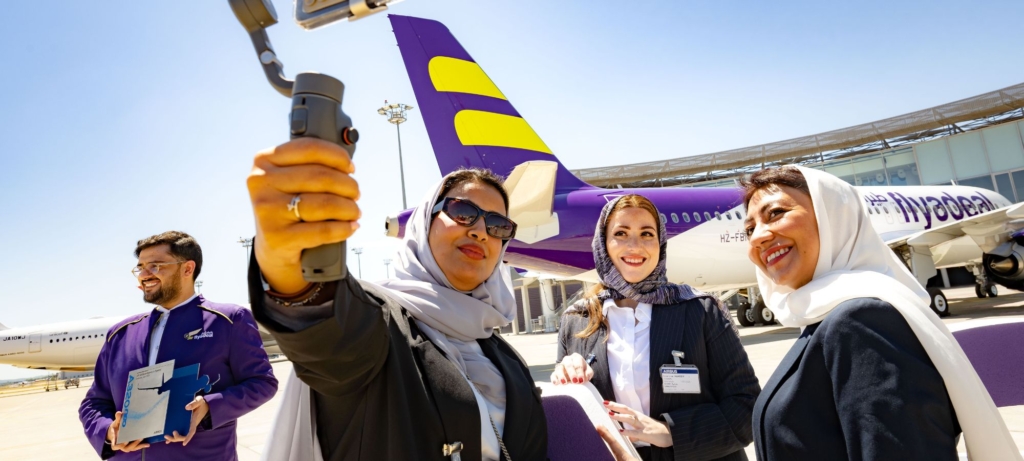
Infrastructure constraints at Jeddah and Riyadh also pose challenges. “Capacity is growing tremendously, but the infrastructure hasn’t kept pace until now,” he said, referencing the impressive airport projects currently underway in the Kingdom. “Terminal 6 at Riyadh will be a game-changer when it opens.”
In the meantime, flyadeal is maximising efficiency by deploying larger aircraft on existing routes. “Our A321s will go into Riyadh first as it has the same footprint as the A320, but it has over 50 more seats,” Greenway said. “Of course, I want an extra runway, but I don’t need one, so in the interim, I’ll keep growing my network, just with bigger aircraft. That’s how we’ll keep growing smartly.”
The Saudi advantage
Despite fierce competition from new entrants like Riyadh Air, which began operations at the end of October, Greenway believes the Saudi market is uniquely positioned for multiple carriers to thrive.
“We’re the only country in the region with a big domestic market,” he said. “That’s a huge advantage, as Bahrain, Qatar and the UAE don’t have that.”
He also credited the different players in Saudi Arabia’s aviation ecosystem for their collaboration. “Unlike other places where aviation is stigmatised, in Saudi Arabia the government, regulator and airports work together. It’s a coalition of the willing.”
Investing in local talent
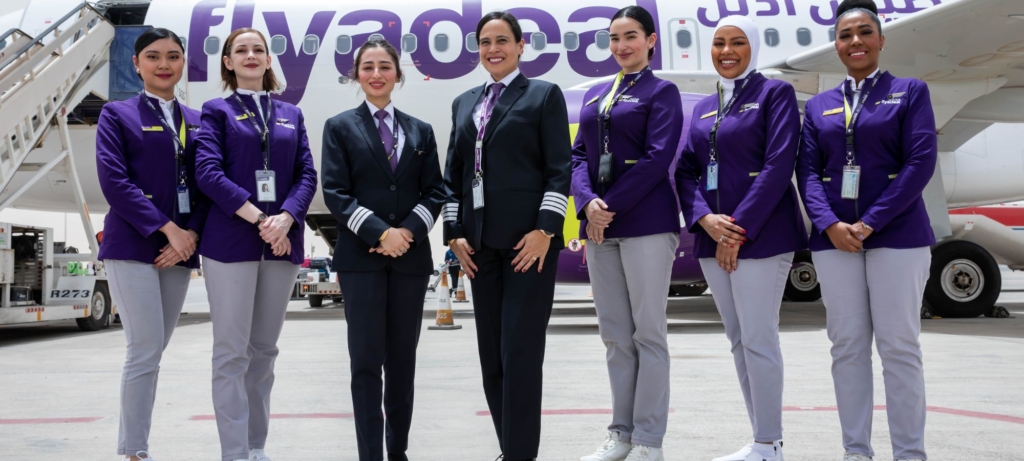
Integral to flyadeal’s growth strategy is the training of Saudi pilots through partnerships with the government.
“We’ve got a brilliant scheme with the Ministry of Education,” said Greenway. “Students train in Spain for three or four months to get type-rated on the A320, and then we hire them as first officers. I’ll have 150 first officers from that particular scheme alone. We’re working hand-in-hand with the Ministry of Education to get that pipeline of talent plugged into the airline.”
For Greenway, who has led airlines in multiple countries, including Scoot and WestJet, flyadeal’s growth is personal.
“Covid traumatised me,” he says, reflecting on his time at WestJet during the global pandemic. We went from 14,000 employees down to just 4,000 in a matter of weeks. It shattered livelihoods and careers, and that’s something that will always stay with me. When I left, I thought I was done with aviation. But ultimately, it was my wife who persuaded me I had one more airline left in me.”
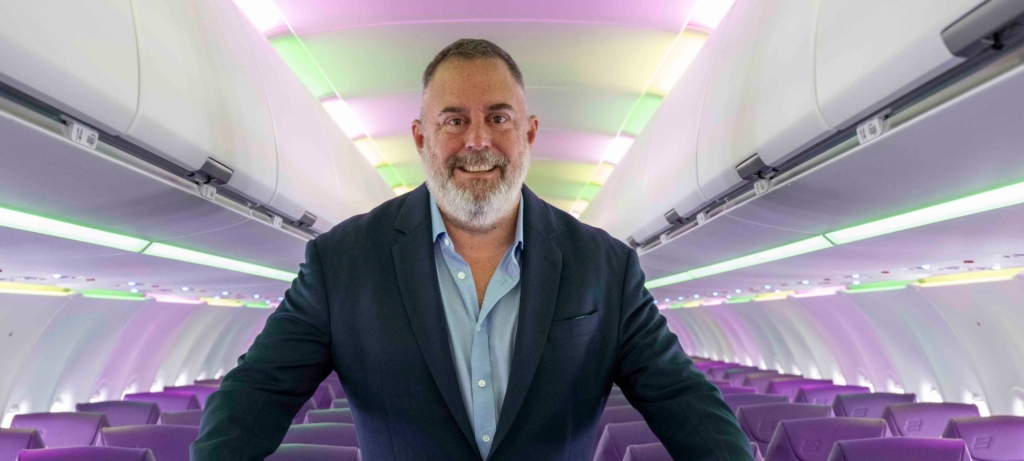
The offer to join flyadeal came at the right time. “I’ve lived in 14 countries, and I genuinely love living in Saudi Arabia,” he said. “It’s been life-changing to be part of a county that’s changing and developing right in front of you. It’s a privilege to be part of that transformation with Vision 2030, which is driving real change in the Kingdom. Beyond that, flyadeal itself is a huge success story. It’s growing at 30% and we’ve got this global ambition with the A330s.”
Greenway concludes that his decision to take on the flyadeal role as one driven by passion, not necessity.
“I do it because I love it,” he said, “I get up at 4.30 or 5 am every morning, happy to go to work. It’s a wonderful ride – and I’m enjoying every minute.”