KC-135 tanker bridge facilitates 8,000-mile ferry flight of Argentina’s new F-16s from Denmark

December 3, 2025
The first six F-16 Fighting Falcons for Argenina are now being ferried from Denmark via the Spanish Canary Islands and Brazil. These are being refuelled by US tankers and supported by other Argentine aircraft (like the Boeing 737-700 T-99 “Islas Malvinas”).
First six Argentine F-16 fighters en route to Argentina
Argentina is in the process of receiving its first ex-Danish F-16 Fighting Falcons. To get to Argentina in the South Atlantic, they need to make multiple refuelling stops along the way.
Departure of the Fuerza Aérea Argentina six F-16s from Skrydstrup Air Base #EKSP November 28th as CONDOR 11-13 and CONDOR 14-16. When they were crossing Dutch airspace the Maastricht radar controller warned an airliner about a flight of three F-16s #CoronetSouth #CS805 🇩🇰 🇦🇷 pic.twitter.com/gYa9QXHZ8D
— Coronet_deployments 🇳🇱 🇺🇸 (@CoronetEast) December 2, 2025
The first six F-16s, now belonging to the Argentine Air Force (Fuerza Aérea Argentina), took off from Denmark’s Skrydstrup Air Base on 28th November.
The first six arrived in Spain’s Canary Islands on 1st December, where three US tankers were waiting. On 1st December, the Argentine account, Avicacion Defensa, reported six Argentine F-16s had reached Gran Ganaria Airport and were waiting for the crossing to Brazil.
Meanwhile, Brazilian military journalist Roberto Caiafa reported that Brazil has granted overflight and landing permission for the incoming F-16s. The Brazilian Air Force has authorised Argentine F-16s to land at Natal Air Base in Rio Grande do Norte on the 3rd.
Llegaron los KC-135 #Stratotanker de la #USAF a la Base de Islas Canarias para realizar el soporte y reabastecimiento de los F-16 en el Cruce del Atlántico @1978_facundo @luispetri Fuerza Aérea Argentina @FuerzaAerea_Arg https://t.co/Y54jbzHFfR pic.twitter.com/UI1Wmokhet
— Aviacion Defensa (@AviacionDefensa) December 2, 2025
They will remain there until the 5th, when they will take their final flight to Argentina. This means it will take a full week for the F-16s to be ferried to their new home.
KC-135s provide F-16 aerial refuelling
To get the F-16s to Argentina, the United States is providing an air bridge with its KC-135R Stratotankers aerial tankers. The F-16AM has a ferry range of around 2,000 miles, although this can be extended with drop tanks.
⚠ FAB autoriza sobrevoo e pouso de aeronaves F-16 da Força Aérea Argentina no Brasil ⚠
— Roberto Caiafa (@beto_caiafa) December 3, 2025
A Força Aérea Brasileira (FAB) informa que aeronaves F-16, pertencentes à Força Aérea Argentina, estão autorizadas a sobrevoar e pousar na Base Aérea de Natal (BANT), no Rio Grande do Norte… pic.twitter.com/ZYJ45cUr1n
The fact that the US is needed to ferry the jets to Argentina underscores the country’s lack of aerial refuelling capacity. According to reporting by Aviation News, Argentina is in talks to purchase two old KC-135R tankers for its new fleet of 24 F-16s.
Currently, it only operates KC-130H Hercules tankers that perform probe-and-drogue refuelling. This is fine for its ancient A-4 Skyhawks, but it is incompatible with F-16s that require the boom refuelling system.
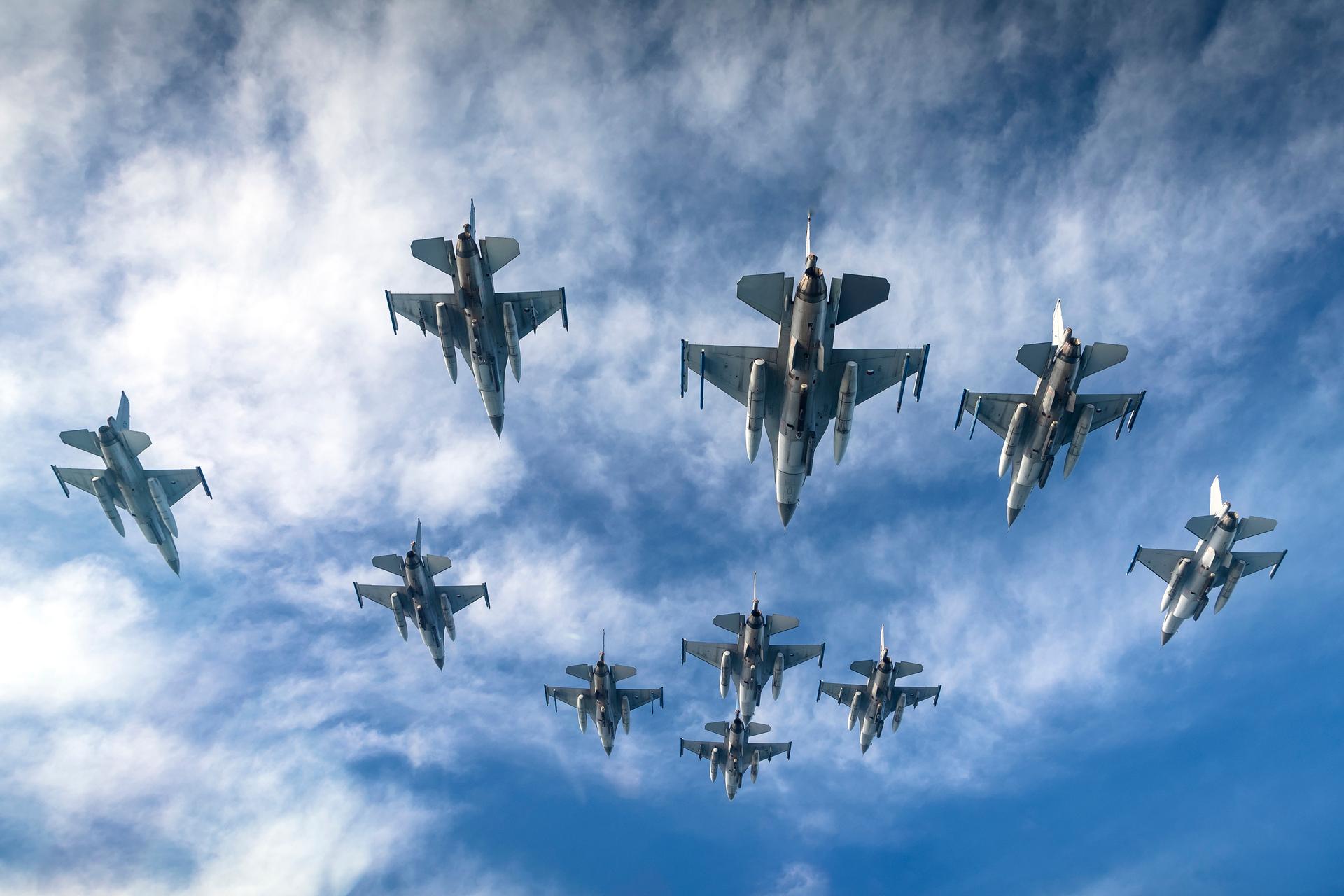
These Danish F-16AM MLU (Mid-Life Update) Fighting Falcons were built in Europe under licence. Denmark, the Netherlands, Norway, and Belgium are all transitioning from these legacy jets to the far more capable F-35 Lightning II.
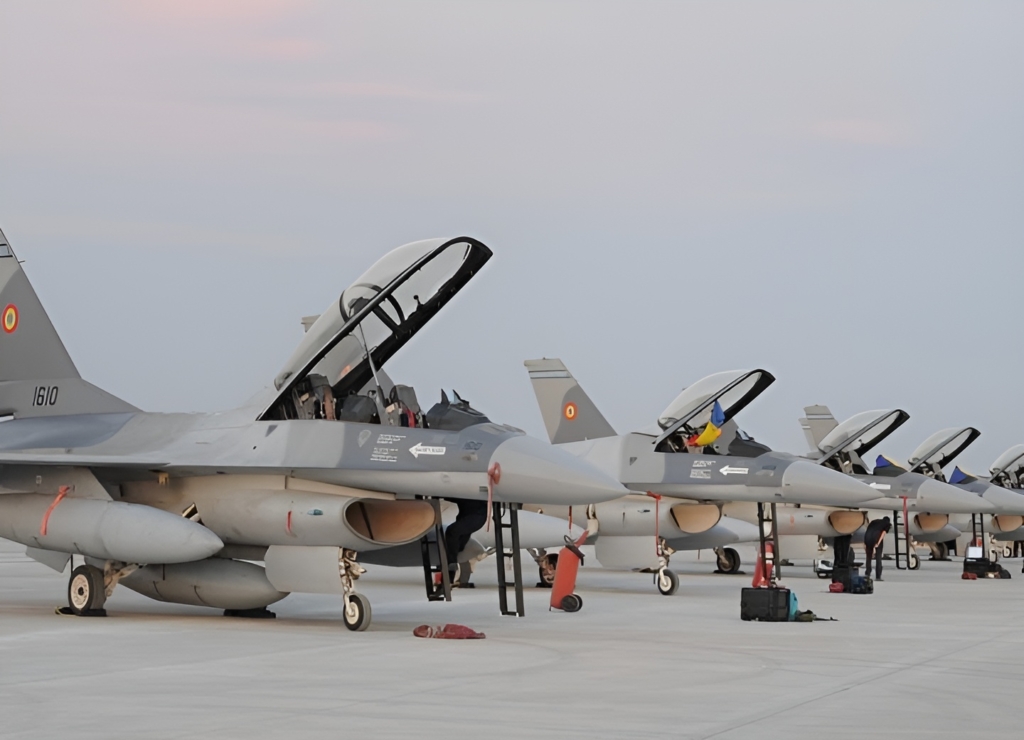
All four of these countries are donating many of their retiring F-16s to Ukraine, although Denmark also sold 24 to Argentina, and Norway sold a couple of dozen to Romania.
Get the latest aerospace defence news here on AGN.
Argentina’s long road to fighter jets
The arrival of the F-16s in Argentina concludes a long-running saga since the 1982 Falklands War. Since then, Great Britain has maintained an arms embargo on Argentina, which de facto cut them off from purchasing new Western fighter jets.
F-16: LA CUENTA REGRESIVA
— FuerzaAéreaArgentina (@FuerzaAerea_Arg) November 10, 2025
El 5 de diciembre, nuestro país será testigo de un nuevo guerrero alado surcando el cielo argentino.
(Video: asistido con IA)#F16 #FuerzaAéreaArgentina #AviacionMilitar #Patria #DefensaNacional #NosProyectamosHaciaElFuturo pic.twitter.com/yTbPNGXneZ
Argentina purchased some ex-French Super Étendards. While Britain wasn’t able to stop the sale, it refused to supply components like the gas cylinders needed for the ejection seats. Consequently, the Super Étendards were never made operational in Argentina.
Frustrated at the UK blocking their attempts to purchase fighter jets at every turn, Argentina threatened to purchase Chinese jets. Eventually, an agreement was reached for Argentina to purchase 24 old ex-Danish F-16s, and Britain dropped its objection.
Older F-16s are now outclassed by the UK’s new F-35Bs. Additionally, Britain maintains four Tranche 1 Typhoon Eurofighters at RAF Mount Pleasant in the Falkland Islands.

Besides the UK veto, there were mixed feelings in Argentina, where the population and civilian government maintain a deep mistrust of the military.
The Dirty War (1974-1983) saw the military junta disappear tens of thousands of civilians, still casts a long shadow over the military.
Featured Image: The Netherlands MOD