Lockheed Martin rolls out Finland’s first F-35A Lightning II fighter jet

October 30, 2025
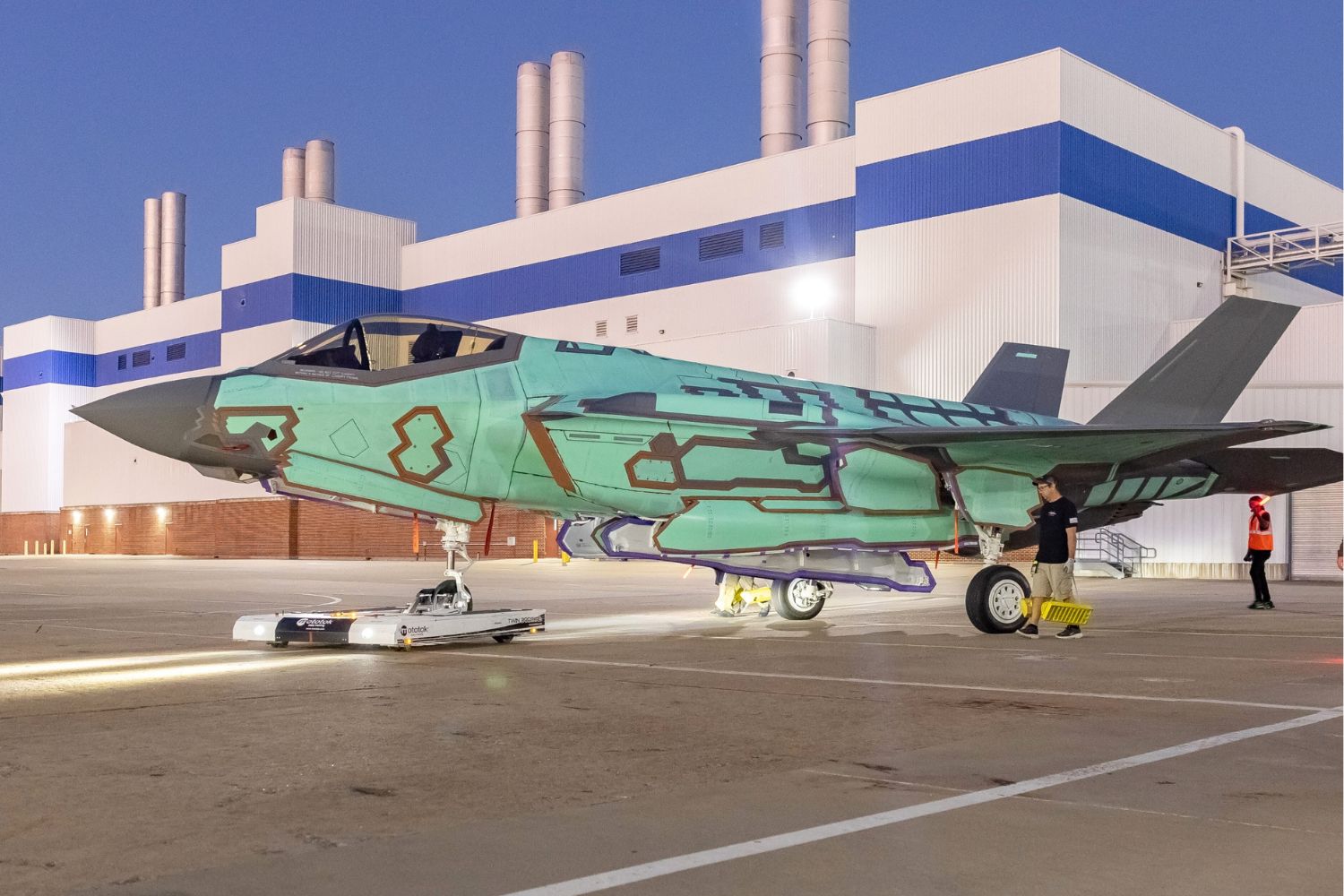
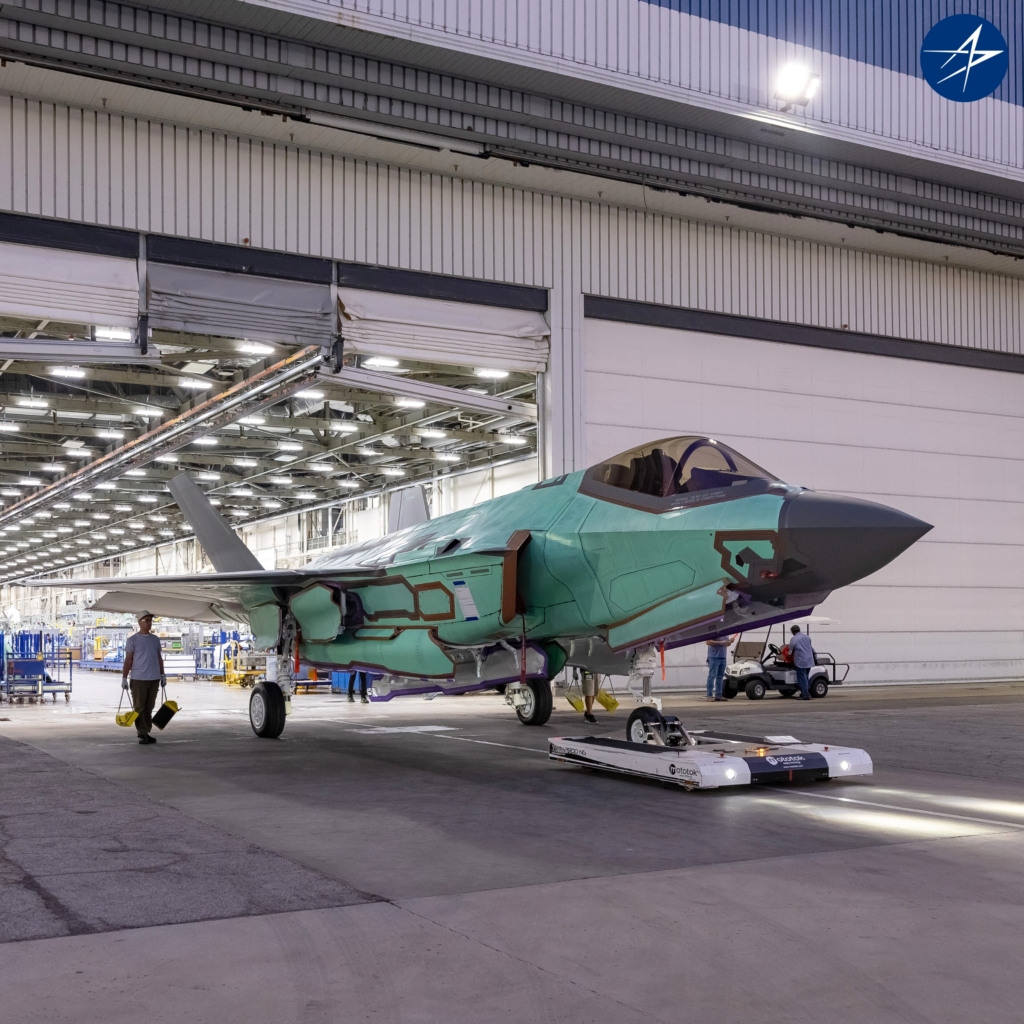
The first F-35A Lightning II fighter jet built for the Finnish Air Force has rolled off the final assembly line at Lockheed Martin’s plant in Fort Worth, Texas, on 29 October.
Towed from the hangar in its primer green finish, the aircraft will now undergo ground checks and flight validation before a formal handover to the Finnish Air Force.
For Finland, it marks a strategic transformation from a regional air power to a fully networked member of NATO’s front-line defence.
Finland’s F-35 programme builds on security needs shaped by geography and history
In December 2021, the Finnish government announced the selection of Lockheed Martin’s fifth-generation F-35 Lightning II for its HX Fighter Programme. The government signed its F-35 contract in February 2022 after a lengthy evaluation to replace the Air Force’s F/A-18 Hornets, which have served faithfully since the 1990s.
The deal, worth around $9.4 billion, covers 64 F-35A Block 4 aircraft, weapons, training, and sustainment support extending well into the 2060s.
The decision was made against a rapidly changing security backdrop. Russia’s invasion of Ukraine, coupled with Finland’s eventual NATO membership in 2023, altered the strategic calculus. The F-35 was viewed as the only platform offering long-range precision strike, advanced situational awareness, and deep interoperability with allied forces.
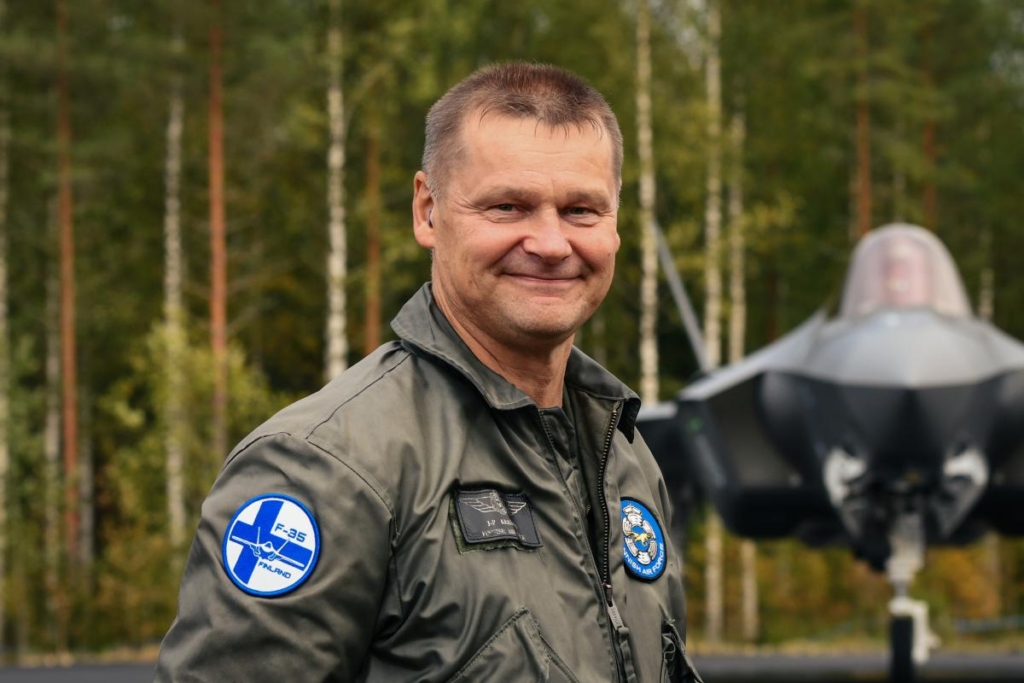
“The transition from the Hornet to the F-35 is extremely tight,” said Major General Juha-Pekka Keränen, former Commander of the Finnish Air Force. “We cannot afford to let it slip. In 2028, at Lapland Air Wing, the F-35 will be combat-capable, and the Hornet will no longer be flown there. It seems the schedule risk won’t materialise — we’re on track to meet our goals.”
F-35 becomes the backbone of NATO and European air defence
Across Europe, the F-35 has rapidly become the aircraft of choice for NATO’s modernisation plans. More than a dozen European nations — including the UK, Italy, the Netherlands, Denmark, Norway, Belgium, Poland, Switzerland, Germany, Greece and Romania — have signed up to the programme.
While some countries, such as Spain and Portugal, have delayed their decisions due to budgetary or industrial considerations, the overall momentum remains clear. Switzerland has also debated downsizing its order amid public pressure and rising costs.
Even so, the F-35 is fast becoming Europe’s shared fighter platform, enabling joint missions that were unimaginable a decade ago. By the mid-2030s, more than 600 F-35s are expected to be stationed across European air bases, forming the backbone of NATO’s deterrent posture.
The aircraft’s ability to gather, fuse, and share data in real time is seen as a decisive advantage in joint operations linking fighters, ground forces, and naval assets across borders.
Preparing Finland’s air bases and pilots for fifth-generation operations
Under the current schedule, Finland’s first eight F-35s will remain in the United States for pilot and maintainer training at Eglin Air Force Base in Florida, and later at Ebbing Air National Guard Base in Arkansas.
The first jets are due to arrive in Finland in 2026, joining the Lapland Air Wing at Rovaniemi, with the Karelia Air Wing following two years later.
Significant upgrades are underway at air bases across the country to accommodate the F-35’s demanding security and maintenance needs. Hangars are being reinforced, simulator facilities expanded, and command infrastructure modernised to NATO standards.
“The target completion dates of our F-35 infrastructure are critically important,” Keränen noted. “Our simulator facilities at Lapland Air Wing must be ready by early autumn 2026 to begin training immediately after summer. We’ve had to adjust plans for inflation and costs, but safety and operational capability remain the priority.”
New engine facility in Finland strengthens industrial self-reliance
In early October, Patria Group opened a new facility in Linnavuori, Nokia, dedicated to assembling and maintaining Pratt & Whitney F135 engines, the powerplant of the F-35.
Patria officially takes ownership of the new F-35 engine facility in Linnavuori, Nokia! 🤝
— Patria Group (@group_patria) October 14, 2025
This critical step secures Finland's domestic security of supply for the F-35 programme. Patria is now ready for F135 engine assembly and full lifecycle MRO&U.
🔗: https://t.co/XKZQ68JkNY pic.twitter.com/1P3UuIwRTZ
The site, purpose-built to meet stringent security standards, will begin with assembly work and progress to full maintenance, repair, and overhaul capability by 2030.
This long-term collaboration with Pratt & Whitney ensures Finland retains sovereignty over its sustainment chain, securing local employment and technical expertise to support NATO’s regional logistics framework.
Finnish F-35 brings better NATO integration
The F-35’s arrival will reshape the Finnish Defence Forces’ command structure. Its advanced sensors and secure data links will feed real-time intelligence into joint networks connecting Finland’s ground-based missile defences and new Pohjanmaa-class corvettes.
“The F-35 can collect and fuse sensor data, sharing it in real time with the Army and Navy,” explained Keränen. “This enables faster combat decisions — sometimes within seconds — on which weapon system should engage a target.”
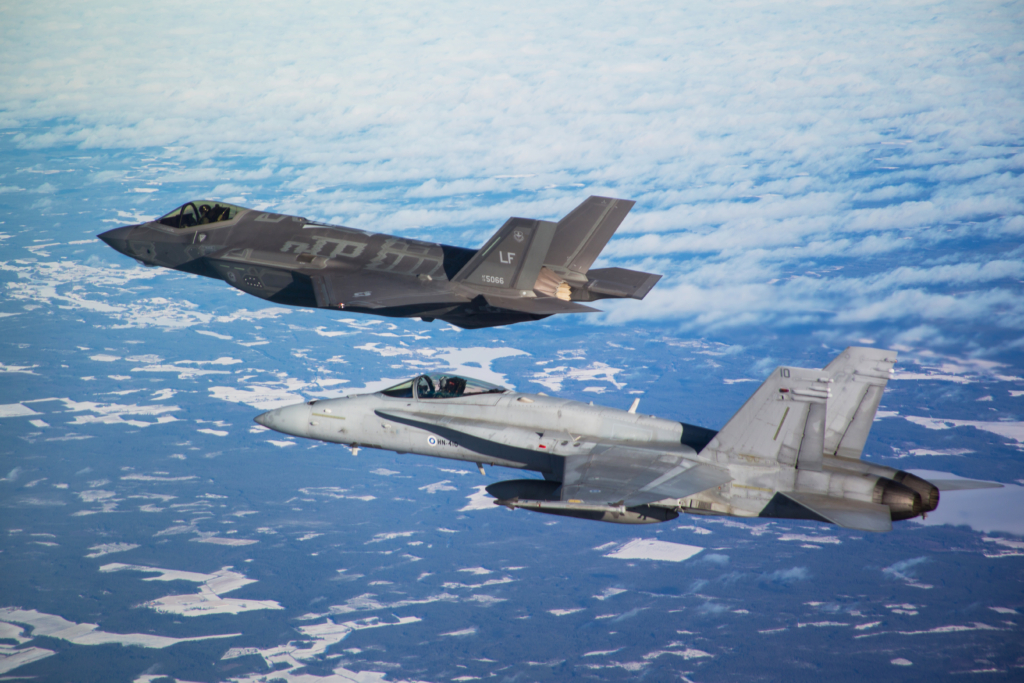
Training integration is already underway. Finnish pilots have begun cross-servicing drills with allied aircraft such as German Eurofighters during Baana 24 exercises. Nordic cooperation with Norway, another F-35 operator, is also deepening, with Finnish bases training Norwegian student pilots and exchanging mission data.
Finland’s aircraft will feature the latest Technology Refresh 3 (TR-3) suite, enabling Block 4 enhancements that deliver more computing power, advanced electronic warfare tools, and greater weapons flexibility.
The Finnish Defence Forces have also selected new precision weapons, including JASSM-ER and AARGM-ER missiles, to extend strike range and effectiveness.
“We’ve nearly completed decisions on our F-35 weapons suite,” said Keränen. “Our design-to-cost approach gives us flexibility until 2035 to purchase newer versions and complementary systems.”
Unlike the Hornet, which required large-scale mid-life upgrades, the F-35 will evolve continuously. “Every decade or so, there’ll be a major refresh — new displays, computers, and defensive aids — so the aircraft remains ahead of emerging threats,” he added.=
Finland plans to operate the F-35A well into the 2060s. By then, it will form the cornerstone of the country’s air defence strategy, fully integrated with NATO’s networked command and control system and supported by a robust domestic industrial base.
Keränen summed up the transformation succinctly: “We are not here to play games — we are here to defend our country if the need arises. The F-35 gives us the capability, the deterrence and the partnership to do that alongside our allies.”