If Embraer’s Super Tucano works, why is Europe studying its own light combat aircraft?

January 6, 2026

For more than two decades, the Brazilian-built A-29 Super Tucano has quietly shaped how air forces think about low-cost combat aviation.
Designed for environments where speed and stealth are less critical than persistence, affordability and precision, the turboprop aircraft has become the reference point for light attack, counter-insurgency and armed reconnaissance missions worldwide.
Now, Europe is taking a closer look at whether it needs something similar of its own.
Under the European Defence Fund (EDF) 2026, the European Union has launched a €15 million ($17.5 million) research initiative to study a Future Multirole Light Aircraft (FMLA), a turboprop platform intended to bridge capability gaps emerging across European air forces in the 2035–2040 timeframe.
The effort is limited to concept studies and design work, but it marks a notable shift in European thinking about affordable airpower.
Why light combat turboprop aircraft are back on Europe’s defence agenda
Across Europe, fleets of light attack and support aircraft are ageing, with many platforms approaching four decades of service.
At the same time, the operational burden on fast jets has increased, particularly in low-intensity conflicts where high-end fighters are often an expensive overmatch.
This dilemma is not new. Western air forces, notably in the United States and France, have repeatedly debated whether turboprop or light jet aircraft could relieve pressure on frontline fighters during counter-insurgency and stabilisation operations.
The argument has always been pragmatic: why use a supersonic jet for missions that demand endurance, low operating costs and close integration with ground forces?
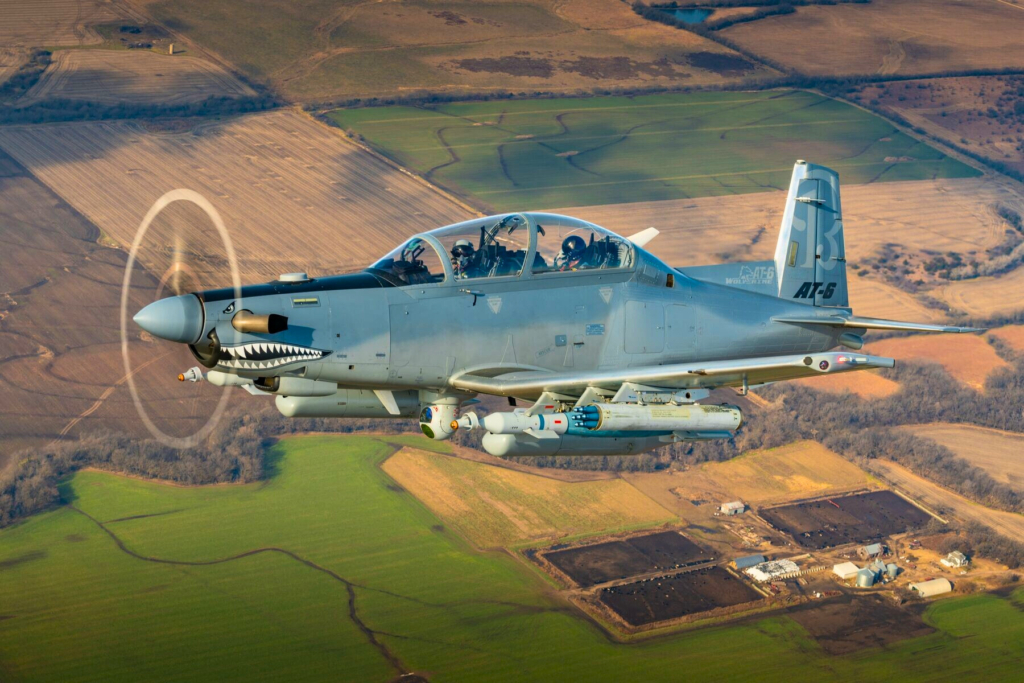
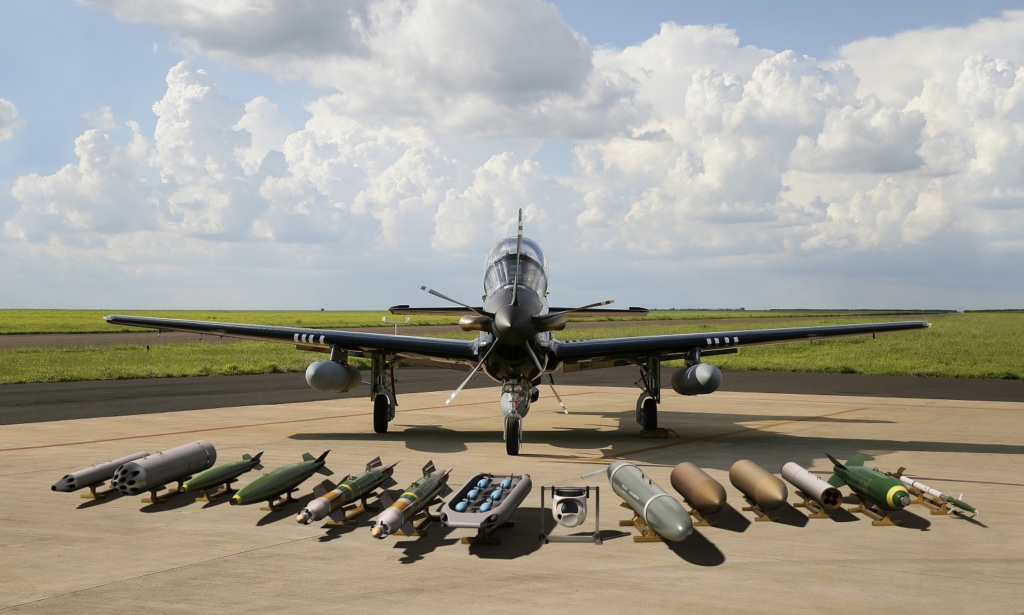
The Super Tucano emerged from exactly that logic. It demonstrated that a turboprop aircraft, when properly equipped with sensors, precision weapons and secure communications, could deliver credible combat capability at a fraction of the cost of a fast jet.
The Super Tucano has become the benchmark for light combat aircraft
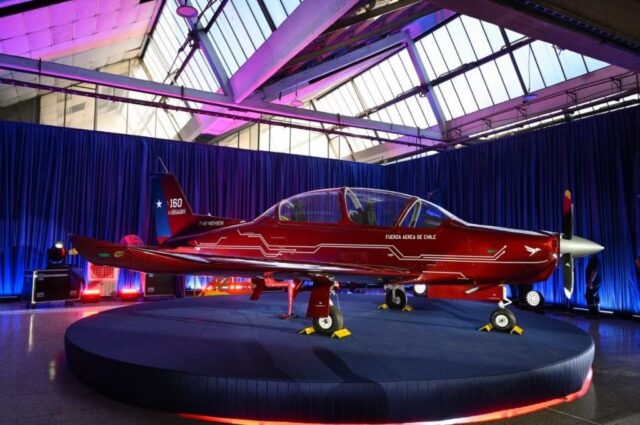
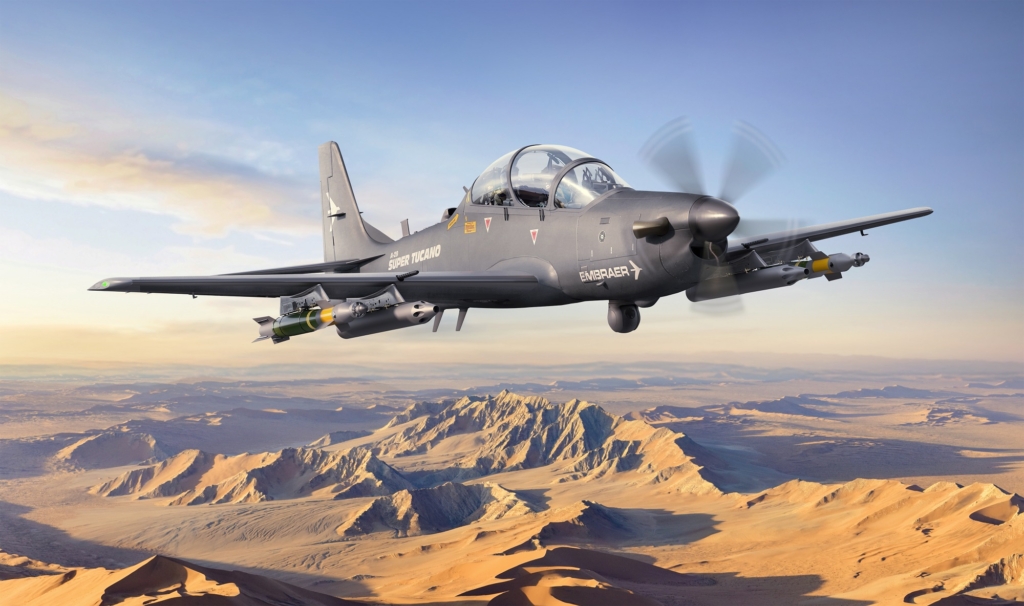
Developed by Embraer, the A-29N Super Tucano has been adopted by more than a dozen air forces and has seen sustained operational use in Latin America, Africa, the Middle East and Asia.
Its appeal lies less in raw performance than in mission efficiency.
The aircraft combines long loiter times, austere runway capability and relatively simple maintenance with modern avionics and precision-guided weapons.
Operating costs are typically measured in a few thousand dollars per flight hour, dramatically lower than even the lightest jet fighters, while endurance on station can stretch to five hours or more.

Those characteristics have made it especially attractive for counter-terrorism operations, border security, armed overwatch and pilot training in contested but permissive airspace.
In many respects, the Super Tucano has defined the modern turboprop fighter category.
So if the Super Tucano already fills this role, why not simply buy more of them? The answer lies less in performance than in politics and industrial strategy.
EU-funded programmes are designed to sustain Europe’s own aerospace sector and reduce dependence on non-European suppliers, even when proven aircraft already exist. In that sense, the FMLA study is as much about sovereignty and long-term control as it is about fielding a new airframe.
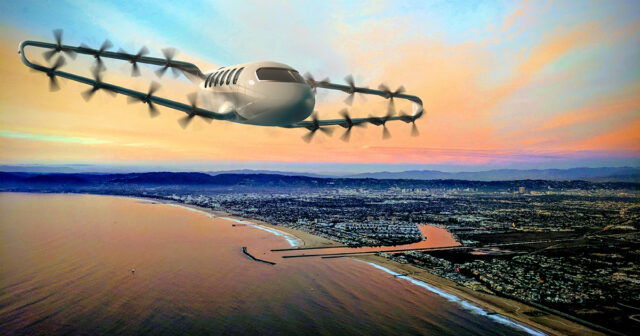
Europe’s Future Multirole Light Aircraft (FMLA) concept explained
The EU’s proposed Future Multirole Light Aircraft mirrors much of that philosophy but adds ambitions that go beyond existing designs.
According to EDF planning documents, the FMLA is envisioned as a turboprop aircraft with a maximum take-off weight of up to 7,500 kg, capable of short take-off and landing from runways as short as 450 metres.
Its mission set would span close air support, drone interception, reconnaissance, strike coordination and target designation, while also being adaptable for civilian tasks such as search and rescue and disaster relief.

Where the concept diverges from the Super Tucano is in its emphasis on reduced observability and electronic resilience.
The EU has explicitly called for studies into radar signature reduction, electromagnetic protection, onboard radar integration and even forms of adaptive camouflage, an unusual set of requirements for a propeller-driven aircraft.
This ambition reflects Europe’s desire to future-proof the platform against increasingly sophisticated threats, but it also introduces technical complexity.
Combining turboprop propulsion with meaningful low-observable characteristics is widely regarded as a significant engineering challenge.
Cost, realism and timelines
One of the most striking aspects of the FMLA initiative is its timeline. The aircraft is framed as a solution for the 2035–2040 period, placing it firmly in the long-term category.
For comparison, the Super Tucano is not a conceptual aircraft but a mature platform in active service today.
That gap has not gone unnoticed. Analysts familiar with light combat aviation note that the core strengths of turboprop fighters – low cost, simplicity and rapid fielding – risk being diluted if requirements expand too far.
Previous Western programmes have faltered when ambition outpaced operational need, particularly when attempting to replicate jet-like survivability in fundamentally different airframes.
By contrast, Embraer’s approach prioritised speed to service, off-the-shelf systems and incremental upgrades, allowing operators to adapt the aircraft to their needs without waiting decades for delivery.
What Europe’s light combat aircraft study signals for future airpower
At its core, the FMLA initiative is less about copying the Super Tucano than about acknowledging the space it occupies.
The EU’s own documents stress that the aircraft should not duplicate existing platforms, yet the overlap in roles is unmistakable.
Whether Europe ultimately pursues a dedicated turboprop combat aircraft, or concludes that existing solutions already meet the requirement, remains an open question.
What is clear is that the Super Tucano continues to influence defence planners far beyond Brazil, serving as both a benchmark and a cautionary example of how simplicity, when matched to the right mission, can be a strategic asset.
As European studies progress, the comparison with proven turboprop fighters will only sharpen. In that sense, the Super Tucano is not merely part of the conversation but the yardstick against which Europe’s future light combat ambitions will be measured.
Featured image: Pilatus