Etihad considers stockpiling parts as it prepares to bring back 2 more Airbus A380s

September 5, 2025

With worldwide demand for premium air travel continuing to rise, Abu Dhabi-based Etihad Airways has revealed in an interview with Bloomberg its plans to reinstate two more Airbus A380s into its mainline fleet.
With seven aircraft having already rejoined the airline, it is understood that the Middle Eastern carrier has already begun preparations to bring its eighth and ninth A380s back into service. These aircraft will soon be undergoing return-to-service maintenance at the company’s facilities in Abu Dhabi.
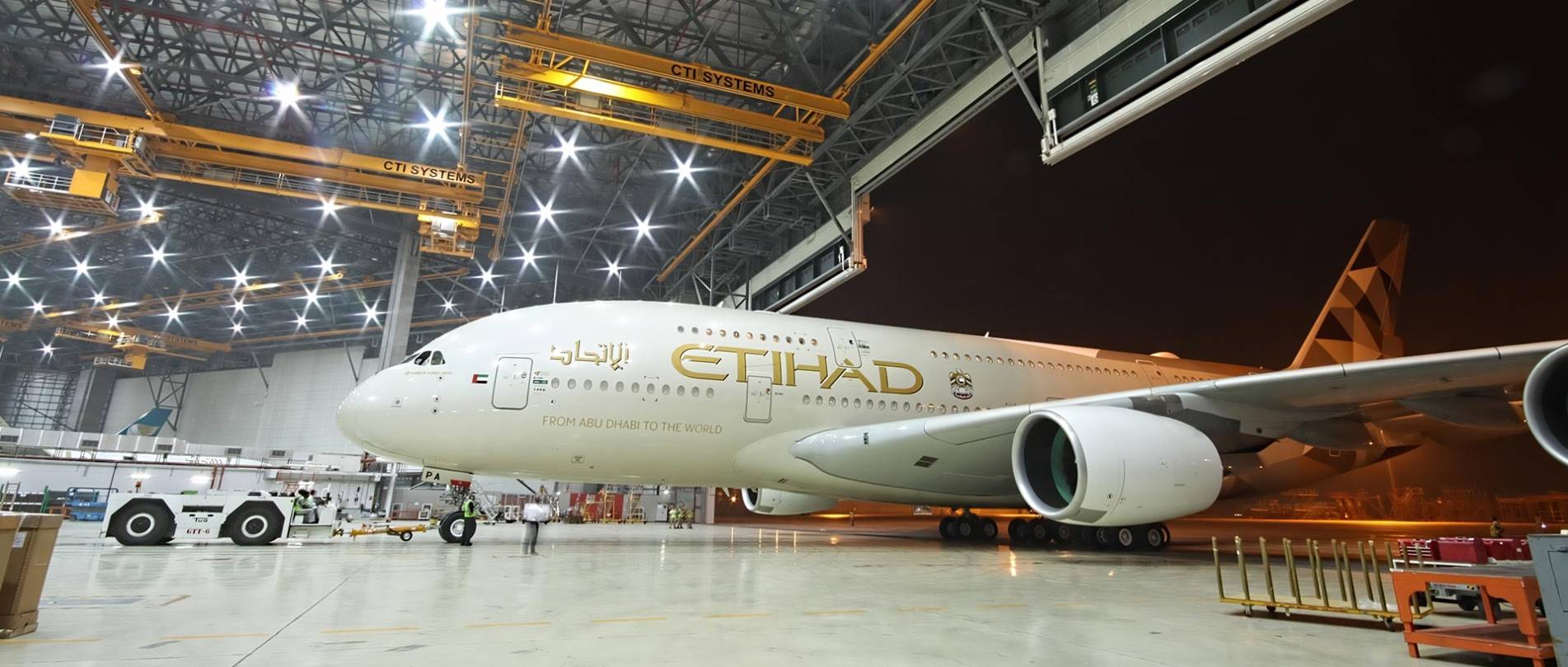
Etihad’s Airbus A380s are returning from storage
During the pandemic, the carrier placed its entire fleet of ten Airbus A380s into long-term storage, stating at the time that it was uncertain whether the type would return to service with the airline at all.
However, since then, the airline has conducted a phased return of the fleet to service in response to soaring travel demand, operating on some of the carrier’s busiest international routes from its Abu Dhabi hub.
In the middle of 2023, Etihad re-introduced four of its A380s, with a further three joining the active fleet since. The eighth aircraft (registered A6-APC) will return to service in June 2026, while the ninth aircraft (A6-APB) will resume flying in January 2027.
It is understood that the tenth and final aircraft will be parted out for spares to keep the remaining aircraft serviceable.
Currently, Etihad’s A380 fleet is being used to fly to four cities worldwide. The airline uses A380s to fly three services per day to London Heathrow (LHR), while other aircraft serve the Canadian city of Toronto, Charles De Gaulle Airport in Paris (CDG), and Singapore’s Changi Airport. All three cities see daily flights operated by the type.
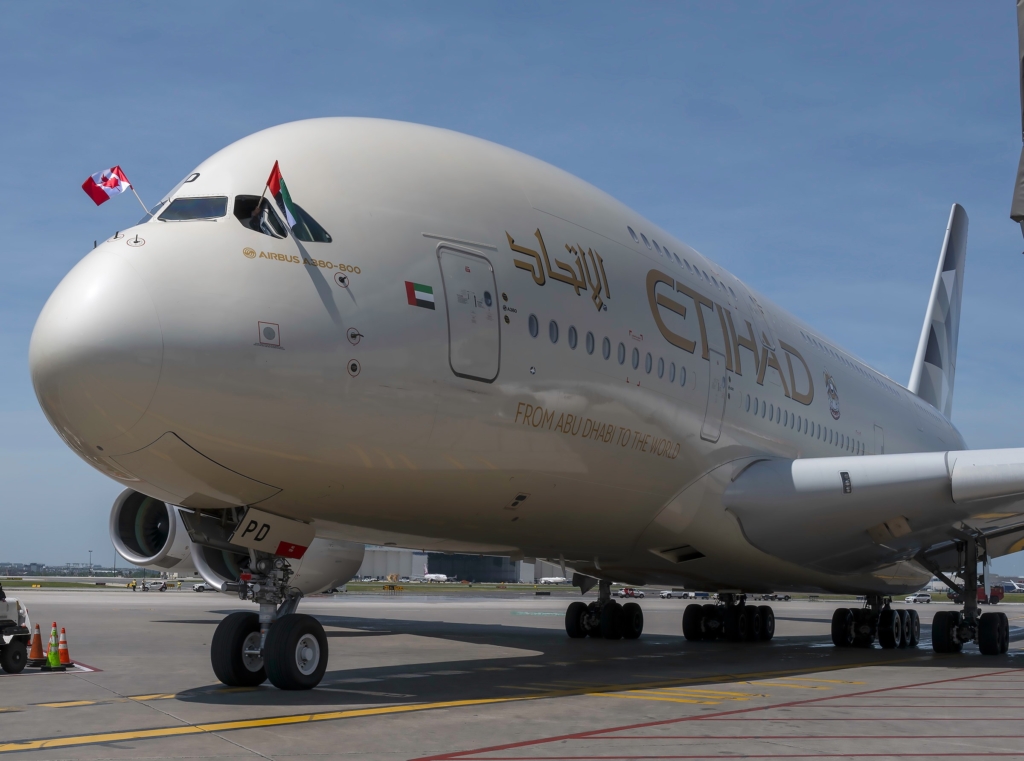
In June, the airline switched A380s away from serving New York and began using them to serve Toronto instead, replacing an Airbus A350-1000 on the route.
The reason for this switch, according to Etihad, was due to the limited capacity offered by the A350 on the route, which is heavily restricted in terms of the number of flights permitted per week under the bilateral agreement between the UAE and Canadian authorities.
Etihad’s A380s feature four classes with the exclusive two three-room ‘The Residence’ suites, along with accommodation for 11 first class passengers, 70 in business class, and 405 in economy class. The carrier does not currently offer a premium economy cabin on any of its aircraft.
While it remains unclear where the next two A380s will be deployed and on which route (or routes) they will operate, the pattern of existing routes will likely continue. That is, long-haul high-density routes where a daily service would be possible.
Etihad mulls bulk buying and stockpiling parts to solve supply chain issues
The return to service of more A380s is also partly in response to the ongoing issue of delayed deliveries of new aircraft and ongoing supply constraints of spare parts that have been plaguing the industry since the end of the pandemic.
There has been a growing trend since 2021 of airlines retaining older aircraft in their active fleets while they await new aircraft to be delivered by the two main manufacturers, Airbus and Boeing – deliveries which have been subject to lengthy delays due to supply chain bottlenecks in the manufacturing process.
Yet, it is not just the retention of older aircraft that carriers are using as a tool to meet demand with supply.
In an interview with Bloomberg, Etihad’s Chief Executive Officer, Antonoaldo Neves, said that the carrier has been investigating the feasibility of bulk buying key components such as aircraft seats to keep the current fleet in service.
Under the plan, vital parts could be purchased in bulk and then stored in warehouses until such time as they are needed.
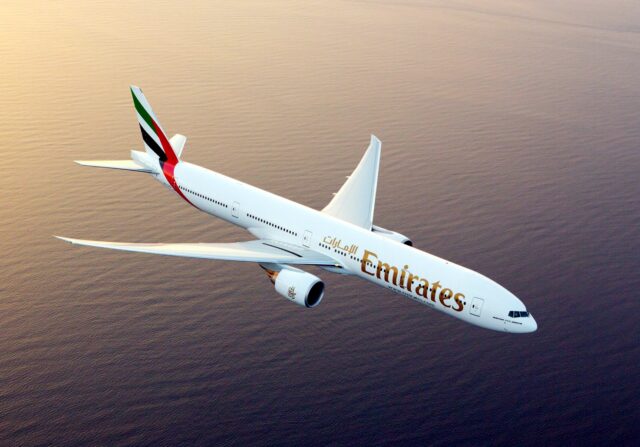
The airline is in the process of upgrading its existing fleet, spending over $5 billion on a major retrofit program to keep older aircraft such as its A380s and Boeing 777s in service for longer.
Cabin refreshes are being used by carriers worldwide to breathe new life into older airframes, to keep passenger appeal high, and to continue meeting customer expectations.
Etihad is considering the bulk buying approach so that its retrofit programme can keep to schedule without the risk of delays due to key components not arriving in time from suppliers – an issue that has become prevalent in recent years.
“I cannot just park five, six, seven planes and destroy my network just to retrofit the planes; it’s going to be too expensive,” said Neves. “We say, look, give me all the seats to retrofit about 50 planes in three months, and I store the seats, and use them when it doesn’t hurt my network to pull those planes out of service.”
New aircraft delays persist
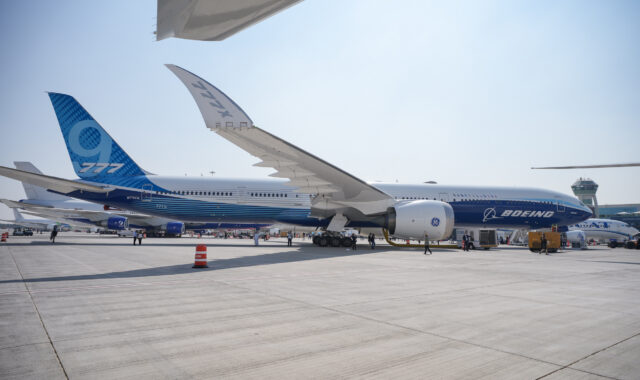
The airline is currently awaiting the delivery of 38 Airbus A321neos, 12 more A350-1000s, 25 Boeing 787s, and 25 of the yet-to-be-certified Boeing 777X series.
However, ongoing production delays will maintain the pressure on the airline to retain and retrofit its existing planes to keep them in service for longer to satisfy the increasing demand.
The Boeing 777X was originally due for delivery to customers in 202, but with multiple delays surrounding the engines, the pandemic, production delays, and changes to Federal Aviation Authority certification rules, the programme is now running at least five years late with certification due in late 2025 or early 2026.
“Certification has not improved; it’s a frustration,” added Neves. “Everything is taking too long, we don’t have time for that, the customer cannot wait.”