Top 10 superjumbo airlines: Which carriers still operate the Airbus A380 in 2026?

January 25, 2026
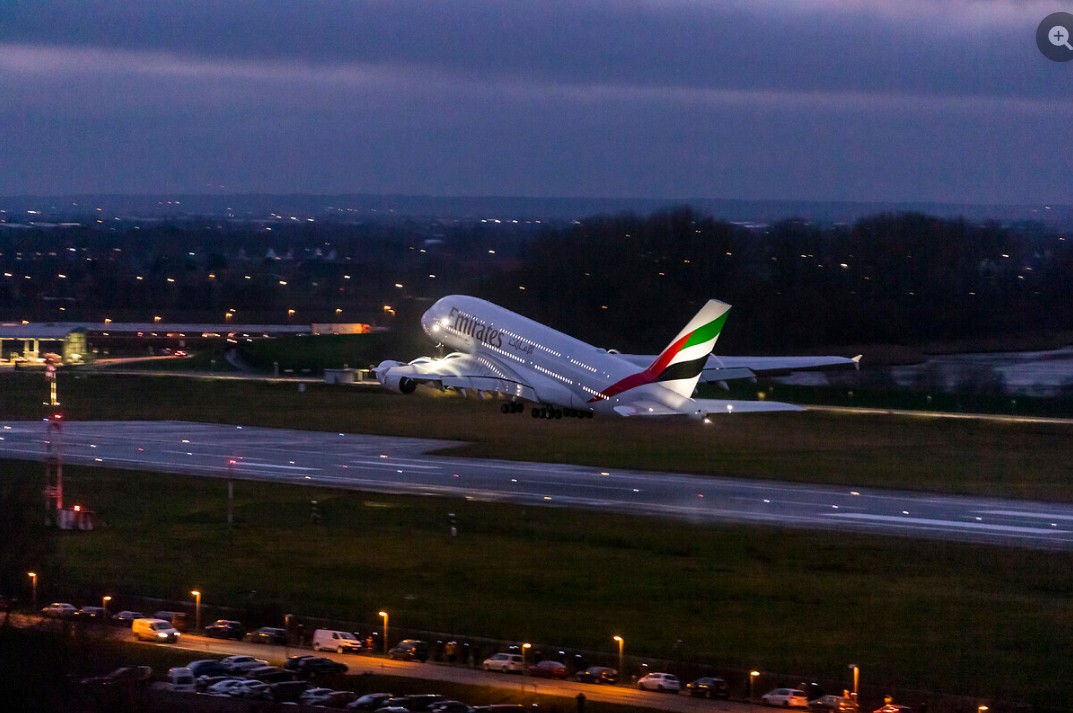
First rolled out to the world’s media on 18 January 2005, the Airbus A380 ‘Superjumbo’ represents the pinnacle of the scale to which humans have developed commercial passenger airliners.
Twenty-one years later, the leviathan of commercial aviation continues to carry passengers and cargo on routes that criss-cross the planet. And while the type may not have sold in the numbers that Airbus may have liked, there are still 190 active A380s plying the world’s airways today.
Aerospace Global News takes a closer look at the ten airlines that continue to operate the A380, how many of the type they operate and on what routes they can be found.
The Airbus A380 – a marvel of modern engineering
The Airbus A380 remains the world’s largest passenger airliner, and when designed, it was one of the most ambitious projects in the history of commercial aviation.
Developed by Airbus in the late 20th and early 21st centuries, the A380 was designed to address growing congestion at major international airports by carrying more passengers on fewer flights.
The origins of the A380 can be traced back to the 1990s, when Airbus began studying the concept of a very large aircraft capable of competing with Boeing’s dominant 747.
At the time, global air travel was increasing rapidly, and many industry forecasts predicted that major hub airports such as London Heathrow, Los Angeles and Frankfurt would soon reach capacity limits.
Airbus believed that a high-capacity, long-range aircraft would be essential for the future of air travel. In 2000, Airbus officially launched the A380 program, initially known back then as the A3XX, with strong backing from European governments as well as growing interest from a handful of major global airlines.
Key features of the Airbus A380
The A380 was a technological milestone. It featured a full-length double-deck design, advanced fly-by-wire systems, extensive use of lightweight composite materials, and quieter, more fuel-efficient engines.
Depending on configuration, the aircraft could carry over 500 passengers in typical airline service and more than 800 in an all-economy layout.
Airbus also focused heavily on passenger comfort, offering wider seats, larger windows, quieter cabins, and the potential for onboard lounges, bars, and even showers, depending on the airline customer’s configuration requirements.
The first A380 made its maiden flight on 27 April 2005, from Toulouse, France, where the type was to be built. After an extensive testing and certification process, the aircraft entered commercial service in October 2007 with Singapore Airlines on the Singapore to Sydney route.
Early passenger reactions were overwhelmingly positive, with many praising the aircraft’s smooth ride and spacious interior.
The A380 falls out of favour with some airlines
Despite its engineering success, the A380 faced significant commercial challenges. The program suffered from production delays and cost overruns, partly due to the complexity of manufacturing such a large aircraft across multiple European countries.
More importantly, airline market preferences shifted over time. Instead of flying very large aircraft between major hubs, many airlines began favouring smaller, more fuel-efficient widebody jets capable of flying long distances directly between cities.
Aircraft such as the Boeing 787 and Airbus A350 proved more flexible and economically viable.
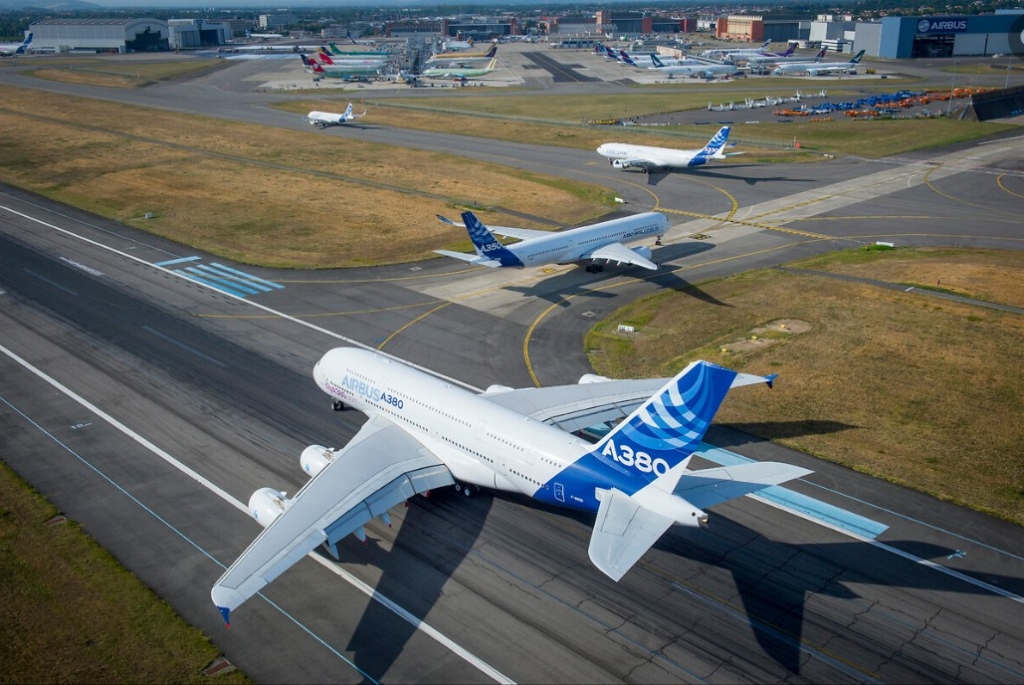
As a result, overall sales of the A380 were lower than Airbus had originally anticipated. While some airlines, most notably Emirates, embraced the aircraft and built their long-haul strategies around it, many others either ordered only small numbers or avoided it altogether.
Notably, despite growing congestion at US airports such as New York JFK and Los Angeles, no US-based carrier would ever order or operate the A380.
In 2019, Airbus announced that it would end A380 production due to insufficient demand, with the final aircraft being delivered to Emirates in 2021. With the last aircraft leaving Toulouse that year, the production space was turned over to the planemaker’s A350 twin-aisle wide-bodied jet, seen by many as the future of long-haul aviation, just as the A380 had once been.
However, with several airlines currently updating their A380 fleets, and with nothing else like it even on the drawing boards, the type is expected to remain in service for many years to come.
Note: All fleet data included in this article has been drawn from Planespotters.net unless otherwise stated.
The world’s ten airlines still operating the Airbus A380 in 2026
Emirates (116 aircraft)
As the world’s largest international airline by some margin, it will come as no surprise that Emirates is also the world’s largest operator of the A380.
The airline has 100 of the type actively flying, while it has another 16 parked at either Dubai International Airport (DXB) or Dubai World Central Airport (DWC) awaiting a service return.
The carrier’s first A380 (registered A6-EDA) was delivered in July 2008, while its most recent (A6-EVS) was handed over in December 2021.

The airline operates its fleet of A380s in a variety of configurations, with the lowest seat density being 484 seats across four classes, while its eight high-density two-class A380s accommodate a whopping 615 passengers (58 in business class and 557 in economy class).
The airline flies its A380 fleet to over 40 destinations, while many of these are slot-constrained airports, others simply demand the largest aircraft in the Emirates fleet.
Singapore Airlines (12 aircraft)
The national carrier of Singapore became the world’s first operator of the A380 when it took delivery of the first of the type in October 2007.
While 12 of its A380s have been withdrawn from service, with at least four having since been scrapped, the carrier still operates 12 examples on its long-haul route network from Singapore’s Changi Airport (SIN). Each aircraft seats 441 passengers in a four-class layout featuring 12 seats in first class, 60 in business class, 36 in premium economy, and 333 in economy.
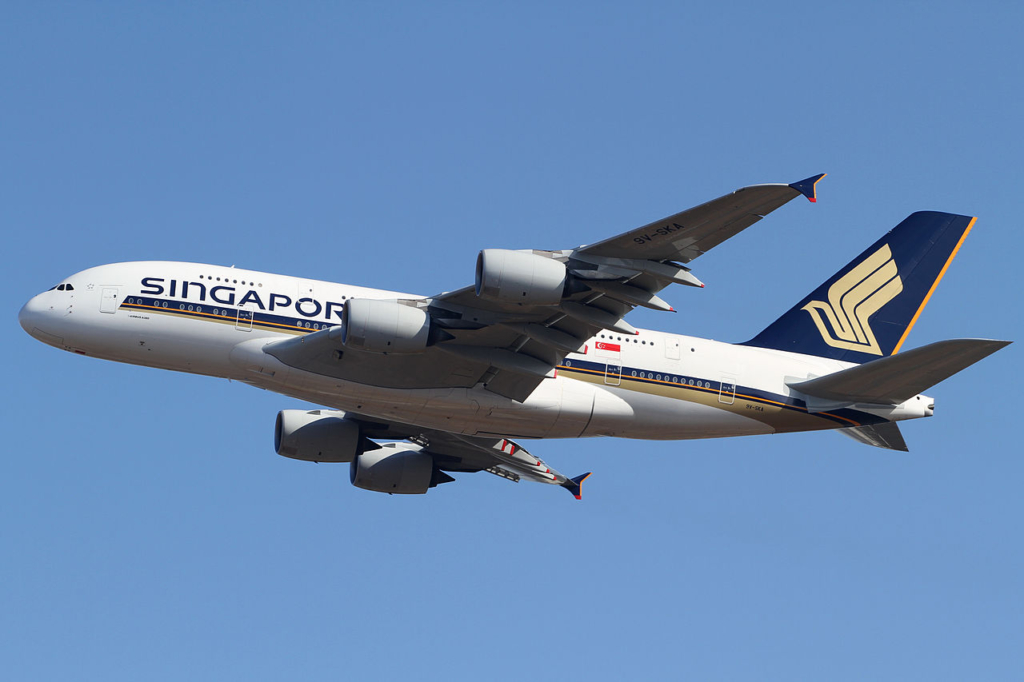
According to data obtained from aviation analytics firm Cirium, the carrier serves the following routes from Singapore with the A380 in January 2026:
- Auckland (AKL)
- Bombay (BOM)
- Delhi (DEL)
- London Heathrow (LHR)
- Shanghai (PVG)
- Sydney (SYD)
British Airways (12 aircraft)
2025 marked 12 years since British Airways took delivery of its first Airbus A380 superjumbo. Since then, the carrier’s 12 A380s have travelled hundreds of thousands of miles carrying millions of passengers to their destinations.
With its full fleet back in active service following a period during which these aircraft had an uncertain future, the airline has become reliant on the type to operate some of its busiest routes from the carrier’s hub at London’s Heathrow Airport (LHR).
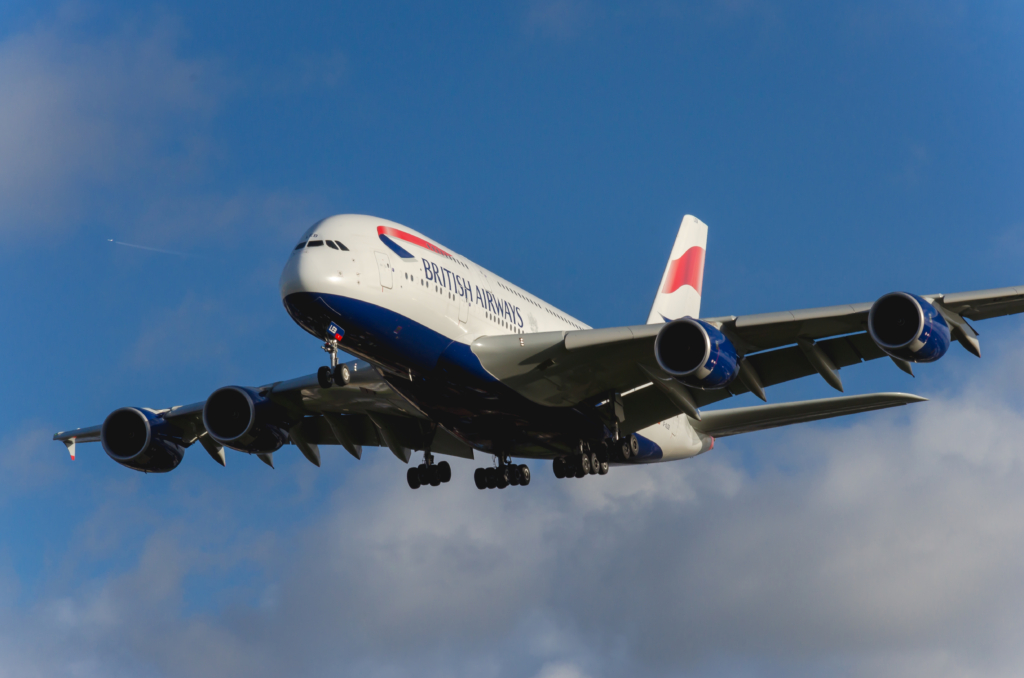
British Airways first became an Airbus A380 operator in July 2013 when the carrier took delivery of G-XLEA from the European manufacturer’s A380 final assembly plant in Toulouse.
With Heathrow already facing severe slot constraints and the carrier needing a larger aircraft than its Boeing 747-400s, British Airways originally ordered 12 A380s in 2007 to supplement its widebody fleet. Over the following three years from 2013, the company took delivery of another 11 A380s, fulfilling the original order for 12 airframes.
Now, with an average age of 11.6 years, the A380 is deployed on a varied route network from London, although the list of destinations has changed over the years as demand on various international routes has fluctuated.
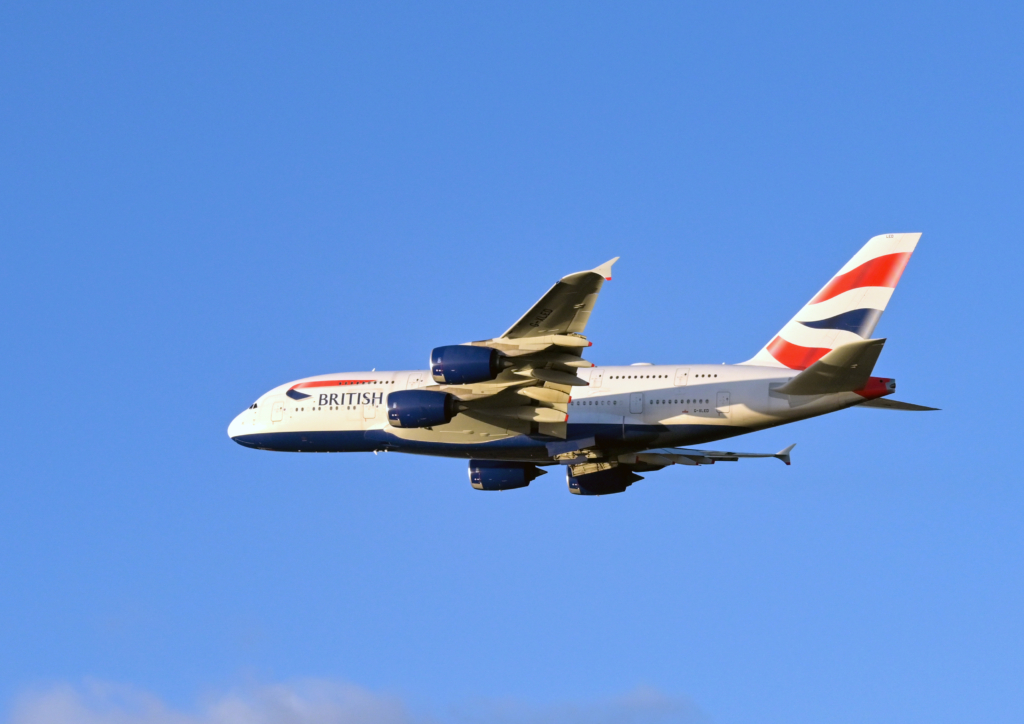
During the remainder of the 2025/26 season, the 12 aircraft be flown on five routes from London Heathrow, linking the UK capital with San Francisco (SFO), Los Angeles (LAX), Miami (MIA), Johannesburg (JNB) and Dubai (DXB).
Configured to carry 499 passengers in a four-class arrangement, each of the 12 aircraft features 14 seats in first class, 97 in business class, 55 in premium economy and 303 in economy class.
Qantas (10 aircraft)
Having originally received 12 aircraft in total, just ten remain active with the Australian airline’s fleet. The carrier placed all 12 of its A380s into long-term storage at the height of the pandemic in 2020 at Victorville in California. However, from 2022, the airline began bringing the superjumbos back into its fleet, although two were earmarked to be parted out to provide the rest of the fleet with a ready pool of spare parts.

The last aircraft to exit storage and return to Australia was VH-OGC, which in December 2025 flew from Abu Dhabi back to Sydney and re-entered service shortly afterwards.
Its service return was cut short, however, with the aircraft suffering wing and engine damage on its very first passenger flight back on 11 December 2025 from Sydney to Los Angeles. Following further repairs, this aircraft returned to service (once again) on 16 January, again heading to Los Angeles.
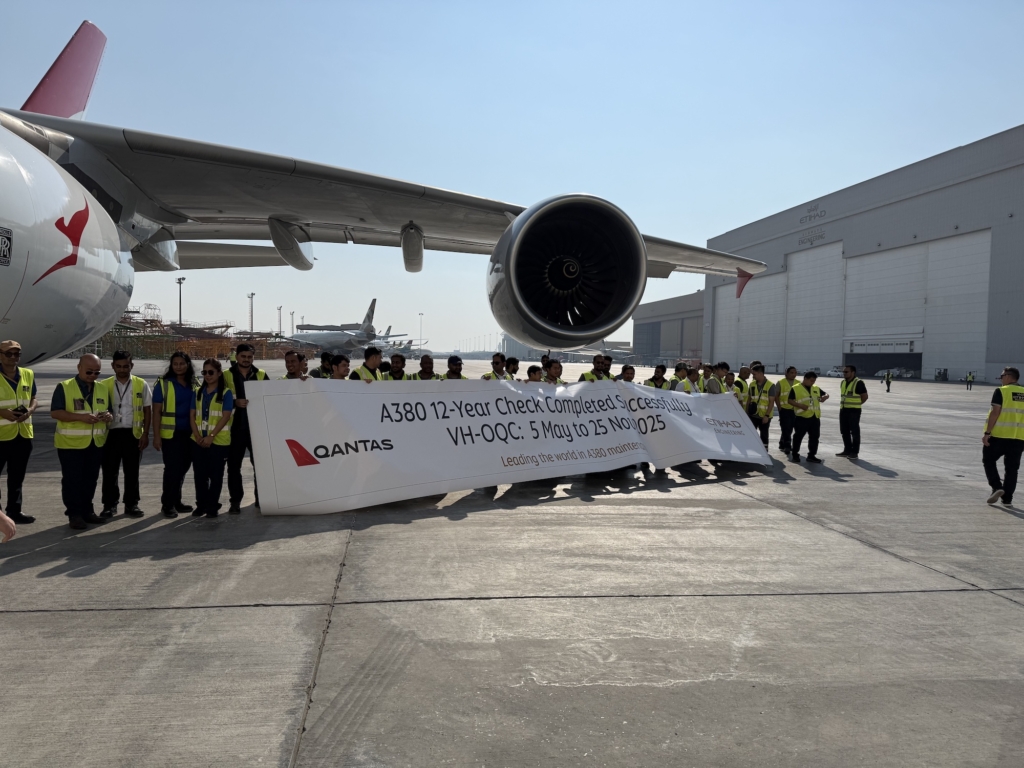
The airline currently flies its A380s on routes from Sydney to London (LHR), Singapore (SIN), Los Angeles (LAX), Dallas Fort Worth (DFW), and Johannesburg (JNB). Qantas operates its A380s in a four-class configuration. This includes 14 first class seats, 70 in business class, 60 in premium economy and 341 in economy, giving a total capacity of 485 passengers.
Etihad (9 aircraft)
The national airline of Abu Dhabi originally had ten aircraft, with the first arriving with the carrier in April 2015. Again, as victims of the pandemic, the carrier parked all of its A380S, while its CEO said he did not expect the type to make a reappearance with the Etihad fleet.
However, the sharp rebound in long-haul demand, particularly on high-density routes, prompted a reassessment. The carrier returned the first A380 to revenue service in 2023, initially on flights between Abu Dhabi and London Heathrow, where premium demand and slot constraints make the aircraft particularly attractive. The inaugural flight departed Abu Dhabi on 25 July 2023 at 02.05 and landed at London Heathrow at 06.45 local time.
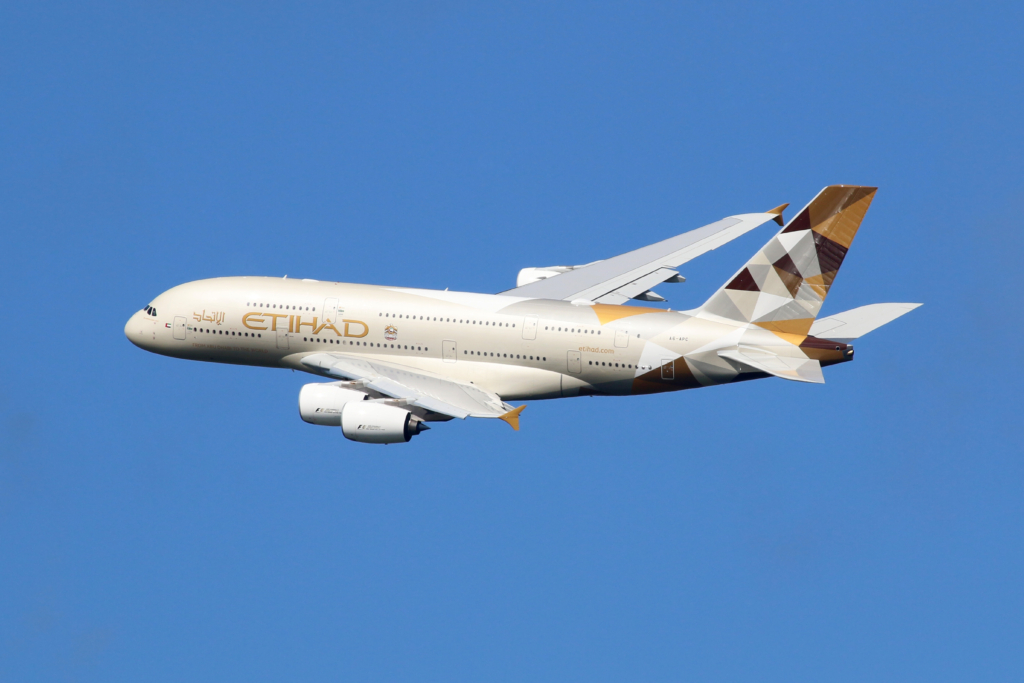
Antonoaldo Neves, Etihad CEO, said at the time: “The aircraft adds much-needed capacity connecting Abu Dhabi with London Heathrow and allows us to build our network and increase frequencies across the network. With a surge in demand for travel over the summer, the return of our much-loved A380 comes at the perfect time.”
The airline now has eight of its nine A380s back in service, with the last (A6-APB) due to return to the fleet in June 2026, in time to commence A380 operations to Tokyo. The carrier’s first aircraft, A6-APA, was scrapped in July 2025.
Elsewhere, the airline flies its A380 fleet from Abu Dhabi to London Heathrow, Paris Charles de Gaulle (CDG), Singapore, and Toronto (YYZ).
Lufthansa (8 aircraft)
The only other European carrier left flying the A380 after British Airways is Germany’s Lufthansa, with eight of the type in service.
Configured to carry 509 passengers in a four-class configuration (eight in first class, 78 in business class, 52 in premium economy and 371 in economy), the airline currently offers A380 flights on a limited network from its Munich (MUC) hub. The destinations include Bangkok and Delhi.
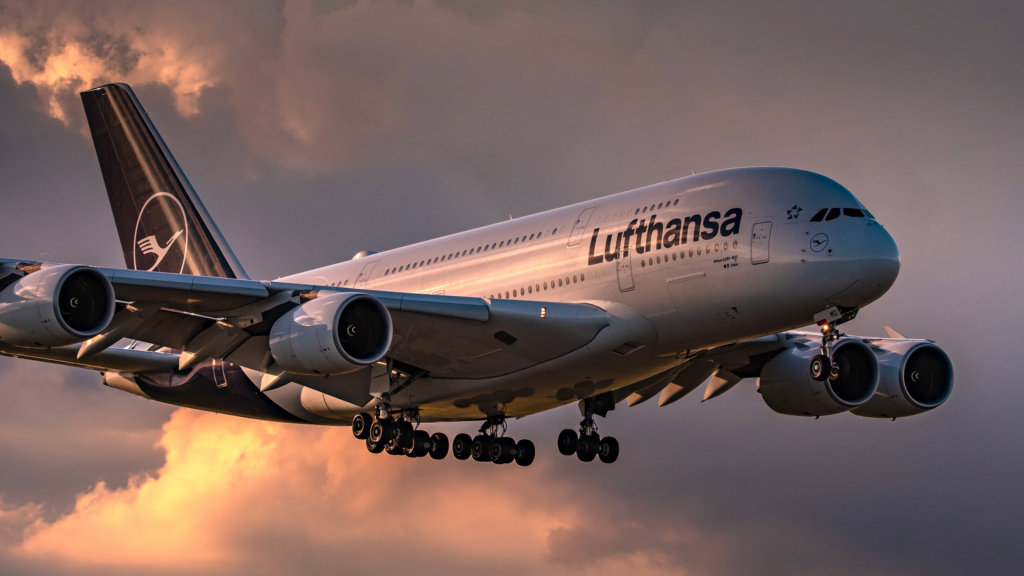
However, for the summer of 2026, the airline will ramp up A380 operations, operating the type from Munich on high-demand routes to the United States and India. Specifically, the carrier will operate its A380s on flights to:
- Los Angeles: daily
- Boston: daily
- Delhi: daily
- Denver: daily
- Washington D.C.: daily
- San Francisco: 3x weekly
As with other carriers, the Airbus A380s are useful for services to more congested airports and those that benefit from high-demand.
Qatar Airways (8 aircraft)
Having scrapped two of its original aircraft, the Doha-based carrier still operates eight A380s on a limited number of routes from its base airport. The airline’s oldest aircraft is 12 years old, having first been delivered in December 2014, and its newest is almost eight years old.
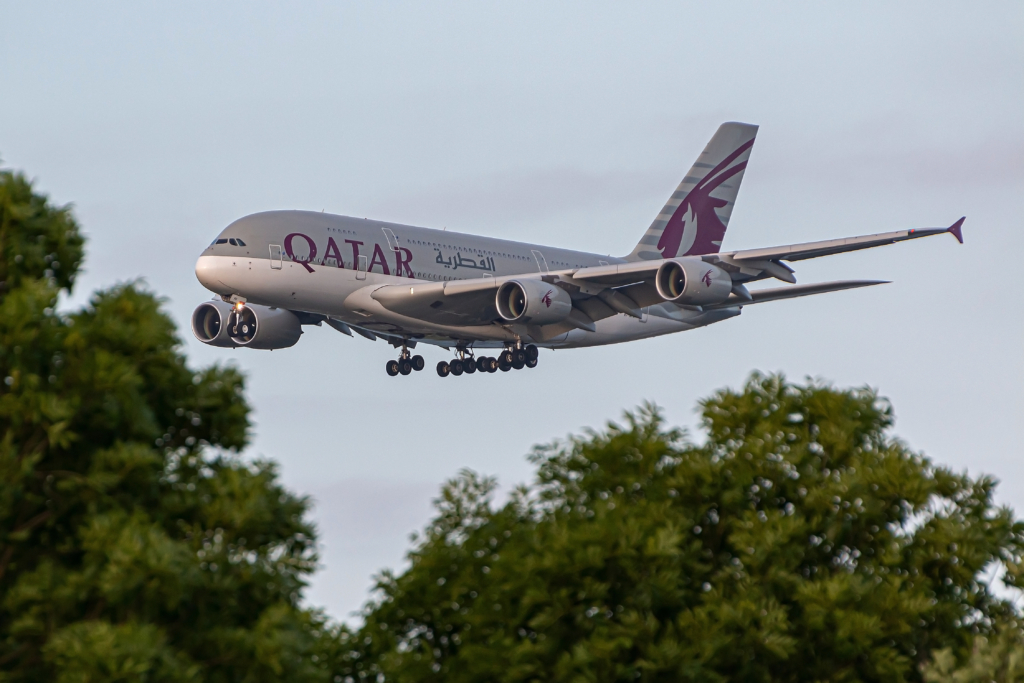
Each aircraft is flown by the airline in a three-class configuration featuring eight first class seats, 48 in business class and 461 in economy (total 517 seats). The carrier operates the type on a limited network from Doha to Bangkok, Sydney, Paris, London Heathrow and Singapore.
Korean Air (6 aircraft)
Having originally ordered ten aircraft, there are still six A380s remaining in service with Korean Air. Five are currently listed as active, while one is parked at Seoul-Incheon Airport (ICN). The four aircraft that were scrapped arrived in 2011, while the newest aircraft with the carrier is almost 12 years old, having arrived in July 2014.

Each of the Korean Air examples accommodates 407 passengers in a three-class layout featuring 12 in first class, 94 in business class, and 301 in economy. From Seoul, the airline currently flies its A380s on routes to New York (JFK), Los Angeles (LAX), and Tokyo Narita (NRT).
Asiana (6 aircraft)
Asiana, which is now a sister airline to the Korean national carrier Korean Air, also operates six A380s on intercontinental and long-haul routes. Its oldest aircraft is 12.1 years old, while its youngest is 9.4 years old.

The carrier configures its superjumbos to carry 495 passengers – 12 in first class, 66 in business class and 417 in economy class. With a wider A380 network than that of its partner airline, Asiana flies the type to:
- Bangkok
- Los Angeles
- Tokyo Narita
- Sydney
- Taipei
All Nippon Airways (ANA)(3 aircraft)
Bringing up the rear on this list, All Nippon Airways (ANA) of Japan maintains a fleet of just three A380S to exclusively serve the route between Tokyo Narita and Honolulu International Airport in Hawaii, a popular destination for Japanese tourists.
Each aircraft carries a relatively high 520 passengers across four classes of service on board – eight in first class, 56 in business class, 73 in premium economy and 383 in economy.
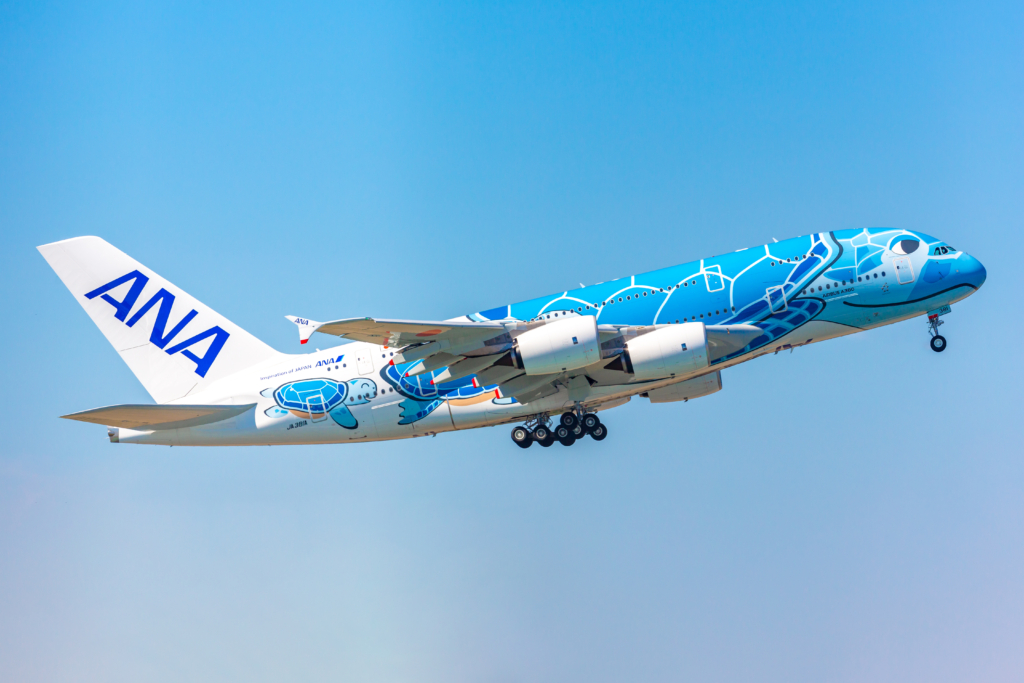
Each of the three aircraft also carries a unique livery known by the airline as its ‘Flying Honu’ scheme (flying turtle). Aircraft JA381A ‘Lani’ features a blue turtle, while JA382A ‘Kai’ carries a green turtle, and JA383A, named ‘Lā’, appears as an orange turtle.
Worth a mention? Global Airlines/Hi Fly Malta
Falling just outside of our top ten list, but for the sake of completeness, is Global Airlines of the UK. In conjunction with Hi Fly Airlines of Malta, the company’s single A380 registered as 9H-GLOBL is not currently used on regular scheduled passenger flights and remains in long-term maintenance.
The aircraft was used to operate four charter flights on Hi Fly Malta’s Air Operator’s Certificate, branded as Global Airlines, back in May 2025. However, the aircraft has flown little since then and has not carried any further fare-paying passengers.
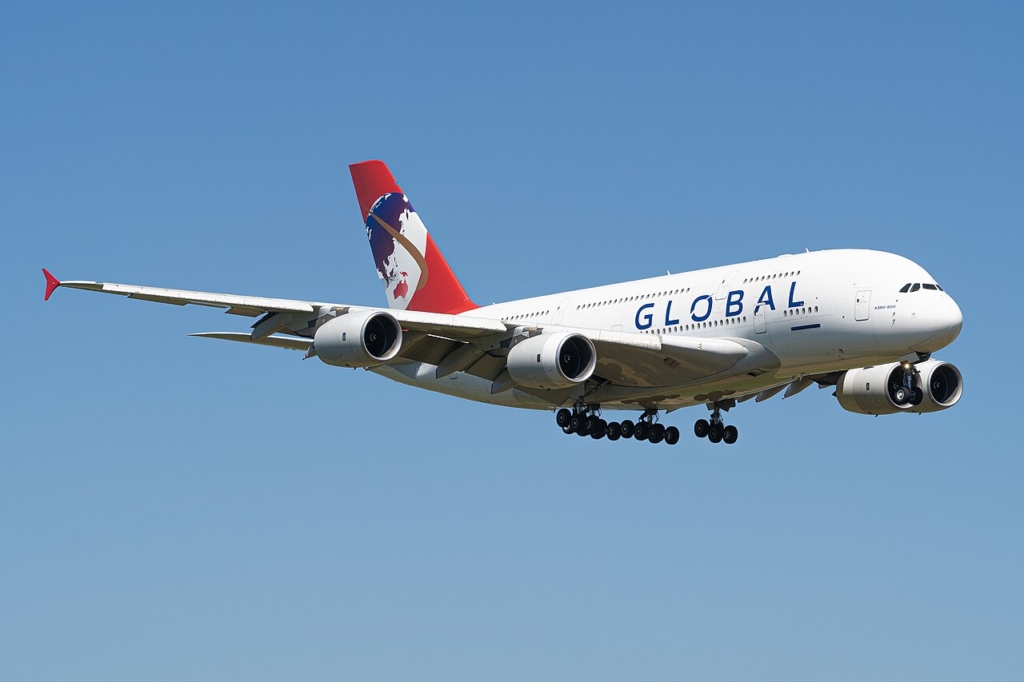
Although Global Airlines remains a legal entity in the UK, whether it ever flies an A380 on regular scheduled passenger services remains to be seen, with many commentators doubting the credibility of the airline’s operating model.
The Airbus A380 – a flying icon
Today, the Airbus A380 remains an iconic symbol of aviation ambition and engineering excellence. Though its commercial lifespan was shorter than hoped, it demonstrated what was possible in aircraft design and left a lasting impression on passengers and the aviation industry alike.
Featured image: Bahnfrend | Wikimedia Commons