Crystal Cabin: These are the most innovative aircraft cabin concepts of 2026

December 14, 2025
This year’s Crystal Cabin Award shortlist highlights innovations that tackle some of the toughest challenges in aircraft interiors: ultra-long-haul comfort, accessibility, sustainability and increasingly digital, connected services. The finalists and winners will be announced on 14 April 2026 during Aircraft Interiors Expo (AIX) in Hamburg.
The shortlist spans eight award categories: Accessibility, Breakthrough Start-ups, Cabin Concepts, Cabin Technologies, IFEC & Digital Services, Passenger Comfort, Sustainable Cabin and University. A total of 85 entries made it to the shortlist and an international jury will narrow the field to three finalists per category in February 2026.
Long-haul comfort takes centre stage
With more ultra-long-haul routes on airline networks, many shortlisted concepts focus on how passengers sleep, work, and move around during flights of 15 hours or more.
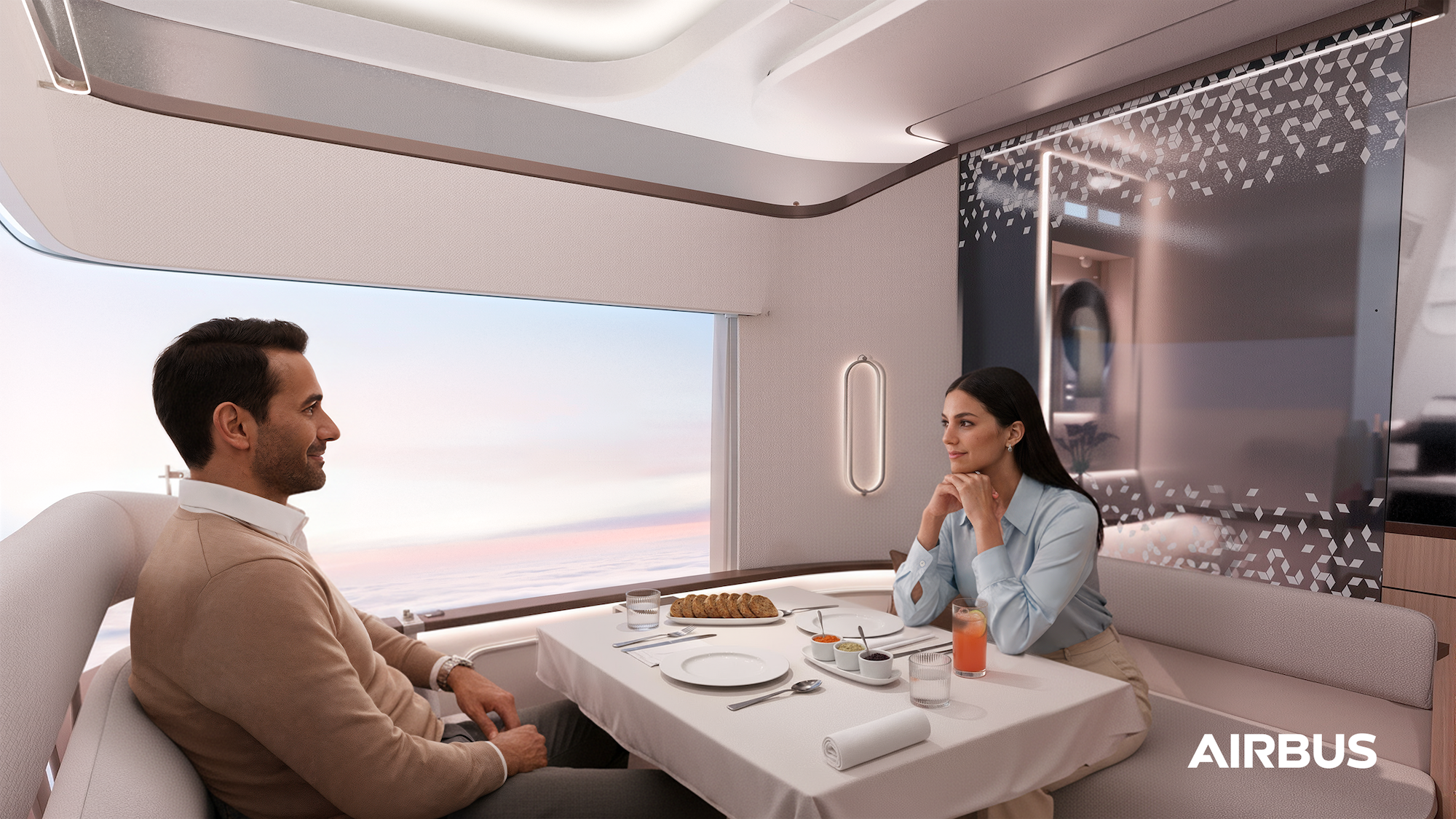
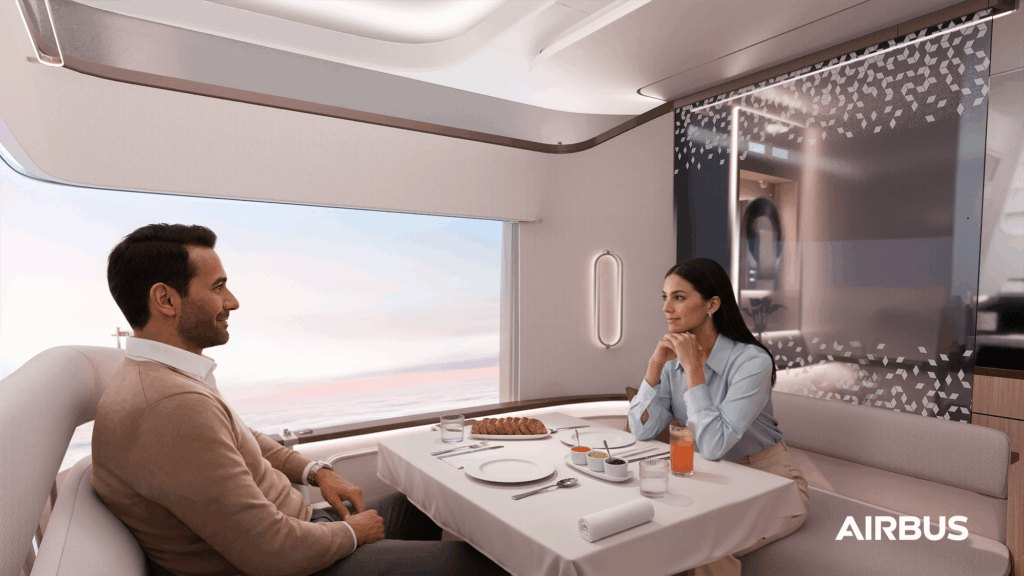
With the A350 Master Suite, Airbus introduces a first-class product featuring a double bed, private toilet, and a small bar, enabled by a new centre module architecture. As a result, the nose of an aircraft is being transformed into a highly private, high-yield space that still fits within the fuselage limits.
At the other end of the cabin, BMW Designworks’ SPACEFRAME seats offer a modular, recyclable design. With re-configurable structures and lightweight materials, the concept aims to marry ergonomics and sustainability.
The SkyNook converts the rear cabin’s ‘dead’ spaces into flexible zones where families can gather, and caregivers can care for dependents. Passengers can also use the space to stand and stretch away from congested aisles. This illustrates a broader theme in this year’s shortlist: turning every square centimetre of cabin space into well-being space for passengers.
Connectivity and digital services move beyond IFE
This year’s shortlisted digital concepts go far beyond a traditional seatback screen and server.
AirFi Wingman is an AI-powered, real-time travel concierge from AirFi.aero that combines connectivity, retail, and entertainment. This is an already mature technology, rather than blue-sky R&D.

The SmartSuite from Thales and Diehl Aviation combines edge computing, artificial intelligence, IoT, and machine vision to boost operational efficiency in and around the cabin. It will deliver more responsive and personalised services to passengers.
In partnership with Starlink, Axinom, and Spotify, United Airlines has developed a cloud-based platform to deliver a consistent, premium digital experience from boarding to landing.
These entries show that IFEC & Digital Services are increasingly focused on end-to-end digital ecosystems rather than standalone hardware.
Accessibility: designing cabins for everyone
Several concepts on the 2026 shortlist focus on preserving dignity and independence for passengers with reduced mobility.
In the AeroSlide Transfer System, Mobility Assist eliminates the need to physically lift a passenger from a wheelchair to a seat, using a horizontal, extendable slide board. During the transfer process, passengers and crew will be protected from injury and made more comfortable.
Using a lightweight, reclining support system, SkyBudi converts three standard economy seats into a full-length bed. Installing it takes only a few minutes using existing seat belts. Because it can be used with both single-aisle and twin-aisle aircraft, airlines can adapt rows to accommodate passengers who need to lie flat without completely renovating the interior.

Toyota Boshoku’s Well-Voyage Seat is a fully removable seat module that doubles as a mobility device, allowing continuous travel from the gate to the cabin and easier access to the onboard facilities. The entire journey will be more seamless and dignified by reducing the number of transfers.
These concepts address both regulatory pressure and social expectations to make air travel accessible from kerb to cabin.
Prioritising sustainability and circularity
Sustainability remains a core pillar of the Crystal Cabin Award, and the 2026 shortlist focuses on lighter cabins and circular materials.
In Expliseat’s TiSeat, titanium and carbon fibre are combined to create an ultra-lightweight seat. Over an aircraft’s lifetime, the product is expected to deliver lower CO2 emissions without compromising comfort.
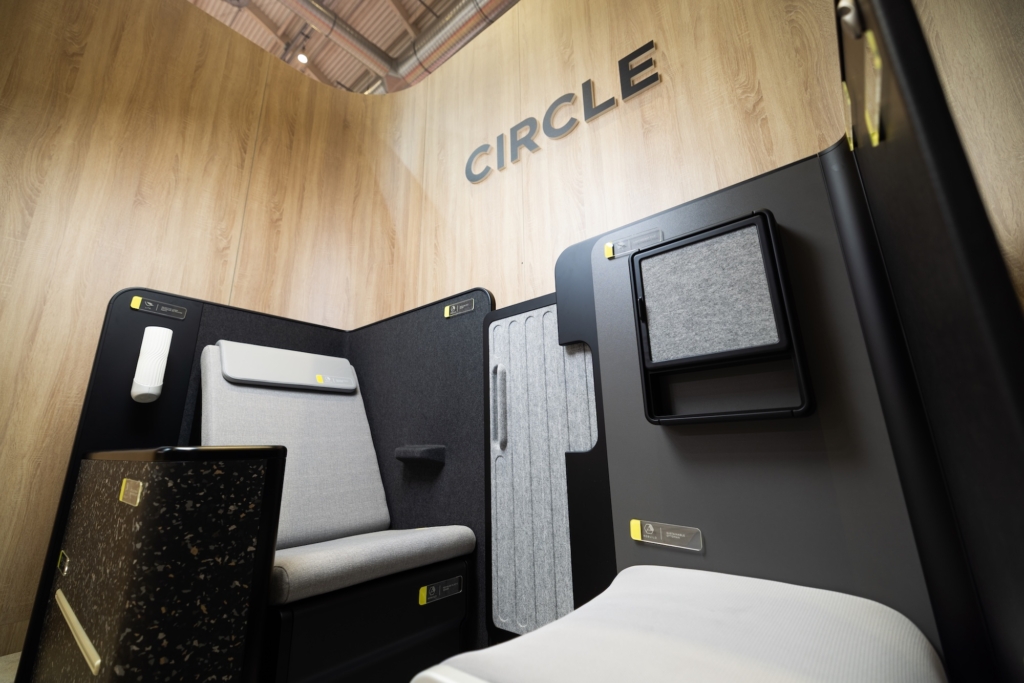
Using recycled materials and waste reuse, Safran Seats’ CIRCLE business-class concept can reduce the weight per seat by up to 7 kg. This project aims to show that premium design can meet environmental targets.
Plant-based Fibre Textile System by Testori Textiles is formulated to meet flame-retardant and durability standards while reducing environmental impact and increasing circular resource flow.
In this new generation of cabin products, weight and materials data back up sustainability claims.
Start-ups get more room to shine with new Crystal Cabin Award category
The Crystal Cabin Award has introduced a new “Breakthrough Start-ups” category for 2026, creating a dedicated platform for young companies.
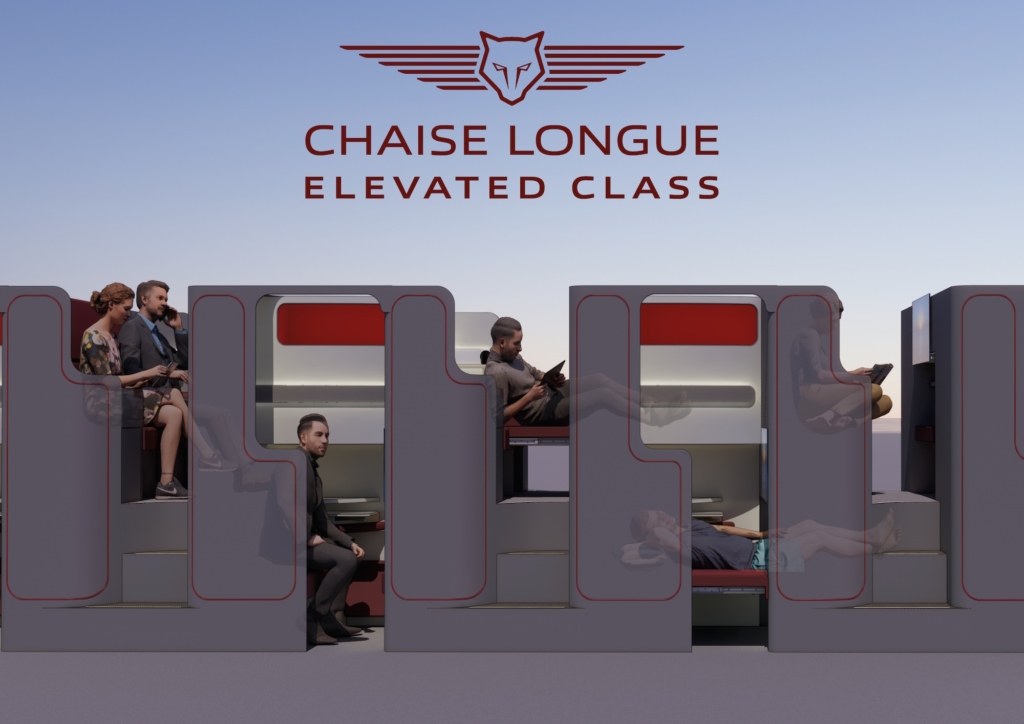
A standout entry is Chaise Longue’s Elevated Class concept. The design stacks private suites below and flexible communal areas above for working, dining, and socialising. Airlines would have more cabin layout options, and passengers would get more choices in how to use their space.
Another shortlisted system is smairGO from smair GmbH. It manages the appearance and life cycle of cabin components. Lifecycle management tools like this are becoming increasingly important as airlines focus on predictive maintenance and consistent branding.
University students dream up a better flying experience
Once again, students in the University category demonstrate how a lack of constraints can influence the design of future aircraft cabins.
Researchers at Hamburg University of Applied Sciences and ZAL Centre for Applied Aeronautical Research have developed smart, networked passenger service units.
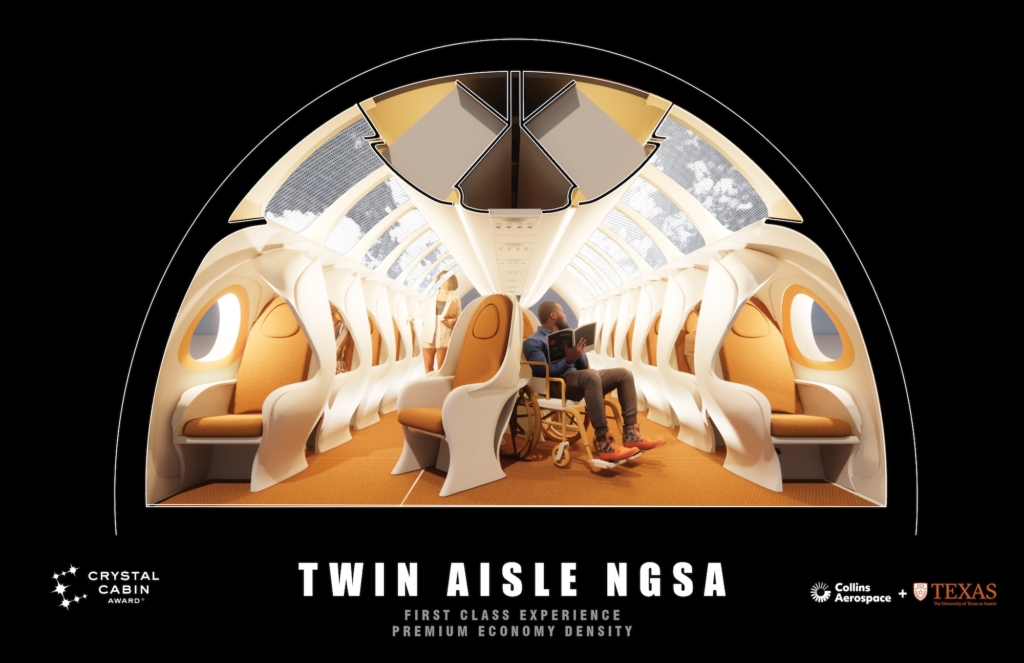
The University of Texas at Austin made the shortlist with its Twin Aisle NGSA, a reimagined single-aisle cabin layout that introduces twin aisles to improve comfort and boarding efficiency.
The Georgia Institute of Technology secured three shortlist spots through collaborations with Delta Air Lines and Airbus, covering new ideas in catering logistics and cabin cleanliness.
While these concepts may not reach service in their current form, they often influence future industrial designs and show where engineers and designers see the biggest opportunities.
Preparing for AIX and the 2026 Crystal Cabin Award winners
In February 2026, the 27-member jury will select three finalists in each of the eight categories. The finalists will present their concepts live at Aircraft Interiors Expo in Hamburg from 14-16 April 2026, with the winners announced at the Hamburg Chamber of Commerce on 14 April.
For airlines, OEMs, and suppliers, the 2026 shortlist offers a glimpse of where cabin innovation is headed: more space-efficient premium products, accessible cabins, lighter, more circular materials, and a strong push to integrate the cabin into the broader digital travel ecosystem.
Featured Image: Airbus