The world’s largest piston-engined bomber: Where can you still see a Convair B-36 Peacemaker in 2025?

December 14, 2025
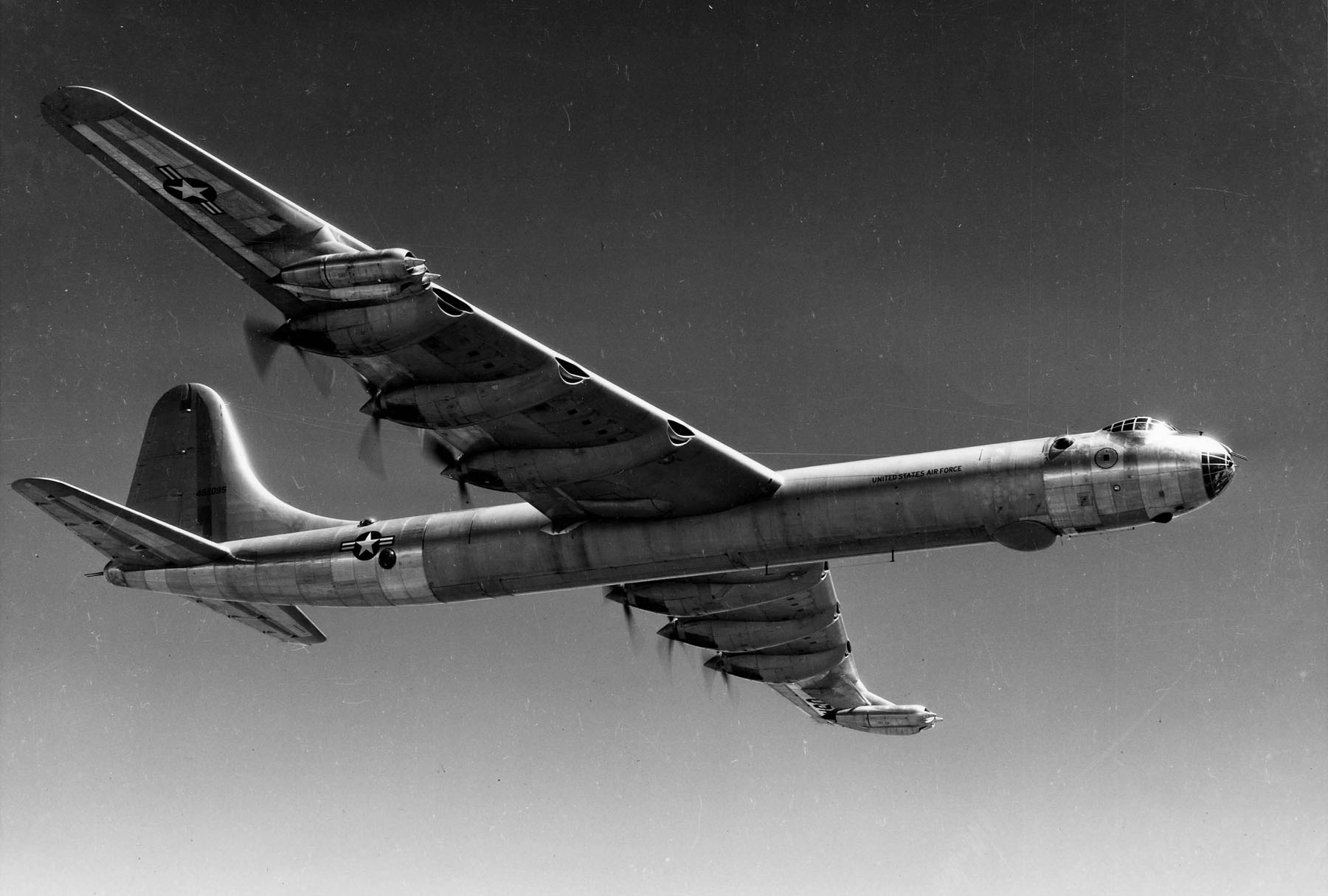
Before the arrival of the Boeing B-52 Stratofortress, America’s first intercontinental bomber and also the largest aircraft to enter operational service with the US Air Force (USAF), was the Convair B-36 Peacemaker.
Originally designed to directly attack Nazi-controlled Germany from bases on the US East Coast if Great Britain became occupied by German forces, the B-36’s arrival came too late for the aircraft to have a real impact on world events.
However, the B-36 later found a role as a long-range reconnaissance aircraft, flying multi-hour missions from US bases across the US and Europe, carrying out vital missions to promote world geopolitical stability.
The history of the B-36 Peacemaker
The first intercontinental bomber designed by the US, the Convair B-36 Peacemaker, originated from a specification issued by the US Government on 11 April 1941, which called for an aircraft with the ability to carry a maximum bomb load of 32,659kg (72,000 lbs).
Of even greater importance, given the state of affairs at the time, was for the aircraft to be capable of delivering 4,536kg (10,000 lbs) of bombs on European targets from bases in the United States
Additionally, an unrefuelled range of 10,000 miles (16,093km) was also a prime requirement, the aircraft having a maximum speed of 240 to 300 mph (383 to 483 kph) and a ceiling of 10,670 metres, or 35,000ft.
Selected from four competing designs, the Convair model 36 featured a pressurised fuselage and a 70.1 metre (230ft) wingspan with a root thickness of 1.83 metres (six ft) to permit in-flight access to the six pusher engines.
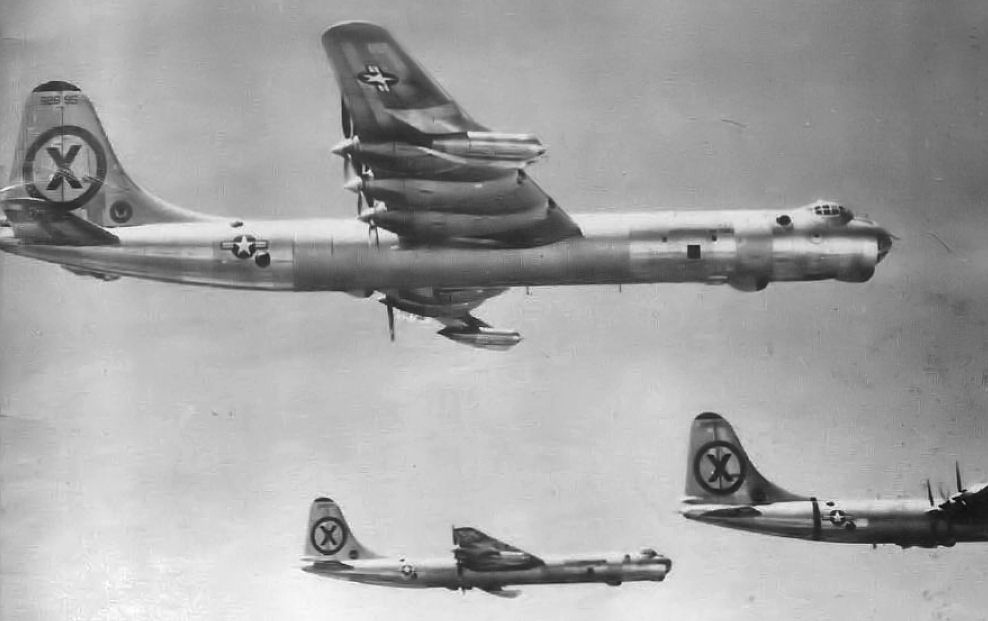
The aircraft was designed originally with twin fins and rudders, but by the time the B-36 prototype was ready to be rolled out of the Convair factory in Fort Worth (Texas) on 8 September 1945, single vertical tail surfaces had been substituted instead.
First flown on 8 August 1946, the experimental XB-36 had single 2.79 metre (110in) diameter main wheels, also a feature of the YB-36 second prototype. These were later replaced by the four-wheel bogies adopted for production aircraft in this form.
The production aircraft were designated as the B-36 and also differed from the first aircraft by introducing a raised cockpit roof. On 23 July 1943, a hundred aircraft were ordered by the US government, but it was more than four years before the first of the 222 unarmed crew trainer B-36A models took its maiden flight on 28 August 1947.
Production of the B-36 continued for almost seven years, with the last example being delivered to the Strategic Air Command on 14 August 1954. The type was finally retired on 12 February 1959. In total, 383 Convair B-36s were built.
The specifications of the Convair B-36 Peacemaker
| Specification | B-36 Peacemaker |
|---|---|
| Wingspan | 230 ft (70.1 m) |
| Length | 162 ft 1 in (49.4 m) |
| Powerplant |
6 × Pratt & Whitney R-4360 piston engines (pusher), 4 × General Electric J47 jet engines (B-36D and later) |
| Maximum Payload | Up to 84,000 lb (38,100 kg) of bombs |
| Combat Range |
10,000 mi (16,000 km) with lighter loads; approx. 6,000 mi (9,700 km) with full payload |
| Maximum Speed | 435 mph (700 km/h) |
| Crew | 13 (up to 15 on some missions) |
Designed as an ultra-long-range strategic/reconnaissance bomber, the B-36 was powered by six 3,200-horsepower Pratt and Whitney R-4360-53 radial piston engines paired with four 2,359 kg (5,200 lbs) thrust General Electric J47-GE-19 turbojets for added power and lift capability.
In terms of performance, the B-36 had a maximum speed of 411 mph (661 kph), flying at 11,095 metres (36,400ft). Cruising speed was 391 mph (629 kph) with a service ceiling of 12,160 metres (39,900ft). The total range was 6,800 miles (10,944km) carrying a 4,536 kg (10,000 bomb load).
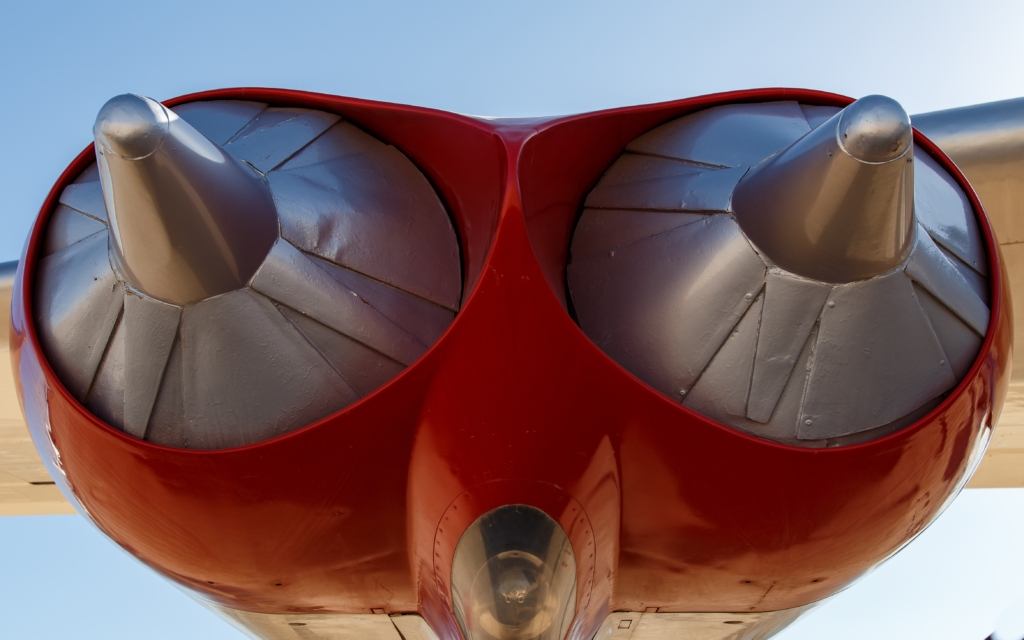
The weight of an empty B-36 aircraft was 77,580 kg (171,035 lbs) while the model offered a maximum take-off weight of 185,973kg (410,000 lbs).
In terms of dimensions, the B-36 had a wingspan of 70.10 metres (230ft) and a length of 49.40 metres (162 feet and one inch). The aircraft had a height of 14.22 metres (46 feet 8 inches) with a total wing area equating to 443.32 square metres (4,772 sq ft).
Where can you still see a B-36 in 2025?
With just four examples of the B-26 Peacemaker left in existence, it has become increasingly hard to find a complete aircraft left in the world. In fact, all surviving aircraft now reside in museums in the US, with none remaining outside of the country.
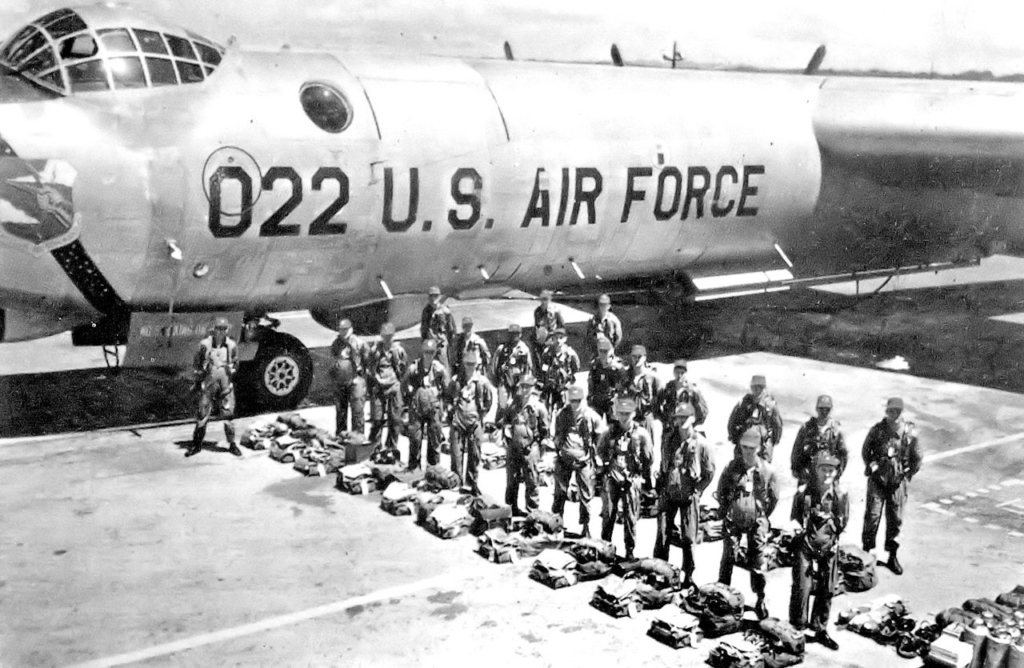
Each of these aircraft enjoyed an eclectic history during its service life with the USAF, but each now lives out its retirement as a museum exhibit, treating visitors to a glimpse into bomber aviation of yesteryear.
B-36J 52-2217 – Ashland, Nebraska
The first aircraft on the list of the four surviving B-36s is located at the Strategic Air Command Museum at Ashland near Omaha, Nebraska.
As recorded by Vintage Aviation News, the B-36J with tail number 52-2217 was built by Convair in Fort Worth, Texas and was accepted into operational service with the USAF on 22 December 1953. The aircraft initially served with the 7th Bombardment Wing of the USAF at Carswell Air Force Base in Fort Worth, which also happened to be where Convair’s B-36 plant was located.
In September 1954, 52-2217 was transferred to Strategic Air Command’s 42nd Bombardment Wing based at Loring Air Force Base in Maine, the closest air base in the continental US to Europe. Later, it was transferred on deployment to the UK and was based at RAF Upper Heyford in Oxfordshire, England, between October and November 1955.
In 1956, the aircraft was based back in the US at Biggs Air Force Base near El Paso, Texas. By this point, the new Boeing B-52 Stratofortress was already replacing the Convair B-36 Peacemaker as America’s premier intercontinental bomber.
In February 1959, 52-2217 was sent from Biggs AFB to Davis-Monthan Air Force Base in Arizona, where the aircraft was due to be scrapped.
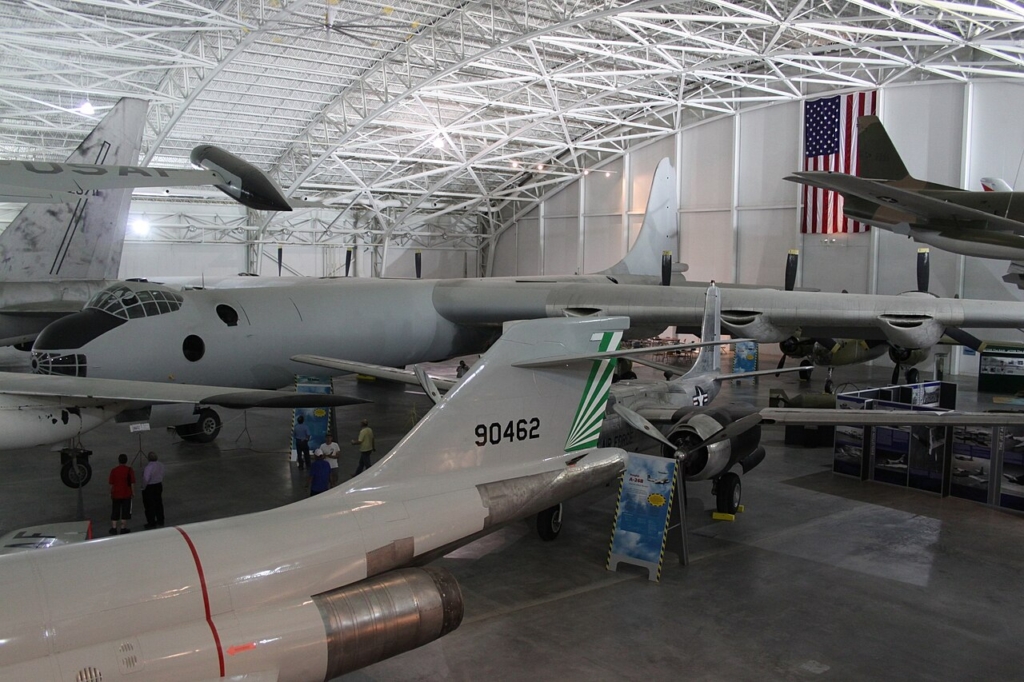
However, fate would step in, and in April 1959, 52-2217 was later flown from the Arizona ‘boneyard’ to the Strategic Air Command Museum being set up at Offutt Air Force Base in Nebraska.
When that facility was scheduled to close in the early 1990s, fundraising efforts were launched, which resulted in the museum transferring to a new site in Ashland in 1996, where it remains today.
52-2217 had to be disassembled and relocated to the new site. In May 1998, the new museum opened its doors, and 52-2217 sits on display with numerous other aircraft in what is now Hangar A at the museum.
RB-36H 51-13730 – Castle Air Museum, California
Castle Air Museum near the town of Merced in California is the final resting place of B-36 with the tail number 51-13730. Specifically, an RB-36H (reconnaissance bomber), the example is the oldest of the four surviving B-36 examples.
The RB-36H was a strategic reconnaissance variant of the Peacemaker. Instead of bombs, these reconnaissance aircraft carried several cameras mounted at oblique angles to capture images of targets in three dimensions.
Vintage Aviation News reports that the aircraft carried a crew of 22, higher than the 15 carried by other B-36s. This increase was to accommodate the additional personnel required to operate the cameras, while the first bomb bay was converted to hold a pressurised compartment featuring 14 cameras and a darkroom for technicians to develop the film in-flight.
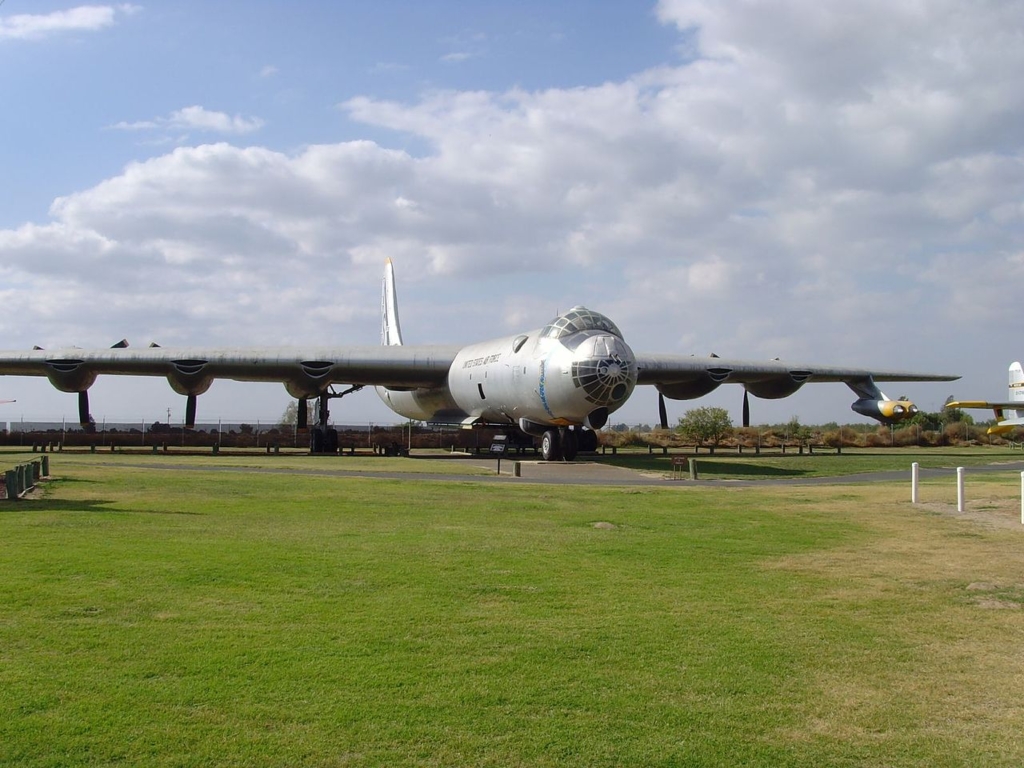
This aircraft was built at the Convair plant located in Ft Worth, Texas, and was accepted into the USAF in September 1952. Once operational, 51-13730 was assigned to the 28th Strategic Reconnaissance Wing based at Ellsworth Air Force Base in Rapid City, South Dakota.
However, following the introduction of next-generation jet-powered strategic reconnaissance bombers such as the Boeing RB-47 Stratojet, all of the RB-36s in service were quickly replaced by their jet contemporaries.
After just over four years of active service, 51-13730 was decommissioned in March 1957. Rather than being scrapped, it then became an instructional aircraft at the Chanute Air Force Base in Rantoul, Illinois.
In December 1988, Chanute Air Force Base was one of 17 major bases recommended for closure by the US Department of Defence, as the Cold War wound down.
With that, the National Museum of the United States Air Force, whose loan programme was responsible for the aircraft displays at Chanute, decided to relocate 51-13730 to the Castle Air Museum in California.
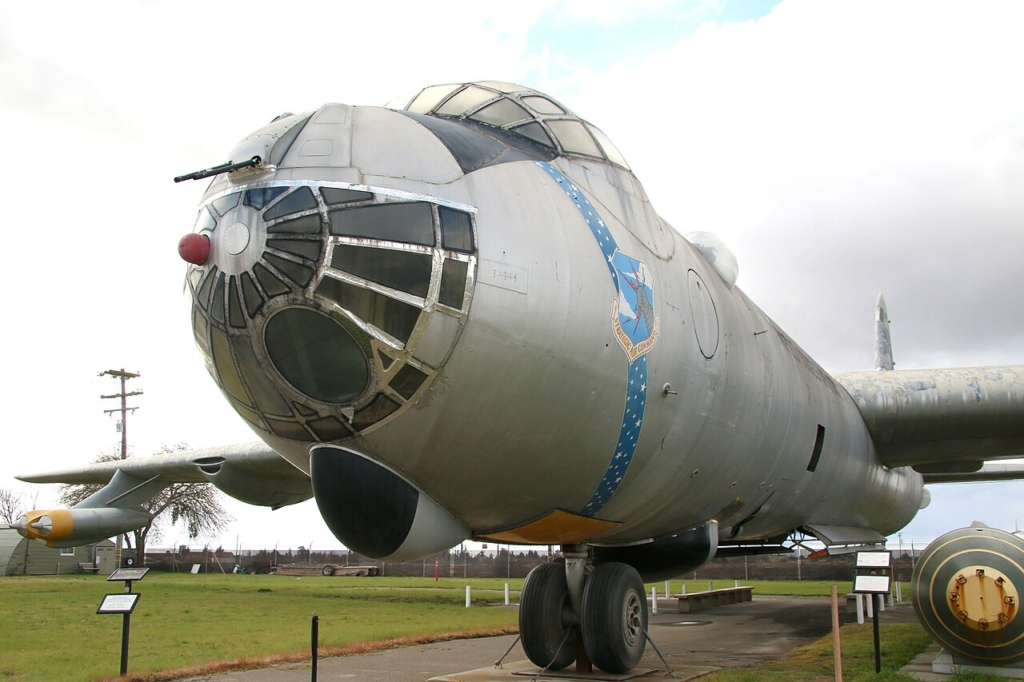
In order to relocate the aircraft and transport it from Illinois to California, 51-13730 was disassembled into 167 pieces and subsequently loaded onto 11 flat railway carriages for its journey west.
By September 1992, the first components of RB-36H 51-13730 arrived at Castle, with reassembly lasting another two and a half years, being completed by May 1994, when the aircraft was put on display.
51-13730 has been on display ever since and is the only surviving strategic reconnaissance variant of the Peacemaker left.
Unfortunately, exposure to pesticide chemicals from nearby agricultural fields and being displayed outside haven’t been great for the airframe’s exterior, but it continues to be looked after by a team of volunteers at the museum.
B-36J 52-2220 – Dayton, Ohio
The third example of a remaining B-36 can be found at the National Museum of the United States Air Force located at Wright-Patterson Air Force Base in Dayton, Ohio. In Hangar 3 at the museum can be found B-36 52-2220.
52-2220 was constructed at the Convair Fort Worth plant in December 1953 before being handed over to the USAF in January 1954.
The aircraft service life was similar to that of 52-2217 in that it served at Loring Air Force Base in Maine before being deployed to RAF Upper Heyford in the UK, before spending the rest of its flying career at Biggs Air Force Base near El Paso.

In February 1959, 52-2220 was flown to Davis-Monthan Air Force Base in Arizona to be scrapped. However, with the United States Air Force Museum wanting a second example for its exhibits at Wright-Patterson AFB in Dayton, 52-2220 made what would be the final ever flight of a B-36 to Ohio on 30 April 1959.
Nowadays, the aircraft sits among other exhibits at the museum’s Cold War exhibition hall and is the best example of a B-36 that can be visited by the public.
B-36J 52-2827 – Tucson, Arizona
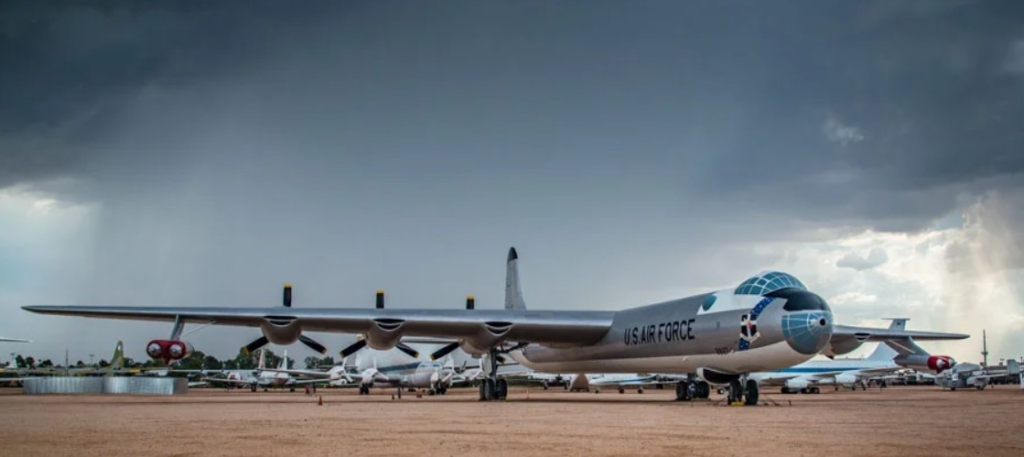
The last Convair B-36 Peacemaker of the 383 ever built is the last of the four survivors. While this last aircraft spent much of its service life in its birthplace of Fort Worth, 52-2827 can be found today at the Pima Air and Space Museum in Tucson, Arizona, located in the same vicinity as the Davis-Monthan Air Force Base.
Built as the last construction B-36, the aircraft was handed over to the USAF in August 1954. With the allocated tail number 52-2827, the aircraft was assigned to the 92nd Bombardment Wing of Strategic Air Command at Fairchild Air Force Base near Spokane, Washington.
Later in its flying career, 52-2827, like other examples in this article, was deployed to the 95th Bombardment Wing at Biggs Air Force Base in El Paso to see out its final days as an active-duty bomber as the larger and faster B-52 came online.
Vintrrage Avation News advises that on February 12, 1959, 52-2827 made the last flight of any active-duty B-36 when it was flown from Biggs AFB to Amon Carter Field (later Greater Southwest International Airport) to be placed on permanent display at what was then Fort Worth’s largest commercial airport.
On arrival there, the aircraft assumed the name ‘City of Ft Worth’ in honour of its birthplace and now its home city.
For the next twenty years, and with the impending closure of Greater Southwest International Airport, the fate of 52-2827 was uncertain. Various attempts were made to relocate the aircraft, by road and air, but various legal arguments put a stop to the aircraft flying out.
Eventually, between 1976 to 1978, the team looking after the aircraft slowly disassembled 52-2827 with a view to transporting it to The Pima Air and Space Museum in Tucson.
After lengthy delays and various obstacles with this plan, in September 2005, the centre wing section of 52-2827 was loaded onto a custom oversize trailer nearly 35m (100ft) in length.
Eventually, the rest of the aircraft followed, and now 52-2827 resides outside in the dry desert heat of Arizona at the Pima Air and Space Museum, welcoming visitors year-round to stand in awe at its colossal size.
The Convair B-36 Peacemaker – an aircraft that came too late
Although the B-36 was built for a specific purpose at a time when its capabilities were very much in demand, by the time the type had entered service, world geopolitics had largely moved on, and the B-36 soon fell out of favour with the USAF.
Indeed, with the arrival of the B-52 Stratofortress in the USAF fleet, the B-36 had been superseded in its capacity as a bomber, leaving just reconnaissance duties as its sole remaining purpose.
That said, with four complete aircraft preserved for future generations, the legacy of the B-36 lives on, standing as a reminder of when world politics required such a huge and capable aircraft to be designed and built.
Featured image: Eric Salard / Wikimedia Commons