Why contrails could be key to climate neutral growth – for now

September 28, 2025

Carbon dioxide (CO₂) emissions tend to dominate the narrative around reducing aviation’s environmental impact with sustainable aviation fuel (SAF), hydrogen and electric vehicles key to cutting those emissions.
However, analysis from the International Council on Clean Transportation (ICCT) has found that reducing short-lived climate pollutants (SLCPs) and contrail-induced cirrus clouds in particular could yield greater and faster climate benefits than focusing exclusively on CO₂.

In its recently released Aviation Vision 2050 report, ICCT highlights that in 2022, the International Civil Aviation Organisation (ICAO) agreed to achieve net-zero CO2 emissions by 2050. However, the industry is not on track to deliver the scale of fuel efficiency improvements, SAF uptake, and zero-emission aircraft development required to meet that goal.
ICCT’s report also points to another sobering reality: CO₂ accounts for about half of aviation’s climate impact. The remaining half comes from non-CO₂ effects, including NOx emissions and particulate matter. But, the major source of SLCPs are contrails.
What are contrails and how do they form?
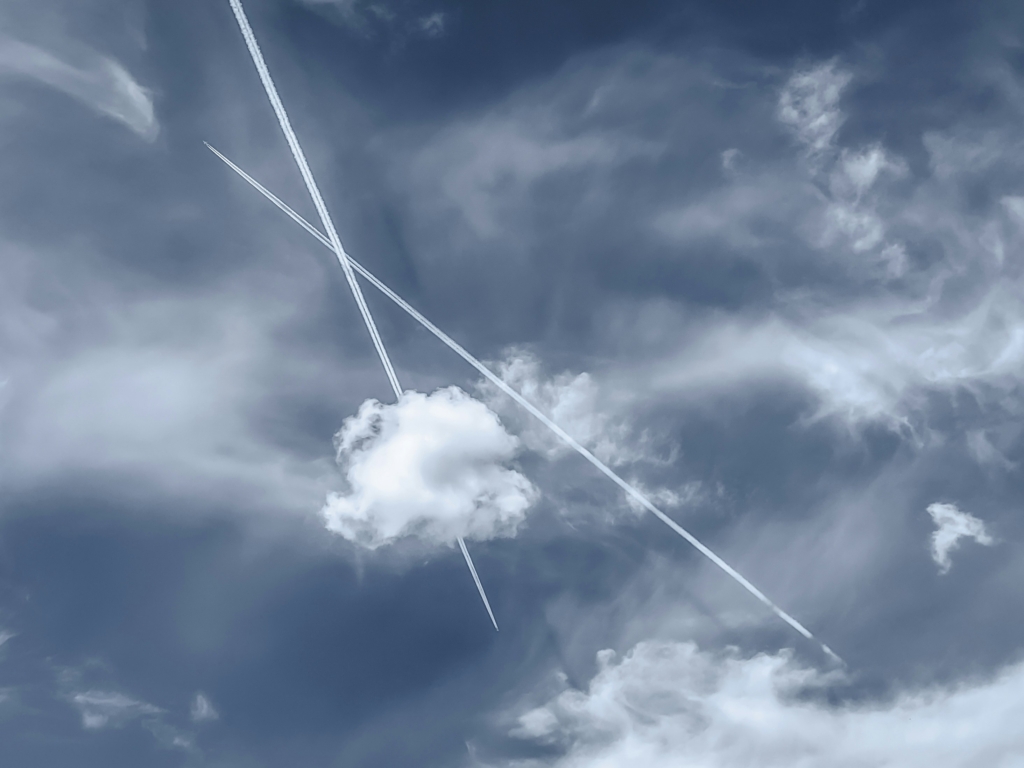
Short for condensation trails, contrails are the thin, wispy clouds left by airlines at cruising altitudes. They form when the hot exhaust gases from an aircraft’s engine meet the cold, low-pressure atmosphere found at high altitudes. These contrails trap outgoing radiation, causing temporary net warming, which differs from the sustained warming caused by greenhouse gases.
Crucially, these effects are short-lived, dissipating quickly once emissions cease. That makes them far more responsive to intervention than CO₂, which has a long atmospheric lifetime.
According to the ICCT, this presents a rare opportunity: because of their short atmospheric lifetime, SLCP reductions can produce a faster climate benefit – helping slow near-term warming and buy time for longer-term CO2 strategies to take effect.
Near-term benefits of contrail avoidance versus scaling SAF
The numbers are impressive. In a modelled “Full Breakthrough” scenario, contrail mitigation alone accounts for over 40% of avoidable warming by 2050—more than any other single measure. By contrast and despite being essential to long-term emission reductions, SAFs are projected to deliver smaller near-term benefits and at markedly higher costs.
ICCT’s report found that contrail avoidance measures, including minor rerouting or altitude adjustments to avoid ice-supersaturated regions, could cost as little as $5 to $25 per tonne of CO₂-equivalent avoided, far below the $300+ costs often associated with early SAF deployment.

Yet these contrail avoidance measures remain underused. Unlike the heavily funded SAF and hydrogen pathways, contrail mitigation requires coordination more than capital. Airlines, air navigation service providers, and meteorological systems all have to be aligned and cooperative. It’s a matter of smarter operations, not moonshot technology.
Is aviation at risk of a “warming overshoot”?
The ICCT warns that a carbon-only strategy may allow aviation to blow past its fair share of the global carbon budget, even if net-zero goals are met later this century. Without controlling SLCPs, the industry risks a mid-century “warming overshoot” – a temporary period during which global temperatures exceed a targeted climate limit. That in turn would undermine climate goals—regardless of long-term CO₂ pledges.
That’s not to say CO₂ isn’t critical—it is. But the report makes a compelling case for broadening the focus of aviation climate strategy in the near-term, at least. A balanced approach combining aggressive GHG and SLCP controls could deliver over 90% of total additional aviation-attributable warming by 2050.