F/A-XX fighter jet back on track as Congress injects nearly $900m into US Navy programme

January 21, 2026

The US Navy’s next-generation carrier-based fighter programme has moved significantly closer to full-scale development after Congress injected nearly $900 million in additional funding into the F/A-XX effort under the fiscal year 2026 defence appropriations.
Lawmakers, through the FY26 Department of Defense Appropriations Act and its accompanying Joint Explanatory Statement, allocated $897.26 million above the President’s budget request for the programme.
Crucially, Congress has directed the Navy to proceed with awarding a single Engineering and Manufacturing Development (EMD) contract and to accelerate progress towards operational fielding.
The funding marks a turning point for a programme that has spent years in early design and technology risk-reduction phases.
By tying substantial funding to specific execution milestones, Congress has sharply narrowed the Navy’s ability to delay decisions on what is expected to become the service’s most important carrier fighter of the 2030s.
Congress signals frustration with slow F/A-XX programme progress
The Joint Explanatory Statement accompanying the FY26 budget makes clear that patience on Capitol Hill is wearing thin.
While lawmakers acknowledge the technical challenges involved in developing a sixth-generation, carrier-capable stealth aircraft, they point to a lack of tangible progress despite sustained funding in earlier years.
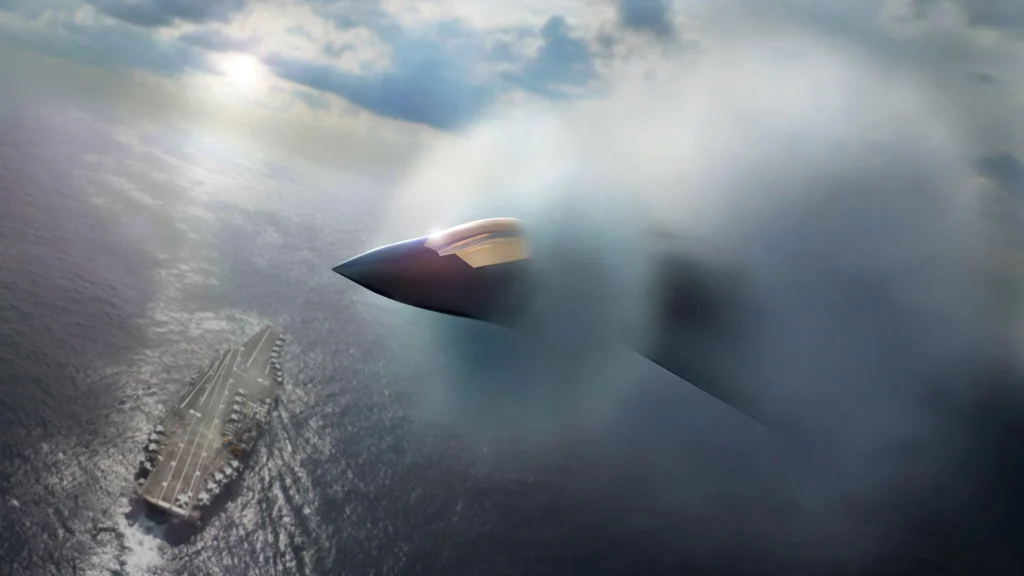
In particular, the committee notes that $453.8 million provided under the FY25 Continuing Resolution, intended to support an assumed March 2025 EMD award, was largely used to extend existing contracts rather than advance the programme to Milestone B.
In response, Congress has now directed the Department of Defense to obligate both prior-year and FY26 funds to move the programme forward, submit a detailed acquisition strategy, and provide an updated development and fielding schedule.
The message to the Navy is explicit: F/A-XX must transition from concept refinement to active engineering and manufacturing development.
Why the F/A-XX is critical to future US Navy carrier operations
The F/A-XX is intended to replace the F/A-18E/F Super Hornet in the 2030s and form the naval component of the broader Next Generation Air Dominance family of systems.
Rather than serving as an incremental upgrade, the aircraft is designed to deliver a significant leap in range, survivability, and integration with uncrewed systems.
For the Navy, urgency is driven by evolving operational realities, particularly in the Indo-Pacific.

As potential adversaries deploy longer-range sensors, missiles, and combat aircraft, US carrier strike groups are expected to operate at greater distances from contested areas.
Without a fighter offering substantially improved unrefuelled range and survivability, the effectiveness of carrier-based airpower could erode over time.
Congressional appropriators explicitly link the funding increase to these concerns, warning that further delays to F/A-XX development could undermine the Navy’s ability to maintain credible carrier airpower in future high-end conflicts.
What the US Navy wants from its F/A-XX next-generation fighter
While specific performance details remain classified, the F/A-XX is widely understood to prioritise attributes shaped by long-range maritime operations rather than traditional close-in air combat.
The aircraft is expected to feature a large internal fuel capacity to extend range, substantial internal weapons bays for long-range air-to-air and maritime strike missions, and advanced signature management across radar, infrared, and electronic domains.

Equally important is its role within a wider networked architecture. F/A-XX is being designed to operate alongside uncrewed wingmen, carrier-launched drones, and distributed sensor networks, functioning both as a strike platform and as a command-and-control node within the future carrier air wing.
F/A-XX competition narrows as Navy down-select decision looms
The industrial competition for F/A-XX has already narrowed. Lockheed Martin has been eliminated from contention, leaving Boeing and Northrop Grumman as the remaining bidders.
Both companies are conducting classified design and testing work under Navy contracts. While each has released limited concept imagery, neither has confirmed that the visuals reflect final designs.
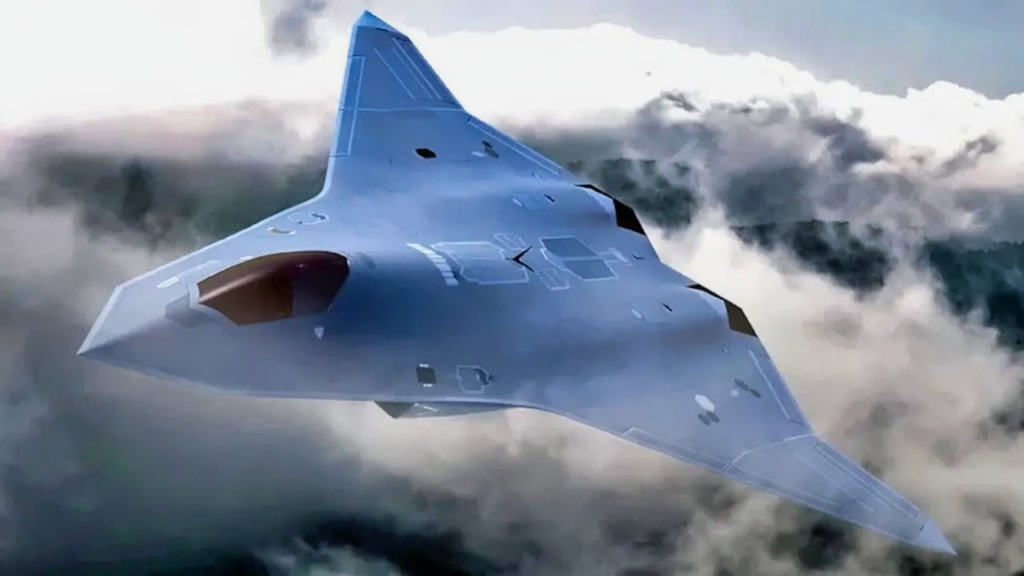
Common design themes include blended fuselage shaping, reduced vertical surfaces, and configurations optimised for low observability and carrier operations.
Congress has not indicated a preference between the two competitors. However, the explicit direction to fund a single EMD contract strongly suggests that a down-select decision is expected once reporting requirements and acquisition milestones are met.
Congress rejects industrial base delays to Navy’s F/A-XX fighter
The Joint Explanatory Statement also reflects awareness of broader industrial base pressures.
Both Boeing and Northrop Grumman are managing multiple large defence programmes simultaneously, raising concerns within the Pentagon about workforce capacity and execution risk.

Congress, however, has rejected arguments that these pressures justify slowing the Navy’s next-generation fighter.
Instead, lawmakers have emphasised the need to balance industrial workload while maintaining momentum on programmes considered essential to national security.
F/A-XX moves from concept to execution under congressional pressure
For much of the past decade, F/A-XX has been characterised by studies, requirements refinement, and classified technology maturation. The FY26 appropriations mark a clear shift away from that phase.
By coupling a substantial funding increase with firm direction to advance into EMD, Congress has pushed the programme into a decisive stage.
The Navy must now convert years of analysis into a defined aircraft programme with a clear contractor, schedule, and path to service entry.
As debate continues over the future role of aircraft carriers in high-end conflict, Congress has made one point unambiguous: preserving the relevance of carrier airpower depends on delivering F/A-XX on time, and lawmakers intend to hold the programme to account.
Featured image: