China’s J-20 enters its next phase with air superiority and MUM-T upgrades

January 13, 2026
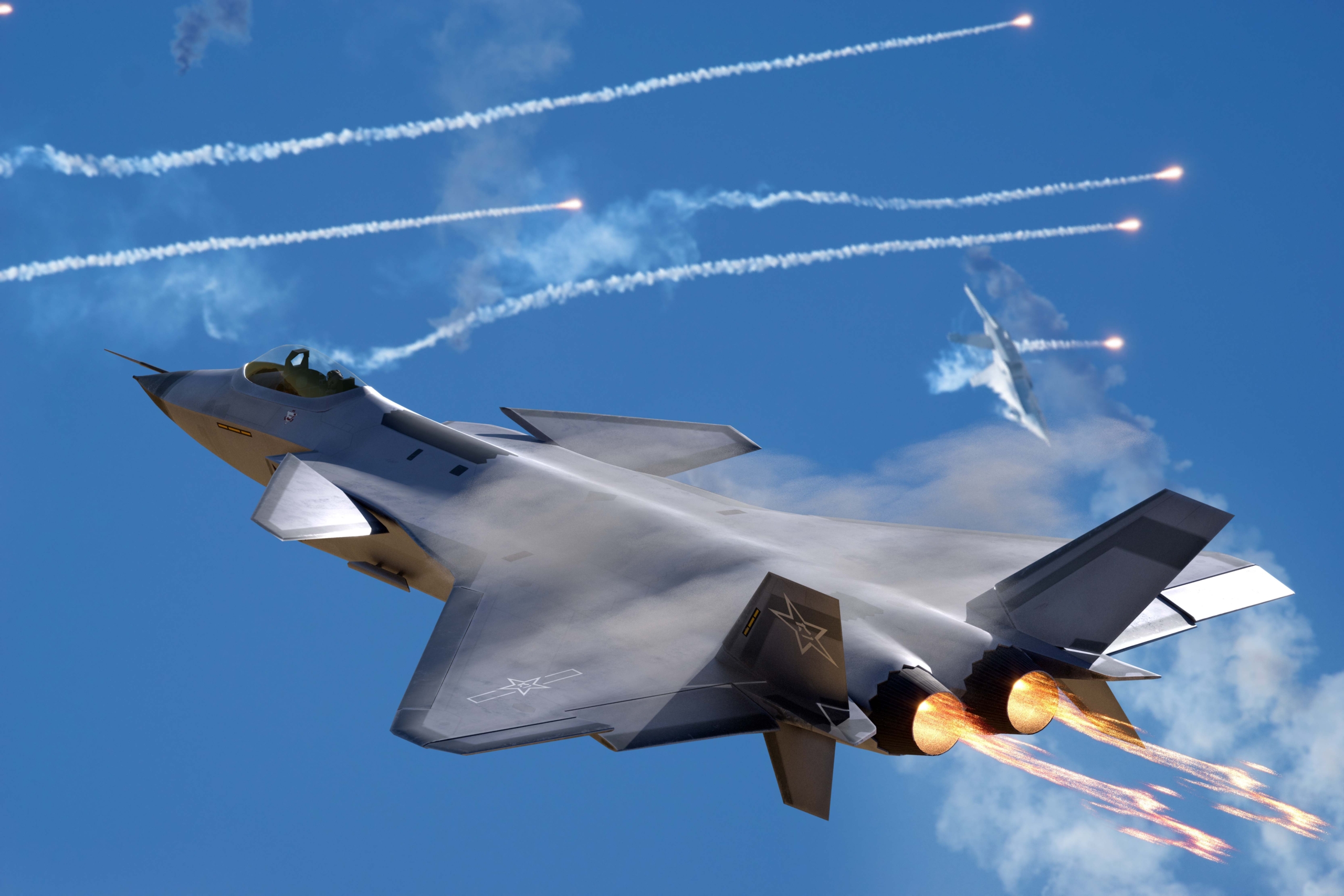
Two new Chengdu J-20 variants, the J-20A and J-20S, made their public debut at China’s V-Day military parade on 3rd September 2025.
Details of the upgraded aircraft were later reported by state-run English-language outlet Global Times, with Chinese official media releasing further information to coincide with the 15th anniversary of the J-20’s maiden flight.
The disclosures offer the clearest public indication yet of how Beijing is evolving its flagship fighter to support enhanced air superiority and manned-unmanned teaming operations.
More space for new J-20A variant
The J-20A is an upgraded variant of the J-20 and functions as the tip of the spear for Chinese air superiority. Externally, the J-20A can be distinguished by a raised section at the junction between the rear of its canopy and its fuselage. New equipment, and possibly fuel, can be installed in the extra space created by the raised section at the rear of the canopy.

Older versions of the J-20 had a taller canopy, but now it’s more smoothly blended with the fuselage. The redesign reduces drag and minimizes airflow separation at the rear of the canopy.
This may hint at other improvements. The older canopy was optimized for pilots to have a clear view in all directions. The lower canopy may indicate that upgraded systems mean the pilot no longer needs to rely on the naked eye for all-directional visibility. New systems likely provide the pilot with increased situational awareness.
The raised section may increase the aircraft’s weight. In compensation, Global Times reported the jet could be fitted with more powerful engines.
It’s important to note that these are discussed in the Chinese media based on external changes to the aircraft. The most important upgrades for modern fighter jets are internal.
Get the latest aerospace defence news here on AGN.
Twin-seat J-20S optimized for loyal wingman role
The J-20S is designed to be the world’s first twin-seat stealth fighter (the F-35 and F-22 are both single-seat). Global Times cited CCTV News and said, “It boasts exceptional medium-and long-range air superiority capabilities, precision strike capabilities against ground and maritime targets…”

It added that the J-35S is capable of conducting manned-unmanned teaming operations (MUM-T). Loyal wingman drones (called Collaborative Combat Aircraft in the USAF) are seen as the future of air war.
While more and more is becoming autonomous, having loyal wingman drones is placing more strain on pilots. The additional pilot helps the J-20S to “conduct forward tactical command.”
J-20S, J-20A and J-20 side by side.
— 𝔗𝔥𝔢 𝕯𝔢𝔞𝔡 𝕯𝔦𝔰𝔱𝔯𝔦𝔠𝔱△ 🇬🇪🇺🇦🇺🇲🇬🇷 (@TheDeadDistrict) January 6, 2026
♦️Top: two-seat J-20S
♦️Left: J-20A (with WS-10C2 engine)
♦️Right: J-20 (with WS-10C engine) pic.twitter.com/nuS2uUIIBR
Chinese military affairs expert Zhang Xuefeng told CCTV News that the rear-seat pilot enables more precise control of drones and coordination with them. This maximizes “the effectiveness of the entire combat system.”
Mass production of the J-20
The J-20 is China’s most advanced air superiority fighter jet, and like the F-35, it is constantly evolving and improving. The jet is in mass production with more than 300 examples now believed to have been delivered to the Chinese Air Force (PLAAF).

According to Rusi, an astonishing 120 J-20s were delivered in 2025, making it the second-most delivered fighter jet in the world after the F-35 (191 deliveries).
One of the major developments in the J-20, and Chinese fighter jet programmes writ large, is the development of domestic engines. This is cutting China’s previous reliance on Russian engines.
J-20S is world first with integrated MUMT
— Xixi®茜茜大姐 🇨🇳🇭🇰🇲🇴 (@Xixi_2328857214) January 7, 2026
With a fast growing CCA ecosystem I guess WSO on other platforms like JH-7A2, J-16 and J-10AS may get such capabilities with comm pods or MLU upgrades to their jetspic.twitter.com/hzH0afADBe
Just as the F-35 is not yet considered mature, neither is the J-20. The Global Times noted that more upgrades for the J-20 are reportedly coming that will include improvements to avionics, engines, and AI integration.