Not business as usual: Boeing wins back limited FAA authority, but oversight and production limits persist

September 29, 2025
In a notable shift in the Boeing-FAA relationship, the US regulator on 29 September restored limited authority to Boeing to issue airworthiness certificates for certain 737 MAX and 787 aircraft.
Under the new arrangement, Boeing and the FAA will alternate weekly in conducting final safety inspections and issuing the certificate that clears the aircraft for delivery and flight. The move is framed as a way to free FAA inspectors to focus more on factory oversight, quality trends, and critical assembly stages.
But make no mistake: Boeing has not fully regained what it once held.
Boeing’s FAA rights before the 737 MAX crisis
Before the 737 MAX disasters and subsequent blowups in oversight confidence, Boeing enjoyed broad delegation rights under the FAA’s Organization Designation Authorization (ODA) program.
Under ODA, Boeing engineers and internal units had authority—subject to FAA rules and audits—to perform design reviews, conformity inspections, and, importantly, issue airworthiness certificates for new aircraft before delivery.
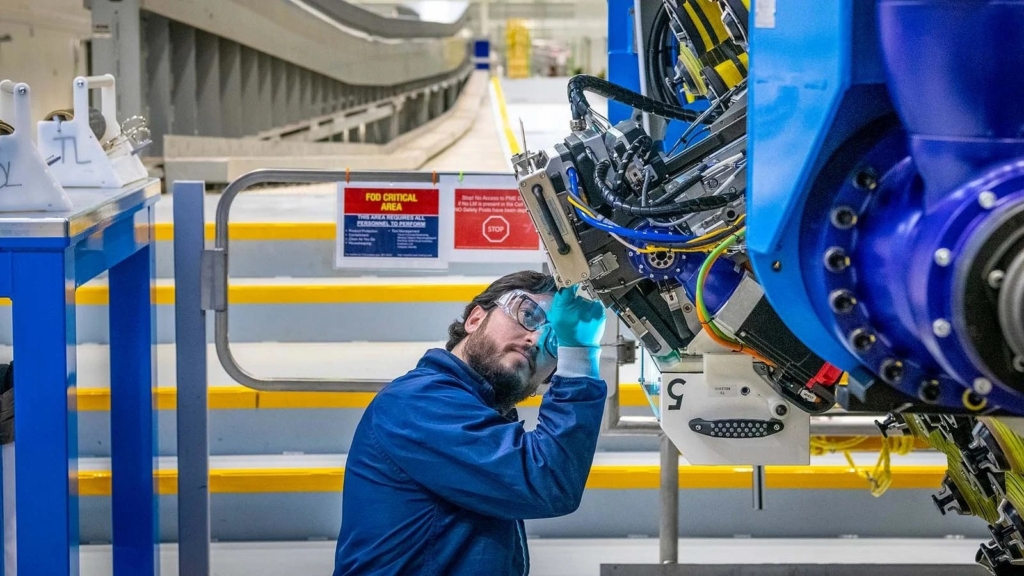
In practice, Boeing certified a large majority of its own aircraft, with FAA oversight intervening in special or high-risk areas.
That delegation gave Boeing a degree of agility: fewer bottlenecks, faster deliveries (especially during ramp phases), and control over certain compliance tasks. Its internal ODA engineers, though reporting under FAA criteria, were active participants in certifying their employer’s work.
What Boeing lost after the MAX crashes and 787 quality issues
The turning point came after two tragic MAX crashes in 2018 and 2019. In November 2019, the FAA stripped Boeing of its authority to self-issue airworthiness certificates for 737 MAX aircraft. Boeing’s ODA remained valid for design and compliance work, but final ticketing—issuance for delivery—was taken over entirely by FAA inspectors.
Then, in 2022, Boeing also lost the ability to self-certify the 787 Dreamliner series, due to recurring quality and production integrity concerns. From then until 2025, every single 737 MAX or 787 airworthiness certificate was signed off directly by FAA inspectors, with Boeing relieved of the final authority.

During that period, FAA oversight tightened. Boeing’s internal processes, quality anomalies, safety culture signals, and change management came under increased external scrutiny. The regulator retained full decision power on design changes, novel systems, and safety-critical modifications.
What has changed in 2025 under the new FAA agreement
Under the 2025 framework:
- Boeing does regain certificate authority—but only on a weekly alternate basis with the FAA. It cannot unilaterally or continuously self-certify.
- The ODA program has been renewed (for three years from June 2025) as a basis for this limited delegation.
- FAA inspectors will retain active roles, even in Boeing’s “certificate weeks,” through surveillance, auditing, and verification of critical stages and trends.
- Boeing’s authority remains conditional: the FAA signals that further expansion of authority depends on Boeing’s ability to prove quality and safety margins sustainably.
What hasn’t returned:
- Boeing does not again have free rein to issue certificates at will. The alternate scheme imposes constraints that did not exist historically.
- It does not yet cover all models or configurations automatically—some aircraft variants or novel changes may remain under full FAA control.
- The full autonomy over final delivery certification that Boeing held pre-MAX is still curtailed.
- Design authority, novel systems, or especially risky innovations are still tightly under FAA review, not delegation.
Boeing production cap on 737 MAX — will it be lifted soon?
Since early 2024, Boeing’s 737 MAX production has been capped at 38 aircraft per month, following a serious safety incident involving a mid-air panel blowout on an Alaska Airlines MAX 9. Though Boeing has expressed interest in raising it to 42 per month, the FAA has yet to approve that increase.
The partial restoration of certification authority may be viewed as a confidence gesture from the FAA — a recognition that Boeing’s internal systems are improving. If Boeing sustains quality metrics, it might lay the groundwork for petitioning the FAA to lift or relax the cap.

Regulators have signalled willingness to consider adjustments, provided onsite inspection, risk analyses, and safety margins check out.
That said, as of late September 2025, the FAA has publicly stated it has not yet made a decision on adjusting the cap. The process remains deliberate and data-driven: front-line inspectors must vouch for consistent performance before any adjustment.
In short, this renewed Boeing authority is a step forward, but cautious. The FAA is giving Boeing back some responsibilities, yet continues to retain strong levers of oversight. If Boeing can deliver performance and quality reliably, the production ceiling might be revisited — but not until the regulator is convinced the risks are managed.