Why Boeing 777X too large for US carriers yet too small for Emirates’ megahub model

November 15, 2025
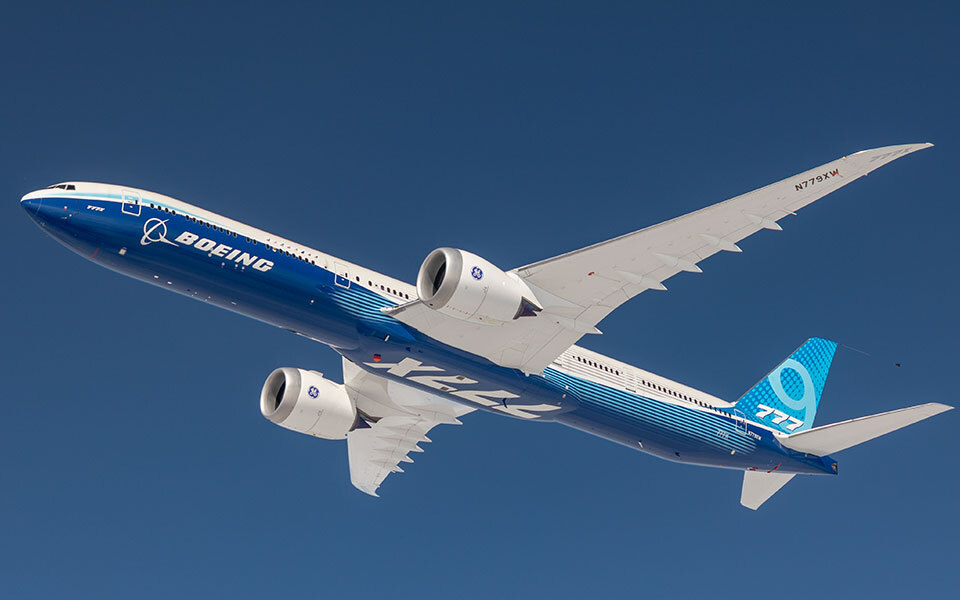
The Boeing 777X, with its 777-8 and stretched 777-9 variants, is set to be the largest commercial aircraft on the market. But the aircraft is too big for US-based carriers and not big enough for what Emirates would like to have.
US-based carriers trending to smaller widebodies
For decades, US-based carriers have been trending toward smaller widebody commercial jets. American retired its 747s in 1997, without a Jumbo replacement, and Delta and United retired their 747-400s in 2017. No US-based carriers purchased the final 747-8 variant of the Jumbo.

Adding to that, no US carriers purchased the Airbus A380 Superjumbo. In fact, no airlines in the Western Hemisphere purchased it at all. None purchased the 747-8 or the quad-engined A340.
This means that quad-engined regularly-scheduled passenger flights with Western Hemisphere airlines are now a thing of the past.
Even the Boeing 777-300ER struggled to find buyers in the United States. Of the 838 Boeing 737-300ERs delivered, only 42 were to US-based airlines. Delta Air Lines did not purchase any as it turned to Airbus A330 and A350 widebodies.
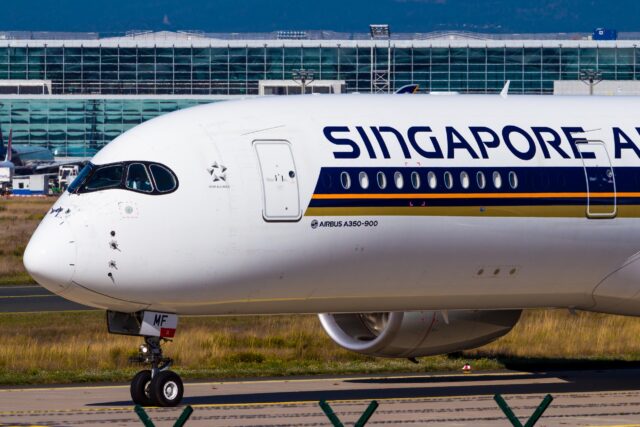
It’s midweek motivation, brought to you by the #A350 😎
— Airbus (@Airbus) October 15, 2025
Did you know that the #LongRangeLeader operates the world’s longest flight, connecting Singapore and New York nonstop in the quietest cabin in the sky? ✈️ pic.twitter.com/deNfvMKF6k
American Airlines purchased 20 Boeing 777-300ERs, and United placed a late order for 22 after receiving a significant discount from Boeing as orders dried up and airlines moved on to purchasing the 777X.
Why the 777X is too big for North America
The 777X is seen as too big for the dispersed hub models operated by US-based airlines. United Airlines has around seven hubs, and Delta has around eight.

In August 2024, an executive at United told Business Insider that the 777X was simply too big for its needs. He stated, “We think the 777X will be a very good airplane, but it is a very big airplane.” He added, “Given our hub structure, we find a smaller widebody is actually better.”
| Category | Emirates | United Airlines | Delta Air Lines |
|---|---|---|---|
| Widebody aircraft in service | 777, A350-900, A380 | 777, 787, 767 | A330, A350, 767 |
| Widebody aircraft types on order | A350, 777X, 787 | 787, A350 | A330, A350 |
| Boeing 777Xs on order | 205 | 0 | 0 |
| Number of hubs | 1 | Approx. 7 | Approx. 8 |
No US-based airline has ordered the 777X. Instead, United and American have focused on purchasing Boeing 787 Dreamliners, while Delta has purchased the A350 and A330; United also has an order of 45 A350s.
After the 777, the A350 is the largest commercial aircraft currently in production. Notably, United has ordered the smaller A350-900 variant. Delta has mostly ordered that variant, although it does have an order for 20 stretched A350-1000s.
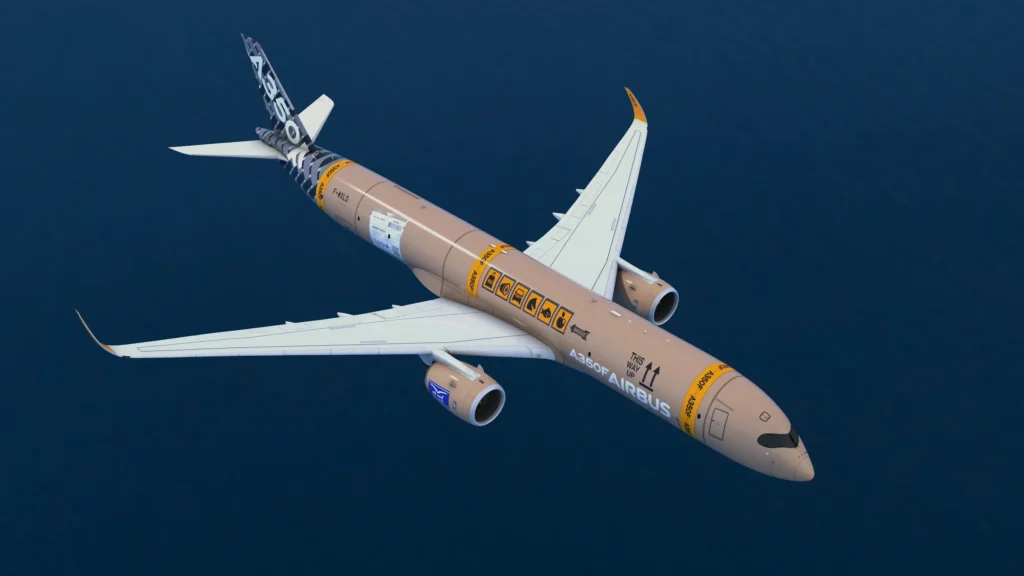
The upcoming 777-8F freighter based on the 777X may be the right size for FedEx. However, FedEx has instead focused on ordering the final 777Fs, likely at a significant discount.
Why the 777X is too small for Emirates
Emirates is almost the antithesis of US-based carriers. Whereas US-based carriers operate from dispersed hubs and have fleets mostly made up of narrowbody aircraft, Emirates has a singular megahub, and its fleet is extra-large widebodies.
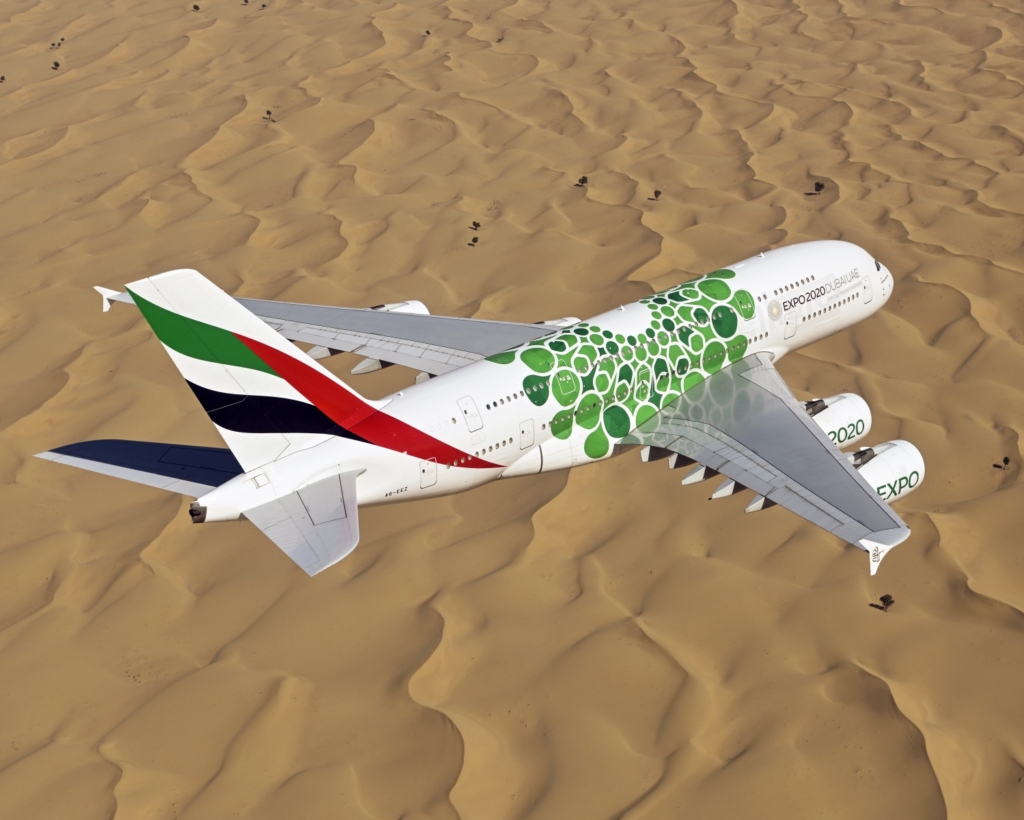
Emirates and United are closely matched in the number of widebody aircraft in their fleets, with Emirates being the larger of the two.
United’s widebodies skew to smaller widebodies, with Boeing 767s and 787s making up the bulk of the fleet. By contrast, Emirates exclusively operates the Boeing 777 and the Airbus A380, at least it did until its A350-900s started arriving in late 2024.
The Boeing 777-9 Has Touched Down in Dubai ready to take the spotlight at #DubaiAirshow2025! 🇦🇪✈️
— Boeing 777X (@b777xlovers) November 12, 2025
This time, WH001 (N779XW) is wearing something new fresh customer stickers representing its future operators from around the globe.
Photo: Jeremy Liu #Boeing777X #777X #GE9X pic.twitter.com/nwLBfNyaCX
Emirates benefits from having a hub centrally located between Asia, Europe, and Africa. From there, it is able to serve most major airports in the world.
Emirates’ hub is purely focused on international travel. Its model enables almost anyone to connect to most major airports in the world via Dubai. For example, its flight from Dubai to Manila can draw passengers from most major European, African, and Middle Eastern cities.
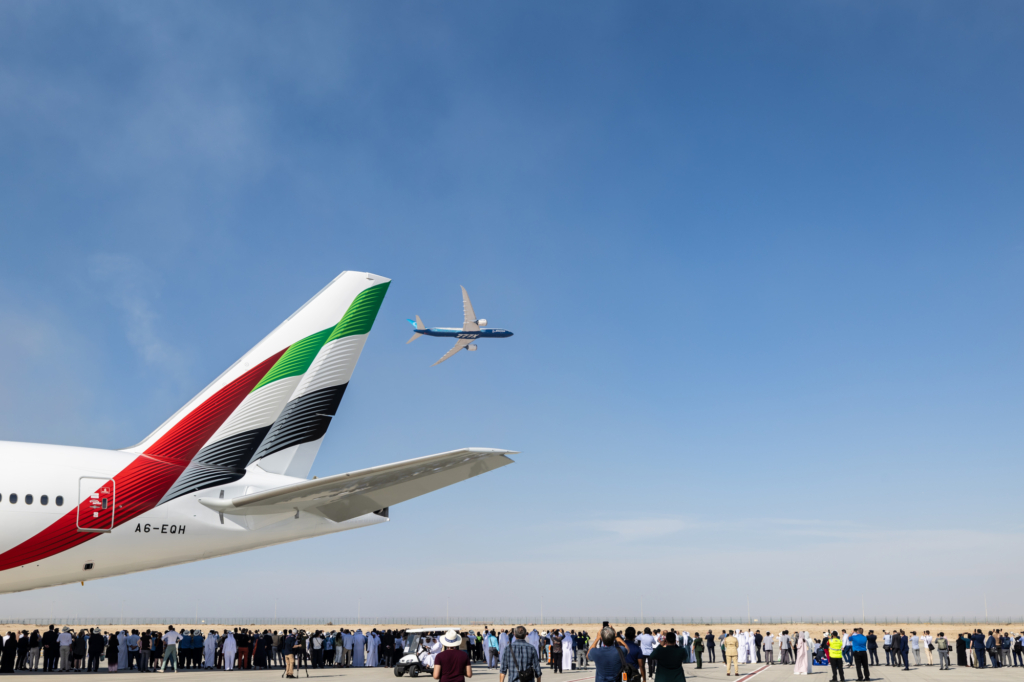
This creates thick routes that require high-capacity aircraft. By contrast, US carriers have dispersed bases, meaning there a fewer passengers flying on any given long-haul route. It is better to fly lower-capacity long-haul aircraft, like the 787, to avoid flying half-empty aircraft.
Emirates’ search for giant aircraft
Emirates has the world’s largest order for the Boeing 777X. Of the 565 firm orders Boeing is recording for its 777X as of the time of writing, 205 of them are from Emirates. Another 124 are from Emirates’ regional rival, Qatar Airways.

This means around half of the 777X’s current orders are from just two Middle Eastern carriers.
The 777X can replace Emirates’ current fleet of Boeing 777 aircraft, but they are not a direct replacement for the A380 Superjumbo. There is no replacement for the Superjumbo.
Emirates is so enamoured with the A380 that it is planning to pull more of its A380s out of storage and get its operational fleet back up to 110 (purchased a total of 116 A380s). While other airlines (like Qatar and Korean) are itching to retire their A380s, Emirates wants to keep them flying until 2041.
The A380 is only designed for 100,000 flight hours or around 20 years, but Emirates would like to get 24-25 years out of them. Emirates loves the A380 so much that it even asked Airbus to put it back into production as the updated A380neo, something Airbus is very unlikely to do.
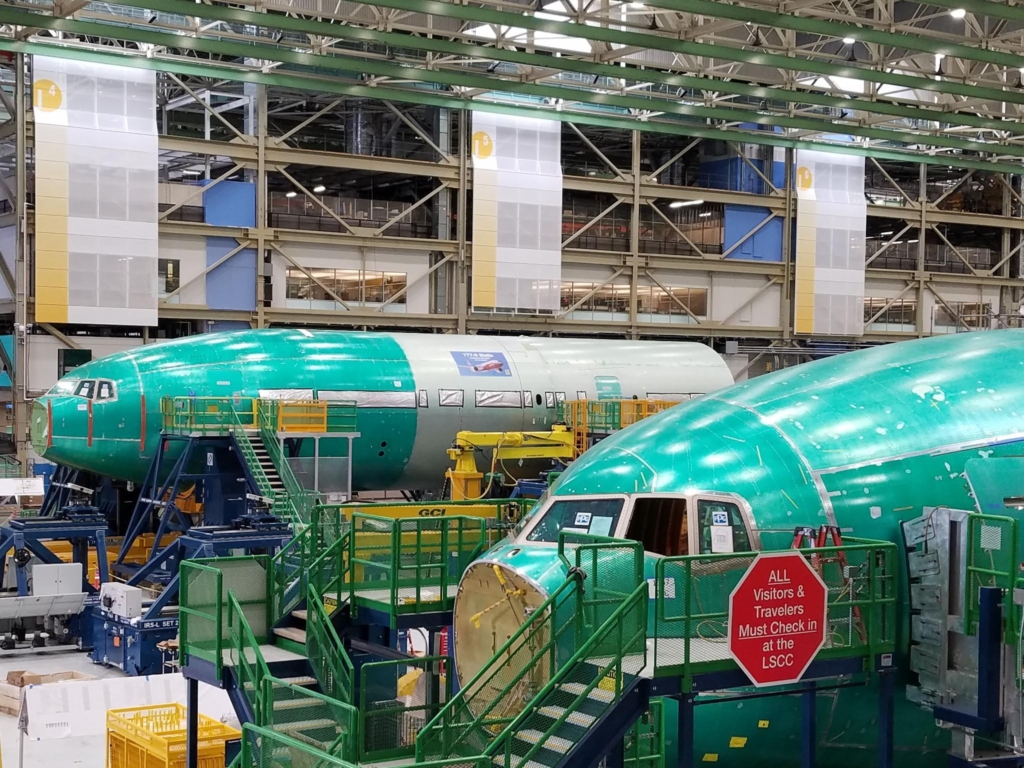
Emirates’ fondness for big aeroplanes is seen in that it is the largest operator of the 777 and the A380, while being poised to be the largest operator of the 777X.
Find the latest aviation industry news right here.
Boeing’s updated 777
The Boeing 777X is the third generation of the Boeing 777 family. Boeing was forced to update its 777 family due to competition from the clean-sheet Airbus A350 and new ICAO regulations soon to come into force.
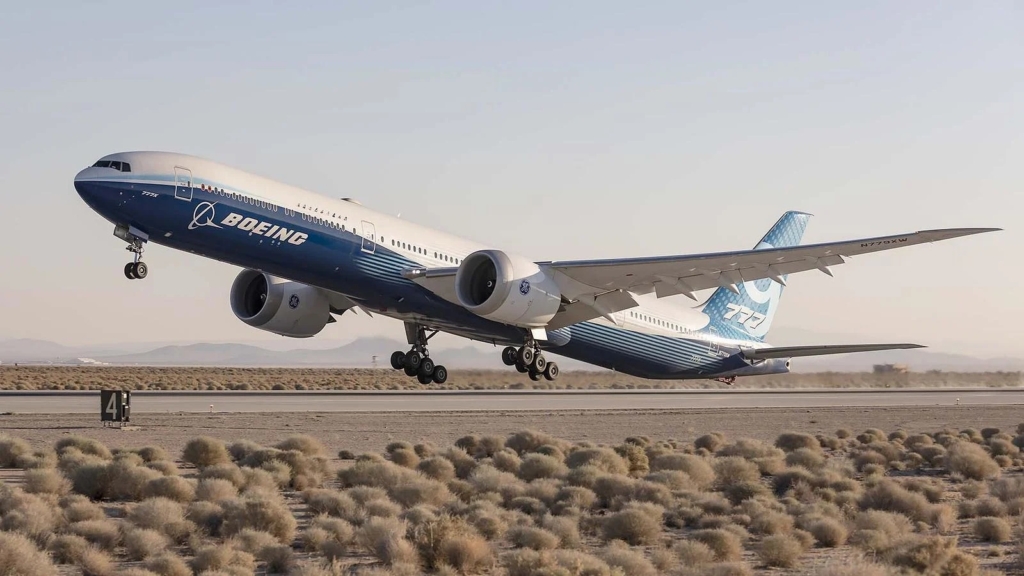
From 1st January 2027, Boeing will no longer be able to sell its 777F freighter variant (or its 767-300F freighter), and so it is rushing to wrap up deliveries in 2026. The final second-generation 777-300ER passenger aircraft was likely delivered in 2024.
But the 777X has been delayed and is now not expected to enter service until 2027, meaning Boeing faces a growing delivery gap.
The 777X comes with new GE Aerospace GE9X turbofans, technologies from the 787 (like large dimming windows), more composite materials, and new wings.
From service to her country to soaring as one of the lead 777-9 test pilots, Capt. Heather Ross shares her passion for connecting people and places.
— Boeing Airplanes (@BoeingAirplanes) November 11, 2025
Discover her dedication to safety, teamwork and aviation, shaped by her U.S. Air Force experience.
More: https://t.co/Cx36CAFigJ pic.twitter.com/5sa4kXi1fI
While the stretched 777-9 is larger than the stretched A350-1000, it actually has a lower maximum seat capacity (475) compared with the A350-1000 (480). This is due to regulations around its reduced exit doors. The 777-9 is not designed for high-density seating (the -300ER’s maximum seating is 550).
In practice, the 777-9 will likely carry more passengers than the A350-1000. The A350 can fit ten abreast, but that is squishy, and airlines typically fit nine-abreast, while the 777-9 comfortably fits ten abreast.

The 777X will be the largest twin-engined passenger aircraft ever built and the largest commercial aircraft on the market. As such, it is too big for the North American market and too small for Emirates.
Featured Image: Boeing