Beyond Aero completes key design review for hydrogen business jet

March 19, 2026
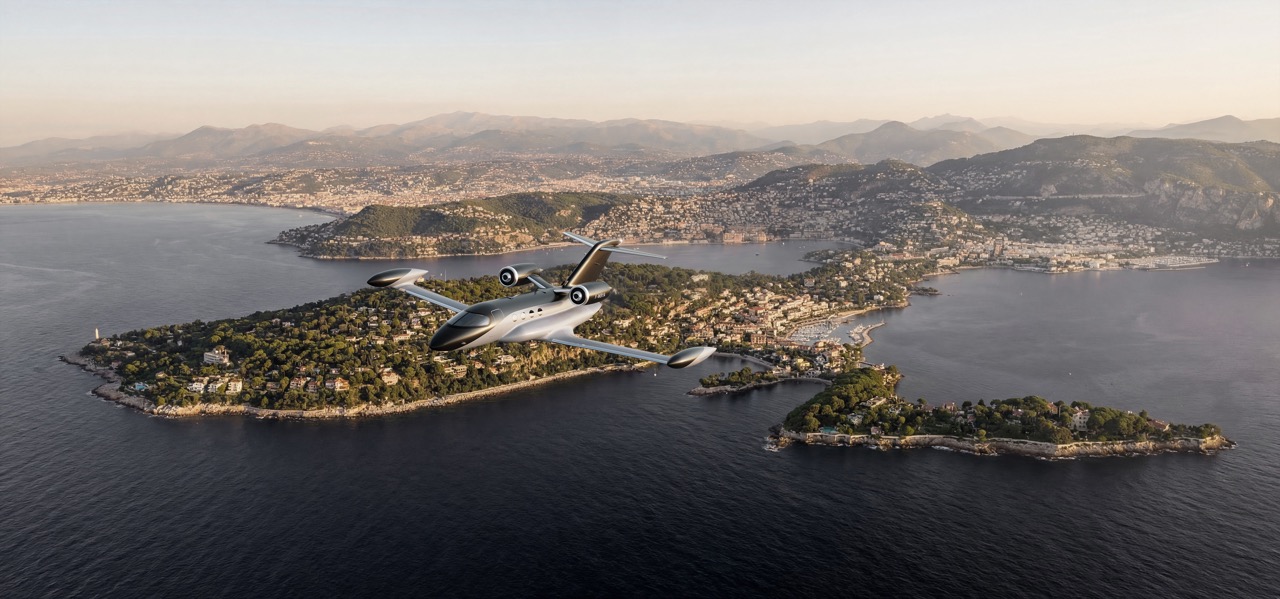
French startup Beyond Aero has completed the preliminary design review (PDR) of its hydrogen-electric business jet, moving from concept to detailed engineering.
The aircraft’s core architecture—including hydrogen storage, fuel-cell propulsion, thermal management and safety systems—has been validated at a system level and is ready for the next stage of development, advancing toward certification.
A different approach to zero-emission flight
Beyond Aero is targeting the business aviation market as an early entry point for hydrogen propulsion.
Existing batteries have a low energy density, limiting the range of battery-electric aircraft. The hydrogen fuel cell does not rely on stored power. Instead, it generates electricity in flight through an electrochemical reaction. It is a more efficient power source which can extend flight range without increasing CO2 emissions.
Beyond Aero’s aircraft is designed to carry six passengers over a range of up to 800 nautical miles (around 1,500km).
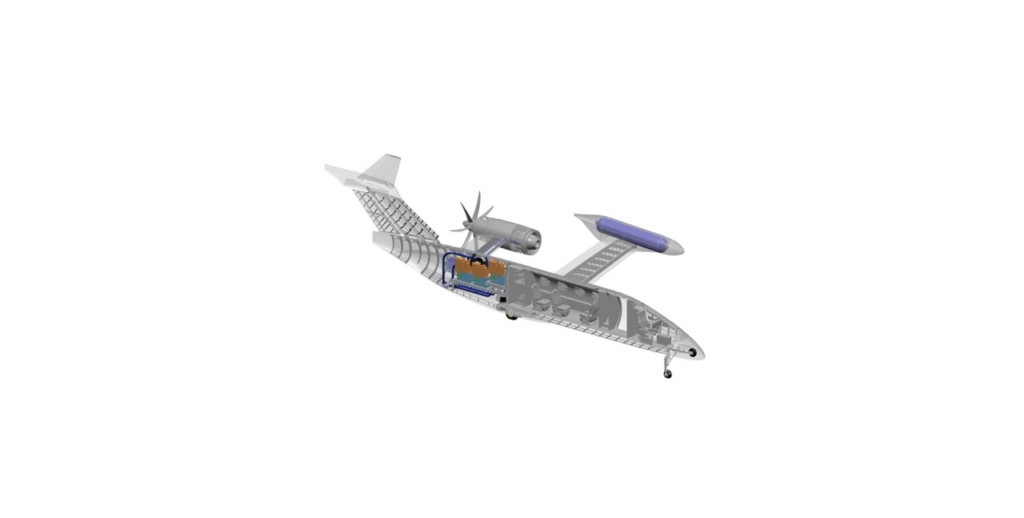
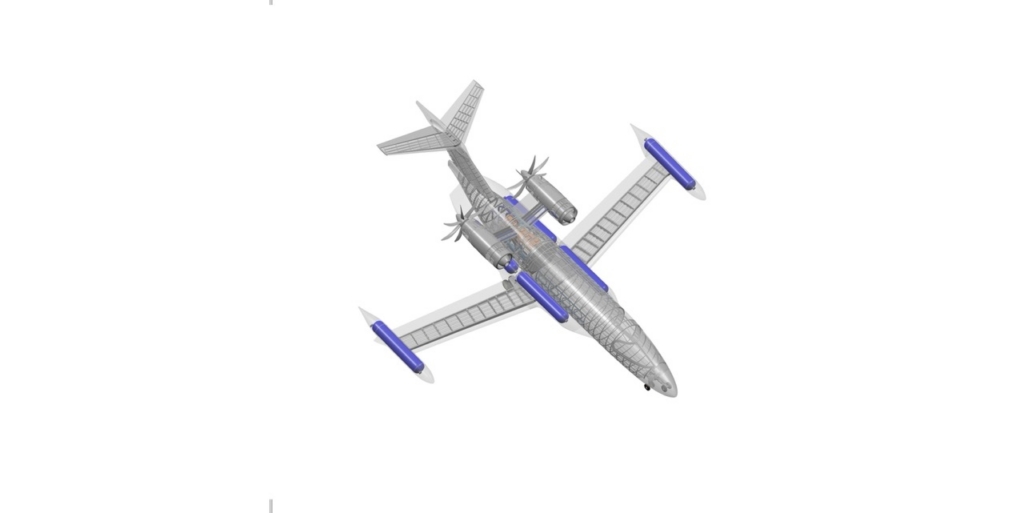
The aircraft will use a twin-propfan configuration, optimised for efficiency and compatible with the lower power density of fuel-cell systems compared to traditional jet engines.
The design relies on gaseous hydrogen stored at 700 bar in external tanks mounted above the wing. It avoids more complex cryogenic liquid hydrogen systems, simplifying integration and safety certification.
Beyond’s certification strategy: a business jet that meets commercial aircraft standards
Beyond Aero is pursuing certification under CS-25 and Part 25 standards, which generally apply to commercial transport aircraft rather than small business jets. That certification pathway requires the company to prove a higher level of regulatory compliance.
“This approach provides a structured safety case and early alignment with regulators — reducing the risk of late-stage regulatory misalignment,” the company states in its announcement.
Beyond Aero is working with the European Union Aviation Safety Agency (EASA) under a pre-application contract, while progressing its Design Organisation Approval (DOA), a key requirement for aircraft certification in Europe.
Prototype testing and industrial progress
Beyond Aero says it has already completed several validation steps, including:
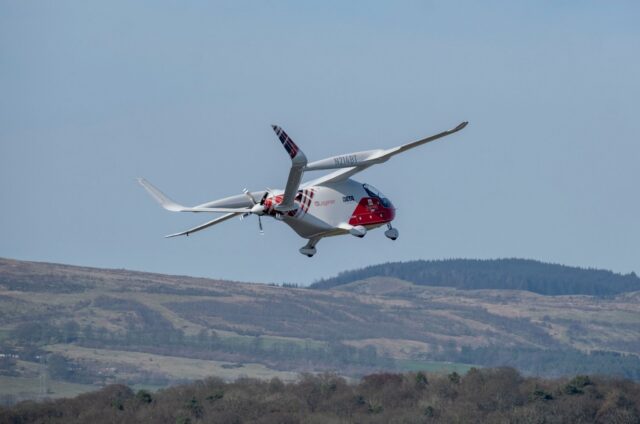
- Flight testing of 85 kW sub-scale prototype
- Validation of 800 kW-class propulsion data through a full-scale flight testing campaign after acquiring Universal Hydrogen assets
- 1,200 kW total testing capacity in ground laboratories
The company is working with several industrial partners, including Airbus Protect and Bureau Veritas, as it builds out its certification and safety framework. It employs over 80 aerospace engineers, dedicated to the programme.
The hydrogen infrastructure challenge
While aircraft design is progressing, hydrogen infrastructure remains one of the biggest barriers to entry.
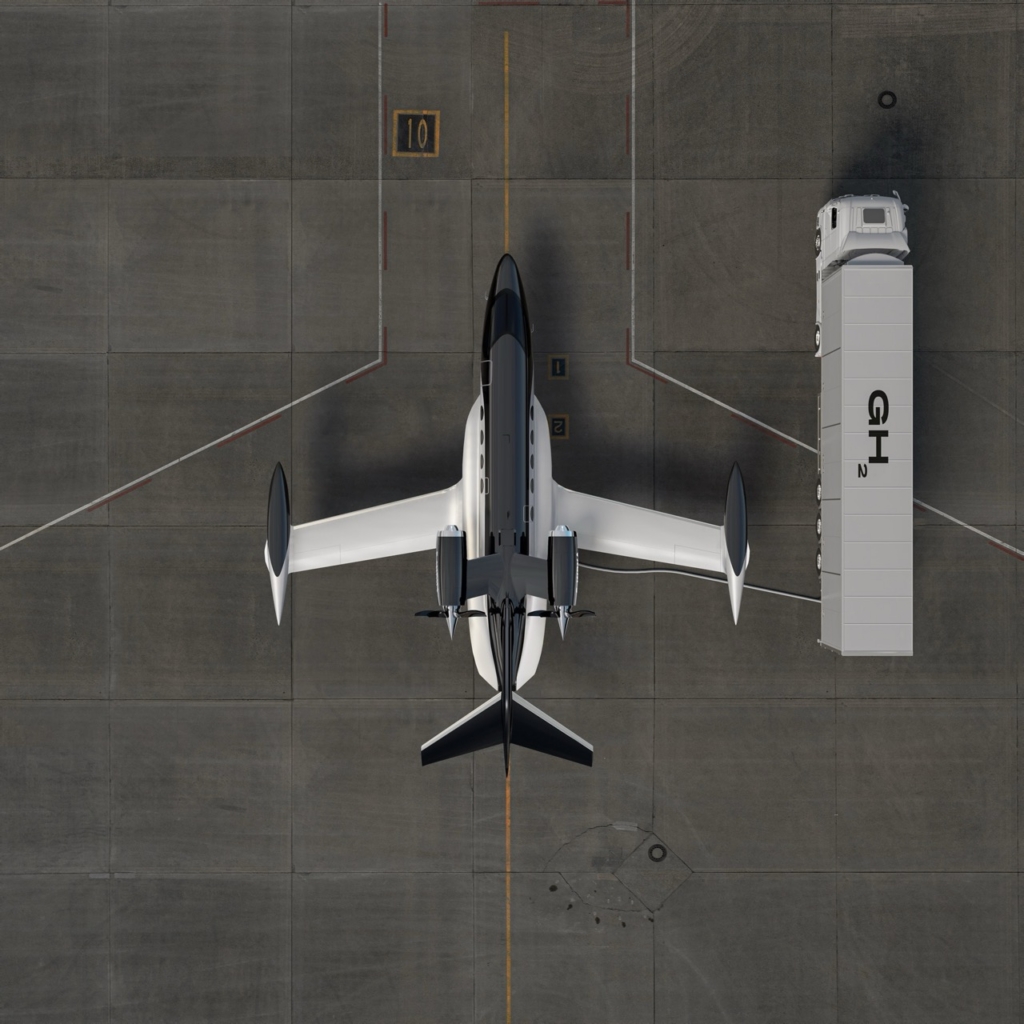
Beyond Aero says it has signed:
- 10+ agreements with airports
- 16+ partnerships with hydrogen suppliers
Beyond Aero’s aircraft would operate with both 700-bar fixed infrastructure and 350-bar mobile refuelling systems, enabling deployment from existing airports.
Hydrogen propulsion with a certifiable architecture
With the preliminary design phase completed, advancing to a certified aircraft will still require detailed engineering and system integration, ground and flight testing, validation of hydrogen safety in real-world operations and regulatory approval.
Still, Beyond Aero’s CEO, Eloa Guillotin, is optimistic.
“The completion of the Preliminary Design Review demonstrates that a certifiable hydrogen-powered business aircraft is achievable,” Guillotin said. “Our objective is to develop a new business aircraft tailored to the constraints of hydrogen-electric propulsion, while meeting the performance, safety, and operational standards expected in business aviation.”
Luiz Oliveira, Chief Engineer at Beyond Aero, added: “The Preliminary Design Review confirms that the aircraft configuration and its major systems—propulsion, hydrogen storage, aerodynamics and avionics—have reached the level of maturity required to support a certifiable architecture.”
As aviation pursues various pathways to decarbonisation, Beyond Aero’s progress is a positive development for hydrogen-powered flight as a potential solution for making business jets sustainable.
Featured Image: Beyond Aero