Amazon backs BETA Technologies’ CTOL electric aircraft over eVTOL air taxi hype

February 12, 2026

Amazon’s newly disclosed 5.3% stake in electric aircraft developer BETA Technologies may look like a modest financial move. In practice, it signals a strategic preference for conventional take-off and landing electric cargo aircraft over the more glamorous eVTOL air taxi model dominating advanced air mobility headlines.
BETA’s shares rose about 16% after the announcement as investors focused on Amazon’s position (the stock briefly traded 18% higher before easing back).
Amazon’s involvement with BETA is not new. The company has backed BETA since 2021 through its sustainability-linked investing, supporting zero-emission air transportation.
Why Amazon is betting on an electric aircraft that is not yet VTOL
Electric vertical take-off and landing (eVTOL) aircraft have attracted significant attention in the advanced air mobility sector, particularly for urban air mobility applications.
But these futuristic air taxi concepts are primarily designed around people transport and must still overcome crucial certification, infrastructure, and operational hurdles.

Meanwhile, BETA has focused on CTOL (conventional takeoff and landing) operations. Because these aircraft share characteristics with traditional fixed-wing aircraft, they can support both passenger and cargo operations and integrate more quickly into existing airspace and airport infrastructure.

CTOL electric aircraft may reach practical commercial use sooner and prove useful for Amazon’s short-haul cargo and regional transport. While CTOL may not be as “sexy” as the futuristic air-taxi vision that dominates headlines, BETA would provide Amazon with a viable, sustainable cargo solution well suited to remote markets.
Proving electric aircraft work: BETA Technologies’ Norway trials
BETA has been building credibility through operational testing in regulated airspace. One of the clearest examples comes from Norway’s international test arena for zero- and low-emission aviation.
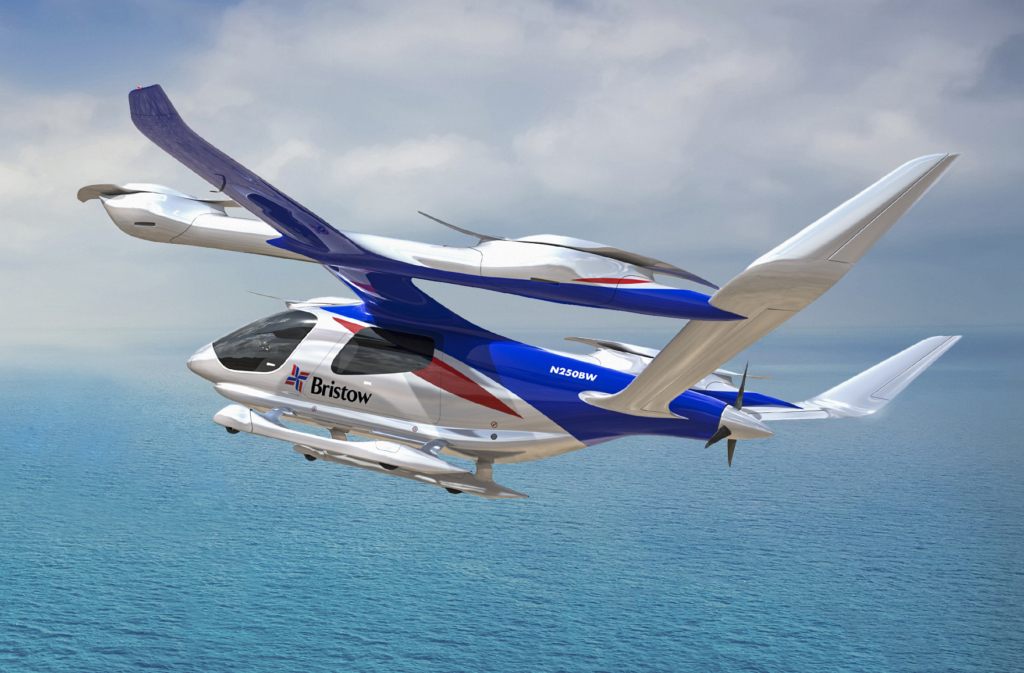
The company’s ALIA electric aircraft has been flying cargo missions between Stavanger and Bergen with Bristow Norway as a proof of concept.

The program reached a visible milestone this January, when the fully electric aircraft landed at Florø Airport—a regional airfield whose shorter runway and remote geography mirror the kinds of environments electric aviation may prove most useful to Amazon first.
Norway’s airport operator Avinor framed the visit as evidence that electric aircraft could extend beyond major hubs:
“That an electric aircraft is visiting Florø shows this technology can also work at regional airports with shorter runways. This is important for regions that depend on air transport for both business and residents,” said Karianne Helland Strand, executive vice president for sustainability and infrastructure at Avinor in the airport group’s announcement.
The Florø stop was part of a six-month operational campaign to test multi-airport flexibility, charging logistics, and real-world dispatch rhythms, including the use of a mobile charging unit carried onboard the aircraft.

“This project demonstrated exactly how electric aviation should be introduced with a planned, safe approach conducted in close partnership with regulators, operators, and airport authorities,” Simon Newitt, Head of Sales & Support at BETA Technologies, said in the company’s announcement of the programme’s milestone, noting that Norway’s geography and regional connectivity was an ideal setting for electric aviation.
“Over six months of real-world operations, BETA was able to validate aircraft performance, charging infrastructure, procedures, and winter operations in one of the most demanding environments in aviation,” Newitt added. “The experience gained here directly informs how electric aircraft can be integrated into existing airspace and airport systems and scaled responsibly to enable commercial operations that deliver both lower cost and lower emissions.”
Norway is setting a “regulatory sandbox” for the broader deployment of electric aircraft
Norway is emerging as one of the most practical test environments for electric aircraft deployment, not because of lofty climate targets alone, but because geography demands it.
Rather than fast-tracking passenger operations, authorities expect cargo to lead. Freight flights carry lower regulatory complexity and allow operators to validate aircraft performance, charging infrastructure and dispatch reliability before introducing passengers, potentially later in the decade if certification milestones are met.
To support this, Norway’s Civil Aviation Authority has created what it calls a regulatory sandbox — a controlled framework that allows electric aircraft developers to test operations within existing safety oversight structures while regulators adapt their methodologies to new propulsion systems.
Jan Petter Steinland, Director of Strategic Analysis & Transformation at the Norwegian CAA, said the programme is designed to evaluate how current safety rules apply to electric aircraft and to refine regulatory processes in parallel with industry testing.
In practical terms, that means electric aircraft are not being trialled in isolation. They are being integrated into live airspace, with regulators, operators and airport authorities learning together.
For BETA, the Norwegian campaign is less about publicity and more about validation. Multi-airport cargo operations, winter weather exposure and mobile charging logistics offer exactly the kind of operational data needed to move from demonstration to commercial service.
Amazon places a calculated CTOL-first bet
The Norwegian trials underline the core distinction in BETA’s strategy. CTOL aircraft do not require new vertiport networks, bespoke airspace rules or radically different operating concepts. They can use existing runways, existing cargo ramps and established airport logistics.
The Norway flights, including operations into shorter regional runways, demonstrate that integration is evolutionary rather than revolutionary.
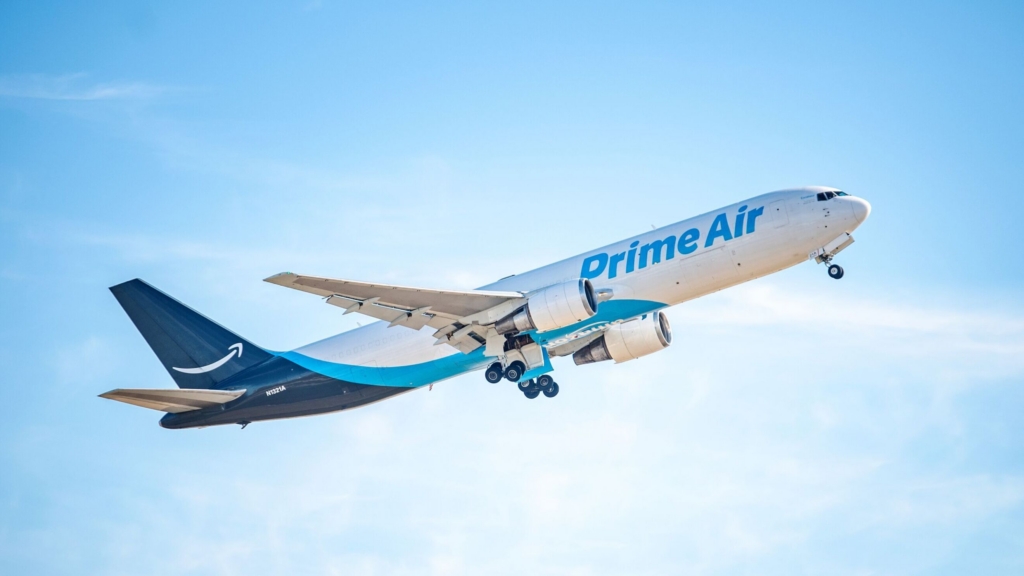
For Amazon, whose interest lies in freight rather than passenger transport, that pathway is commercially logical. Electrifying segments of its regional cargo network does not require reimagining aviation from the ground up. It requires aircraft that can perform reliably within the system that already exists.
In that context, the 5.3% stake looks less like a speculative punt on futuristic air taxis and more like a measured logistics play. Electric CTOL aircraft could reach practical commercial deployment sooner than many eVTOL concepts, particularly in cargo operations where regulatory and operational barriers are lower.
Amazon is not buying into a concept. It is positioning itself alongside a platform that has already begun accumulating operational data in real-world conditions.
If electric aviation scales first through freight rather than passengers, BETA’s less glamorous approach may prove to be the more durable one.
Featured Image: Amazon