Watch: US bomber force grows at RAF Fairford as B-52s arrive for Iran strikes

March 10, 2026
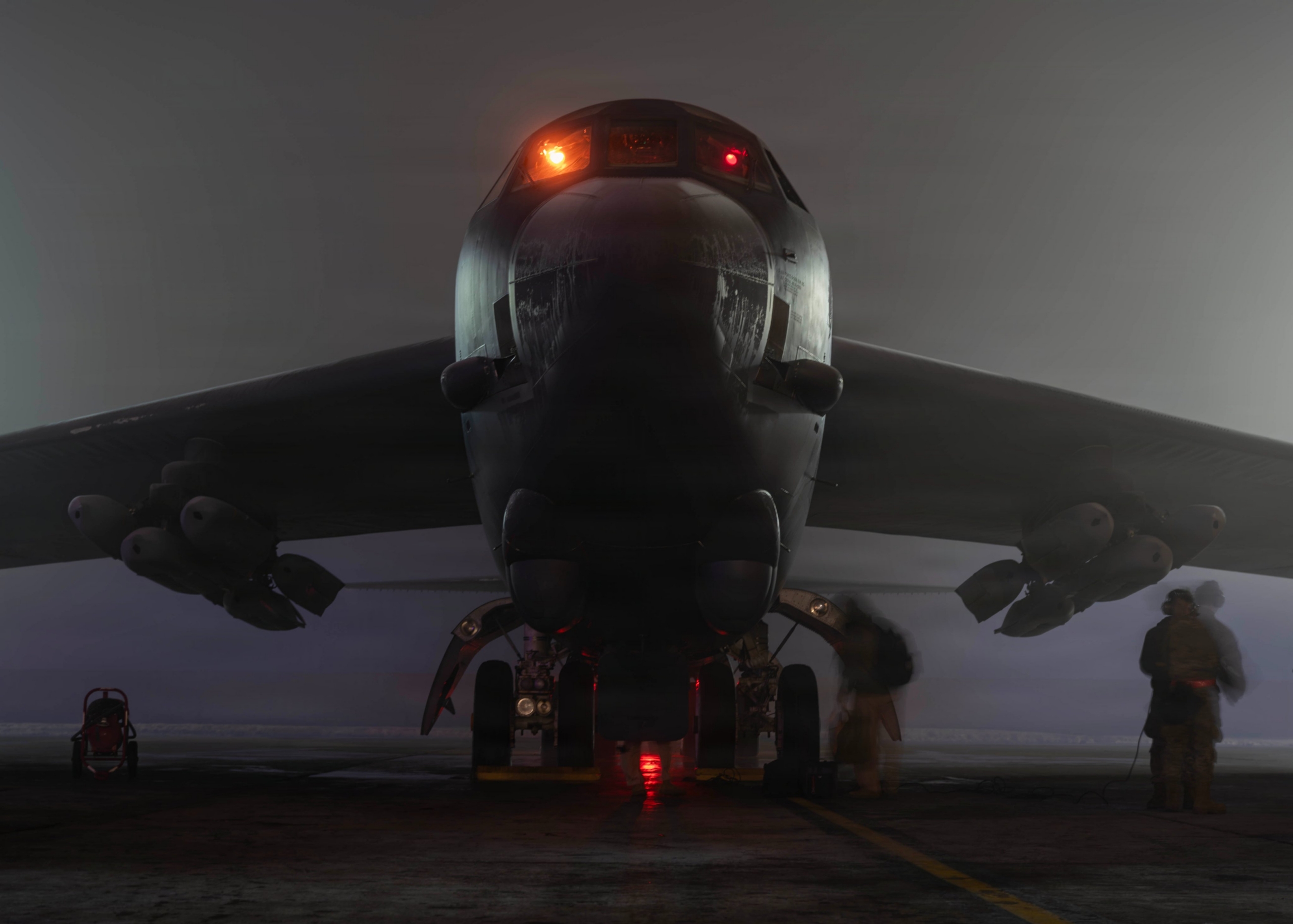
Yesterday saw the first Boeing B-52 Stratofortress strategic bombers arrive in RAF Fairford ahead of expected strikes on Iran. These are joining the Rockwell B-1B Lancers already based there, carrying out bombing missions over Iran.
First B-52 Stratofortress bombers arrive in RAF Fairford
The first three B-52 “BUFF” Stratofortress bombers touched down at RAF Fairford yesterday ahead of bombing strikes over Iran. The B-52 is sometimes described as having the radar cross-section of an apartment building.
RAF Fairford – USAF Bombers ORBAT #FreeIran
— DefenceGeek 🇬🇧 (@DefenceGeek) March 9, 2026
— Operation EPIC FURY —
As of a short while ago, (and once the 3 diverted to Ramstein move to the UK), RAF Fairford will have the following US Air Force bomber aircraft available for #OperationEpicFury:
B-1B 85-0064 #AE6BD3 (DY)… pic.twitter.com/WPjFT7hujN
Open source account Defence Geek wrote the three B-52s are “Bomber Barons” registered 60-0023 (Flight #AE587C), “Iron Butterfly” registered 60-0060 (Flight #AE5895), and “Guardians of the Upper Realm” registered 60-0007 (Flight #AE5871).
This brought the total bombers at RAF Fairford to 11, made up of eight B-1B Lancers and three B-52 Stratofortress bombers. The US has a total of 76 B-52s remaining in service; these are slated to be upgraded with new engines and other improvements.
Some videos from my weekend at RAF Fairford. Unfortunately I missed the B-1s, but Minot AFB made up for it and sent some B-52s with fantastic nose art to compensate.
— Havoc Aviation (@havoc_aviation) March 10, 2026
Edits soon 👀 pic.twitter.com/kZsEhz4oVB
B-52s have the largest payloads of any US bomber at around 70,000 lbs. When they were built in the 1950s, the US assumed an attrition rate of around 10-20% per mission; these days, the US probably wouldn’t be using them over Iran if it assessed there was a significant chance of losing one.
Get the latest aerospace defence news here on AGN.
Dinosaur B-52 BUFFs about to enter the fray from England
These ancient dinosaurs were built in the 1950s and early 1960s, with their early design work starting at the end of WWII. They share a lineage with Boeing’s WWII B-17, B-29, and B-36 bombers.
The youngest of these airframes is now around 64 years old, and they are expected to remain in service into the 2040s and possibly into the 2060s.
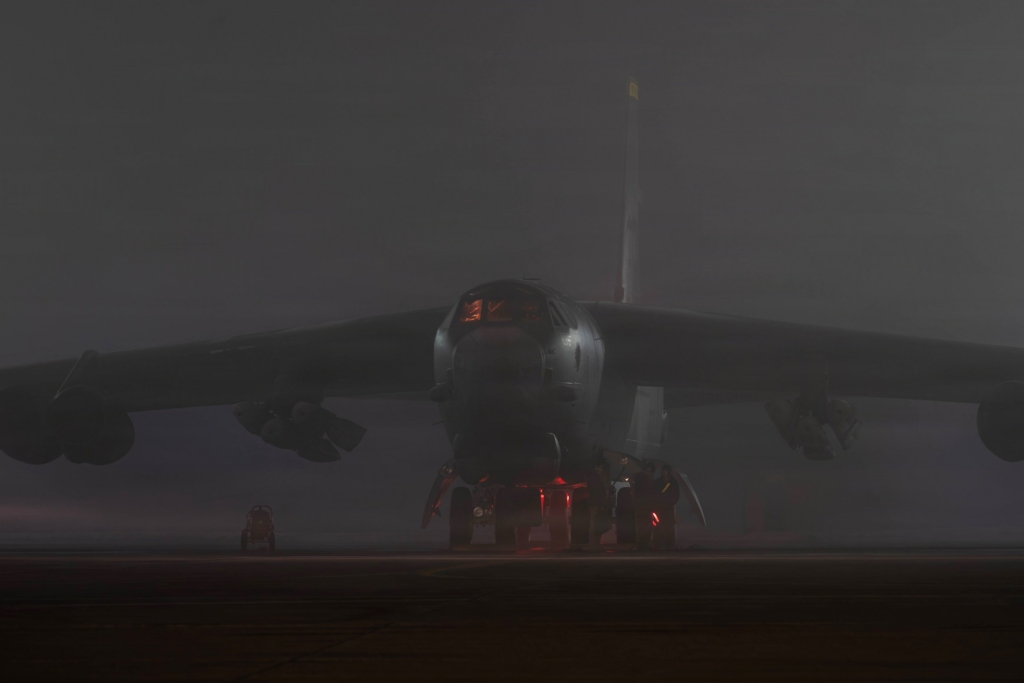
They are the antithesis of the B-2 Spirit and upcoming B-21 Raider stealth bombers. Whereas the B-2 is designed to be the first in, penetrate defended airspace, and take out high-profile targets, the B-52 is now a bomb/missile truck. The B-1B is something of an in-betweener with a reduced radar cross-section.
RAF Fairford about to get real Noisy
— GlobeSentinel (@GlobeSentinels) March 9, 2026
Barons are back in town, the first USAF B-52's from Minot AFB 23rd BS are on the Ground at RAF Fairford.
Plenty of support flights from Ellsworth, Dyess, and Minot still to come into this fog ridden base in Gloucestershire over the next 24… pic.twitter.com/g5CEBK9DeR
The USAF is keeping the B-52 in service to carry long-range standoff munitions, including future hypersonic weapons. However, it is unclear if this is how the B-52s are about to be used in Iran.
Operation Epic Fury: The first 10 days pic.twitter.com/pGL1Scu4hG
— U.S. Central Command (@CENTCOM) March 9, 2026
It may be that the USAF now considers Iran’s air defence to be so heavily degraded that B-52s can fly over Iran carrying JDAMs and carrying out more conventional bombing runs.
UK lifts ban on US bombers while Spain kicks out tankers
The development comes after the United Kingdom lifted its ban on US bombers using its airbases to strike Iran following strikes on its bases in Cyprus. The UK always permitted the US to use its airspace and airbases for transiting fighter jets, cargo aircraft, and tanker aircraft to the Middle East, with the restriction confined to bombers.
NEW: At least three U.S. B-52 bombers have landed at RAF Fairford in the U.K., signaling preparations for potential sustained heavy bomber strikes against Iran.
— Clash Report (@clashreport) March 9, 2026
Source: Airport Action pic.twitter.com/LmSKVQvX9I
This hampered the US’s use of RAF Fairford in England and Diego Garcia in the British Indian Ocean Territory. The US was forced to fly its bombers on longer routes, including direct flights from the United States, reducing the sortie rate.
While the UK lifted its ban, Spain went the other way and has prohibited the US from using its joint airbases for refuelling. Spain is a major refuelling stop for aircraft flying across the Atlantic to the Middle East.
It’s never fair when a B-52 is involved.
— U.S. Central Command (@CENTCOM) March 7, 2026
“This was never meant to be a fair fight, and it is not a fair fight. We are punching them while they’re down.” – Secretary of War Pete Hegseth pic.twitter.com/JgRSgiM7jl
The US has other routing operations through Europe, while Portugal sought to undercut its larger neighbour, saying its Azores Islands remain available for US use.
Featured Image: CENTCOM