AutoFlight unveils Matrix five-ton eVTOL aircraft with full transition flight demonstration

February 6, 2026
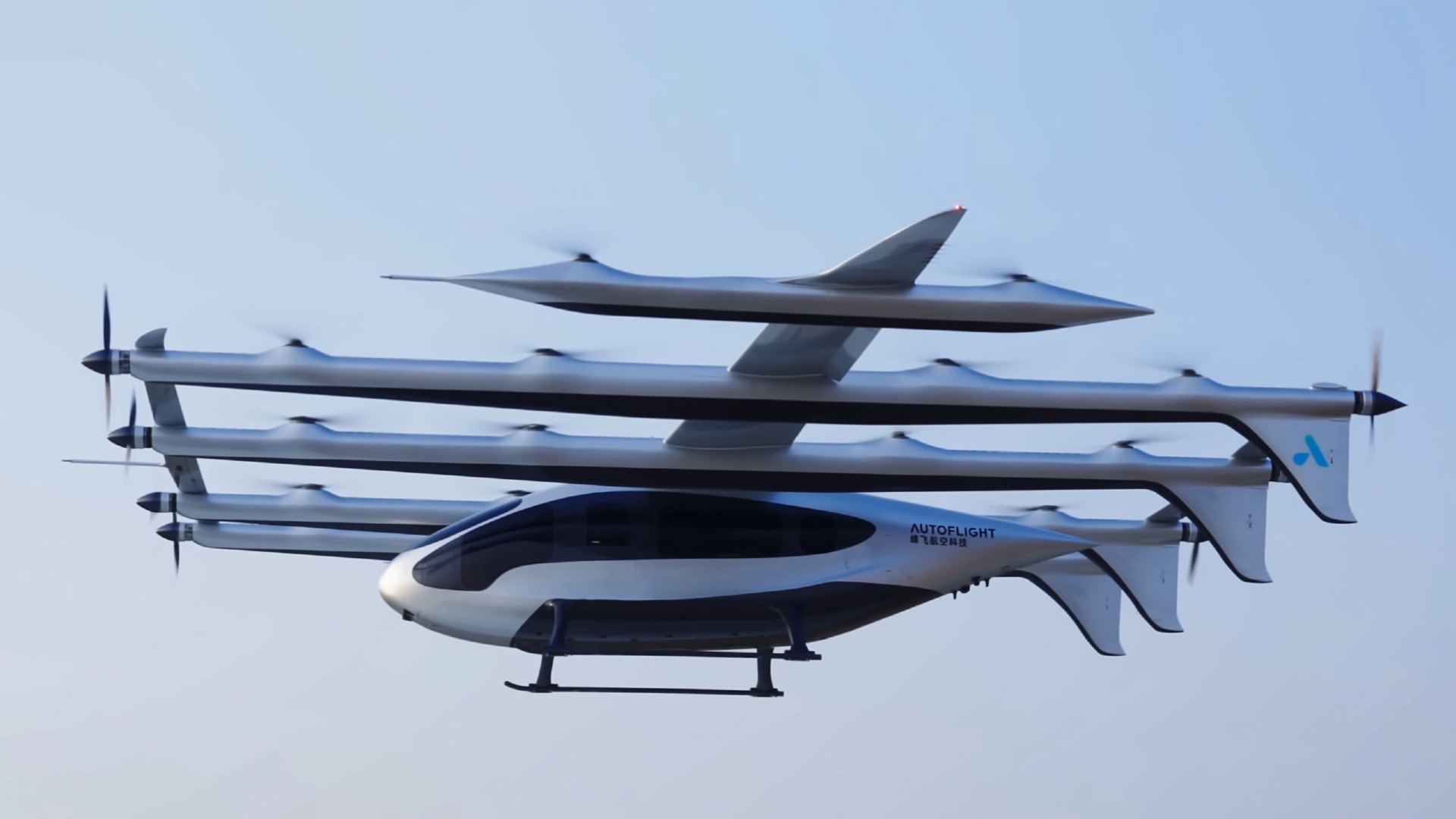
China’s AutoFlight has unveiled Matrix, which it describes as the world’s first five-ton class electric vertical take-off and landing (eVTOL) aircraft, following a successful full transition flight demonstration at its low-altitude test facility.
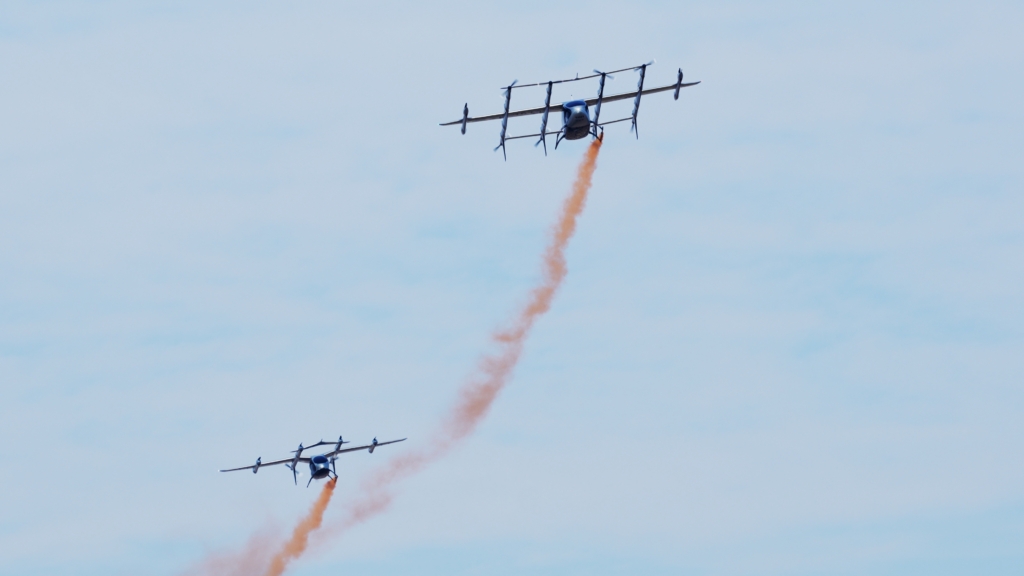
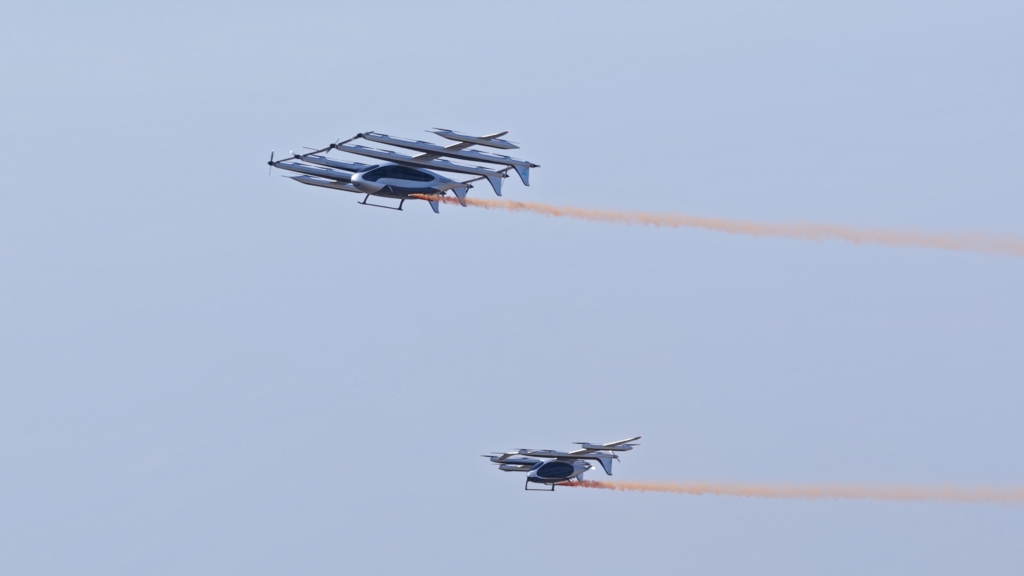
The public demonstration saw Matrix transition from vertical take-off to wing-borne cruise and back to vertical landing in a complete flight sequence. According to the company, this represents “the first time a five-ton eVTOL has achieved full transition flight”.
While numerous eVTOL manufacturers have demonstrated hover tests or partial transitions, achieving full conversion between lift and cruise modes at this weight class marks a technical step beyond the majority of platforms currently flying.
AutoFlight Matrix enters five-ton class eVTOL category
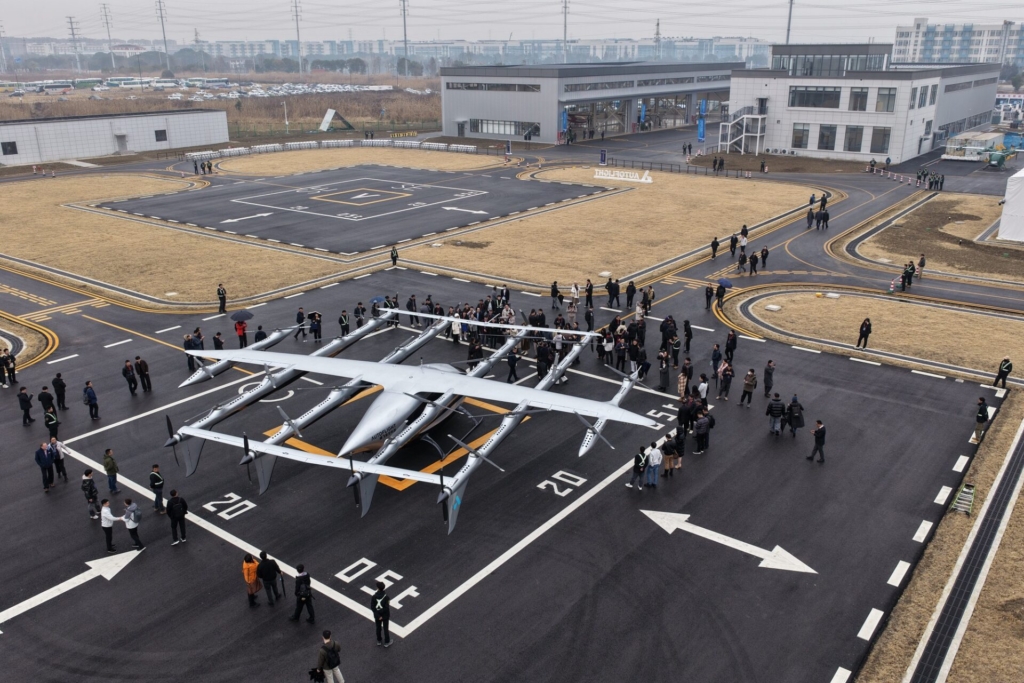
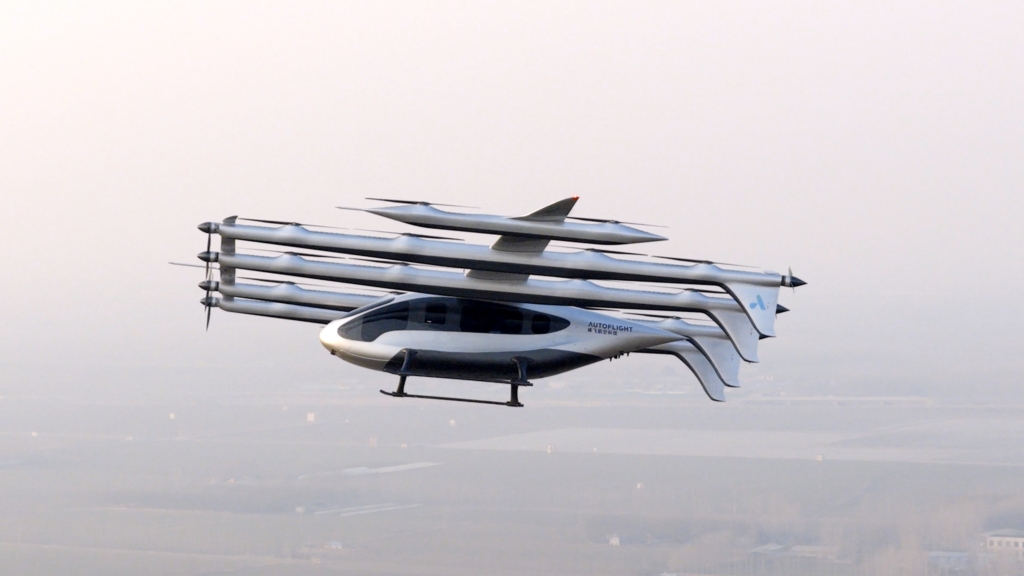
Matrix sits at the upper end of the emerging eVTOL spectrum. The aircraft has a wingspan of 20 metres, measures 17.1 metres in length and stands 3.3 metres high, with a maximum take-off weight of 5,700kg.
Most operational prototypes in the sector fall within the 1.5 to 3-tonne range and typically accommodate between four and six passengers.
By comparison, Matrix enters the five-ton class, targeting larger payloads and longer missions.
The internal cabin measures 5.25 metres in length, 1.8 metres in width and 1.85 metres in aisle height, providing 13.9 cubic metres of volume.
The company says the platform will be available in both passenger and cargo variants.
The passenger configuration supports either 10 business-class seats or six VIP seats, suggesting a positioning beyond purely urban shuttle services.
AutoFlight develops hybrid cargo variant of Matrix eVTOL
Alongside the all-electric passenger version, AutoFlight is developing a hybrid-electric cargo configuration. The cargo variant is designed to carry up to 1,500kg and features a forward-opening door capable of accommodating two AKE standard air cargo containers.
The pure electric version offers a maximum range of 250 kilometres, while the hybrid-electric version extends range to 1,500 kilometres. That difference reflects the constraints battery-powered systems currently face in balancing payload and endurance.
If validated through certification, the hybrid configuration could position Matrix closer to regional air transport or specialised logistics roles rather than solely short-hop urban operations.
Lift-and-cruise design enables Matrix eVTOL full transition flight
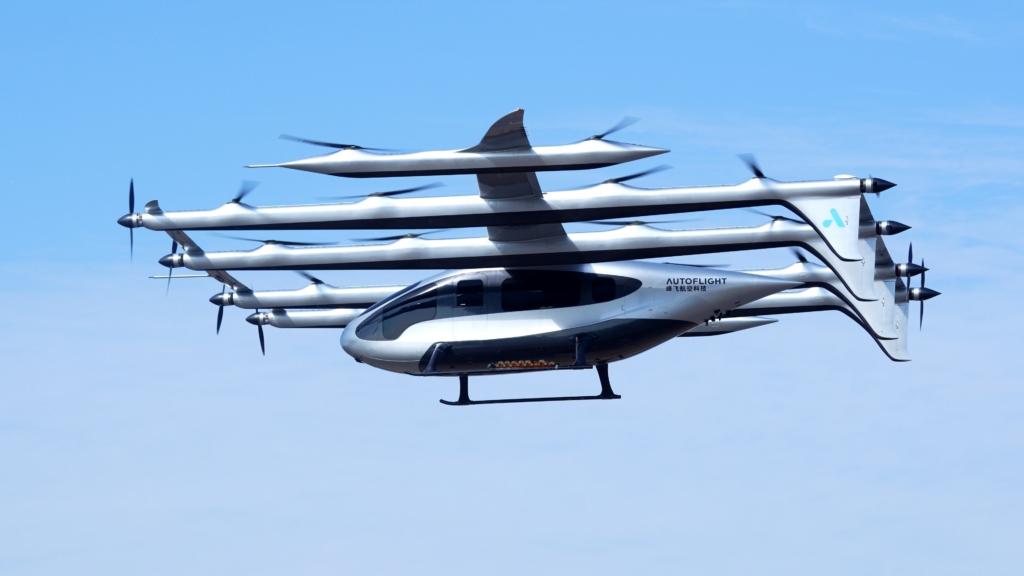
Matrix uses what AutoFlight describes as a compound wing “Lift and Cruise” configuration, incorporating a triplane layout and a six-arm structure. The aircraft is equipped with a distributed propulsion architecture incorporating up to 20 lift motors, intended to provide redundancy and maintain stability in the event of motor failure.
The lift-and-cruise model separates vertical lift propulsion from forward cruise propulsion, reducing aerodynamic compromise compared with tilt-rotor systems.
However, scaling that architecture to five-tonne class introduces additional structural and power management challenges, particularly during transition phases where aerodynamic loads shift rapidly.
The successful demonstration of full transition flight suggests that AutoFlight has addressed at least the core integration of aerodynamic control, propulsion management and flight control software required to handle those shifts.
AutoFlight positions Matrix beyond urban air mobility
AutoFlight CEO and founder Tian Yu framed the aircraft as a departure from prevailing assumptions in the eVTOL sector.
“Matrix is not only a rising star in the aviation industry but also an ambitious industry disruptor. It will break the industry perception that eVTOL equals short-haul, low-load, and will reshape the rules of eVTOL routes,” he said.
“Through economies of scale, it significantly reduces transportation costs per seat-kilometre and ton-kilometre, revolutionising costs and embracing profitability,” he added. “It covers all scenarios from urban commuting to intercity feeder routes, driving the expansion of the entire low-altitude ecosystem.”
While commercial viability remains dependent on certification pathways, infrastructure build-out and operating economics, the emphasis on higher payload and longer range reflects an emerging debate within the sector over whether smaller, urban-focused aircraft will provide sustainable margins.
Certification pathway for Matrix eVTOL remains unclear
AutoFlight has not disclosed a certification timeline for Matrix. Scaling from demonstrator to commercial service in the five-ton category will require validation of structural integrity, redundancy, energy management systems and compliance with evolving regulatory frameworks for eVTOL operations.
The company’s previous programmes, including the Great White Shark industrial platform, CarryAll autonomous logistics system and Prosperity urban air mobility aircraft, form part of a broader product strategy.
However, Matrix represents a significant step in size and complexity compared with earlier platforms.
Five-ton class eVTOL marks next phase of industry competition
The broader eVTOL industry remains focused largely on urban air mobility concepts, typically optimised for short sectors under 200 kilometres with limited passenger loads.
By contrast, Matrix’s five-ton maximum take-off weight and hybrid range claims place it closer to light regional aviation territory.
Whether that positioning proves commercially viable will depend on operational cost validation, infrastructure readiness and regulatory approval.
Featured image: AutoFlight